Can I Put Oil In My Car Until I Get An Oil Change Can 2026
Last Updated on September 1, 2026 by Ryan
Yes, in most cases, you can safely add oil to your car as a temporary measure until you can get a full oil change. This can prevent significant engine damage from critically low oil, but it is not a substitute for scheduled maintenance.

Prime for Young Adults — 6 Months Free
Students and 18–24s get six months of Prime free, then half price.
Start 6 Months FreeYes, in most cases, you can safely add oil to your car as a temporary measure until you can get a full oil change. This can prevent significant engine damage from critically low oil, but it is not a substitute for scheduled maintenance.
The question, “can I put oil in my car until I get an oil change,” often arises when you notice your oil level is low, and the immediate answer is generally yes, with important caveats. Topping off your engine oil can act as a crucial temporary fix, safeguarding vital engine components from lubrication-related damage.
However, it is never a permanent solution. Think of it as a bridge to your next scheduled maintenance, not a replacement for comprehensive care. Ignoring low oil levels, even for a short period, can lead to severe and costly engine problems in 2026.
Understanding when and how to perform this temporary fix safely is crucial for your engine’s health, which leads us to determining if topping off is the right step for your situation.
Key Takeaways
Recommended Best Deal Products

- Topping off oil is usually safe temporarily.
- Low oil causes severe, costly engine damage.
- Match oil type and viscosity carefully.
- Know how to check oil levels precisely.
- Topping off is never a full oil change replacement.
When to Safely Top Off Your Engine Oil
Deciding when to safely top off your engine oil requires a quick assessment of your current situation. This temporary measure is appropriate when your oil level is low but not critically so, and there are no signs of major engine trouble beyond simple consumption.

Interpret Your Dipstick Reading
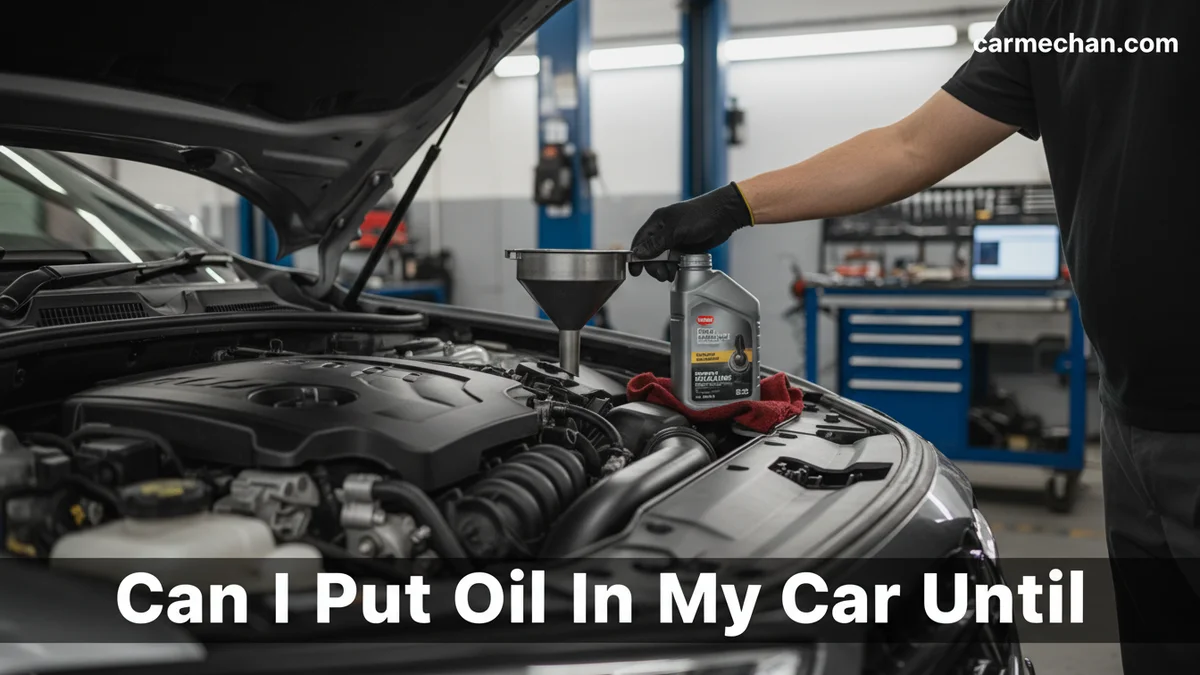
Your vehicle’s dipstick is your primary tool for this assessment. If the oil level falls below the “add” or “low” mark, adding oil is usually a safe and wise preventative step. Generally, the difference between the “add” and “full” marks on a dipstick represents about one quart (or liter) of oil.
Most passenger vehicles, such as a typical 4-cylinder sedan, hold around 4-5 quarts of oil; a 6-cylinder SUV might hold 5-7 quarts; and an 8-cylinder truck could hold 6-8 quarts .
Topping off one quart will typically bring a low engine back to a safe operating level.

Audible — Listen Free for 30 Days
One free credit a month and thousands of titles included.
Listen Free for 30 DaysRespond to Oil Warning Lights
If your oil warning light illuminates on your dashboard, it often signals a more urgent problem than just a low oil level. This light usually indicates a loss of oil pressure, which means oil isn’t circulating properly, or that the oil level is dangerously low.
While you might still need to add oil, this situation often warrants immediate professional inspection as low pressure can cause rapid engine damage. Pull over as soon as it is safe to do so.
Recognize Contamination Signs
Do not top off your oil if you notice signs of contamination. If the oil on your dipstick appears milky, foamy, or has a strong gasoline smell, it indicates a more serious underlying issue like a coolant leak or fuel dilution. Adding more oil will not resolve these problems and could worsen engine damage.
In such cases, your vehicle needs immediate professional diagnosis and repair, not just a top-off.
Once you’ve determined that topping off is a viable temporary solution, knowing how to accurately check your engine oil level becomes the next critical step.
How to Correctly Check Your Engine Oil Level
Learning how to correctly check your engine oil level is a fundamental skill for any car owner, ensuring you get an accurate reading before adding oil. An accurate measurement helps you decide how much oil to add and prevents overfilling.
Prepare Your Vehicle Correctly
- Park on Level Ground: Ensure your car is parked on a flat, level surface. Parking on an incline can give an inaccurate oil level reading.
- Warm Then Rest the Engine: Drive your car for 10-15 minutes to bring the engine up to operating temperature. Then, turn the engine off and wait at least 5-10 minutes. This allows the oil to drain back into the oil pan for an accurate reading. Check your owner’s manual, as some manufacturers recommend checking oil cold.
Locate and Extract Dipstick
- Locate the Dipstick: Find the engine oil dipstick, usually marked with a bright handle (yellow or orange).
- Clean the Dipstick: Pull the dipstick out completely and wipe it clean with a lint-free cloth or paper towel.
Read the Level Accurately
- Reinsert and Re-extract: Fully reinsert the dipstick into its tube until it’s seated. Wait a few seconds, then pull it out again.
- Read the Oil Level: Observe the oil level. It should fall between the “add” or “low” mark and the “full” mark. If it’s below the “add” line, you need to add oil.
- Add Oil Carefully: If low, slowly pour small amounts of the appropriate oil (usually 1/2 quart at a time) through the oil filler cap. Wait a few minutes for the oil to settle, then recheck the dipstick. Repeat until the oil level is within the safe range, but do not overfill.
With your oil level checked, the next crucial decision involves selecting the right type of oil for topping off to avoid any adverse reactions within your engine.
Which 3 Oil Types Can You Safely Mix
Understanding which 3 oil types can you safely mix for topping off is essential to prevent potential engine issues. While ideal practice involves using the exact oil recommended by your manufacturer, emergencies sometimes necessitate mixing.

Match Existing Viscosity Grades
The most critical factor when topping off is matching the viscosity grade, such as 5W-30 or 0W-20, which is specified in your vehicle’s owner’s manual. Mixing oils of different viscosities can alter the lubricant’s performance characteristics, potentially reducing its protective capabilities. While not immediately catastrophic for a temporary top-off, sticking to the correct viscosity maintains the engine’s intended lubrication system.
Audible Premium Plus — Annual Membership
12 audiobook credits up front, plus the full Audible catalogue.
See Annual PlansFor instance, if your car uses 5W-30, add 5W-30, regardless of brand or base stock.
Understand Base Stock Compatibility
Engine oils are generally classified by their base stock: conventional (mineral oil), synthetic blend, and full synthetic. The good news is that most modern engine oils, regardless of their base stock, are designed to be compatible for mixing. For a temporary top-off, adding a quart of synthetic to a conventional fill, or vice versa, typically won’t cause immediate harm or turn your oil into sludge.
This is because all licensed engine oils meet certain industry standards, like those set by the American Petroleum Institute (API) or the Society of Automotive Engineers (SAE), which ensure a baseline level of compatibility .
The blend will simply assume the characteristics of the less protective oil until a full change occurs.
Consider Manufacturer Specifications
Always refer to your car’s owner’s manual for specific oil recommendations, including any particular certifications or specifications. While mixing for a short-term top-off is generally safe, continually operating on a mixed blend, especially if it deviates significantly from manufacturer specs, is not advisable. When in doubt, any oil of the correct viscosity is better than no oil at all for preventing immediate engine damage.
However, prioritize getting a full oil change with the correct, specified oil as soon as possible.
While knowing how to add oil is helpful, ignoring critically low oil levels or making incorrect choices can lead to severe engine damage, highlighting the risks involved.
What 5 Critical Risks Low Oil Poses to Your Engine
Understanding what 5 critical risks low oil poses to your engine underscores why addressing the issue promptly, even temporarily, is so important. Your engine’s lifespan directly correlates with consistent and adequate lubrication.
Experience Excessive Friction
Engine oil’s primary role is to reduce friction between moving parts. Without sufficient oil, metal components rub directly against each other. This creates immense heat and causes rapid wear, leading to irreparable damage.
Suffer Component Overheating
Oil also acts as a coolant, carrying heat away from critical engine components. Low oil levels reduce the oil’s cooling capacity, causing engine parts to overheat. This can warp metal, blow head gaskets, and severely compromise engine integrity.
Encounter Premature Wear
Insufficient lubrication accelerates the wear of bearings, pistons, camshafts, and other vital engine parts. This premature wear can manifest as knocking sounds, reduced engine performance, and eventually, component failure.
Risk Engine Seizure
In the most severe cases of critically low oil, engine components can seize up completely. This happens when parts generate so much friction and heat that they weld together, bringing the engine to an abrupt, often catastrophic, halt. An engine seizure typically means a complete engine replacement.
Incur Major Repair Costs
The consequences of low oil levels invariably lead to expensive repairs. Depending on the extent of the damage, you could face anything from replacing specific components to a full engine overhaul or replacement. An engine replacement in 2026 could easily cost anywhere from $3,000 to over $10,000, significantly impacting your budget .
Addressing low oil proactively, even with a temporary top-off, saves you from these financial burdens.
While topping off can prevent these immediate dangers, it’s crucial to remember that it’s merely a stop-gap, making it essential to understand when a full oil change is still absolutely necessary.
When to Prioritize a Full Oil Change
Despite the temporary relief from topping off, knowing when to prioritize a full oil change is paramount for your vehicle’s long-term health. Topping off extends the interval, but it does not reset your maintenance clock.
Follow Scheduled Intervals
Always adhere to your vehicle manufacturer’s recommended oil change schedule, typically found in your owner’s manual. These intervals, whether based on mileage or time (e.g., every 5,000-7,500 miles or 6-12 months in 2026), ensure your engine receives fresh oil with optimal protective additives. Topping off simply replaces lost volume; it does not refresh the oil’s degraded detergents or anti-wear properties.
Address Contamination Concerns
If you topped off with a different oil type due to an emergency, or if you suspect your oil is contaminated (e.g., milky appearance, fuel smell), a full oil change is immediately necessary. A complete drain and refill ensures all the old, potentially compromised oil is removed and replaced with the correct, clean lubricant.
Resolve Persistent Oil Loss
If you find yourself frequently topping off your oil, it indicates an underlying problem, such as a leak or excessive oil consumption. Topping off in this scenario only masks the symptom. A full oil change appointment is a good opportunity for your mechanic to diagnose and repair the root cause of the oil loss, preventing future engine issues.
After a Warning Light Event
If your oil pressure warning light illuminated, even if you successfully added oil to turn it off, a full oil change and professional inspection are highly recommended. The warning light signals a critical event that may have caused stress or wear, and a mechanic can assess any potential damage and ensure the system is functioning correctly.
Don’t Delay Your Next Oil Change
In conclusion, the answer to “can I put oil in my car until I get an oil change” is a qualified yes, serving as a vital temporary measure to protect your engine in 2026. Topping off a low oil level can effectively prevent severe and costly damage from excessive friction and heat.
However, this action should never be seen as a substitute for your vehicle’s scheduled maintenance. Always check your dipstick accurately, select the correct oil viscosity, and get a full oil change promptly. Prioritize professional service to address any underlying issues and ensure your car’s long-term health and performance.
7 Questions About Car Oil You Need Answered
Is It Bad to Top Off Engine Oil?
No, topping off engine oil is generally not bad; it’s a good temporary measure if your oil level is low. It prevents serious engine damage by ensuring sufficient lubrication until a full oil change can be performed.
Can I Put Any Oil in My Car If It’s Low?
Ideally, use oil that matches your car’s specified viscosity (e.g., 5W-30) and type (conventional, synthetic). In an emergency, any correct viscosity oil is better than dangerously low oil, but aim for a full change soon after.
What Oil to Use for Topping Off Car?
For topping off, use the same viscosity and type of oil (conventional, synthetic, or blend) that is already in your engine. Check your owner’s manual for the manufacturer’s recommended specifications for your vehicle.
How Much Oil to Add If Low?
When your dipstick shows low oil, start by adding about half a quart (or half a liter). Wait a few minutes for the oil to settle, then recheck the dipstick and add more in small increments until the level is between the “add” and “full” marks.
How Soon to Get Oil Change After Adding Oil?
After topping off, you should get a full oil change as soon as possible, ideally within a few days or within 500-1000 miles, especially if you mixed oil types or if your oil warning light came on.