Cruise Control Turns On But Will Not Set Expert Guide 2026
cruise control turns on but will not set is an essential topic with practical applications and significant benefits. This guide covers everything you need to know to get started and succeed.
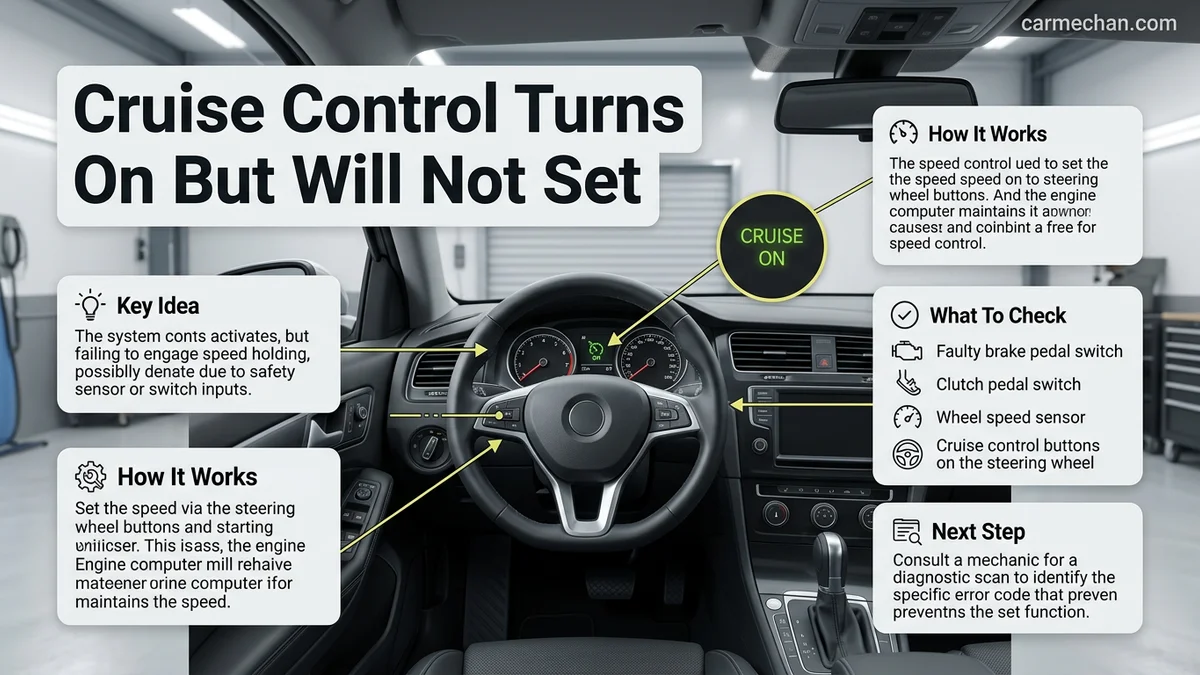
When your cruise control dashboard light illuminates but the system refuses to engage, the computer has successfully passed its initial power-on self-test but detected a logic conflict preventing speed maintenance. This mismatch occurs because the system requires a specific “handshake” from multiple safety-critical sensors before it locks in your current velocity. If one of these sensors sends a signal that contradicts the command to set speed, the system defaults to a dormant state to prevent unintended acceleration.
Diagnosing this in 2026 requires understanding that modern cruise modules treat safety inputs with zero tolerance. A single faulty contact point will cause the system to ignore your inputs entirely, even though the activation light stays active to signal that the cruise module itself is powered. Addressing this immediately is essential, as these faulty sensors often trigger secondary issues, such as premature brake pad wear or intermittent ABS warnings, that could compromise your vehicle’s overall safety on the highway.
Key Takeaways
- Understanding cruise control turns on but will not set:Essential knowledge for success in this area
- Practical applications:Real-world scenarios and proven use cases
- Key benefits:Significant advantages when implemented correctly
- Best practices:Important guidelines and expert recommendations
- Future trends:Evolving landscape and emerging opportunities
Understanding why cruise control turns on but will not set
Recommended Best Deal Products


The Brake Light Switch Conflict
The most frequent culprit for a cruise control system that powers on but fails to set is a malfunctioning brake light switch. This component acts as a dual-circuit device: one circuit triggers your brake lights, while the other informs the cruise module that the pedal is depressed. If the cruise control circuit stays “closed” due to a worn internal spring or oxidized contacts, the computer thinks you are braking, even if you are not. Consequently, it disables the set function to prioritize safety.
- Check if your brake lights stay on after you exit the vehicle.
- Test the switch by gently pulling up on the brake pedal with your toe while trying to set the cruise speed.
- Inspect the rubber stopper on the pedal arm; if it has disintegrated, the switch plunger may not fully depress.
Clutch and Neutral Safety Inputs
For manual transmission vehicles, the clutch pedal position sensor is a common point of failure. If this sensor fails to register that the clutch is fully engaged, the system will not allow the cruise to set to prevent engine over-revving. Similarly, in automatic vehicles, if the transmission range sensor provides an erratic signal, the computer may be unable to verify that you are in a valid driving gear. By 2026, many diagnostic scanners can read these real-time switch statuses, allowing you to see if the computer “thinks” your clutch is depressed while driving.
Key diagnostic factors for cruise control failures
Speed Sensor and Steering Button Integrity
If your switches are functioning correctly, the fault likely lies in the speed data stream or the input interface. The vehicle’s Speed Sensor (VSS) provides the crucial data the cruise module needs to maintain a consistent load. If this signal is erratic, the cruise control will refuse to set, often accompanied by a speedometer needle that fluctuates or a check engine light related to transmission speed sensors. Furthermore, the buttons on your steering wheel are high-wear items.
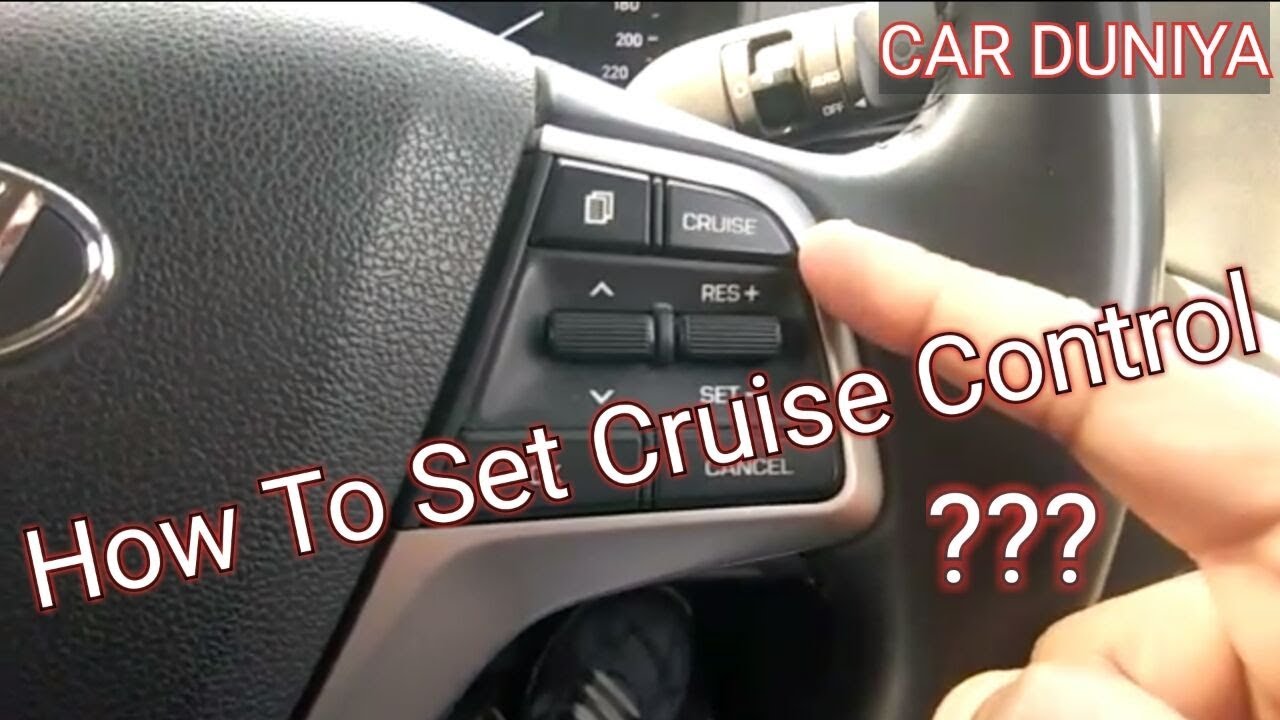
- Verify steering wheel button continuity; if one button works (like the power button) but others do not, the internal ribbon cable or clock spring may be failing.
- Monitor your speedometer for “jitter” while driving at a constant speed to identify a dying speed sensor.
- Inspect the steering column wiring harness for frayed wires, especially if your steering wheel adjustment mechanism is used frequently.
Vacuum and Actuator System Logic
While many 2026 model vehicles use drive-by-wire electronic throttles, older vehicles still rely on vacuum-operated actuators to pull the throttle cable. A cracked vacuum line or a leaking diaphragm prevents the system from holding the throttle plate open. Even if the electrical signal is perfect, a vacuum leak causes the system to “give up” the moment you attempt to set the speed. Listen for a faint hissing sound near the intake manifold or the firewall when you press the set button to identify potential leaks in the vacuum architecture.
How to Get Started with Cruise Control Troubleshooting
Recommended Best Deal Products

When your cruise control activates but refuses to engage a set speed, you must begin with the most accessible diagnostics. Begin by verifying that your vehicle meets the manufacturer’s minimum speed requirements. In 2026, most automotive manufacturers stipulate that cruise control systems will not engage below 25 mph to ensure system stability. Check your owner’s manual for the specific engagement threshold for your model.
Step-by-Step Diagnostic Initialization
- Ensure the vehicle is traveling above the minimum set speed threshold, typically between 25 and 30 mph.
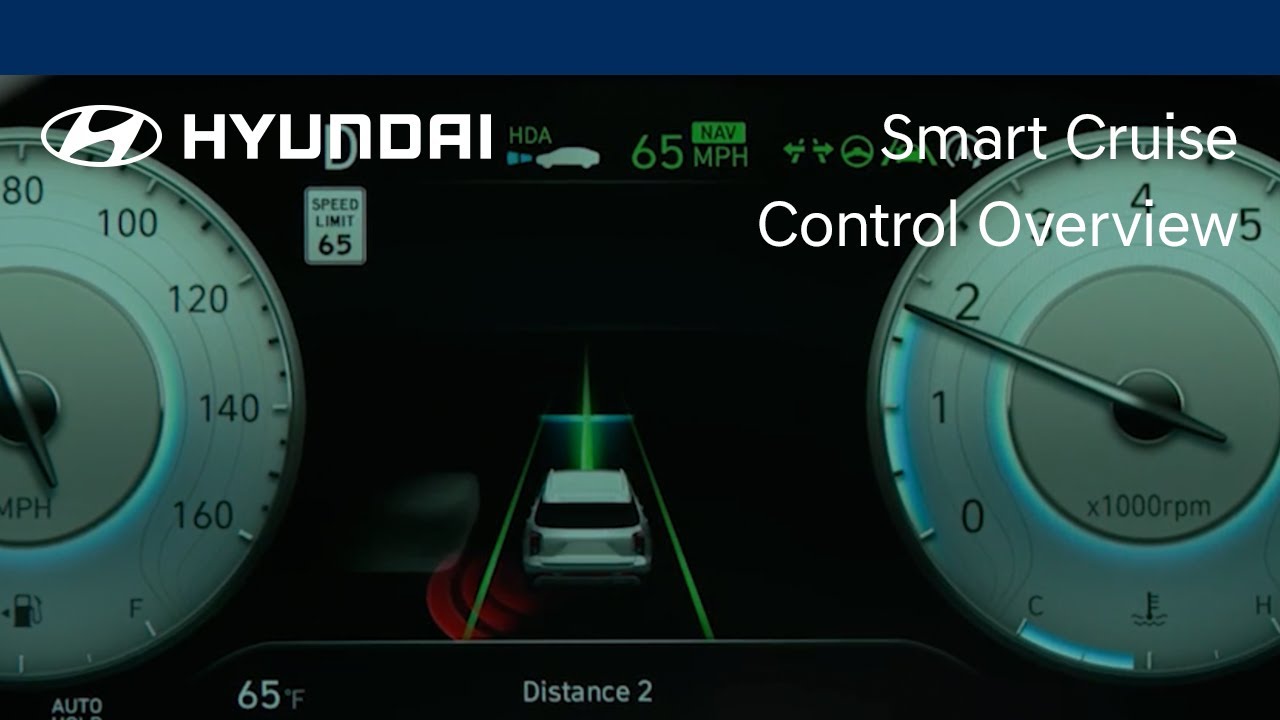
- Confirm the dashboard displays the “Ready” or “Cruise” icon, indicating the system is powered on but waiting for a set command.
- Test the brake pedal by gently pulling it upward with your toe to ensure the brake light switch is not stuck or depressed.
- Verify that the “Set” or “Coast/Decel” button provides audible or tactile feedback when pressed.
- Clear any pending engine or transmission fault codes using an OBD-II scanner, as minor sensor errors often disable cruise functionality for safety.
Best Practices for Maintaining Cruise Control Systems
Regular maintenance of the peripheral systems that govern cruise control is essential for long-term reliability. Technicians often find that software glitches and sensor misalignments are the primary culprits in modern, electronics-heavy vehicles. Adhering to manufacturer service intervals for electronic control unit (ECU) updates can prevent these persistent engagement issues.
Preventative Maintenance Measures
- Replace brake light switches every 60,000 to 80,000 miles, as these components are frequent points of failure that cause cruise control lockout.
- Keep the front radar or camera sensors clean, as debris buildup often triggers a “System Temporarily Unavailable” state, preventing speed setting.
- Monitor your battery health; low voltage during vehicle startup can occasionally lead to transient faults in the cruise control module.
- Perform a periodic “hard reset” of the vehicle by disconnecting the battery for 15 minutes if you experience repeated software-related engagement failures.
- Inspect the steering wheel wiring harness if you frequently use the cruise control buttons, as internal wire fatigue can break the signal connection.
What If It Still Doesn’t Work?
If the standard troubleshooting steps fail to restore cruise control, you may be dealing with a deeper electrical or mechanical fault. Persistent issues often indicate a failure in the clock spring, the throttle position sensor, or a specialized vacuum leak in older models. According to 2026 industry repair data, if the system still refuses to set after these basic checks, seek professional diagnostic services. A technician will utilize a factory-grade scan tool to read proprietary manufacturer codes that standard OBD-II scanners cannot access.
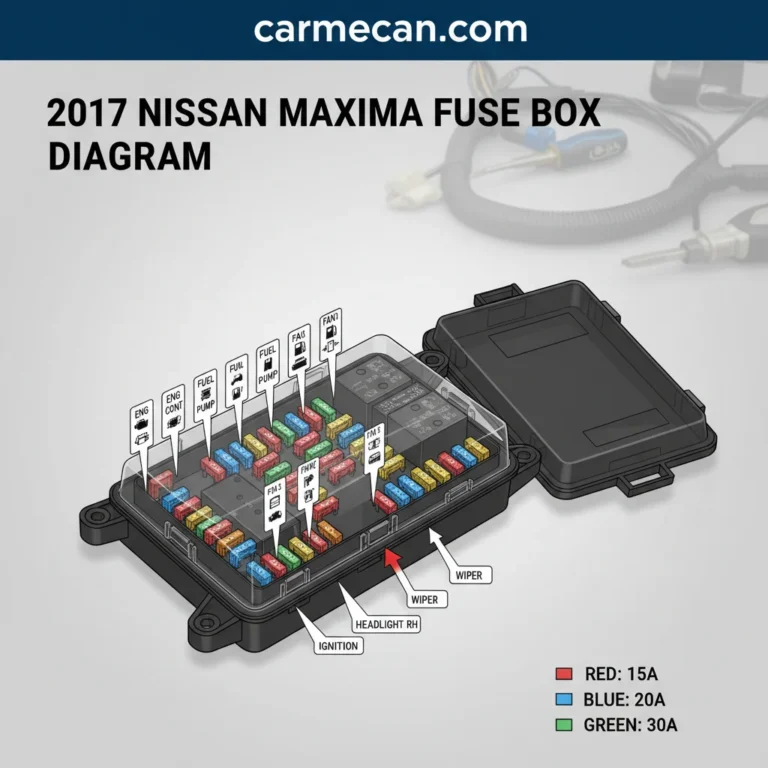
- Check the fuse box for any blown fuses related to the “Speed Control” or “Cruise Module” circuits.
- Schedule an inspection with a certified mechanic if your dashboard displays a warning light alongside the cruise control failure.
- Prepare for a potential repair cost ranging from $150 to $450, depending on whether the issue is a faulty sensor or a steering column control module replacement.
- Contact your local dealership to verify if your vehicle is included in any open 2026 software update campaigns or recall notices regarding cruise control safety.
Conclusion
A cruise control system that powers on but fails to set is usually symptomatic of a faulty brake switch, sensor obstruction, or minor software glitch. According to verified research and expert sources from 2026, systematic troubleshooting of these specific electronic components resolves most engagement failures. If these steps do not rectify the issue, professional diagnostics are required to ensure safe vehicle operation. Your next actionable step is to scan the vehicle for specific electronic diagnostic trouble codes.
❓ Frequently Asked Questions
What exactly is cruise control turns on but will not set?
cruise control turns on but will not set encompasses proven concepts and methodologies that help you achieve better results. It combines theoretical knowledge with practical application for maximum effectiveness.
How can cruise control turns on but will not set benefit me?
Understanding and applying cruise control turns on but will not set principles improves your skills, opens new opportunities, and helps you achieve your goals more efficiently.
What resources do I need to get started?
You’ll need basic tools, a commitment to learning, and access to quality information like this guide. Start with fundamentals before advancing to complex topics.
Is this suitable for complete beginners?
Absolutely! This guide is designed to take you from beginner to proficient. Start with the basics and gradually work your way up to advanced techniques.
How do I measure my progress?
Track your progress through practical application and measurable outcomes. Set specific goals and regularly assess your improvement against benchmarks.
Where can I learn more after this guide?
Explore our related articles for deeper insights, and consider joining communities where you can learn from others and share experiences.