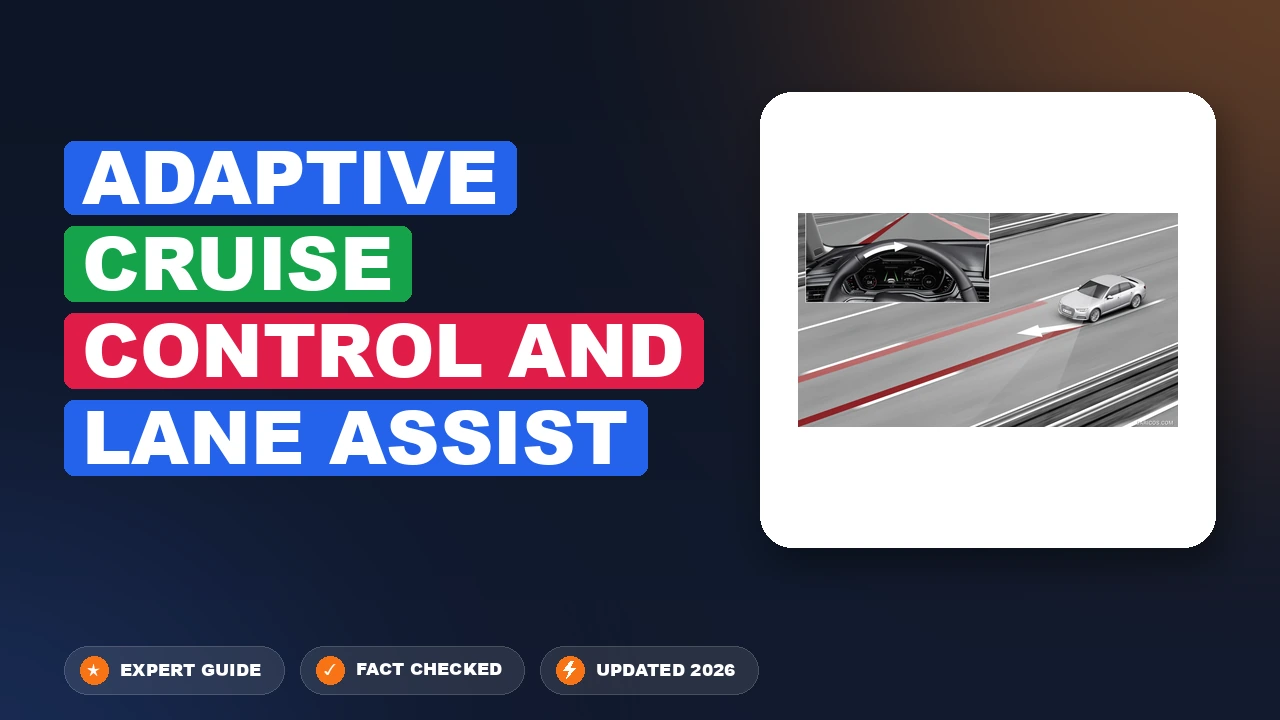
Adaptive Cruise Control and Lane Assist Decoded
Modern vehicles are increasingly driving themselves, but do you know where your responsibility ends and the computer’s begins? Drivers often mistake convenience features for full autonomy, leading to dangerous gaps in attention and situational awareness. This guide provides a professional, clear look at how adaptive cruise control and lane assist function, their real-world limits, and how to stay in control.
Adaptive Cruise Control and Lane Assist: How Systems Function
Recommended Best Deal Products


Modern vehicle safety suites are marvels of sensor fusion, yet their operation is grounded in specific, deterministic hardware. Understanding these systems requires a look at how they interpret the world around your vehicle.
📤 Share Image
Sensors and the Electronic Control Unit
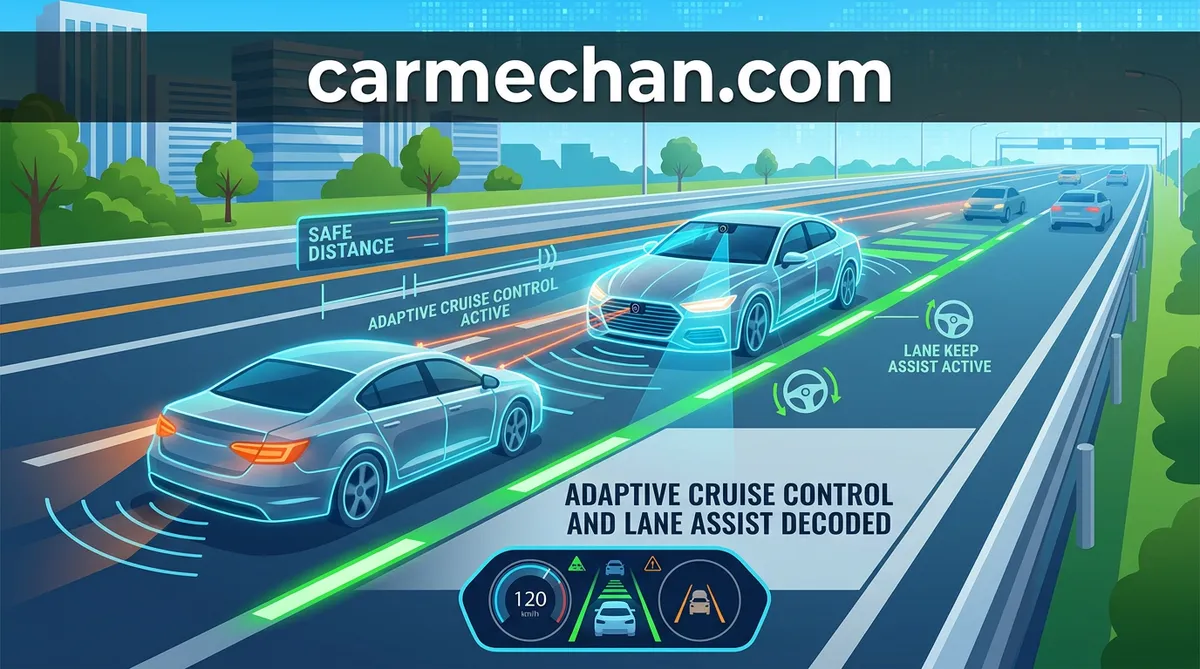
The backbone of your vehicle’s capability lies in the integration of the radar sensor and the forward-facing camera. The radar, typically mounted in the front grille or bumper, constantly emits radio waves to detect the distance and closing speed of lead vehicles. Simultaneously, the forward-facing camera—usually located behind the rearview mirror—scans the road surface to identify lane markings and path geometry.
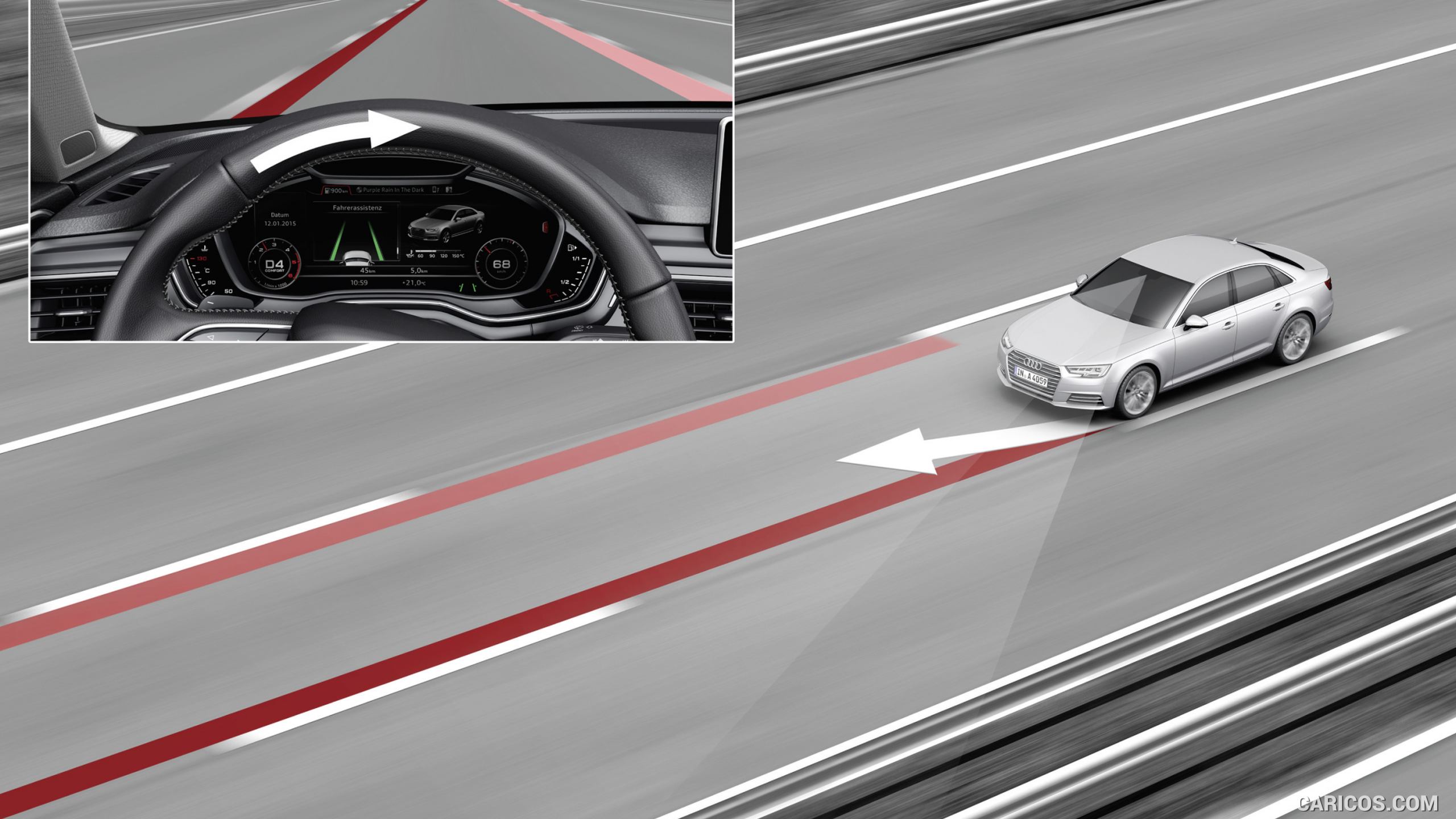
The Electronic Control Unit (ECU) serves as the central brain. It receives raw data from these sensors and cross-references them against vehicle speed and steering angle. If the radar detects an obstruction, the ECU commands the powertrain to modulate throttle or braking. If the camera detects the vehicle drifting without a turn signal, the ECU interacts with the Electric Power Steering (EPS) actuator to apply gentle corrective steering.

The Mechanics of Longitudinal and Lateral Control
These systems split the task of driving into two distinct vectors. Adaptive Cruise Control (ACC) governs longitudinal control, which is the management of your speed relative to the vehicle ahead. It is essential to recognize that ACC is restricted by the limits of the hardware; in heavy rain or dense fog, these radar waves can be scattered, leading to “sensor blindness” or system disengagement.
Conversely, Lane Keep Assist (LKA) manages lateral control. This is significantly more complex because it relies entirely on visual data. If road markings are faded, covered by snow, or absent—as is common in many construction zones—the system lacks a frame of reference and will cease operation. Never rely on the system to navigate curves that exceed the steering torque limitations of the EPS actuator.

Comparing Driver Assist Tech: Traditional vs. Adaptive Systems
Distinguishing between legacy cruise control and modern ADAS is crucial for driver confidence. Most modern systems are categorized under SAE J3016 Level 2 Automation, meaning the vehicle can control both speed and steering simultaneously, but the driver must remain in the loop at all times.
Cruise Control Evolution
Traditional cruise control is a static mechanism; it maintains velocity regardless of traffic density. Adaptive systems, however, introduce the concept of “time gap,” which defines the distance in seconds between you and the car ahead. This evolution prevents the constant “on-off” cycle required by legacy systems in light to moderate highway traffic.
Lane Departure Warning vs. Lane Keep Assist
There is a technical distinction between passive and active systems. Lane Departure Warning (LDW) is purely an alerting mechanism; it uses auditory or haptic (steering wheel vibration) signals to notify you of drift. Lane Keep Assist (LKA) is active; it uses “torque overlay” on the steering column to physically nudge the vehicle back into the lane. It is not designed to steer through corners, but rather to serve as a safety net against unintended departure.
How to Properly Operate Your Vehicle’s Safety Suite
Recommended Best Deal Products


Effectively utilizing your vehicle’s safety technology requires a formal approach to engagement. These systems generally operate within a speed range of 0 to 90 mph, though specific engagement thresholds vary by manufacturer.
📋
Step-by-Step Guide
Engage the main ADAS switch on your steering wheel. Confirm the icon appears on your digital instrument cluster, indicating the camera and radar are ready.
Set your desired cruising speed and, crucially, select your preferred follow distance. Start with a conservative gap (3–4 seconds) until you are comfortable with the system’s braking characteristics.
Stay vigilant for haptic feedback or visual warnings. If the steering wheel shakes or an alert chimes, the system has detected a potential error or your hands have left the wheel.
Managing Follow Distance and Speed Ranges
The “follow distance” setting is not merely a preference; it is a critical safety parameter. In heavy traffic, a shorter distance may be tempting, but it reduces your reaction time if the radar fails to detect a stopped vehicle in time. Most manufacturers integrate Driver Attention Monitoring, which uses infrared sensors or steering input tracking to ensure you are actually watching the road. Never attempt to “trick” these sensors, as they are your final fail-safe.
Critical Limitations and Common Safety Pitfalls
Recommended Best Deal Products


The greatest danger associated with these features is automation complacency. When a car handles steering and speed, the human brain naturally disengages from the active task of driving, leading to dangerous lapses in situational awareness.
You are 100% legally responsible for your vehicle at all times. Neither adaptive cruise control nor lane assist can account for unpredictable human behavior, debris in the road, or sudden infrastructure changes.
- Construction Zones: These areas frequently present contradictory lane markings. The vehicle’s camera may prioritize old, visible lines over new orange cones, leading to erratic steering inputs.
- Weather Degradation: Heavy rain, sleet, and snow reflect radar waves and obscure camera lenses. If your vehicle reports a “Sensor Obstructed” error, manually disable the system immediately.
- Blind Spot Monitoring: Remember that even with lane assist, you must rely on Blind Spot Monitoring indicators and manual shoulder checks. These systems have blind spots, particularly at sharp angles during merging.
- Road Geometry: Sharp curves and steep hills can exceed the system’s physical capabilities. If the camera loses sight of the lane boundary, the system will disengage, potentially leaving you in an improper position on the road.
By The Numbers
Legal Responsibility
MPH Range
Troubleshooting Adaptive Cruise Control and Lane Assist Faults
When your safety suite displays a fault, follow a professional diagnostic protocol before rushing to the dealer. Most issues are environmental rather than mechanical.
- Clear Obstructed Sensors: Inspect the front radar cover (often hidden in the grille emblem) and the camera area behind the top center of your windshield. Dirt, ice, or salt buildup is the #1 cause of system failure.
- System Reboot: If the error persists after cleaning, try cycling the ignition. In many modern cars, this re-initializes the ECU’s communication with the radar and camera sensors.
- Dashboard Fault Codes: Note the specific wording of the error. A “Sensor Unavailable” message is usually temporary; a “Service ADAS System” message indicates a hardware fault that requires a professional service center.
- Avoid Misconceptions: Do not mistake a lane assist correction (a gentle nudge) for a system malfunction. Ensure your steering grip is firm enough that the vehicle doesn’t interpret your lack of input as an emergency.
Conclusion
Adaptive cruise control and lane assist are sophisticated tools that, when understood and respected, significantly improve driver comfort on long journeys. However, they are fundamentally convenience features—not safety-critical autonomous systems. Their performance is tethered to the quality of road markings, clear weather conditions, and the limitations of the hardware sensors.
The takeaway is clear: these systems are designed to assist, not replace, human driving. Environmental variables and road quality significantly impact performance, and constant, active driver vigilance is the only way to ensure safety. Always consult your specific owner’s manual for system-specific nuances and remember to keep your eyes on the road at all times, rather than relying on dashboard alerts to manage your driving environment.
Adaptive Cruise Control and Lane Assist: Frequently Asked Questions
Does this make my car self-driving?
No. These features are classified as SAE Level 2 partial automation. They assist the driver with steering, braking, and acceleration, but the human remains fully responsible for vehicle control. You must maintain complete situational awareness at all times, as the car lacks the judgment to handle unpredictable road hazards, emergency scenarios, or complex urban environments independently.
Will it work in heavy rain or snow?
Generally, no. Heavy precipitation can obscure camera lenses and attenuate radar signals, leading to system failure or ‘blindness.’ Most systems will automatically disengage and issue a warning if environmental conditions prevent them from accurately reading lane markers or maintaining a safe distance from other vehicles. Never rely on these features during severe weather.
Do I still have to keep my hands on the wheel?
Yes. Most vehicles require constant torque or touch on the steering wheel to confirm you are alert. If you remove your hands for too long, the system will trigger an escalating series of visual and auditory alerts before eventually disengaging. Keep your hands on the wheel to ensure you can take instantaneous control if necessary.
What happens if the lane markings are faded?
If lane markings are faded, non-existent, or obscured by debris, the camera-based lane assist system will likely lose its reference points. In most cases, the system will cease providing steering input and notify you via the instrument cluster. You must immediately steer the vehicle manually to stay within the intended lane path.
Can these systems prevent all collisions?
No system is infallible. While adaptive cruise control and lane assist significantly mitigate the risk of common accidents caused by fatigue or distraction, they cannot account for every road variable. Human judgment is necessary to interpret road hazards, navigate intersections, and handle erratic behavior from other drivers, ensuring safety beyond the scope of digital sensors.