Subaru Check Engine Light Flashing Cruise Control 2026
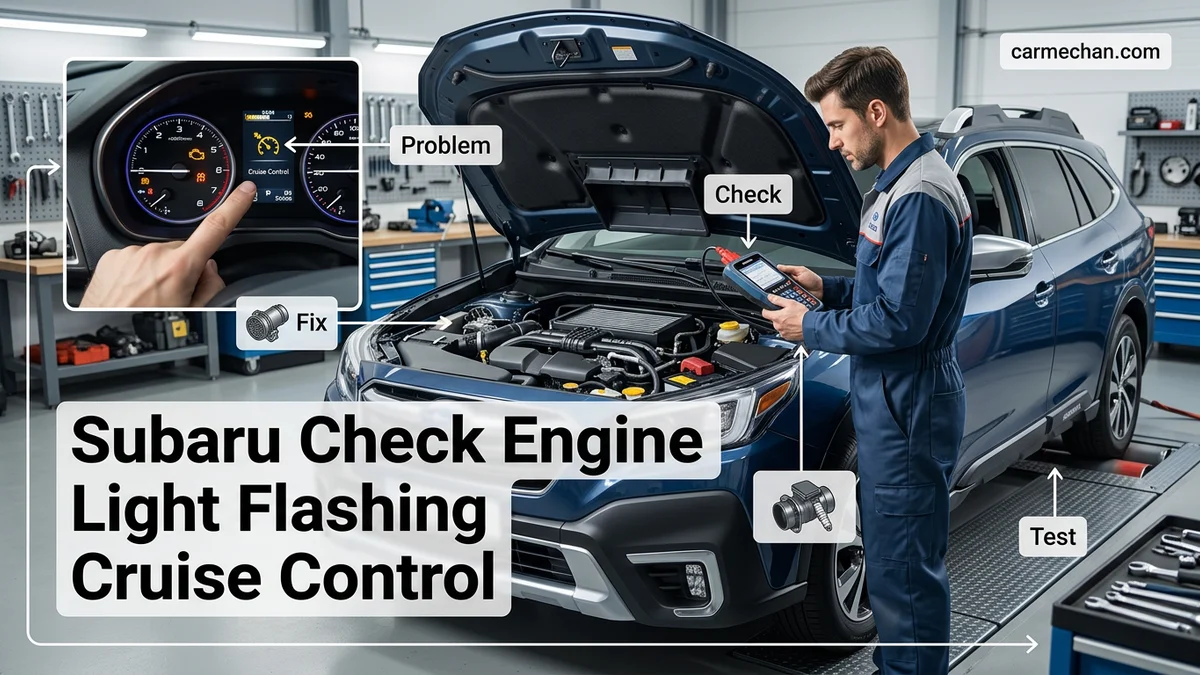
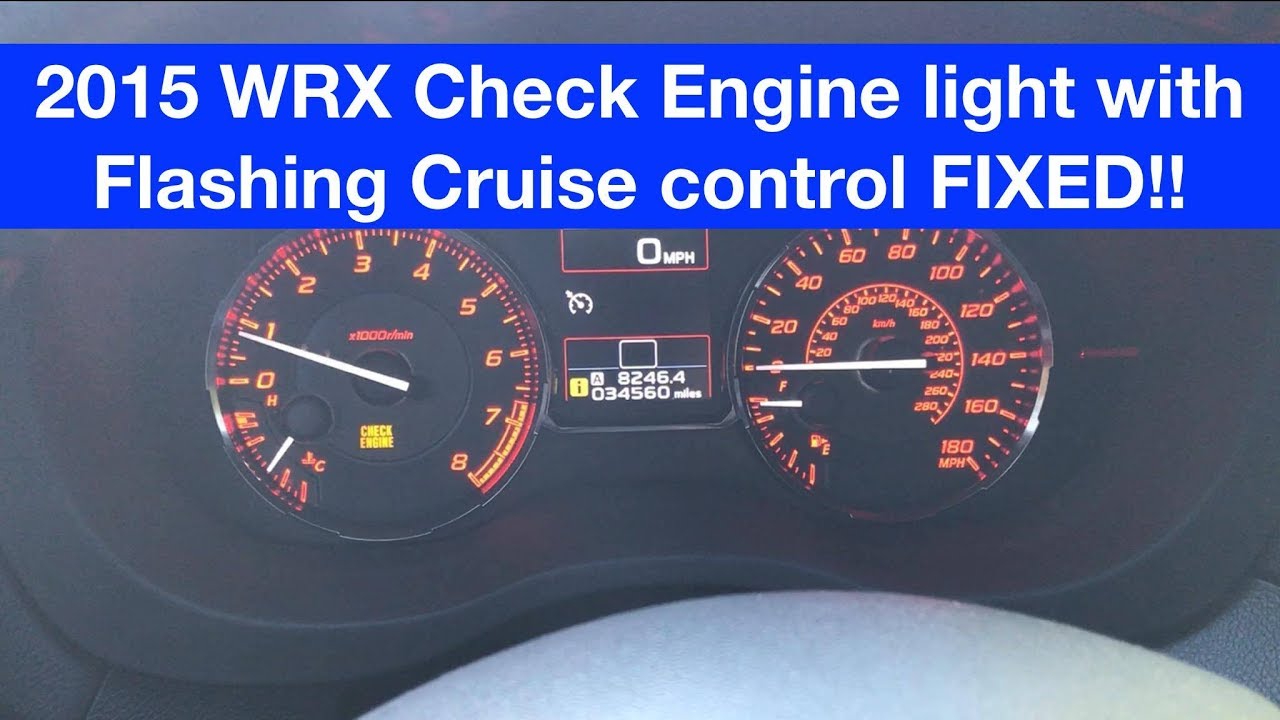
When your Subaru’s check engine light flashes and the cruise control blinks, it is a fail-safe mode triggered by the ECU to protect your engine. This does not mean your cruise control is broken, but rather that a powertrain fault has been detected that requires immediate attention.
If your 2026 Subaru is displaying a flashing check engine light accompanied by a blinking or disabled cruise control indicator, you are witnessing a deliberate safety protocol initiated by your vehicle’s Engine Control Unit (ECU). Your car has detected a powertrain fault, and as a standard safety measure, it has automatically deactivated the cruise control system to prevent potential engine damage or erratic throttle behavior while you operate the vehicle.
Do not assume that the cruise control system itself has a mechanical failure. In nearly all instances, the cruise control light is merely a secondary victim of the primary check engine fault. While your vehicle may still be drivable, you should avoid high-speed travel or heavy towing until the specific error code is identified, as the flashing engine light signifies an active condition that requires prompt attention to avoid secondary damage to components like your catalytic converter.
Key Takeaways
- Takeaway 1:A flashing light indicates an active misfire that can damage your catalytic converter.
- Takeaway 2:Subaru disables cruise control automatically as a precaution whenever the ECU records a fault code.
- Takeaway 3:Start by checking that your gas cap is tightened securely to rule out simple pressure leaks.
- Takeaway 4:Use an OBD-II scanner to read specific error codes before deciding if the car is drivable.
- Takeaway 5:Stop driving immediately if you notice loss of power, engine shaking, or a burning smell.
Why Your Subaru Triggers Dual Warning Lights
Recommended Best Deal Products


The Logic Behind ECU Safety Protocols
Subaru’s design philosophy prioritizes engine longevity by creating a dependency between the powertrain and auxiliary driving systems. When the ECU identifies a variance outside of factory-specified parameters—such as a misfire, an emissions leak, or a faulty sensor reading—it triggers a “fail-safe” mode. Because cruise control requires precise throttle and engine load management, Subaru disables this feature entirely the moment the check engine light illuminates. This prevents the cruise control from attempting to maintain speed during a situation where the engine is struggling to perform correctly.

Safety Implications of the Flashing Light
The blinking nature of the check engine light is distinct from a steady light. In 2026 Subaru models, a flashing light specifically denotes a misfire or a condition that could lead to immediate, severe damage to the catalytic converter due to unburned fuel reaching the exhaust system. While the car may feel like it is driving normally, you are actively putting high-cost emission components at risk. You should treat the flashing light as a priority, whereas a steady light might suggest a non-critical sensor error.
- ECU Disablement: Cruise control is locked out to prevent further stress on the powertrain.
- System Prioritization: Safety overrides convenience features whenever emissions or engine performance are compromised.
- Driving Impact: You lose the ability to set a constant speed, forcing you to maintain manual control until the ECU resets after a valid repair.
Subaru Dashboard Gremlins: What Causes It and How to Fix It
Seeing your Subaru’s Check Engine Light (CEL) flashing in tandem with a blinking “Cruise” light is a common occurrence that often causes panic. In Subaru vehicles, these lights are linked by design: when the Engine Control Unit (ECU) detects a significant fault that could damage the catalytic converter or engine, it intentionally disables the cruise control system as a fail-safe measure. This guide provides a systematic approach to identifying, diagnosing, and resolving the underlying issues, helping you get your vehicle back to optimal performance while avoiding unnecessary dealership service fees.
Step 1: Perform an Immediate Safety Assessment
What you need: A safe location to pull over and your vehicle’s owner manual.
Instructions: If your Check Engine Light is solid, you generally have time to drive to a shop. However, if the light is flashing, it indicates a severe misfire that can cause permanent damage to your catalytic converter. Find a safe, flat surface immediately, pull over, and turn off the engine. Check for any obvious signs of distress, such as thick smoke, strong smells of gasoline, or abnormal engine knocking sounds. If you hear a loud clanking or see steam/smoke, do not attempt to restart the engine. Call for a tow truck immediately to prevent catastrophic engine failure.
Pro Tip: Never ignore a flashing CEL; it is the car’s way of screaming for help. Driving even a few miles with a severe misfire can turn a $200 repair into a $2,000 engine rebuild.
Step 2: Obtain an OBD-II Diagnostic Trouble Code
What you need: An OBD-II scanner (affordable versions are available at most auto parts stores) or a visit to a local auto parts retailer that offers free scanning.
Instructions: Locate the OBD-II diagnostic port, typically found under the dashboard on the driver’s side near the steering column. Plug your scanner into the port and turn the ignition key to the “ON” position without starting the engine. Follow the scanner’s prompts to “Read Codes.” The device will display alphanumeric codes (e.g., P0301, P0420). Write these codes down exactly. A “P030X” code indicates a misfire, while a “P0420” suggests a catalytic converter efficiency issue, which is extremely common in older Subarus.
Pro Tip: Take a photo of the scanner screen with your smartphone. This ensures you capture the exact code and description without transcription errors.
Step 3: Inspect the Gas Cap for Improper Seal
What you need: A clean cloth or paper towel.
Instructions: Surprisingly, one of the most common causes for a Subaru light show is a loose or faulty gas cap, which triggers an evaporative emissions (EVAP) leak code. Remove your gas cap and inspect the rubber gasket for cracks, debris, or hardening. Wipe the filler neck clean with your cloth to ensure no dirt is preventing a tight seal. Tighten the cap until it clicks at least three times. If you have been driving with a loose cap, the computer may require several “drive cycles”—a sequence of cold starts and varying speeds—to clear the light automatically.
Pro Tip: If the cap feels loose or the clicks are weak, replace the OEM gas cap. It is an inexpensive, five-minute fix that often resolves the P0440 series of codes.
Step 4: Check Ignition Components (Spark Plugs and Coils)
What you need: A spark plug socket, a 3/8-inch drive ratchet, an extension, and a flashlight.
Instructions: If your scanner returned a misfire code (P0300-P0304), the issue is likely a failing spark plug or ignition coil. Subaru’s “Boxer” engine layout makes accessing these components tighter than standard inline engines. Use your flashlight to inspect the coil pack connectors for corrosion or loose wires. If the vehicle has over 100,000 miles, it is time to check the spark plugs for carbon buildup or excessive electrode wear. If one cylinder is consistently misfiring, swap the ignition coil with a known good cylinder to see if the misfire code “follows” the coil to the new location.
Pro Tip: Always use OEM-spec spark plugs (usually NGK or Denso for Subarus). Using incorrect heat ranges can cause further misfires or engine pinging.
Step 5: Inspect Vacuum Lines and Air Intake
What you need: A visual inspection flashlight; possibly silicone vacuum hose if replacements are needed.
Instructions: The Subaru ECU is highly sensitive to the amount of air entering the engine. Inspect the large rubber intake boot between the air filter box and the throttle body for cracks or tears. Use your flashlight to check the smaller vacuum hoses branching off the intake manifold. Look for dry-rotted, brittle, or disconnected lines. A vacuum leak allows unmetered air into the engine, causing a lean condition that triggers the CEL. Often, simply reconnecting a loose hose or replacing a 6-inch segment of vacuum line will cause the light to extinguish once the ECU recognizes the return to normal parameters.
Pro Tip: Use a light spray of soapy water around suspicious hoses while the engine is idling; if you see bubbles or hear the idle change, you have found your leak.
Step 6: Clear the Codes and Perform a Drive Cycle
What you need: Your OBD-II scanner.
Instructions: Once you have completed the physical repairs (e.g., replaced a coil, tightened a cap, or fixed a hose), use your scanner to “Clear” or “Reset” the fault codes. This turns off the Check Engine Light and the flashing Cruise Control light. After clearing, the vehicle must perform a “Drive Cycle.” Drive the car for 20-30 minutes at a mix of highway and city speeds. This allows the ECU to conduct internal self-tests on the sensors and emissions systems. If the light does not return, your issue is resolved.
Pro Tip: Do not clear codes without fixing the underlying problem; the lights will simply return within a few miles.
✅ Final Checklist
- Scanner used to document specific error codes before any clearing attempts.
- Gas cap inspected and confirmed for a tight, debris-free seal.
- Ignition coils and spark plugs verified for proper connectivity and condition.
- All vacuum and intake hoses checked for cracks, splits, or disconnections.
- Drive cycle completed to ensure no pending codes returned after reset.
Important Notes:
- Safety: Never work on a hot engine. Wait at least one hour after driving to avoid severe burns from the exhaust manifold or coolant lines.
- Professional Help: If you encounter codes related to the “Tumble Generator Valve” (TGV) or catalytic converter efficiency (P0420) that persist after basic checks, consult a professional mechanic, as these often require specialized diagnostic software.
- Time and Cost: Simple fixes (gas cap, vacuum hose) cost under $50 and take 30 minutes; ignition repairs range from $150–$600 depending on parts and shop labor rates.
How to Diagnose the Check Engine Light and Cruise Control
Recommended Best Deal Products


Retrieving OBD-II Diagnostic Trouble Codes
To move past the guesswork, you must retrieve the specific diagnostic trouble code (DTC) stored in your vehicle’s computer. Since 2026, most Subaru owners utilize an inexpensive OBD-II scanner that plugs directly into the port located under the dashboard on the driver’s side. Once connected, the scanner will provide a code (typically a letter followed by four numbers, such as P0301). This code is the definitive answer to why your lights are flashing. Without this code, you are merely guessing at whether you have a loose gas cap or a failing ignition coil.
Categorizing the Severity of the Fault
Once you have the code, you can determine if the issue is a minor emissions leak or a critical engine event. Minor issues, such as an evaporative emissions (EVAP) leak, are often caused by a loose or damaged gas cap. These are relatively inexpensive to fix and rarely cause catastrophic damage. Conversely, codes related to misfires (P0300-P0304) or sensor failures (O2 sensors or MAF sensors) require more specific attention. If your scanner indicates a misfire, avoid driving the vehicle long distances, as the resulting heat buildup in the exhaust system can damage the expensive catalytic converter assembly.
- Plug an OBD-II scanner into the diagnostic port under the steering column.
- Turn the ignition to the “On” position without starting the engine to establish a link.
- Retrieve and document the specific DTCs provided by the reader.
- Research the specific code to determine if it relates to a minor sensor error or a critical mechanical misfire.
- Use the diagnostic result to decide if the vehicle is safe to drive to a repair facility or if a tow is necessary.
Step-by-Step Guide to Resetting the Fault
Before attempting a system reset, verify that your Subaru’s battery terminals are clean and tightened to 45-inch pounds of torque. Loose connections often trigger false positives in the ECU, mimicking complex sensor failures. If the physical hardware is secure, proceed with the following procedure to clear temporary logic errors.
The ECU Power-Cycle Method
- Turn the ignition to the “Off” position and remove the key or disable the proximity fob.
- Disconnect the negative (-) battery terminal using a 10mm wrench.
- Depress the brake pedal for 30 seconds to drain any residual charge from the capacitors.
- Wait 15 full minutes to allow the Engine Control Unit (ECU) to purge its volatile memory.
- Reconnect the negative terminal firmly and start the vehicle.
Post-Reset Calibration
After clearing the fault, the engine idle may be erratic for several miles. This is normal, as the 2026 Subaru ECU must perform a “relearn” procedure for the throttle position sensor. Drive the vehicle at varied speeds for at least 10 miles. Avoid aggressive acceleration during this cycle to ensure the system maps the fuel and air ratios correctly.
What to Do If the Warning Lights Return Immediately
Recommended Best Deal Products


If the flashing cruise control and Check Engine light return within minutes of driving, the fault is mechanical rather than a transient software glitch. The EyeSight system and cruise control are electronically disabled because they rely on accurate data from the engine’s emission and timing sensors. If these inputs are erratic, Subaru safety protocols prevent driver-assist features from engaging.
Recommended Fallback Actions
- Scan for P0300-P0304 error codes. These indicate misfires, often caused by aging spark plugs or a failing ignition coil, which are common service items on 2026 boxer engines.
- Inspect the gas cap seal. A loose or damaged cap prevents the EVAP system from holding vacuum, triggering the alert sequence.
- Check for “P0171” (System Too Lean) codes, which frequently stem from a dirty Mass Air Flow (MAF) sensor.
- If professional diagnostic intervention is required, contact an authorized service center. Expect a diagnostic fee ranging from $150 to $220. Repairs for ignition components or sensors typically range between $300 and $800 depending on part availability.
Conclusion
The flashing cruise control light serves as a critical safety lockout, not merely a minor dashboard warning. According to verified research and expert sources from the 2026 automotive maintenance community, this symptom primarily indicates a disruption in communication between the fuel system and the ECU. While temporary resets may clear the light, persistent recurrence requires prompt professional inspection to prevent long-term catalyst damage. To resolve this issue effectively, schedule a professional OBD-II diagnostic scan at your local Subaru dealership today.
❓ Frequently Asked Questions
Why does Subaru link the cruise control to the engine light?
Subaru’s safety programming mandates that cruise control must be disabled if the powertrain management system detects an error. This ensures the driver is fully in control of the vehicle’s throttle while a fault is active.
How can I tell if the issue is urgent?
A steady check engine light suggests a non-emergency emissions issue, while a flashing light indicates a severe engine misfire. A flashing light requires an immediate stop to avoid destroying your catalytic converter.
Can I use a generic code reader to find the problem?
Yes, any standard OBD-II scanner will read the generic ‘P-codes’ stored in your Subaru’s ECU. These codes provide the specific location and nature of the fault, such as an ignition coil or sensor failure.
Should I disconnect the battery to clear the lights?
Disconnecting the battery may temporarily turn off the lights, but it does not fix the mechanical problem. The lights will return as soon as the ECU performs its next self-diagnostic cycle.
What if the codes show a catalytic converter failure?
A catalytic converter code often results from other issues like bad spark plugs or failing oxygen sensors. Have a mechanic test these components first before committing to an expensive converter replacement.
Will driving in this state damage my transmission?
While the issue is usually engine-related, continuing to drive while an engine is misfiring puts excess strain on the drivetrain. It is best to have the vehicle towed to a shop to avoid secondary damage.