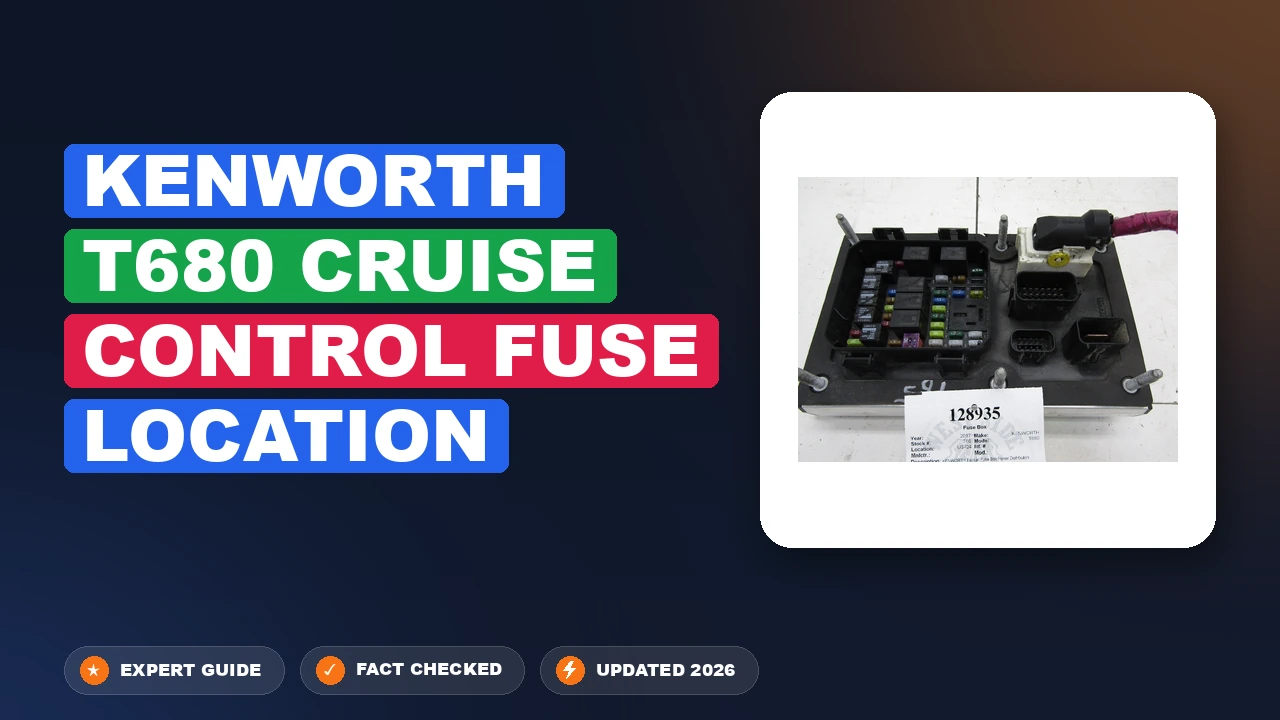
Kenworth T680 Cruise Control Fuse Location: Mapped Out
Is your cruise control suddenly dead while you are mid-haul? The Kenworth T680 has a complex electrical architecture, and finding the cruise control fuse is not as simple as checking a single label. This guide will show you exactly where to look, how to interpret your truck’s specific fuse layout, and how to verify if it is really a fuse issue or something more serious.
Why Your Kenworth T680 Cruise Control Fuse Location Matters


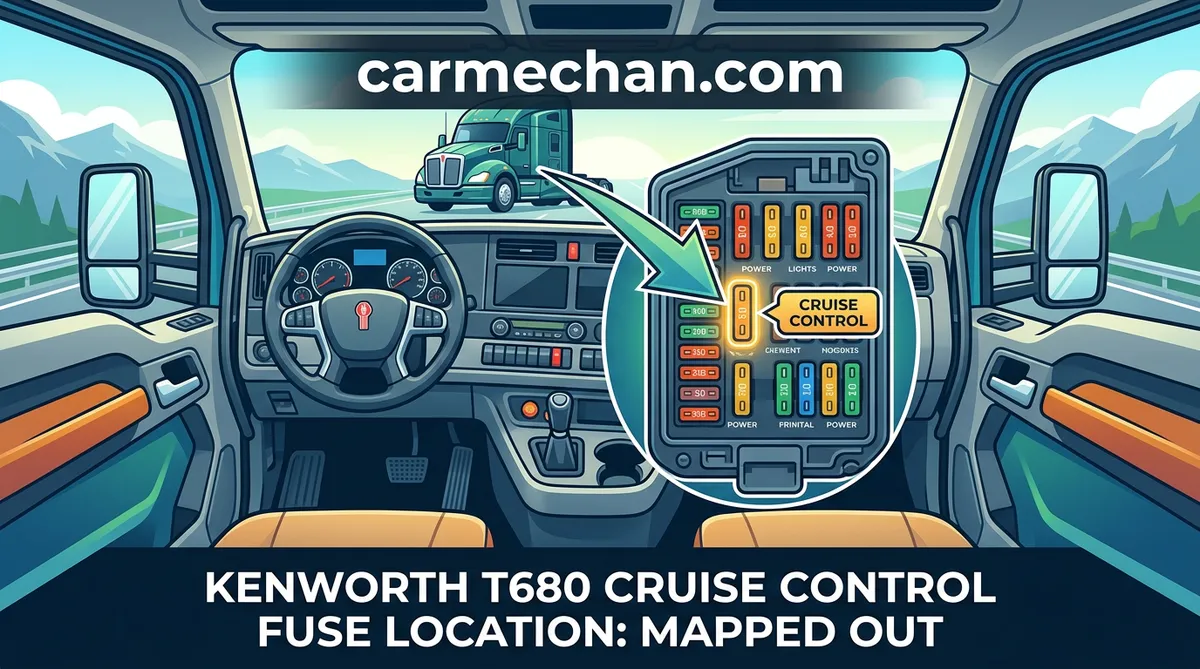
📤 Share Image
Modern heavy-duty trucks have evolved significantly from the days of simple, independent circuits. The Kenworth T680 utilizes advanced multiplexing—a method where multiple electrical signals travel over the same set of wires via a CAN (Controller Area Network) bus. Understanding this architecture is vital because your cruise control function is no longer a standalone system; it is a software-driven feature that depends on inputs from various vehicle components.
Understanding Multiplexing and the CAN Bus
In a T680, when you engage the cruise control switch, you aren’t just sending power to a solenoid. You are sending a digital signal to the vehicle’s Engine Control Module (ECM) and the Cab Control Module. If any sensor within this loop—such as the brake pressure switch or the clutch position sensor—reports an “active” status to the CAN bus, the system will inhibit cruise control. This is why a search for a specific “cruise control fuse” often leads to frustration; the circuit is frequently bundled with engine management or cab auxiliary power.

The Danger of Improper Fuse Replacements
A common pitfall for operators is replacing a blown fuse with a higher amperage rating or a generic bridge. Because the T680’s electrical system is highly sensitive, improper fuse replacement can lead to catastrophic damage to the Power Distribution Center (PDC) or the ECU itself. If a fuse blows, it is almost always a symptom of an electrical short, often caused by vibration-worn wiring or a faulty bulb in the brake light circuit, which shares a logic path with the cruise control inhibit signal.
Never install a fuse with a higher amperage than what is specified on the PDC cover decal. Doing so can cause wire insulation to melt, potentially leading to a vehicle fire.

How to Access the Kenworth T680 Cruise Control Fuse Location


Locating the correct power distribution hub requires precision, as Kenworth updates its electrical schematics regularly. Whether you are driving a 2018 model or a 2024 next-gen T680, the primary power distribution center is designed to be accessible but secure.
📋
Accessing the Electrical Panel


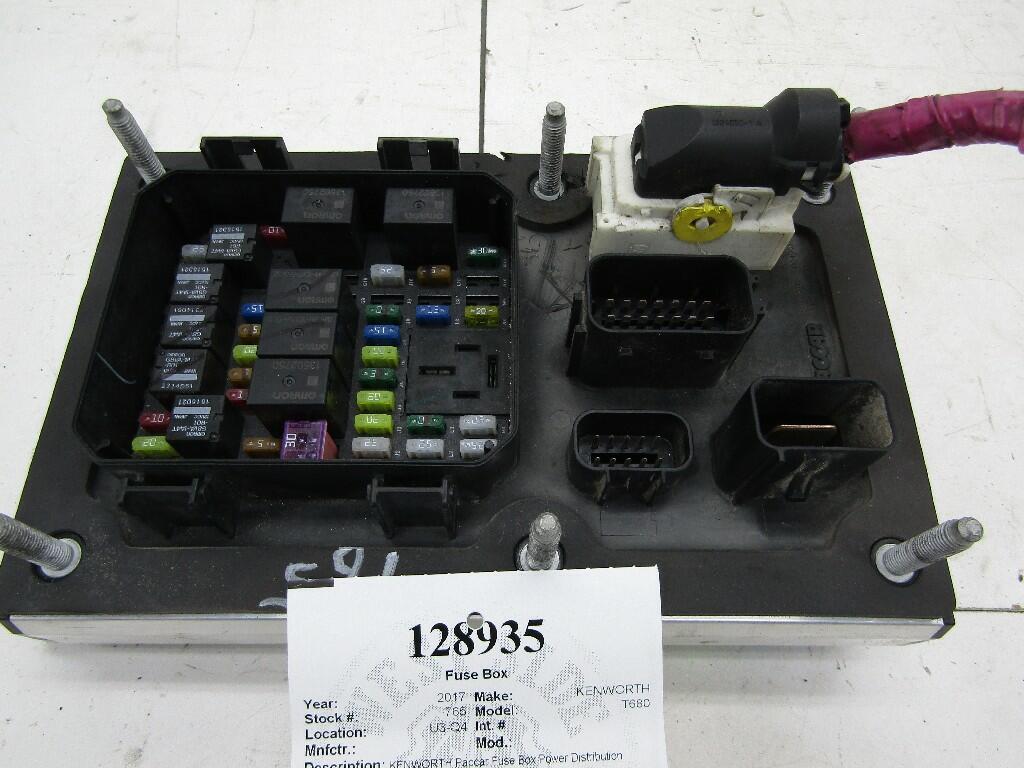
The main Power Distribution Center (PDC) for the cab is located behind the glove box area or the lower passenger side dash panel. Depress the latches to swing the door forward. You should hear a distinct click when the door releases.
Every Kenworth T680 features a unique decal inside the PDC cover. Look for labels related to “CHASSIS,” “ENG ECU,” or “AUX.” Cross-reference the layout on the decal with your specific truck’s build sheet, which is usually located in the glove box or the owner’s portfolio.
Diagnostic Tools for Heavy-Duty Systems
To perform an effective inspection, you need more than just a visual check. Ensure you have the following tools available:
- Digital Multimeter: Essential for checking voltage at the fuse terminals.
- Fuse Puller Tool: Prevents damage to the plastic housing while removing tight fuses.
- LED Flashlight: Necessary for spotting signs of “arcing” or burnt plastic around the fuse pins.
Common Kenworth T680 Cruise Control Troubleshooting
Before you assume the fuse is the culprit, perform a basic diagnostic scan of the system. In the professional trucking community, we often find that the fuse is healthy, but the cruise control is inhibited by a simple physical switch failure.
Testing the Brake and Clutch Safety Switches
The ECM is programmed to cut cruise control immediately if it detects the brake pedal or the clutch pedal has been touched. If the switch near the pedal is stuck or the return spring is weak, the ECM thinks you are constantly resting your foot on the pedal. Use your multimeter to verify that the switch circuit opens and closes as intended when the pedal is physically moved.
Reading ECU Inputs and Loom Failures
If you possess a diagnostic tool compatible with your PACCAR MX engine, connect it to the J1939 diagnostic port. Check for fault codes. Common codes related to cruise control failure often point to “Signal Invalid” or “Inhibit Request.” If you see these, the issue is almost certainly wiring-related rather than a blown fuse. Specifically, look for chafing where the wiring harness passes through the firewall or near the transmission bell housing—a frequent site of vibration-induced wear.
By The Numbers
Cases where “fuse issues” are actually sensor/switch faults.
Standard operating voltage for most T680 ECU signal circuits.
Ensuring Electrical System Longevity in Your T680
Preventing electrical issues is far more cost-effective than diagnosing them on the side of the road. By maintaining your electrical centers and wire harnesses, you ensure the reliability of your truck.
- Moisture Management: Use dielectric grease on exposed electrical terminals to prevent corrosion, which creates resistance and can cause intermittent fuse blowing.
- Harness Inspection: During every major service, check the harness near high-vibration areas. Use zip-tie anchors to keep wires from rubbing against the chassis.
- Factory Connections: Never splice wires unless absolutely necessary. Keep connections factory-fresh to avoid the “Christmas tree effect” on your dashboard, where multiple systems report faults simultaneously due to ground noise.
Regular Inspections
Scheduling a routine check of your PDC and surrounding looms prevents downtime and ensures your truck remains road-ready.
If your cruise control remains non-responsive after confirming that no fuses are blown and all switches are operational, the issue may lie within the ECM software or a failed CAN bus node. In these instances, relying on a trusted local dealership is your best course of action. They have access to the proprietary software needed to “ping” individual modules and locate the break in communication.
To recap: cruise control is a complex, networked function. Always check for stuck brake or clutch switches before blaming the fuse box. When accessing your passenger side PDC, prioritize the manufacturer’s decal as your map, and never bridge a fuse beyond factory specifications. Keep your truck manual accessible, and for recurring electrical gremlins, reach out to your serving Kenworth dealer for a comprehensive diagnostic scan to keep you moving efficiently across the community of professional drivers.
Kenworth t680 Cruise Control Fuse Location: Frequently Asked Questions
Where is the fuse box located on a Kenworth T680?
The Kenworth T680 features two primary fuse locations. The main Power Distribution Module (PDM) is generally housed behind a removable panel on the passenger side dash. Additionally, a secondary, smaller fuse and relay box is often accessible from outside the cab, located on the firewall beneath the hood. Refer to the identification plate on your specific cover for the exact layout.
Why is my cruise control not engaging?
If your cruise control isn’t engaging, it is rarely just a blown fuse. It is often caused by an active engine fault, a malfunctioning clutch or brake pedal position sensor, or a communication error within the CAN bus. If the dash indicator fails to illuminate at all, start with the fuse; if it illuminates but won’t set, inspect your brake light and clutch switches.
Does the cruise control have a dedicated fuse or is it part of a larger circuit?
In modern Kenworth T680 models, cruise control is rarely governed by a single, isolated ‘cruise control’ fuse. Instead, it is typically integrated into the ‘Engine/Chassis ECU’ or ‘Cab Power’ circuit. Because the system relies on the Engine Control Module (ECM) for logic, the power supplied to the cruise system is usually shared with other critical engine management components.
What do the icons on the fuse panel cover mean?
The icons on your T680 fuse panel cover are standardized symbols representing the components served by that specific circuit. For example, a small engine block icon usually denotes ECM power, while an icon depicting a gear or truck silhouette may refer to transmission or chassis modules. Always cross-reference these icons with the provided owner’s manual or the specific electrical schematic for your chassis build.
Can I replace a blown fuse with a higher amperage one?
Never replace a blown fuse with one of a higher amperage rating. Fuses are calibrated specifically to protect the gauge of the wiring in that circuit. Installing a higher-rated fuse can cause wires to overheat, melt, or lead to an electrical fire before the fuse blows. Always replace a fuse with an identical amperage rating as specified on the panel map.