2022 Jeep Gladiator TPMS Reset Button Location: Solved
Seeing a tire pressure warning light on your dashboard is stressful, but don’t spend hours searching for a hidden button. Many owners search for a ‘reset’ switch that simply does not exist on this model. In this guide, we reveal how the 2022 Jeep Gladiator’s auto-learn system functions and the exact steps to clear the light correctly.


Understanding the 2022 Jeep Gladiator TPMS Reset Button Location Myth
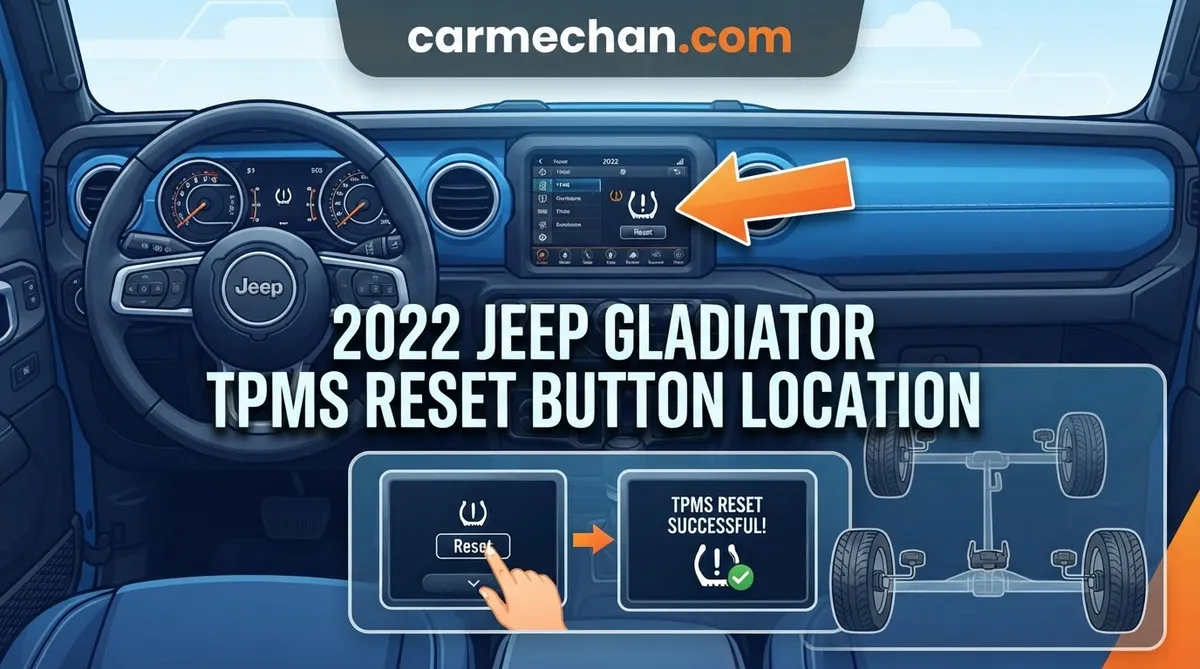
📤 Share Image

Why You Cannot Find a Physical Reset Switch
If you have spent time crawling under your dashboard or scouring the glove box for a reset button, you are not alone. Much of the confusion stems from older vehicle generations or aftermarket tire pressure monitoring systems that required manual interaction to initialize a new baseline. In the 2022 Jeep Gladiator, the system is fully integrated into the vehicle’s electrical architecture. There is no physical switch because the system is designed to be autonomous, constantly scanning for data from the valve stem sensors.
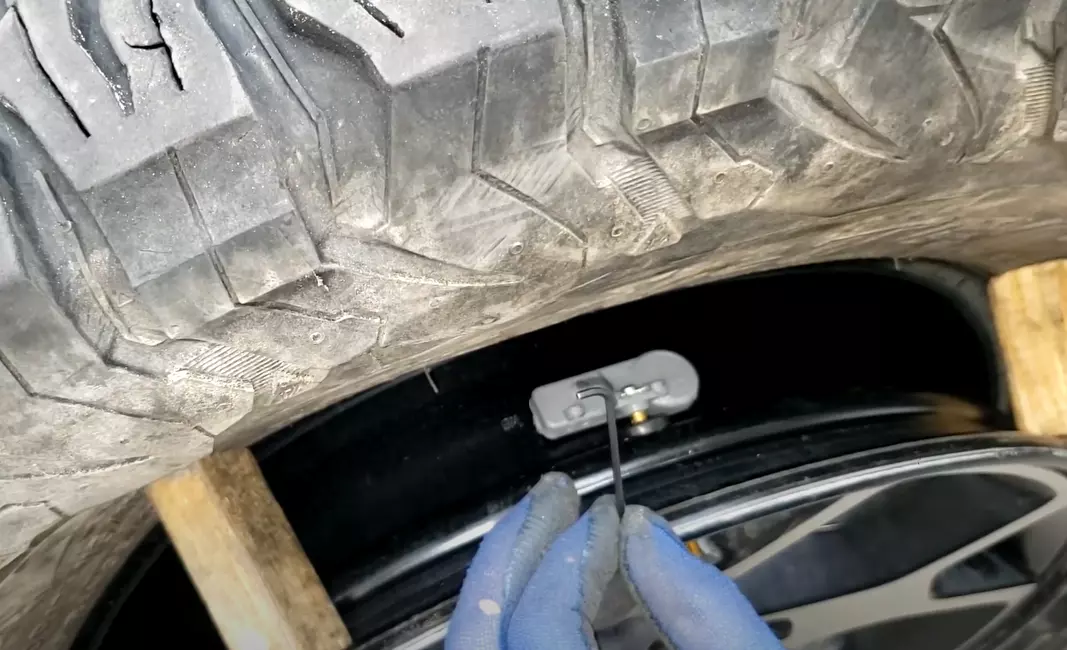
How the Body Control Module Interprets Tire Data
The Body Control Module (BCM) acts as the central brain for your TPMS. It monitors the wireless signals sent from each tire sensor. When the pressure within a tire deviates from the programmed parameters, the BCM triggers the warning light on your instrument cluster. Differentiating between a simple low-pressure warning and a system fault is critical: a solid light almost always signifies low tire pressure, while a flashing light indicates a hardware malfunction, such as a dead sensor battery or a communication break between the sensor and the receiver.
How to Initialize the 2022 Jeep Gladiator TPMS Auto-Learn Process
📋
Step-by-Step Guide
Before attempting to clear the light, use an accurate manual gauge to check all four tires. Inflate them to the exact PSI specified on the driver’s side B-pillar placard. Do not rely on the maximum PSI printed on the tire sidewall; the door placard is the only factory-authorized reference point for your specific vehicle configuration.
Once the pressure is corrected, you must initiate the auto-learn process. Drive the Jeep for at least 10–20 minutes at a consistent speed, ideally above 20 mph. This sustained movement allows the sensors to rotate and send signals to the BCM, effectively performing a reboot of the sensor-to-receiver handshake.
During your drive, watch the instrument cluster display. If the sensors are functional, the system will automatically update the pressure readings, and the warning light will extinguish once the BCM confirms all tires are within the acceptable range.
Common Troubleshooting Issues for the TPMS System
If your warning light persists after the drive cycle, you may be dealing with a hardware issue rather than a simple pressure drop. Use the following points to diagnose your next steps:
- Identifying Dead Sensor Batteries: If the warning light blinks for roughly 60 seconds upon engine start-up and then turns solid, this is the classic indicator of a failed sensor battery or an internal electronics failure.
- Using an OBD-II Scanner: Professional-grade OBD-II diagnostic scanners can read individual Sensor IDs and signal strength. This allows you to pinpoint exactly which wheel has the faulty sensor without trial-and-error replacements.
- Seek Professional Assistance: If you lack the tools to verify individual sensor connectivity, visit a tire shop. They can use specialized frequency tools to “wake up” sensors that have entered a low-power mode or identify physically damaged valve stems.
Avoid the common pitfall of resetting the system without first verifying actual pressure with an accurate manual gauge. Trusting an incorrect TPMS reading could lead to driving on significantly under-inflated tires, which compromises your handling and increases the risk of a blowout.
Maintaining Data for Optimal Performance
Why Sidewall PSI Labels Are Misleading


The maximum PSI listed on your tire sidewall represents the highest pressure the tire can safely contain under its maximum rated load. It is not the recommended operating pressure for your Jeep Gladiator. Always adhere to the factory placard on the door jamb to ensure a safe, comfortable ride and even tread wear.
Tire Rotation and System Calibration
Rotating your tires is essential for longevity, and the good news is that the 2022 Jeep Gladiator system is intelligent enough to detect the new position of each sensor. Following a rotation, the vehicle will require another short drive cycle to recalibrate and display the correct pressure for each specific corner of the vehicle. This process ensures your backup data remains accurate even after moving tires to different axle positions.
By The Numbers
Min. Drive Time
Trigger Speed
If you frequently off-road and lower your tire pressure, be aware that your TPMS will trigger an alert. Once you return to street pressure, the fresh start of the system occurs automatically once you exceed 20 mph for a sustained period, provided your sensors are healthy.
Final Considerations for Your Jeep Gladiator
The 2022 Jeep Gladiator uses an automatic TPMS reset cycle, not a physical button. By verifying your cold tire pressure against the door jamb placard—not the tire sidewall—and driving for 10–20 minutes over 20 mph, you allow the sensors to initialize and update the system automatically. Remember, a flashing light usually indicates a sensor hardware failure, not a simple pressure issue. Check your tire pressures today with a manual gauge to ensure your sensors are providing accurate, safe data for your next off-road adventure.
2022 Jeep Gladiator Tpms Reset Button Location: Frequently Asked Questions
Where is the reset button for the TPMS?
There is no physical reset button for the TPMS in a 2022 Jeep Gladiator. The system is fully automated. Jeep designed the vehicle to detect tire pressure changes and automatically update the dashboard display without any user intervention. If you are looking for a hidden button under the dash or inside the glovebox, you will not find one, as these were common on older vehicle generations.
Why is my tire pressure light still on after inflating my tires?
The light often remains on because the system requires a ‘drive cycle’ to register the new pressure data. After inflating your tires to the recommended PSI, the sensors need to transmit updated information to the vehicle’s computer. Ensure you have driven for at least 15-20 minutes at speeds over 15 mph. If the light remains on, verify your gauge accuracy or look for a slow leak.
Do I need a tool to reset my Jeep sensors?
For routine pressure adjustments, you do not need any tools other than an accurate tire pressure gauge. However, if you have replaced a sensor, a technician will use a specialized TPMS diagnostic tool to ‘relearn’ or program the new sensor’s unique ID code to your Jeep’s computer. This ensures the vehicle correctly identifies which sensor belongs to which wheel position during your next rotation.
How long do I need to drive to reset the TPMS light?


Generally, you need to drive the vehicle for 10 to 20 minutes at speeds consistently above 15 mph to trigger a reset. This motion allows the wheel-mounted sensors to wake up from their ‘sleep mode,’ measure the pressure, and transmit the data to the receiver. Once the receiver confirms all four tires are within the factory-specified pressure range, the warning light will automatically extinguish on your dashboard.
Can aftermarket wheels interfere with TPMS calibration?
Yes, aftermarket wheels can cause issues if the TPMS sensors are not installed correctly or if the wheel material blocks the radio frequency signal. Additionally, if you change to non-standard tire sizes, the vehicle’s computer may need to be recalibrated using a Tazer Mini or similar OBDII programmer to adjust the pressure threshold so the TPMS doesn’t trigger falsely due to the difference in tire volume and pressure requirements.