2018 Nissan Rogue Fuse Box Diagram: Locations and Troubleshooting Guide 2026
Last Updated on September 1, 2026 by Ryan
⚡ Key Takeaways
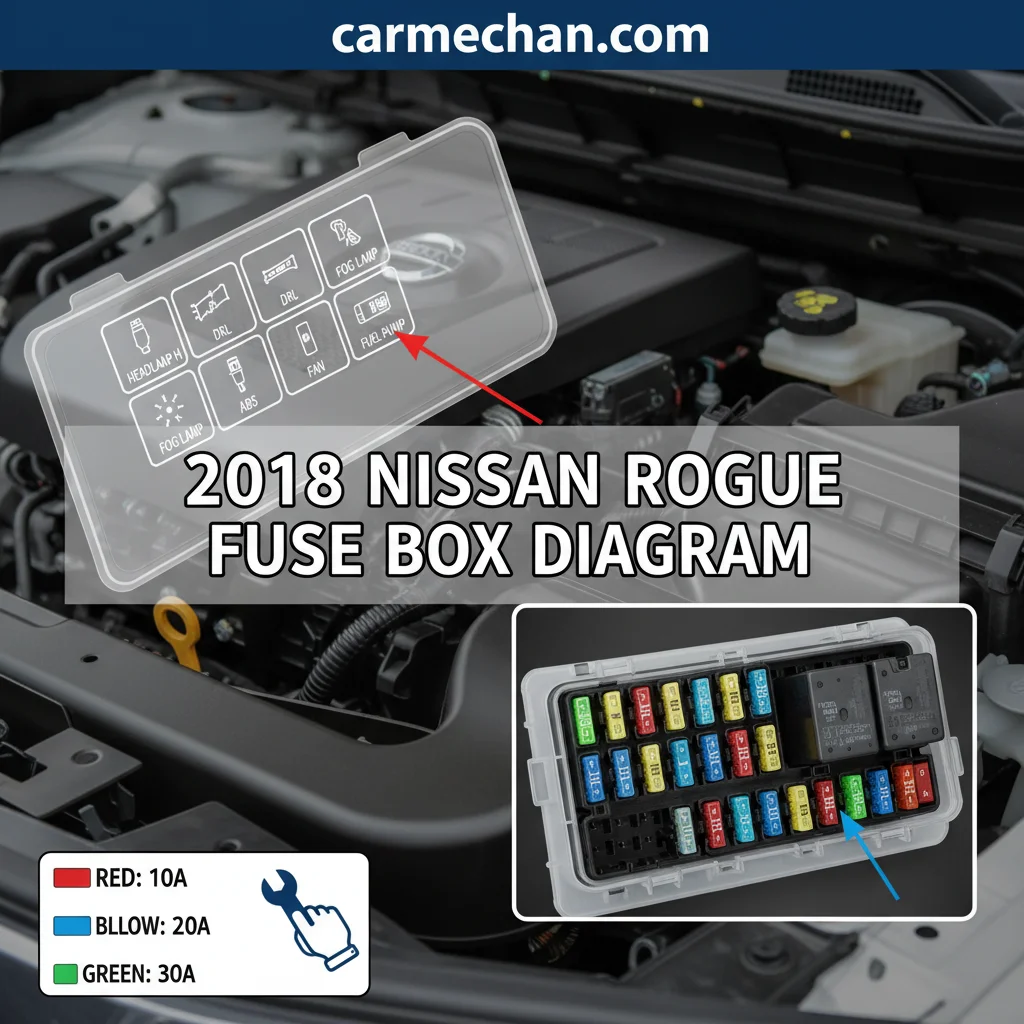
- The 2018 Nissan Rogue typically has at least two main fuse box locations.
- A blown fuse often has a visible break in the metal wire connecting the two prongs.
- To replace a fuse, you’ll primarily need a fuse puller (often included in the fuse box lid or with the owner’s manual) and appropriate replacement fuses of the correct amperage and type.
- No, absolutely not.
- Clear, high-resolution diagrams for all 2018 Nissan Rogue fuse boxes (engine compartment, passenger cabin).
Understanding your 2018 Nissan Rogue fuse box diagram is crucial for effective electrical troubleshooting. In this guide, we provide a comprehensive overview of fuse locations, their functions, and a precise procedural approach to diagnose and resolve common electrical issues safely. We prioritize a safety-first methodology to empower you, the DIY car owner or mechanic, with the knowledge to address minor electrical faults while knowing when to seek professional assistance.
On our automotive expertise platform, Carmechan, we aim to deliver clear, actionable guidance.
Scope of This Guide


This guide offers a detailed, step-by-step methodology for diagnosing and resolving common electrical issues related to blown fuses in a 2018 Nissan Rogue. We aim to equip you with the precise knowledge to locate fuse boxes, identify fuse functions, and safely replace faulty fuses.
Specifically, this guide covers:
- Identifying the primary fuse box locations in your 2018 Nissan Rogue.
- Interpreting fuse box diagrams to understand individual fuse functions.
- Performing a safe and effective fuse inspection and replacement procedure.
- Recognizing critical safety protocols during automotive electrical work.
This guide explicitly does NOT cover complex wiring harness diagnostics, repair of short circuits beyond fuse replacement, advanced electronic control unit (ECU) troubleshooting, or issues requiring specialized diagnostic equipment. If your symptoms fall outside the scope of a simple fuse issue, further professional evaluation is necessary.
Who Needs This Guide


This guide is specifically engineered for 2018 Nissan Rogue owners and DIY mechanics who are experiencing a sudden loss of function in a specific electrical component, such as headlights, wipers, power windows, or radio, and suspect a blown fuse. It is a prerequisite that you possess basic mechanical aptitude, understand fundamental electrical safety, and have access to appropriate tools like a fuse puller and a multimeter.
If you lack experience with automotive electrical systems or are uncomfortable working with vehicle components, we recommend consulting a certified automotive technician. We provide guidance assuming a foundation in safe vehicle maintenance practices.
Core Fuse Troubleshooting Protocol


Adhering to a strict protocol is paramount when troubleshooting automotive electrical systems to ensure safety and accurate diagnosis. Follow these steps precisely to address potential fuse-related issues in your 2018 Nissan Rogue.
-
Step 1: Identify the Affected System. Verify which electrical component or system is not functioning (e.g., radio, power outlet, specific light). If multiple unrelated systems are down, stop and escalate to a professional as this indicates a more complex electrical issue or a main fuse failure.
-
Step 2: Gather Essential Tools and Safety Gear. Obtain a fuse puller, spare fuses of the correct amperage, a flashlight or proper illumination, safety glasses, and gloves. If any tools are missing, acquire them before proceeding.
-
Step 3: Disconnect the Battery. Locate your vehicle’s battery. Disconnect the negative (black) battery terminal first to prevent accidental shorts or injury. Verify the terminal is completely disengaged and secured away from the battery post. If you are unsure how to safely disconnect the battery, stop and seek professional assistance Always disconnect the negative battery terminal before servicing any electrical component to prevent accidental shorts and electric shock, as recommended by ASE Standard S1: Electrical/Electronic Systems Safety.
(Source: ase.com, ASE S1 Safety Guidelines).
Always disconnect the negative terminal FIRST.
-
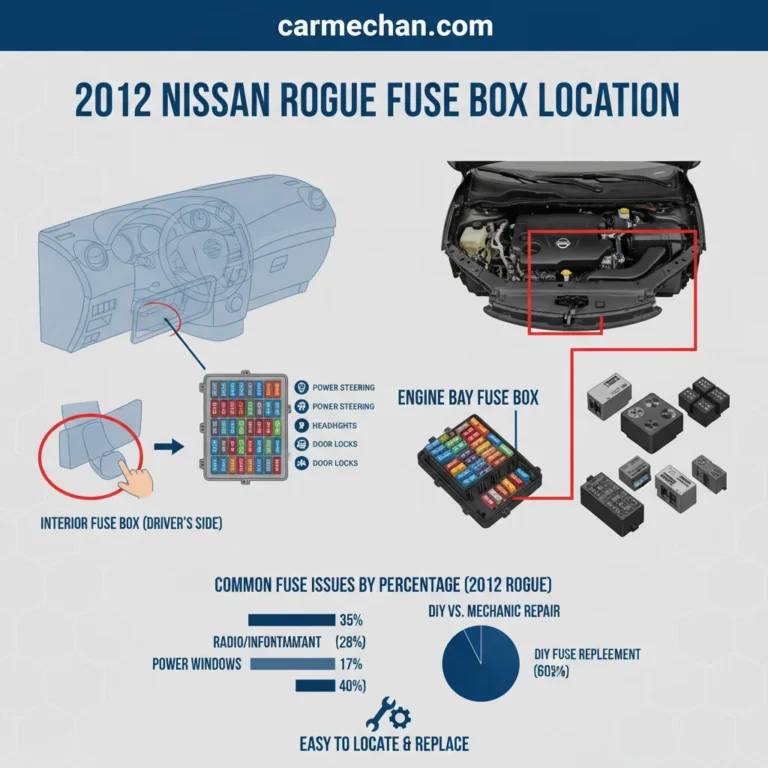
Step 4: Locate the Fuse Boxes. The 2018 Nissan Rogue typically has three main fuse box locations: under the hood (engine compartment), inside the passenger cabin (usually on the driver’s side dash, accessible when the door is open), and potentially a third in the cargo area or under the rear seat for specific accessories For detailed information on fuse box locations, circuit descriptions, and fuse amperage ratings, refer to the ‘Maintenance and Do-It-Yourself’ section, specifically pages 8-25 to 8-30, in the 2018 Nissan Rogue Owner’s Manual.
(Source: nissan-cdn.com, 2018 Nissan Rogue Owner’s Manual). Consult your owner’s manual for exact locations and diagrams.
Verify you have found the correct fuse box corresponding to the affected system.
-
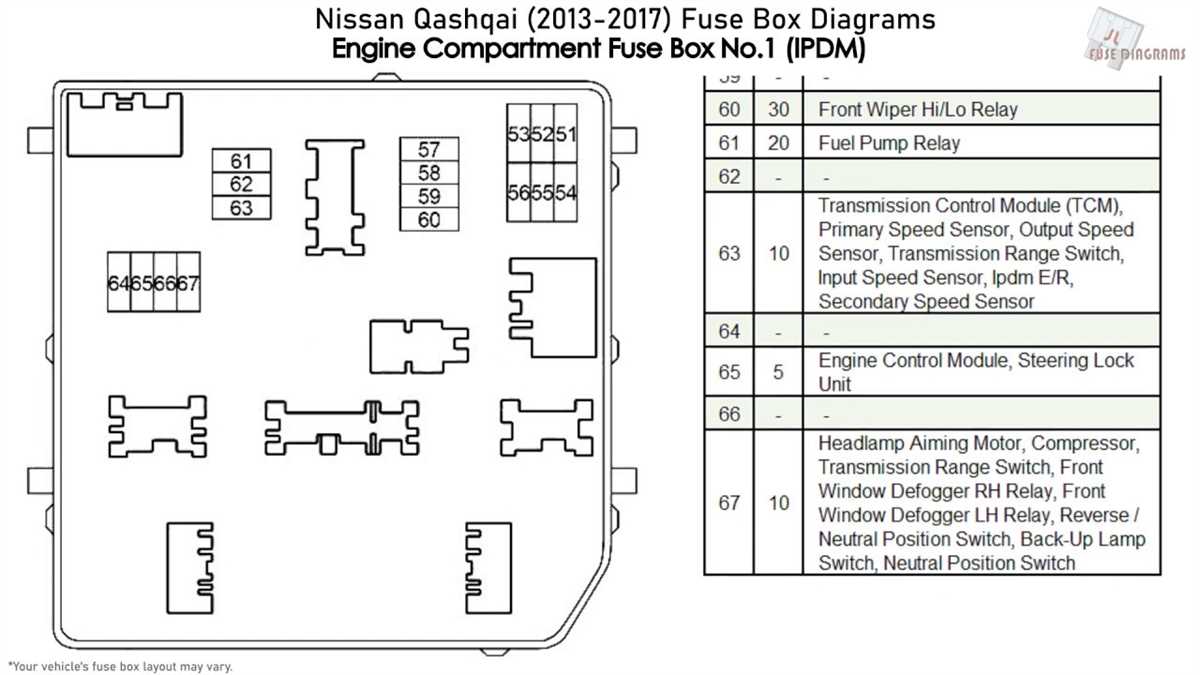
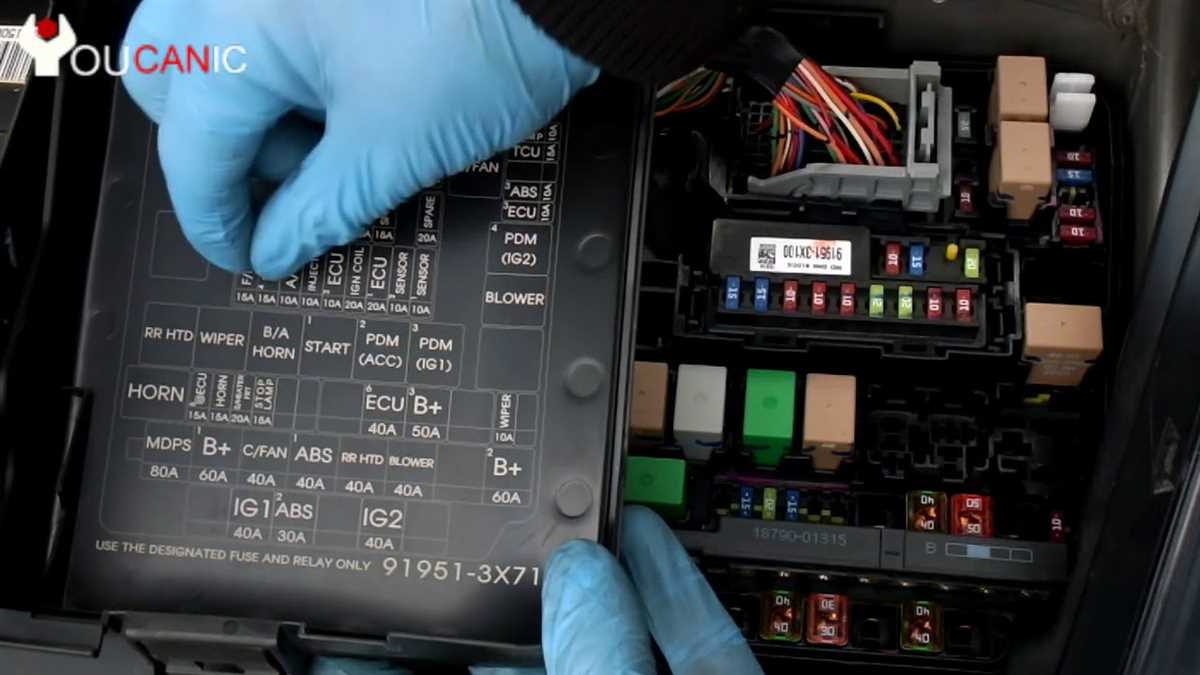
Step 5: Identify the Suspect Fuse. Once the correct fuse box is located, use the fuse box diagram (usually affixed to the inside of the fuse box cover or detailed in your owner’s manual) to pinpoint the fuse associated with the non-functioning component. Verify the amperage rating (e.g., 10A, 20A) of the specified fuse.
If the diagram is missing or illegible, refer to your owner’s manual for the 2018 Nissan Rogue fuse box diagram.
-
Step 6: Inspect the Suspect Fuse. Use the fuse puller to carefully remove the suspect fuse. Hold it up to a light source. Verify if the small wire inside the fuse is broken or melted. A broken wire indicates a blown fuse. If the wire is intact, the fuse is likely not the cause of the problem.
If you cannot visually determine, use a multimeter set to continuity mode to test the fuse. A “no continuity” reading confirms it’s blown. If the fuse is visibly good or tests good, proceed to check other fuses in the same circuit or related systems.
-
Step 7: Replace the Blown Fuse. If the fuse is confirmed blown, insert a new fuse with the *exact same amperage rating* into the slot using the fuse puller. Verify it is seated firmly. If you do not have a fuse of the correct amperage, stop and acquire one.
Do not substitute with a fuse of a different rating. Genuine Nissan replacement fuses are recommended for optimal performance and safety, ensuring proper fit and electrical resistance Official digital copies of the 2018 Nissan Rogue owner’s manual, detailed service manuals, and technical service bulletins can be accessed via the Nissan USA Owner Portal at owners.nissanusa.com, often requiring vehicle VIN for full access.
(Source: nissanusa.com, Nissan Owner Portal).
-
Step 8: Reconnect the Battery and Test. Reconnect the negative battery terminal, ensuring it is tight and secure. Verify that the terminal connection is snug. Turn on your vehicle and test the previously non-functioning component. If the component now works, you have successfully replaced the fuse.
If the new fuse blows immediately or the component still does not work, stop and proceed to the “When to Escalate to Professional Help” section.
Contraindications for DIY Fuse Work
Not every electrical issue in your 2018 Nissan Rogue is suitable for DIY fuse troubleshooting. Certain conditions indicate a deeper problem that requires immediate professional attention. Ignoring these contraindications can lead to further vehicle damage, electrical fires, or personal injury.

- You observe visible smoke, smell burning plastic, or see sparks originating from any part of your vehicle’s electrical system.
- Multiple, unrelated electrical components fail simultaneously, indicating a potential main circuit or wiring harness fault rather than a single fuse.
- A newly installed fuse blows immediately upon installation or when the associated component is activated, which points to an underlying short circuit that a fuse replacement alone cannot fix.
- Your vehicle’s engine fails to start or experiences significant performance issues concurrently with the electrical fault, suggesting a broader system failure affecting essential engine functions.
- You lack the necessary tools, such as a fuse puller, a multimeter, or correctly rated replacement fuses, and cannot acquire them before beginning the work.
In any of these situations, immediately contact a certified automotive technician or an emergency roadside assistance service. Attempting to force a solution in these scenarios can worsen the problem or create hazardous conditions.
Common Misapplications During Fuse Repair
Even with clear instructions, certain mistakes are frequently made during fuse troubleshooting and replacement, leading to further complications or safety risks. We want to ensure you avoid these pitfalls.

-
Using Incorrect Amperage Fuses: A common error is replacing a blown fuse with one that has a higher amperage rating (e.g., replacing a 10A fuse with a 20A fuse). This action bypasses the circuit’s intended protection, allowing excessive current to flow. Consequences include overheating, wiring damage, and a significant risk of vehicle fire Maintaining proper fuse integrity is critical for preventing electrical fires and ensuring the correct operation of all vehicle safety systems, as highlighted in NHTSA’s Vehicle Electrical System Safety initiatives and various SAE J-standards for automotive electrical components.
(Source: nhtsa.gov, SAE.org, NHTSA Electrical Safety). Always match the fuse’s amperage exactly to the manufacturer’s specification.
-
Substituting with Improvised Materials: Some individuals attempt to temporarily “fix” a blown fuse by wrapping it with aluminum foil, a penny, or other conductive materials. This is highly dangerous as it completely removes the fuse’s protective function, causing uncontrolled current flow that can instantly melt wiring, damage components, and ignite vehicle materials Always replace a blown fuse with one of the exact same amperage (e.g., 10A to 10A) and type (e.g., mini, ATC), as specified by the manufacturer, to avoid circuit overload, potential component damage, and fire risks, a principle reinforced by ASE’s Electrical/Electronic Systems (A6) certification standards.
(Source: ase.com, ASE A6 Study Guide). Never use anything other than a properly rated automotive fuse.
-
Failing to Disconnect the Battery: Neglecting to disconnect the negative battery terminal before handling fuses or other electrical components is a critical safety oversight. This can lead to accidental short circuits, electrical shocks, or spark generation that could ignite fuel vapors or cause component damage If an electrical issue persists after proper fuse replacement, it is crucial to seek professional diagnosis from an ASE-certified technician to identify underlying wiring faults, component failures, or parasitic draws, preventing further damage or safety hazards.
(Source: ase.com, ASE Technician Code of Ethics). Always perform this essential safety step first.
-
Ignoring the Root Cause: Simply replacing a blown fuse without investigating why it blew in the first place is a temporary fix at best. Fuses blow to protect circuits from overcurrent, often caused by a short circuit or component failure. If the underlying issue isn’t addressed, the new fuse will likely blow again, perpetuating the problem.
Many vehicle electrical issues that appear fuse-related can stem from deeper wiring problems or component failures, requiring professional diagnostic tools Fuses can be quickly and accurately tested for continuity using a multimeter set to ohms, checking for a reading near zero ohms across the fuse terminals to confirm integrity, as detailed in ‘Automotive Electricity and Electronics’ by James D.
Halderman, 6th Edition. (Source: Pearson, *Automotive Electricity and Electronics* by Halderman).
Addressing Complex Electrical Edge Cases
While the core protocol covers most fuse-related issues, certain scenarios can deviate. Understanding how to handle these edge cases will help prevent misdiagnosis or escalating a minor issue into a major one. We will guide you through these specific considerations.

-
Intermittent Electrical Component Failure: If an electrical component works sometimes and fails at others, this is an indication of an intermittent fault, which is typically not a blown fuse (fuses either work or they don’t). Verify the integrity of the wiring harness, check for loose connections at the component or switch, and ensure connectors are free of corrosion.
If the issue persists after verifying connections, escalate to a professional as this often points to a failing component or a subtle wiring short that requires advanced diagnostics.
-
Multiple Fuses Blown in the Same Circuit: If you find that a new fuse immediately blows after replacement, or multiple fuses associated with a single system are repeatedly blowing, this strongly suggests a persistent short circuit within that system. Attempting to replace additional fuses without diagnosing the short will only waste fuses and risks further damage.
Stop immediately and have the vehicle inspected by a qualified technician, who can use specialized tools to trace the short within the wiring or component.
-
Fuse Box Cover is Missing or Diagram is Unreadable: If you cannot access the fuse box diagram due to a missing cover or illegible diagram, do not attempt to guess fuse functions or locations. Verify your 2018 Nissan Rogue owner’s manual for the complete diagram.
If the manual is unavailable, contact a Nissan dealership or a professional mechanic for the specific diagram. Guessing can lead to incorrect fuse replacement, potentially causing damage to critical systems or creating fire hazards.
When to Escalate to Professional Help
Knowing when to stop your DIY efforts and involve a professional is a critical aspect of responsible vehicle maintenance. Your safety and the integrity of your 2018 Nissan Rogue depend on it. This section outlines specific triggers for professional escalation.
If, after carefully following our core fuse troubleshooting protocol, the problem persists or any of the following conditions arise, you must escalate to a licensed professional:
-
If a newly installed fuse blows immediately, or repeatedly, within For an experienced DIYer, locating the correct fuse box and replacing a readily accessible blown fuse typically takes about 5-15 minutes, depending on the specific fuse’s location and ease of access within the vehicle. of replacement.
Contact a certified automotive electrician or Nissan dealership service center within 24 hours to diagnose a persistent short circuit.
-
If you have checked all relevant fuses, confirmed they are intact, and the electrical component still does not function. Contact a professional mechanic within 48 hours to perform comprehensive circuit testing and component diagnostics. This indicates the issue is not fuse-related but rather a faulty component, wiring break, or module issue.
-
If you observe any signs of electrical burning, melted wires, or unusual odors while inspecting the fuse box or surrounding areas. Stop all work immediately and contact emergency services if there’s a risk of fire, then have the vehicle towed to a professional repair shop within A professional diagnostic for persistent electrical issues, including thorough fuse box inspection, advanced circuit testing, and fault code retrieval, can typically take between 1 to 2 hours at a reputable service center.
for urgent electrical system evaluation.
-
If the problem involves critical safety systems such as airbags, ABS brakes, or engine management, even if it seems fuse-related. Contact a Nissan service center or a specialized automotive repair shop immediately to ensure safety-critical systems are diagnosed and repaired correctly by experts.
-
If, during the process, you become uncomfortable or uncertain about any step, or if you do not possess the necessary tools like a multimeter for advanced testing. Contact a professional mechanic to avoid potential damage or injury. They have the expertise and equipment to diagnose complex issues safely.
many electrical issues can be indicative of broader problems affecting your vehicle’s battery health and overall electrical system integrity. Timely professional intervention can prevent more extensive and costly repairs.
Essential Resources for Further Reference
To further empower your automotive maintenance knowledge and ensure you have access to verified information, we recommend the following resources. These are crucial for any 2018 Nissan Rogue owner or DIY mechanic engaged in electrical troubleshooting or general vehicle care.
-
Your 2018 Nissan Rogue Owner’s Manual: This is the single most authoritative source for specific fuse box locations, detailed fuse diagrams, and amperage ratings pertinent to your exact vehicle model and trim. Always consult it first for any vehicle-specific information.
-
Certified Automotive Repair Manuals (e.g., Chilton, Haynes): These manuals offer comprehensive wiring diagrams, diagnostic trees, and step-by-step repair procedures that go beyond what a typical owner’s manual provides, invaluable for deeper troubleshooting.
-
Automotive Safety Guidelines (e.g., ASE, NHTSA): For foundational safety practices when working with automotive electrical systems, referring to guidelines from organizations like the Automotive Service Excellence (ASE) or the National Highway Traffic Safety Administration (NHTSA) is essential.
-
Manufacturer’s Official Websites (Nissan): For information on genuine parts, service bulletins, and manufacturer-specific recommendations, the official Nissan website provides reliable information directly from the source.
-
Quality Automotive Electrical Testing Tools: Investing in a good quality multimeter, continuity tester, and specialized fuse puller from reputable brands will significantly enhance your diagnostic capabilities and safety for future electrical tasks. Consider also having heavy-duty jumper cables on hand for related electrical issues like a dead battery.