2017 Nissan Rogue TPMS Reset Button Location Guide
Last Updated on September 1, 2026 by Ryan
📋 Table of Contents
- 🎯 Key Takeaways
- Understanding the 2017 Nissan Rogue TPMS System Logic
- 2017 Nissan Rogue TPMS Reset Made Easy: Your Essential Action Plan
- Environmental Factors Affecting Tire Pressure Accuracy
- Advantages of Nissan’s Automatic Sensor Recalibration
- Expert Insights on TPMS Sensor Lifespan and Maintenance
- Conclusion
- 💬 Quick Questions & Answers
- ❓ Frequently Asked Questions
The 2017 Nissan Rogue does not have a physical TPMS reset button located in the cabin or glovebox. Instead, the vehicle utilizes an automatic recalibration system that updates sensor data once the tires reach the correct PSI and the car is driven.
🎯 Key Takeaways


- The 2017 Nissan Rogue lacks a manual TPMS reset button.
- Automatic recalibration occurs after driving at speeds above 16 mph.
- Check the driver-side door jamb for the specific recommended PSI.
- Cold weather is a frequent cause of temporary TPMS warnings.
- A flashing light usually indicates a sensor hardware malfunction.
Have you ever noticed that glowing orange horseshoe symbol on your dashboard and wondered what your car is trying to tell you? Your 2017 Nissan Rogue is equipped with a Tire Pressure Monitoring System (TPMS) that acts like a silent guardian for your safety. While it might feel like a nuisance when the light flickers on during your morning commute, it is actually one of the most important safety features in your vehicle. It is designed to keep you informed about the literal “foundation” of your driving experience.
Understanding how this system works is the first step toward a smoother and safer ride. Proper tire pressure does more than just turn off an annoying warning light. It ensures your Rogue handles correctly during sharp turns, helps you achieve the best possible fuel economy, and prevents expensive premature tire wear. If you want to keep your crossover running at its absolute best, you need to master the logic behind its tire sensors and understand why they behave the way they do.
Understanding the 2017 Nissan Rogue TPMS System Logic


The 2017 Nissan Rogue uses a “Direct” TPMS system, which is much more advanced than the systems found in many older vehicles. Instead of just guessing based on wheel speed, your Rogue has actual battery-powered sensors mounted inside each wheel. These sensors measure the exact air pressure in real-time and beam that data wirelessly to your car’s computer. It is a sophisticated piece of technology that gives you a constant window into the health of your tires.
The Intelligent Easy-Fill Tire Alert
One of the most helpful features of the Rogue is the Easy-Fill Tire Alert system. When you are adding air at a gas station, you do not need to fumble with a handheld gauge in the dark. Your car watches the pressure for you. As you pump air, the hazard lights will flash to let you know the system is receiving the air. Once you hit the perfect manufacturer-recommended pressure, the horn will give a friendly “honk” to tell you to stop. This logic makes maintaining your tires incredibly simple and eliminates the guesswork often associated with DIY maintenance.
Real-Time Dashboard Communication
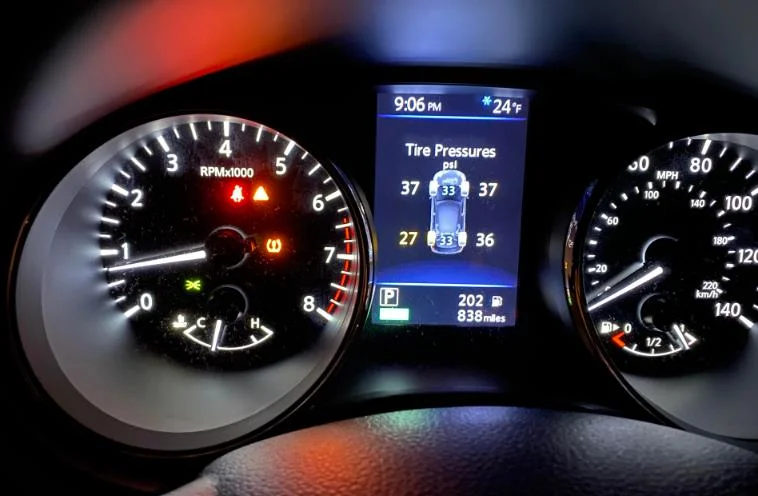
Your Rogue is smart enough to tell you exactly which tire is low rather than leaving you to guess. Through the Advanced Drive-Assist Display located right between your gauges, you can see a digital readout of all four tires simultaneously. This logic allows you to identify a slow leak in a specific corner of the car before it becomes a dangerous flat tire on the highway. It transforms the TPMS from a simple warning light into a comprehensive diagnostic tool.
- Sensor Activation: The sensors usually stay in a “sleep mode” when the car is parked to save battery life. They wake up and start transmitting once you exceed 15-20 mph.
- Warning Thresholds: The dashboard light typically triggers when the pressure in any tire drops approximately 25% below the recommended cold inflation pressure.
- Direct Feedback: Because it is a direct system, the readings are highly accurate and respond quickly to changes while you are driving.
2017 Nissan Rogue TPMS Reset Made Easy: Your Essential Action Plan

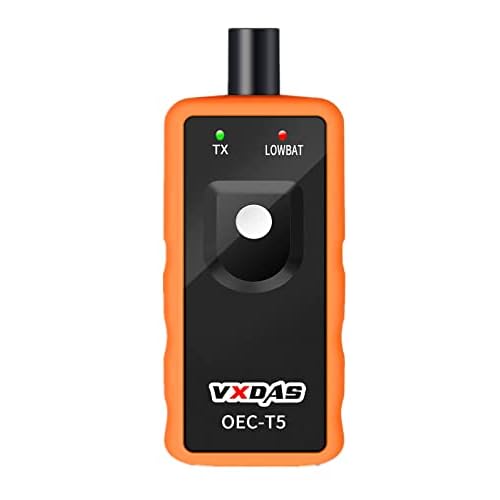
Managing your Tire Pressure Monitoring System (TPMS) is a critical part of vehicle maintenance that ensures your safety, maximizes fuel economy, and extends the life of your tires. For owners of the 2017 Nissan Rogue, there is often a bit of confusion regarding the “reset button location” because, unlike older vehicles, this model utilizes an integrated digital menu system rather than a physical button hidden under the dashboard. This guide will walk you through the precise steps to recalibrate your sensors and clear that stubborn dashboard warning light using the onboard Advanced Drive-Assist Display.
Step 1: Inspect and Adjust Tire Pressures
What you need: A high-quality digital tire pressure gauge and access to an air compressor (at home or at a gas station).
Instructions: Before you attempt any digital reset, you must ensure the physical tires are actually inflated to the manufacturer’s specifications. Open your driver-side door and locate the tire information placard on the “B-pillar” (the frame of the car). For a 2017 Nissan Rogue, the standard pressure is typically 33 PSI for both front and rear tires, though this can vary slightly based on wheel size. Use your gauge to check all four tires while they are “cold” (driven less than a mile). Inflate or deflate each tire until they match the placard exactly. Do not forget to check the spare tire if your model includes a sensor for it, though most 2017 Rogues only monitor the primary four.
Pro Tip: Temperature changes significantly affect tire pressure; for every 10-degree drop in outside temperature, your tires can lose about 1 PSI. Always check your pressure in the morning before the sun heats the rubber.
Step 2: Powering the Vehicle Systems
What you need: Your Nissan Intelligent Key and a clear environment (ensure you are parked in a well-ventilated area if you choose to start the engine).
Instructions: Sit in the driver’s seat and ensure the vehicle is in “Park.” To access the TPMS menu, you need the electronics to be fully active. You can do this by pressing the “Start” button twice without your foot on the brake (putting the car in “ON” mode) or by simply starting the engine. Starting the engine is often preferred to ensure the battery doesn’t drain while you navigate the menus, especially if you are new to the system and might take a few minutes. Ensure all doors are closed, as an open-door warning can sometimes block the TPMS interface on the digital display.
Pro Tip: If the TPMS light is flashing for 60 seconds before staying solid, this indicates a system malfunction (like a dead sensor battery) rather than just low pressure.
Step 3: Accessing the Advanced Drive-Assist Display
What you need: The steering wheel-mounted controls, specifically the left-hand side directional pad and the “OK” button.
Instructions: Look at the center of your instrument cluster, located between the tachometer and the speedometer. This is the Advanced Drive-Assist Display (ADAD). Use the left and right arrow buttons on the steering wheel to scroll through the primary menu screens. You will see icons for fuel economy, navigation, audio, and safety shields. Continue scrolling until you reach the icon that looks like a “Gear” or “Cogwheel,” which represents the “Settings” menu. This is the digital “hub” that replaces the old-fashioned physical reset buttons found in earlier car generations.
Pro Tip: If you get lost in the menus, pressing the “Back” button (the curved arrow icon) on the steering wheel will always take you one step closer to the main screen.
Step 4: Navigating to Maintenance Settings
What you need: Steady use of the steering wheel scroll wheel or arrow keys.
Instructions: Once you are inside the “Settings” menu, use the down arrow or the scroll wheel to move through the list. You are looking for a sub-menu labeled “Maintenance.” On the 2017 Rogue, this section governs oil life, filter changes, and tire rotations. Highlight “Maintenance” and press the “OK” button in the center of the directional pad. From there, you will see a specific option for “Tire” or “Tire Pressure.” Select this option to enter the specific calibration screen for your TPMS sensors.
Pro Tip: If your vehicle has recently had its battery disconnected, these settings might have reverted to default. Take a moment to ensure your units (PSI vs Bar) are set to your preference.
Step 5: Initiating the TPMS Calibration
What you need: Direct interaction with the “OK” button to confirm settings.
Instructions: Within the Tire Maintenance menu, you will see the current recorded pressures (which may show as dashes if the car has been stationary). Depending on your software version, you will see a “Reset” or “Calibrate” option. Highlight “Reset” and press “OK.” The screen will ask for confirmation—select “Yes” and press “OK” again. This action clears the stored “low pressure” fault code in the vehicle’s ECU. Note that the light might stay on for a moment or start blinking; this is normal as the system prepares to look for new data from the sensors while the wheels are in motion.
Pro Tip: This step doesn’t actually “fix” the pressure; it simply tells the computer to stop complaining and look for new, corrected values from the wheel sensors.
Step 6: The Relearn Driving Cycle
What you need: A 10-to-15 minute drive on a relatively clear road.
Instructions: The 2017 Nissan Rogue uses “active” sensors that require centrifugal force to wake up and transmit data to the receiver. Once you have performed the digital reset in the settings menu, you must drive the vehicle to complete the process. Drive at a consistent speed above 16 MPH (25 km/h). The system usually requires about 5 to 10 minutes of continuous driving to register the new pressures from all four wheels. Avoid heavy stop-and-go traffic if possible, as the sensors transmit most reliably at steady cruising speeds. During this drive, you should see the TPMS warning light disappear from the dashboard.
Pro Tip: If you are driving on a highway, use the “Tire Pressure” screen in the ADAD to watch the numbers populate in real-time as each sensor checks in.
Step 7: Utilizing Easy-Fill Tire Alert (Verification)
What you need: No extra tools; this is a built-in feature of the 2017 Rogue.
Instructions: If the light returns or you are unsure if the pressure is correct, you can use Nissan’s “Easy-Fill Tire Alert” to verify your work. With the vehicle in Park and the ignition “ON,” start adding air to any tire. The hazard lights will flash to show the system is monitoring. When the tire reaches the recommended pressure, the vehicle’s horn will give a short “chirp.” This is the ultimate confirmation that the TPMS system is correctly synchronized with your tire’s physical state. If the horn honks three times, you have over-inflated the tire and need to release some air.
Pro Tip: This feature is incredibly helpful at night or in noisy environments where you might not be able to read a handheld gauge easily.
✅ Final Checklist
- Are all four tires set to exactly 33 PSI (or the value on your specific door placard)?
- Did you navigate through the “Settings” and “Maintenance” menus on the dashboard display?
- Did you receive a confirmation message on the screen after selecting “Reset”?
- Have you driven the vehicle for at least 10 minutes at speeds above 16 MPH?
- Is the yellow “horseshoe” icon with an exclamation point now gone from your dashboard?
Important Notes:
- Safety Warning: Never ignore a TPMS light. If the light comes on while driving, pull over safely to inspect for punctures or “flats.”
- Professional Help: If the light remains on despite correct pressures and a reset attempt, one of your sensor batteries may have failed. TPMS sensors typically last 5–10 years. A tire shop can test each sensor with a wireless tool.
- Estimated Time: 15–20 minutes (including the drive time).
- Cost Range: $0 (DIY) to $150 (if a sensor needs replacement at a dealership).
Environmental Factors Affecting Tire Pressure Accuracy
Have you ever noticed your TPMS light turn on during the first cold morning of autumn, only to see it disappear later in the afternoon? This is usually not a sign of a puncture or a broken sensor. Air is a gas, and gases expand when they are hot and shrink when they are cold. Your 2017 Nissan Rogue is very sensitive to these physical changes. Understanding these environmental factors can save you a lot of stress when the seasons begin to change.
Temperature Fluctuations and Seasonal Changes
As a general rule of physics, your tire pressure will change by about 1 PSI for every 10-degree change in outside temperature. In the winter, the air inside your tires becomes denser and takes up less physical space. This causes the internal pressure to drop, often triggering the TPMS sensor. Conversely, a hot summer day can cause the pressure to spike. It is vital to check your tires during seasonal transitions to ensure they stay within the recommended range as the thermometer moves up or down.
The Impact of Driving Duration and Friction
The act of driving itself changes your tire pressure readings. As you travel down the road, friction between the rubber and the pavement generates a significant amount of heat. This heat warms the air trapped inside the tire, causing the PSI reading to rise. This is why you should always check your tire pressure when the tires are “cold,” which means the car has been parked for at least three hours. If you check them right after a long highway trip, you might get an artificially high reading that does not reflect the true state of the tire.
- Altitude Changes: If you are driving into higher elevations in the mountains, the lower atmospheric pressure outside can cause your internal tire pressure to read differently.
- Sun Exposure: If one side of your Rogue sits in direct, hot sunlight for several hours, those specific tires may read several PSI higher than the tires kept in the shade.
- Natural Seepage: Even perfectly healthy tires naturally lose about 1 to 2 PSI per month through the microscopic pores in the rubber material.
Advantages of Nissan’s Automatic Sensor Recalibration
One of the most significant benefits of the 2017 Nissan Rogue’s TPMS design is its automatic recalibration feature. Unlike older vehicles that required drivers to perform a series of manual steps or locate a hidden physical button, the Rogue handles the heavy lifting through its onboard computer. This shift toward automation reflects a modern approach to vehicle maintenance, focusing on driver convenience and safety.
Eliminating the Guesswork for Drivers
The absence of a physical reset button means there is no need to fumble around the steering column or dig through the glovebox. The 2017 Rogue is designed to recognize changes in tire pressure dynamically. For example, if you add air at a gas station, the system monitors the sensors in real-time. This eliminates the “did I do it right?” anxiety often associated with manual reset procedures. Once the sensors detect the correct PSI, the system updates the dashboard display almost instantly, providing immediate peace of mind.
Seamless Integration with Easy-Fill Tire Alert
Nissan’s TPMS works hand-in-hand with their Easy-Fill Tire Alert system. This is a standout feature for the 2017 model year. When you are inflating your tires, the vehicle provides an audible signal (a quick honk of the horn) when the ideal pressure is reached. Key advantages of this integrated system include:
- Reduced reliance on handheld gauges: The car tells you exactly when to stop.
- Improved fuel efficiency: Properly calibrated tires reduce rolling resistance.
- Enhanced safety: Automatic updates ensure you are never driving on under-inflated tires for long.
- Minimized dealer visits: You won’t need a technician to “clear the code” after a simple pressure adjustment.
Expert Insights on TPMS Sensor Lifespan and Maintenance
While the 2017 Nissan Rogue’s TPMS is sophisticated, it is not invincible. The sensors located inside your wheels are electronic components that live in a harsh environment. Understanding how these sensors age can help you avoid unexpected dashboard warnings and expensive repairs down the line. Experts generally agree that TPMS sensors are “wear items” that eventually require replacement, much like your brake pads or tires.
Understanding Sensor Battery Life
Each TPMS sensor contains a small, internal lithium-ion battery. These batteries are sealed inside the sensor housing and cannot be replaced individually. On average, these batteries last between 5 and 10 years. Since the 2017 Nissan Rogue is now several years old, many owners may start to experience sensor failures due to battery depletion. If your TPMS light flashes for 60 seconds before staying solid, it is often a sign that a sensor battery is dying rather than a simple pressure issue.
Protecting Your Sensors from Environmental Damage
Environmental factors play a huge role in sensor health. Corrosion is the leading cause of premature TPMS failure, especially in regions that use road salt during winter. To keep your system functioning properly, consider these professional maintenance tips:
- Always use plastic valve caps: Metal caps can seize onto the sensor stem due to galvanic corrosion, leading to a broken sensor during your next tire service.
- Avoid liquid tire sealants: Most “fix-a-flat” products can gum up the sensor’s pressure port, rendering it useless.
- Service sensors during tire changes: When buying new tires, ask the technician to replace the TPMS seal kits (the rubber grommet and nut) to prevent slow leaks.
- Monitor temperature swings: Cold snaps can cause a temporary drop in PSI, triggering the light even if the tire isn’t leaking.
Conclusion
In summary, the 2017 Nissan Rogue streamlines the tire maintenance process by replacing the traditional reset button with an intelligent, automatic recalibration system. By leveraging the Easy-Fill Tire Alert and understanding the lifespan of your internal sensors, you can keep your vehicle running efficiently without the frustration of manual resets. Modern technology has truly turned a tedious chore into a seamless experience.
Moving forward, your best course of action is to check your tire pressure monthly and pay attention to how your Rogue reacts during seasonal temperature changes. If your TPMS light remains on after a proper inflation and a short drive, it may be time to have a professional check your sensor battery health. Stay proactive with your maintenance, and enjoy the safety and performance your Rogue was built to deliver!
💬 Quick Questions & Answers
Where is the 2017 Nissan Rogue TPMS reset button?
There is no physical reset button; the system updates automatically through driving.
How long should I drive to clear the TPMS light?
You should drive for about 10 minutes at speeds over 16 mph.
What is the recommended PSI for this vehicle?
The standard requirement is usually 33 PSI, but check your door sticker.
Why is my TPMS light flashing?
A flashing light typically indicates a sensor battery failure or system error.
Can I reset the TPMS via the dashboard settings?
The menu displays current pressure but does not offer a manual reset function.
❓ Frequently Asked Questions
Why did Nissan remove the physical TPMS reset button?
Nissan moved to an automated system to reduce user error and ensure the system only resets when tires are actually at the correct pressure. This integration with the ‘Easy-Fill Tire Alert’ makes the process hands-free for the driver.
Will the light turn off if I just let the car idle?
No, the sensors in the 2017 Rogue require wheel rotation to transmit updated data to the computer. You must drive the vehicle at a steady speed to trigger the recalibration sequence.
Does cold weather trigger the TPMS light in a 2017 Rogue?
Yes, air contracts in cold temperatures, which can drop your tire pressure enough to trigger the sensor. Usually, the light will turn off once the tires heat up during a drive or after air is added.
How do I know if a TPMS sensor is actually broken?
If the light flashes for one minute before staying solid, or if one tire consistently shows ‘No Data,’ a sensor is likely faulty. These sensors have batteries that typically last 5 to 10 years before requiring replacement.
Is there a difference between the Rogue and Rogue Sport TPMS?
Both the 2017 Rogue and the Rogue Sport utilize similar buttonless, automatic TPMS systems. They both rely on the driving cycle to clear warnings once proper inflation is achieved.
Can aftermarket tires or wheels affect the TPMS reset?
Yes, if the new wheels do not have compatible Nissan sensors, the system will not be able to reset. Ensure that any aftermarket hardware is programmed to communicate with the Rogue’s central computer.