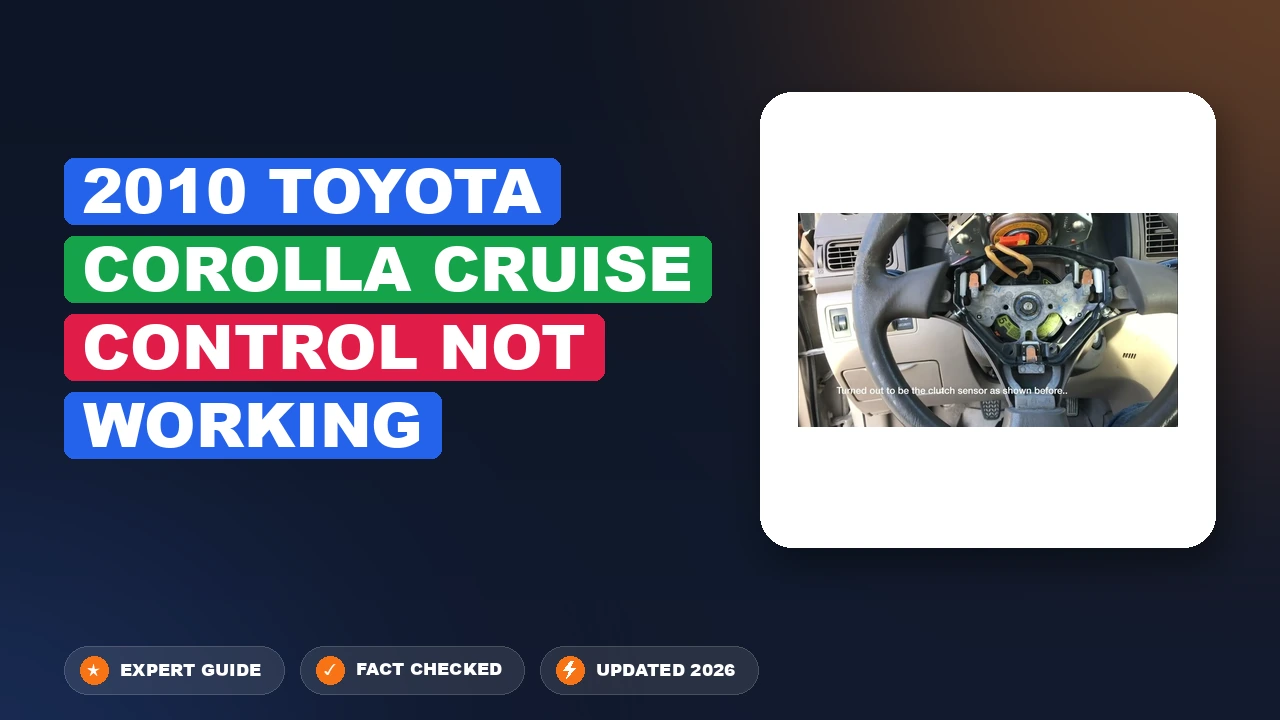
2010 Toyota Corolla Cruise Control Not Working: Diagnosed & Fixed
Is your 2010 Toyota Corolla cruise control failing to hold speed or refusing to turn on entirely? Many drivers find themselves frustrated by mysterious cruise control failures that appear alongside check engine lights or intermittent electrical gremlins. Understanding the system’s logic is the key to restoring your highway driving comfort without resorting to unnecessary, expensive part swaps. This guide provides a clear path to diagnose the fault, from checking simple switches to identifying complex electrical issues, ensuring your vehicle functions as intended.

Identifying Causes for 2010 Toyota Corolla Cruise Control Not Working
Recommended Best Deal Products


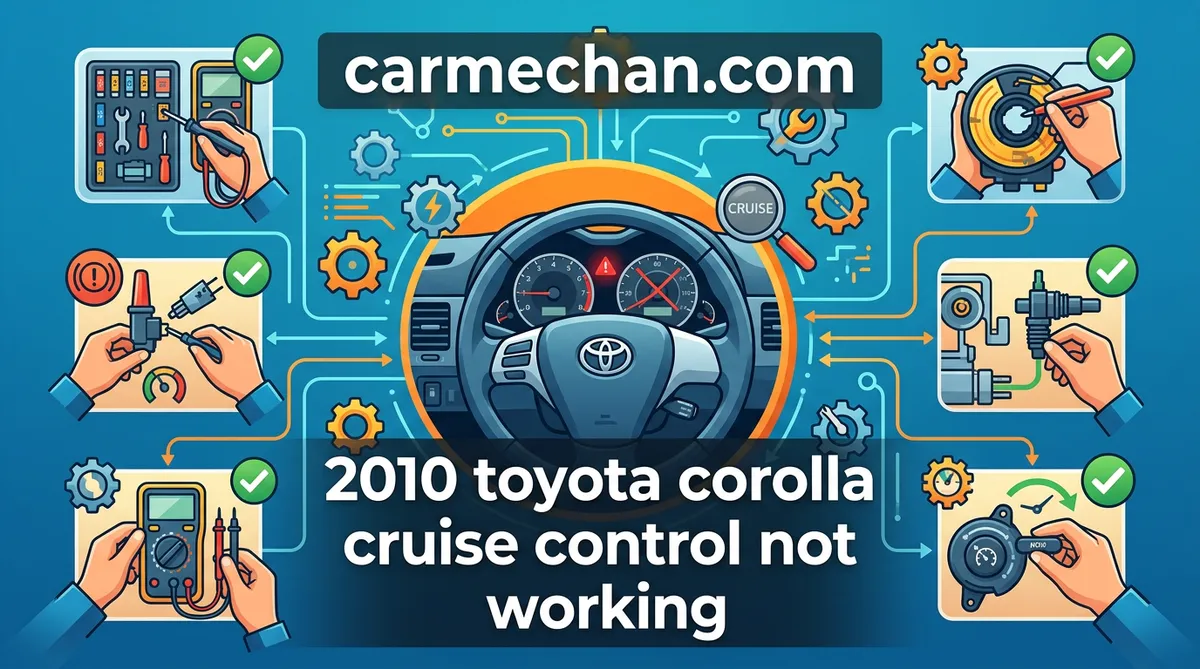
The cruise control system in the 2010 Corolla is an electronic sub-system managed by the Engine Control Module (ECM). Because it interacts directly with your throttle and braking systems, the manufacturer programmed it with strict “fail-safe” parameters. If any component in the engine or safety circuit reports an anomaly, the ECM disables the cruise control functionality to prevent potential accidents.
📤 Share Image

Why Check Engine Lights Disable Cruise
A Check Engine Light (CEL) is the most frequent culprit. Even minor issues, such as a loose gas cap causing an EVAP system leak code, will immediately disable your cruise control. The ECM prioritizes emissions and engine health over convenience features, locking out the cruise system until the fault is resolved and the code is cleared.

The Role of the Brake Light Switch
The brake light switch serves a dual purpose: it tells the car to illuminate your rear lights and signals the ECM to disengage cruise control. If the switch is misaligned or failing, it may stay “open” or “closed” incorrectly, tricking the computer into thinking you are braking. This prevents the system from setting a speed.
Understanding Clock Spring Failures
The clock spring is a ribbon cable assembly located behind the steering wheel. It maintains electrical continuity for the cruise control switches, airbag, and horn while the wheel turns. Over time, this cable can fray or break. If your cruise control buttons on the steering wheel feel non-responsive, the clock spring is a primary suspect. Note that the system also requires a minimum speed—typically above 25–30 mph—to engage; attempting to test it at a standstill will always result in a “not working” symptom.
By The Numbers
Required Speed
Safety Interlock
Systematic Diagnosis of 2010 Toyota Corolla Cruise Control Not Working
Before spending money on replacement components, you must follow a logical diagnostic path. Replacing parts without verification is a common pitfall that rarely solves intermittent electronic issues.
- Reading OBDII Codes: Use a high-quality OBDII scanner to retrieve Diagnostic Trouble Codes (DTCs). If you have ‘P’ codes relating to the engine or transmission, address these first. The cruise control is often a symptom, not the root cause.
- Brake Light Check: Visually verify your brake lights. If they remain on constantly or fail to light up entirely, your brake pedal switch is likely the failed component.
- Steering Wheel Button Test: If the cruise control “ON” light appears on the dashboard but won’t set, the issue is likely with the brake switch or speed sensor. If the light won’t even turn on, investigate the clock spring or the fuse.
- Throttle Actuator Inspection: In some cases, a sluggish or dirty throttle body can prevent the ECM from maintaining a steady throttle position, leading to cruise control disengagement.
Testing the Brake Switch Signal Path
To test the switch, use a multimeter to check for continuity across the pins. With the pedal released, the switch should be in one state; when depressed, it should switch to the other. If the resistance does not change, the switch is faulty and requires replacement.
Fixing 2010 Toyota Corolla Cruise Control Not Working: Step-by-Step
Recommended Best Deal Products


📋
Step-by-Step Guide
Locate the switch mounted above the brake pedal bracket. Disconnect the electrical connector, unscrew the retaining nut, and swap in the new OEM unit. Ensure the plunger is properly adjusted so the lights extinguish immediately when the pedal is released.
Safety Alert: Disconnect the battery and wait 15 minutes for the airbag capacitor to discharge. Remove the steering wheel trim and airbag module carefully. Replace the clock spring with a new unit, ensuring the wheel is centered during installation to avoid damaging the new ribbon cable.

Audible — Listen Free for 30 Days
One free credit a month and thousands of titles included.
Listen Free for 30 DaysNever attempt to repair the internal ribbons of a clock spring. Once damaged, the unit is compromised and must be replaced to ensure airbag safety.
Troubleshooting Persistent 2010 Toyota Corolla Cruise Control Not Working
Recommended Best Deal Products


If basic replacements do not restore function, you are likely dealing with a deeper electrical issue. Persistent, intermittent failure often points to wiring harness integrity or ECM communication errors.
Wiring Loom and Connectivity
Inspect the wiring harness for signs of chafing or heat damage, particularly near the steering column and the engine bay firewall. Corrosion at the ECM connector pins can also cause high resistance, preventing the cruise signal from reaching the actuators. Use an electrical contact cleaner on all suspect harness plugs.
Speed Sensor Input
The cruise system relies on constant data from the Vehicle Speed Sensor (VSS). If your speedometer is erratic or if the ABS light is illuminated, these sensors may be providing inconsistent data, prompting the ECM to disable the cruise control as a safety measure. Ensure the VSS connections are clean and secure.
✅ Pros
- Most parts are easily accessible.
- OBDII codes narrow the focus significantly.
- Repairing the switch is inexpensive.
❌ Cons
- Airbag handling carries inherent risks.
- ECM faults require advanced diagnostics.
- Wiring gremlins can be time-consuming.
Final Recommendations for Your Vehicle
Restoring your 2010 Toyota Corolla cruise control functionality requires patience and adherence to systematic diagnostic procedures. Always start with an OBDII scan to rule out powertrain codes, as these are the most common triggers for system lockout. Check your brake lights; if they are out or constantly on, the cruise system is likely disabled as a safety measure. Never open the steering column without disconnecting the battery to manage the airbag system safely. Most of these repairs can be handled with basic hand tools and a multimeter. If these steps fail to restore functionality, consult a certified technician to inspect the ECM and main wiring harness for deep-seated electrical faults.
2010 Toyota Corolla Cruise Control Not Working: Frequently Asked Questions
Why does my cruise control light flash?
A flashing cruise control light in a 2010 Toyota Corolla typically indicates a system fault detected by the Engine Control Unit (ECU). This is often triggered when the car detects an inconsistency in the brake switch circuit or a vehicle speed sensor malfunction. It acts as a safety measure, notifying the driver that the cruise system has been disabled to prevent erratic throttle behavior during operation.
Can a blown fuse cause cruise control to stop working?
Yes, a blown fuse is one of the most common reasons for a sudden loss of cruise control. The cruise system relies on specific interior and engine-bay fuses, often labeled ‘ECU-IG’ or ‘Cruise.’ If this circuit loses power, the cruise module remains dormant regardless of button inputs. Always inspect your fuse box diagrams before moving on to more expensive mechanical repairs.
Is the brake pedal switch easy to replace?
The brake pedal switch is generally considered a user-friendly repair for those with basic mechanical aptitude. Located near the top of the brake pedal assembly, it is usually secured by a locking nut or a simple twist-and-pull clip. The most challenging aspect is working in the tight footwell space; however, once the electrical connector is detached, the replacement process typically takes less than twenty minutes.
Does a check engine light disable the cruise control?
Absolutely. Toyota designs the engine management system to disable the cruise control whenever a significant diagnostic trouble code (DTC) is present. This is a failsafe to ensure that if the engine is struggling with a performance issue (like a misfire or emissions fault), the cruise control does not exacerbate the problem by attempting to maintain speed despite mechanical distress.
Audible Premium Plus — Annual Membership
12 audiobook credits up front, plus the full Audible catalogue.
See Annual PlansIs the clock spring a common failure point?
While not as common as a brake switch, the clock spring is a known failure point in high-mileage 2010 Corollas. The clock spring is a ribbon cable inside the steering column that allows electrical signals to travel to the cruise control buttons while the wheel turns. If the horn also stops working, it is a high-probability indicator that the clock spring has failed and needs professional replacement.