Horn and Cruise Control Not Working: Diagnosed & Resolved
Is your steering wheel dead quiet when you need it most, or does your cruise control refuse to engage during long highway drives? Drivers often struggle when the horn and cruise control stop working at the same time, leading to frustrating repairs and safety concerns. In this guide, we will walk through the diagnostic steps to isolate the issue, identify if your clock spring is the culprit, and provide a professional procedure for getting your controls back in order.


Why Are My Horn And Cruise Control Not Working Simultaneously?
Identifying the root cause of electrical gremlins requires a firm grasp of signal architecture. When multiple steering-wheel-mounted features fail at once, you are likely looking at a systemic interruption in the steering column rather than a discrete component failure.
📤 Share Image
The Clock Spring As The Central Failure Point
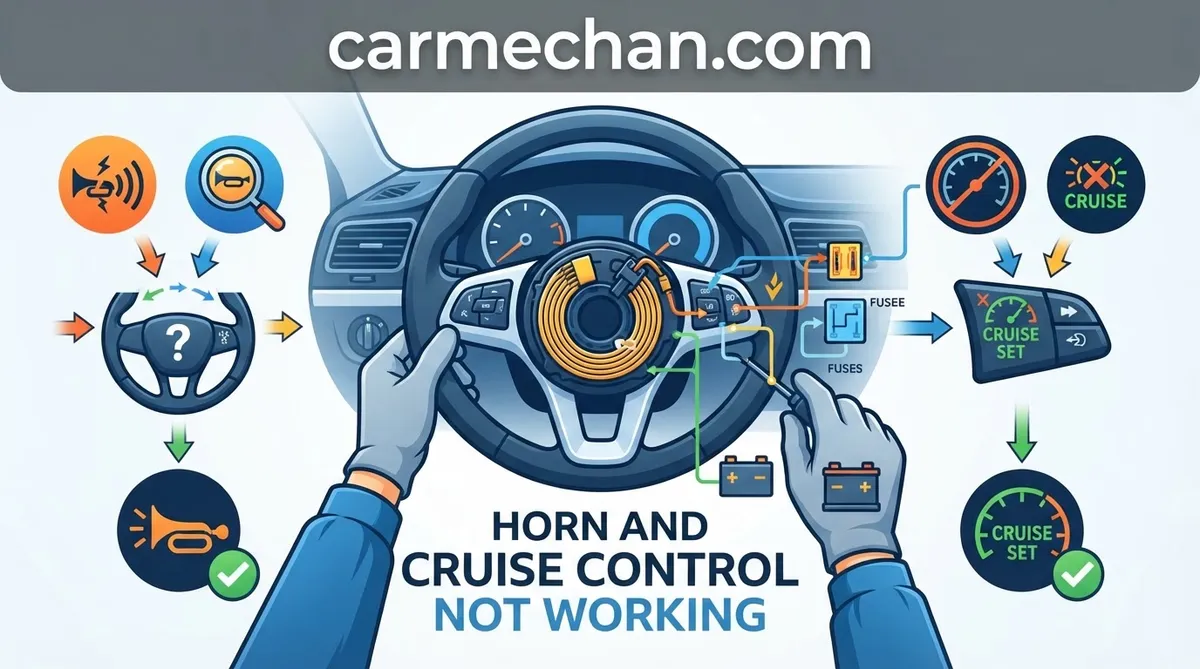
The clock spring (or spiral cable) is a sophisticated ribbon cable housed within the steering column. It allows the steering wheel to rotate continuously while maintaining constant electrical connectivity for the airbag, horn, cruise control, and steering-wheel-mounted audio or phone controls. Because it undergoes physical stress with every turn, internal ribbon tears are common. Industry data indicates that the clock spring is the most common single point of failure when both cruise control and horn functions vanish in unison.

Differentiating Between Fuse Issues And Wiring Faults
A blown fuse is a localized protection event. If your horn fuse blows, the horn circuit remains dead, but your cruise control—controlled by separate circuit paths through the Body Control Module (BCM)—should remain operational. If you find both systems are inoperative, a fuse is rarely the culprit. Instead, the failure point resides in the physical path shared by these systems: the wiring harness within the steering column. If you experience a complete loss of signal from multiple steering wheel buttons, the signal path has been severed at the clock spring, effectively “orphaning” the steering wheel controls from the vehicle’s command center.
By The Numbers
Cases linked to clock spring failure
Standard rotation limit of internal ribbons

How To Properly Diagnose A Faulty Clock Spring
Before condemning the component, you must systematically verify the electrical path. Use these diagnostic markers to confirm your findings.
- SRS/Airbag Warning Light: A faulty clock spring almost always disrupts the Supplemental Restraint System (SRS) circuit. If the airbag warning light is illuminated on your dash, the clock spring has likely lost continuity for the airbag deployment circuit.
- Steering Angle Sensor (SAS) Data: Using an OBD-II scan tool capable of live data, observe the SAS values. If the values remain static or jump erratically while the steering wheel is in motion, the clock spring is failing to transmit the position data.
- Intermittent Functionality: If the horn works sporadically when the wheel is turned to a specific angle, you are likely dealing with a fraying ribbon cable that momentarily makes contact when positioned just right.
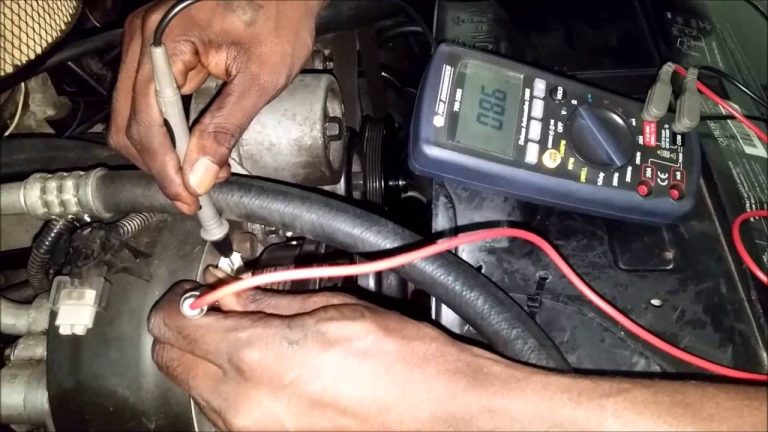
- Multimeter Continuity Test: With the steering wheel removed, back-probe the harness connectors to verify continuity through the clock spring for the horn and cruise control pins. A lack of continuity confirms the internal break.
Step-By-Step Guide To Fixing Horn And Cruise Control Not Working
📋
Procedural Repair Steps
Disconnect the negative battery terminal and wait at least 15-20 minutes for the SRS capacitor to discharge. Failure to do this risks accidental airbag deployment.
Ensure wheels are pointed straight forward. Remove the airbag module and steering wheel. Extract the old clock spring, being careful not to rotate the new unit before installation, as it must be perfectly centered.
Rotate the new clock spring to its center position based on the manufacturer’s locking pin or reference marks. Improper centering will snap the internal ribbon cable the moment you turn the steering wheel to full lock.


Do not attempt to repair the ribbon cable inside a clock spring. It is a high-reliability safety component; if damaged, it must always be replaced as a complete assembly with an OEM or high-quality aftermarket equivalent.
Troubleshooting Secondary Causes For Steering Control Failures
If you have replaced the clock spring and the issues persist, you must expand the scope of your diagnosis to the surrounding control architecture.
Testing Steering Wheel Switch Inputs
Sometimes the switches themselves suffer from mechanical failure or internal contact oxidation. If the cruise control buttons are separate from the horn contact, verify that the switches show a change in resistance when pressed. A multimeter set to Ohms can confirm if the switch completes the circuit or if it remains open regardless of pressure.
Verifying Horn Relay And Circuit Protection
Locate the horn relay in your primary fuse/relay distribution box. Switch it with an identical relay (such as the AC clutch relay) to determine if the relay itself is dead. If the horn honks upon swapping, the original relay was faulty. If not, inspect the horn ground point located near the radiator support, as these are frequently exposed to salt and moisture.
Deep Dive Into SCCM Wiring Integrity
The Steering Column Control Module (SCCM) acts as the data translator for all steering inputs. Inspect the wiring connectors at the base of the column for signs of corrosion or “terminal fretting.” Ensure the SCCM grounds are clean and tight. In modern vehicles, a software update for the SCCM may sometimes be required to re-establish communication if the module was disconnected during a battery drain event.
✅ Pros of Proper Diagnosis
- Avoids redundant part replacement
- Ensures long-term SRS system safety
- Confirms integrity of data signals
❌ Cons of Shortcuts
- Risk of accidental airbag deployment
- Improper centering kills new parts
- Could lead to intermittent failures
Successfully resolving steering electrical issues requires a methodical approach. The clock spring remains the most common failure point for dual-system steering electrical issues. Always prioritize safety by disconnecting the battery before handling SRS components. Furthermore, proper centering is critical for the long-term reliability of new parts. Finally, never ignore the airbag light as it is often a silent indicator of deeper wiring damage. If these diagnostic steps fail to restore your systems, consult with a professional technician, as modern vehicle SRS repairs often require specialized software calibration to sync the steering column control module to the vehicle network.
Horn and Cruise Control Not Working: Frequently Asked Questions
Is it safe to drive with no horn?
Driving without a functioning horn is not recommended and is often illegal in many jurisdictions. The horn is a critical safety device designed to alert other drivers to avoid accidents. If your horn is inoperative, you lack the primary means of preventing a collision in emergency scenarios. We strongly advise repairing this issue immediately to ensure road safety compliance.
Why is my airbag light on at the same time as my horn failure?
The airbag light, horn, and cruise control all rely on the clock spring (spiral cable) to transmit signals across the rotating steering column. When this component fails, the internal ribbon cable often breaks at multiple points, cutting power to the horn and cruise control while simultaneously creating an ‘open circuit’ that triggers the SRS warning light on your dashboard.
Do I need to disconnect the battery before working on the steering wheel?


Yes, absolutely. Disconnecting the negative battery terminal is the mandatory first step when working on any steering wheel components. Because the steering wheel contains the driver-side airbag, failure to disconnect power and allow the system to discharge—typically for at least 15 to 30 minutes—poses a severe risk of accidental airbag deployment, which can cause significant physical injury.
Is the clock spring easy to replace DIY?
Replacing a clock spring is a moderate-to-advanced DIY task. It requires specific tools, including a steering wheel puller and the ability to follow precise safety procedures for airbag handling. The difficulty arises from the need for perfect alignment; if the new unit is not centered correctly before installation, it will snap immediately when the steering wheel is turned, resulting in total part failure.
Could a blown fuse be the only issue?
While it is possible for a fuse to blow, it is unlikely to cause both horn and cruise control failures simultaneously unless they share a dedicated power circuit. If your fuses are intact, the issue is almost certainly mechanical or electrical degradation within the steering column wiring, typically necessitating a clock spring replacement or a thorough diagnostic scan of the steering control module.