Subaru Forester TPMS Reset Button Location and Fix Guide 2026
Last Updated on June 24, 2026 by Albert Duke
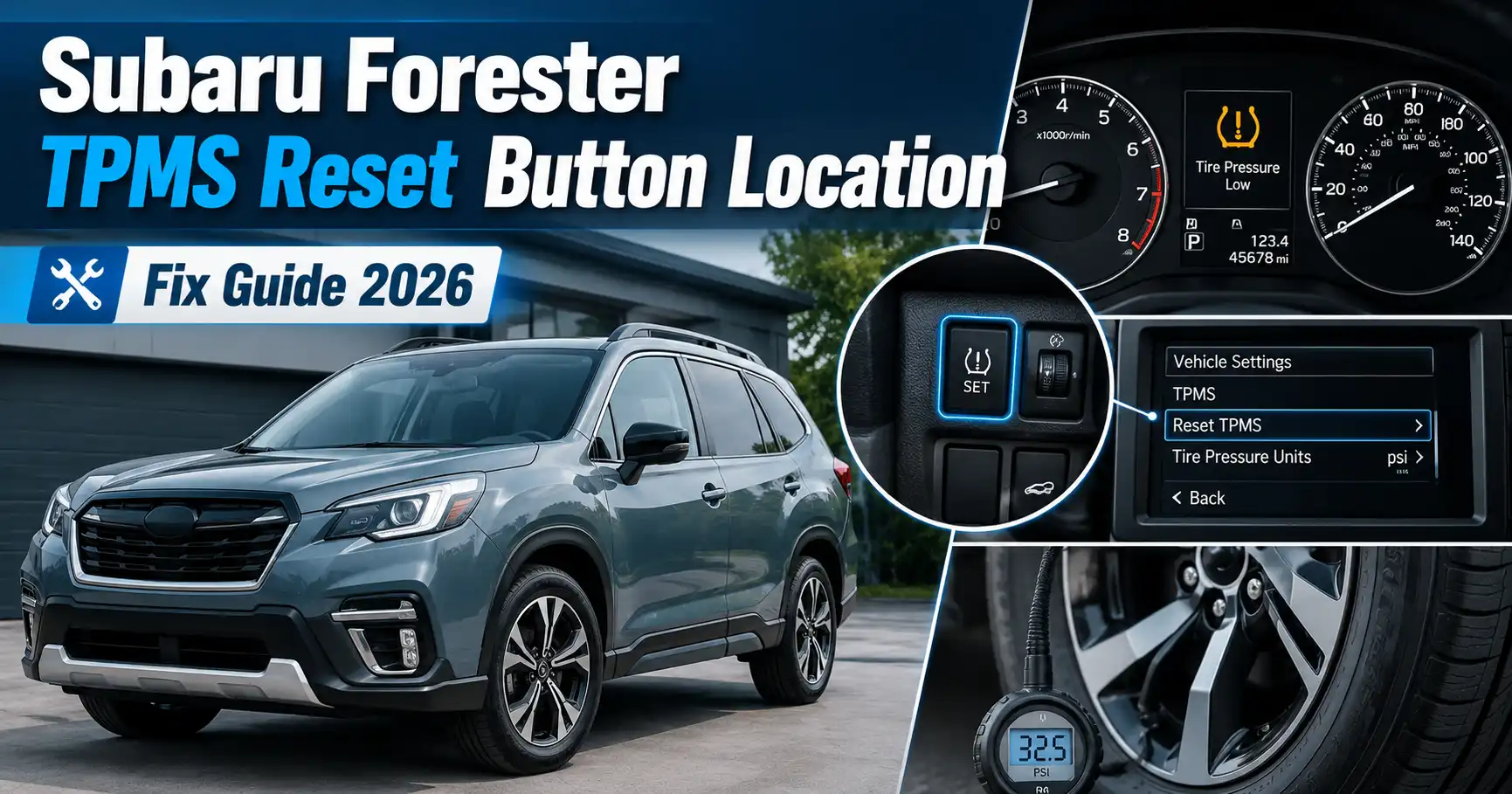
The Subaru Forester TPMS reset button location is not as simple as looking under the dash. For many U.S.-market Forester models, there is no dedicated tire pressure reset button that you press after inflating the tires.
TPMS means Tire Pressure Monitoring System. It watches tire pressure and turns on a dashboard warning light when the system detects low pressure or a sensor problem.
The right fix depends on what the light is doing, whether your Forester shows individual tire pressure readings, and whether tires or TPMS sensors were recently replaced. The first step is knowing whether your Forester actually has a reset button or needs a relearn.
Where Is the Subaru Forester TPMS Reset Button


Most Subaru Forester models do not have a dedicated TPMS reset button that clears the light like some Toyota or Honda models. If you are searching under the steering wheel, near the lower dash, or inside the glove box, you may not find one.
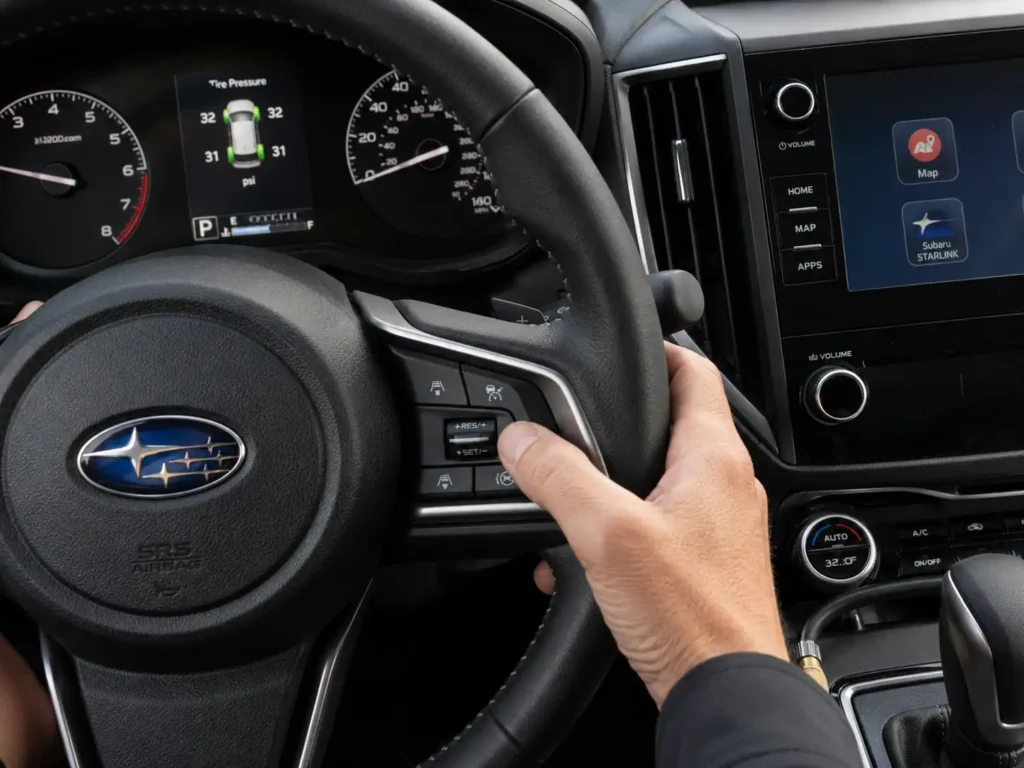
Subaru’s official vehicle resources list Forester owner manuals and Tire Pressure Monitoring System help videos for different model years, but those resources focus on pressure monitoring and display functions rather than a simple reset switch. See Subaru’s official Forester owner resources and TPMS overview for model-specific manuals and videos.
Some owners confuse the i or i/Set switch with a TPMS reset button. On newer Forester models, this switch helps you view or change tire pressure display settings, but it does not necessarily reset the TPMS warning light.
Check these areas first:
- Driver-side lower dash near the steering column
- Steering wheel menu buttons
- Combination Meter Display menu
- Center screen vehicle settings
- Glove box and lower left dashboard panel
If you do not find a button, do not force the issue. Your Forester likely needs correct tire pressure, a short drive cycle, or a TPMS relearn with a scan tool.
If there is no button, the next question is what actually turns the TPMS light off.
Why Your Forester TPMS Light Stays On


The TPMS light behavior tells you more than the button location. A solid warning light usually points to tire pressure. A flashing light often points to a sensor or TPMS system fault.
NHTSA’s TPMS rule says the system must warn the driver when tire pressure is 25 percent or more below the vehicle manufacturer’s recommended cold tire inflation pressure. You can verify that threshold in NHTSA’s FMVSS No 138 tire pressure monitoring rule.
Solid TPMS Light
A solid TPMS light usually means one or more tires are below the recommended cold pressure. This can happen after a temperature drop, a slow leak, or normal air loss over time.
Start by checking all four tires when they are cold. Use the tire placard on the driver-side door pillar, not the maximum pressure printed on the tire sidewall.
Flashing TPMS Light
A flashing TPMS light that later stays solid usually means the Forester sees a TPMS system problem. Common causes include a dead TPMS sensor battery, a missing sensor signal, or a sensor that was replaced but not registered.
This is when a simple pressure correction may not clear the light. The system may need a TPMS scan tool to read sensor IDs and faults.
Missing Pressure Readings
If your Forester normally shows individual tire pressure but one reading is missing, the issue may be sensor communication. A failed sensor, unregistered sensor, or incompatible wheel set can cause this.
For related Subaru behavior, Car Mechan’s guide to the 2018 Subaru Outback TPMS reset button location is useful because Subaru models often use similar display-based TPMS logic.
Once you know what the light is telling you, the reset path becomes much easier.
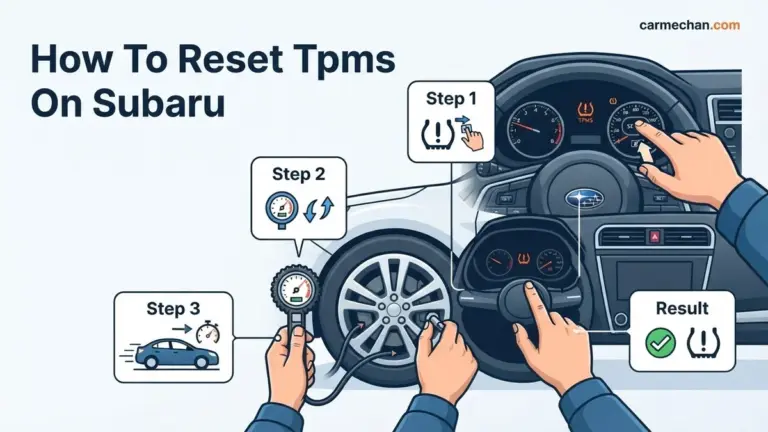
How To Reset Subaru Forester TPMS Without a Button

If your Forester has no TPMS reset button, start with tire pressure before you assume the sensor failed. Most pressure-related TPMS lights clear only after the tires are set correctly and the vehicle has been driven.
Follow these steps:
- Park the Forester and let the tires cool.
- Open the driver-side door.
- Find the tire information placard on the door pillar.
- Check all four tires with a reliable tire pressure gauge.
- Inflate each tire to the placard pressure.
- Start the Forester and drive normally.
- Watch whether the TPMS light turns off after the system updates.
Subaru’s 2019 Forester owner manual says the vehicle is equipped with TPMS and shows individual tire pressure in the Combination Meter Display. The same manual also directs owners to use the tire placard for tire pressure specifications. See the official 2019 Subaru Forester owner manual for the TPMS and tire pressure sections.
Do not inflate the tires to the number on the tire sidewall unless that number matches the placard. The sidewall number is a maximum tire rating, not Subaru’s recommended pressure for your Forester.
If the light stays on after correct pressure and driving, the problem usually moves from pressure to sensor relearn.
When Subaru Forester Needs TPMS Relearn
A relearn is different from a reset because the Forester must recognize sensor IDs. A TPMS sensor ID is the electronic identity of the sensor inside each wheel.
If the tire pressure is correct but the warning stays on, use this logic:
- If you only added air, then drive the Forester and let the system update.
- If you replaced a TPMS sensor, then the new sensor ID may need to be registered.
- If you changed to winter wheels, then the Forester may need the new wheel sensor IDs.
- If the light flashes first, then scan the TPMS system for a sensor fault.
- If one tire reading is missing, then inspect that wheel sensor first.
ATEQ’s TPMS diagnostic information for 2008-2019 Subaru Forester models says a TPMS relearn is recommended when a sensor is replaced or when wheels and tires have been rotated. Its documented OBD relearn process uses a TPMS tool, an OBDII module, and sensor ID transfer to the ECU, followed by driving at least 5 minutes at 12 mph or more. See ATEQ’s Subaru Forester 2008-2019 TPMS relearn procedure for the tool-based process.
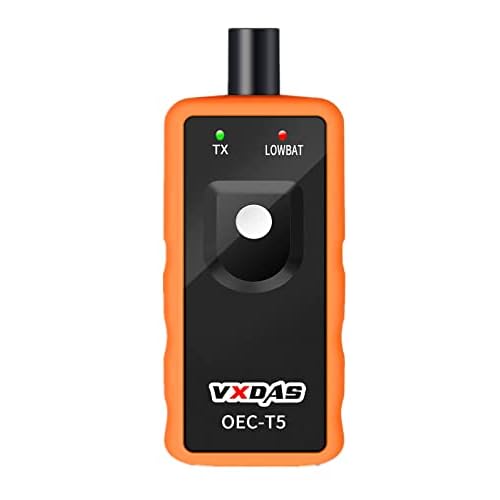
This matters because an ordinary OBD2 scanner may read engine codes, but it may not perform TPMS sensor registration. If you need a general scan tool for check engine light work, see Car Mechan’s best OBD2 scanner for the money guide, but verify TPMS relearn support before buying a tool for this job.
The right next step depends on whether you changed pressure, changed tires, or changed sensors.
Subaru Forester TPMS Decision Guide by Situation
Use this quick guide when you are standing near the car and need the next step. It separates a pressure problem from a sensor registration problem.
Use the warning light behavior first. A solid light usually points to tire pressure, while a flashing light or missing pressure reading usually needs TPMS diagnosis.
Solid TPMS Light
One or more tires are likely below the recommended cold tire pressure.
Flashing TPMS Light
The Forester may have a sensor fault, dead sensor battery, or communication issue.
Missing Pressure Reading
One wheel sensor may not be sending a signal to the vehicle.
New Tires Installed
If the same sensors stayed in place, pressure correction may be enough.
New Sensors Installed
The Forester may not recognize the new TPMS sensor IDs yet.
Light Returns Later
A slow leak, damaged valve stem, or weak sensor may be causing repeat warnings.
| Situation | Likely Cause | What To Do | Button Needed |
|---|---|---|---|
| TPMS light is solid | One or more tires are low | Set all tires to placard pressure and drive | Usually no |
| TPMS light flashes then stays on | Sensor or TPMS fault | Scan the TPMS system | No |
| One pressure reading is missing | Sensor not communicating | Test that wheel sensor | No |
| New tire or wheel set installed | Sensor IDs may not match | Perform TPMS relearn | No |
| New TPMS sensor installed | Sensor not registered | Register sensor ID with TPMS tool | No |
| Light returns after inflation | Slow leak or bad sensor | Inspect tire and scan sensor | No |
The key point is simple. If pressure is wrong, fix pressure. If sensor communication is wrong, a reset button will not solve the problem.
You can also compare this with Car Mechan’s broader Subaru SUV guide on the Subaru Ascent TPMS reset button location, especially if you own more than one Subaru model.
A quick table helps in the driveway, but model-year differences still matter.
Which Subaru Forester Years Show Tire Pressure Readings
Newer Forester models can show tire pressure readings, but that display does not always mean there is a reset button. Display access and reset control are two different things.
Subaru’s 2021 Forester Getting Started Guide states that individual tire pressure can be found in the Combination Meter Display and that the i/Set switch is used to access it. You can check the official 2021 Subaru Forester Getting Started Guide for that display instruction.
Use this year guide carefully:
| Forester Year Range | What To Expect |
|---|---|
| 2008-2018 | TPMS warning light, display details vary by trim |
| 2019 | Individual pressure display documented by Subaru |
| 2020-2021 | TPMS overview and pressure display support documented in Subaru resources |
| 2022-2026 | TPMS resources listed by Subaru, exact display path varies by trim |
If your Forester shows individual pressures, use the display to identify which tire is low. If your Forester only shows a warning light, check every tire manually with a gauge.
If you recently changed tires, Car Mechan’s best tires for Subaru Forester guide can help with replacement planning, but TPMS sensors still need to be handled correctly during tire service.
Once the display question is clear, the last concern is when a shop or TPMS tool becomes necessary.
When To Use a TPMS Tool or Mechanic
A TPMS tool becomes necessary when the problem is sensor communication, not tire pressure. This is common after sensor replacement, wheel replacement, or a tire service where a sensor was damaged.
Use a TPMS tool or mechanic when:
- The TPMS light flashes before staying on.
- One or more tire pressure readings are missing.
- A new TPMS sensor was installed.
- A winter or summer wheel set was installed.
- The light stays on after all tires are correctly inflated.
- A tire shop says the sensor battery is dead.
We did not find a reliable single national price for Subaru Forester TPMS relearn or sensor replacement from an official Subaru source. For publication, use a verified local quote, a Subaru dealer service estimate, or documented invoice screenshots before adding a cost range.
With the decision path covered, the final takeaway is simple: do not chase a reset button before checking the tires.
What Subaru Forester Owners Should Do Next
The smartest fix is to treat the TPMS light as a tire and sensor question, not only a button question. The Subaru Forester TPMS reset button location may not exist on your model, especially if your Forester relies on pressure correction, display menus, and tool-based sensor relearn.
Start with cold tire pressure and the driver-side door placard. Then drive the vehicle and see whether the light clears.
If the light flashes, pressure readings are missing, or sensors were replaced, move to TPMS diagnosis instead of searching for a hidden button. That path is safer and usually faster.
FAQ
Does a Subaru Forester Have a TPMS Reset Button
Most Subaru Forester models do not have a dedicated TPMS reset button. The usual fix is to correct tire pressure, drive the vehicle, or perform a TPMS relearn when sensors or wheels have changed.
Where Is the TPMS Reset Button on a 2019 Subaru Forester
The 2019 Subaru Forester owner manual documents TPMS and individual pressure display, but it does not support the idea of a simple dashboard reset button in the sources reviewed. Use the Combination Meter Display to view pressure, then correct tire pressure at the tires.
Why Is My Subaru Forester TPMS Light Flashing
A flashing TPMS light usually means the system sees a TPMS fault, not just low tire pressure. The most likely causes are a dead sensor battery, an unregistered sensor, or sensor communication failure.
How Long Does a Subaru Forester TPMS Light Take To Reset
There is no single verified reset time for every Subaru Forester year. For 2008-2019 Forester TPMS relearn, ATEQ lists a drive step of at least 5 minutes at 12 mph or more after sensor ID transfer.
Can I Reset Subaru Forester TPMS Without a Scanner
Yes, if the only problem is low tire pressure. Inflate all tires to the placard pressure and drive the Forester. If sensors were replaced or the light flashes, you usually need a TPMS tool or shop-level relearn.
Do I Need a TPMS Relearn After Replacing Subaru Forester Tires
You may need a TPMS relearn if sensors or wheel sets were changed. If the original sensors stayed in the same wheels and are working, correcting pressure may be enough.