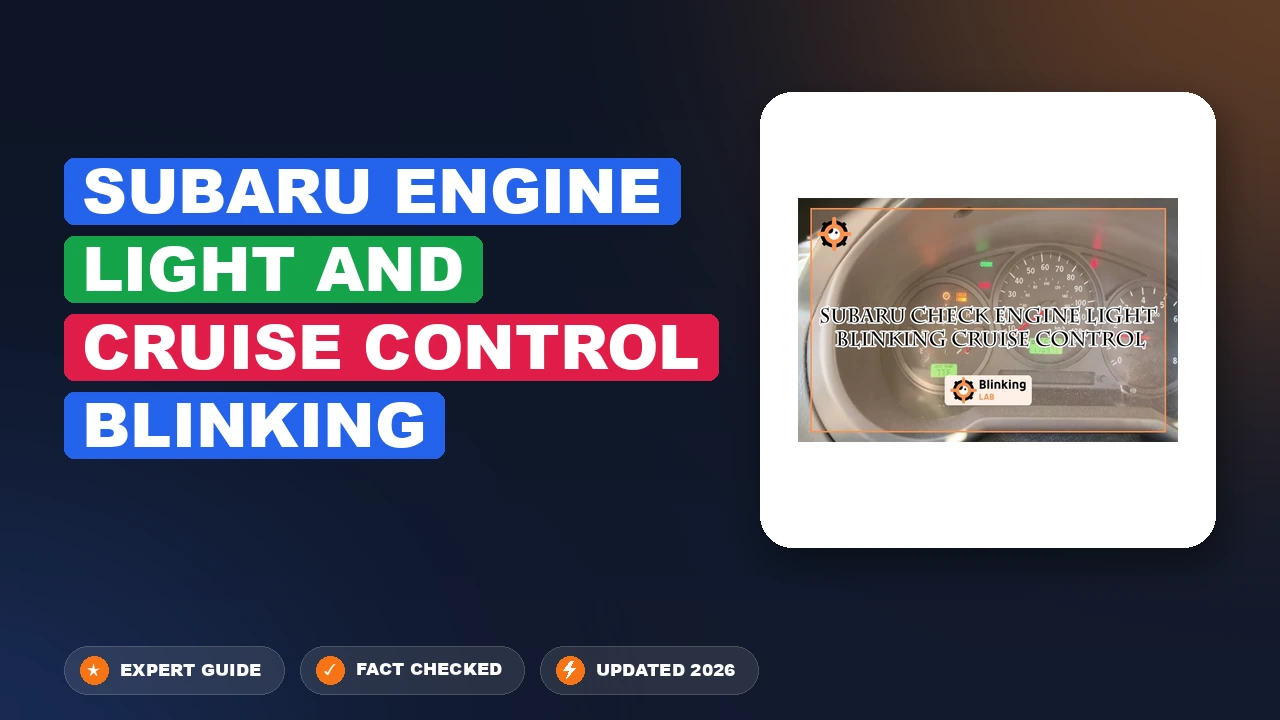
Subaru engine light and cruise control blinking: Resolved
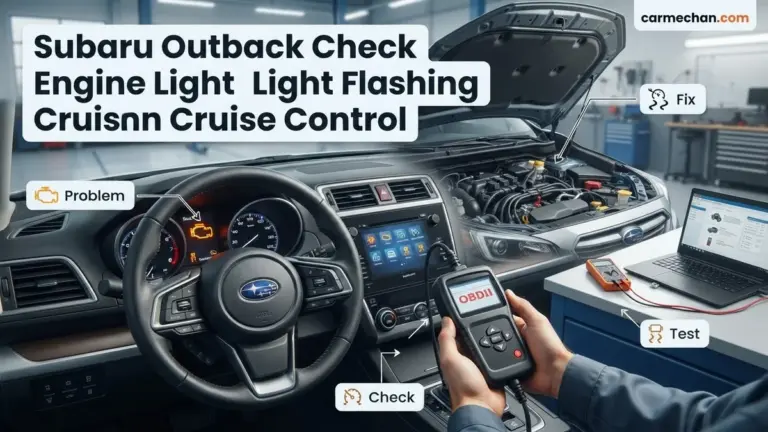
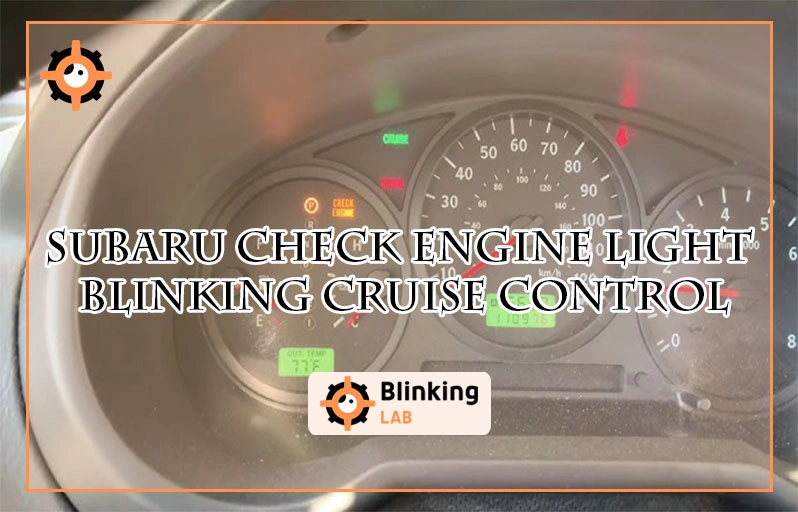
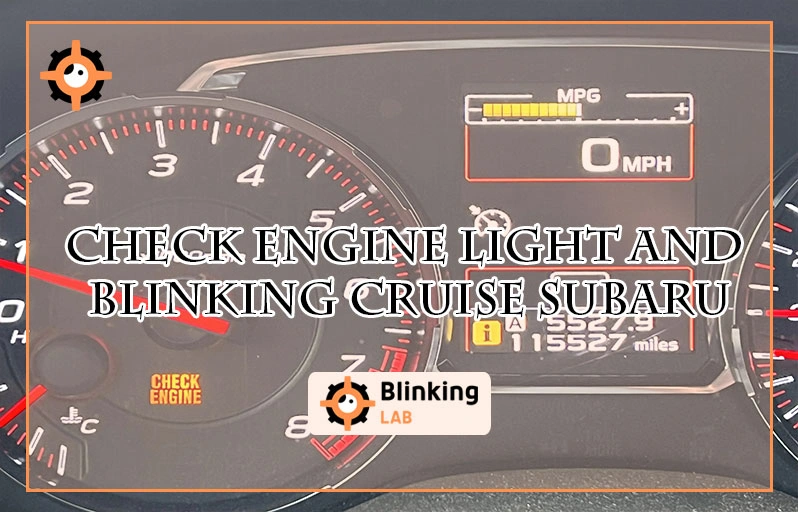
Seeing a “Christmas tree” of warning lights on your dashboard is enough to make any driver nervous. The combination of a solid Check Engine light and a flashing Cruise Control light is a quintessential experience for many Subaru owners, often causing unnecessary panic. While the flashing cruise light suggests a transmission or speed control fault, it is actually a secondary symptom triggered by the engine management system. This guide will explain exactly why these lights appear, what they mean for your vehicle’s safety, and how to identify the root cause using professional diagnostic tools.

Understanding Why Your Subaru Engine Light And Cruise Control Are Blinking
Recommended Best Deal Products


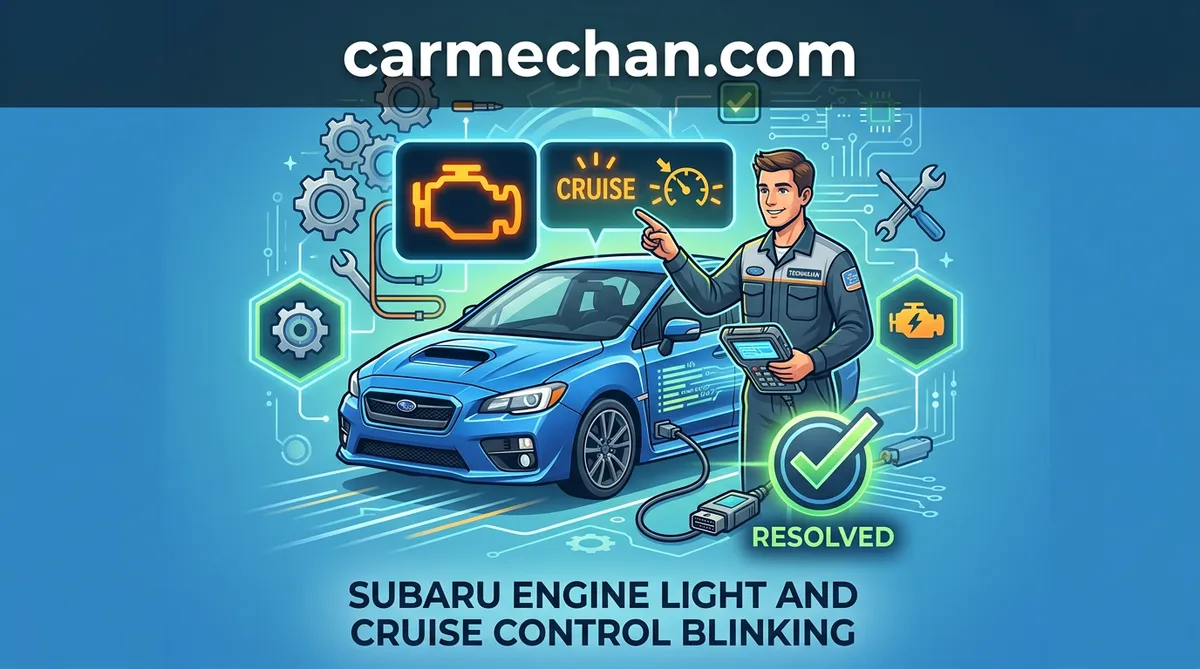
To the uninitiated, a flashing cruise light seems like an electrical glitch, but it is a deliberate design choice by Subaru engineers. When your vehicle’s onboard computers encounter a diagnostic error, the goal is to protect the drivetrain from further harm while signaling to the driver that immediate attention is required.
📤 Share Image
The Role of the Engine Control Module (ECM)
The Engine Control Module (ECM) serves as the brain of your Subaru. It constantly monitors hundreds of data points, including fuel mixtures, sensor voltages, and ignition timing. If one of these values falls outside of pre-programmed parameters, the ECM triggers a Diagnostic Trouble Code (DTC) and illuminates the Check Engine Light (CEL). The cruise control system operates on a separate logic flow, but it is linked via the CAN bus (Controller Area Network) to the engine computer.

Why Subaru Disables Cruise Control
Subaru intentionally disables the cruise control system when an engine fault is present. Because cruise control relies on fine-tuned throttle adjustments and consistent engine load, using it while the engine is struggling—perhaps due to a misfire or a faulty sensor—could exacerbate the problem or cause erratic vehicle behavior. By flashing the “Cruise” light, the car provides a visual notification that the electronic driver-assist features are offline, effectively locking them out until the primary fault is cleared.
Limp Mode: When Your Car Protects Itself
In severe cases, the ECM may trigger “Limp Mode.” This is a fail-safe state where the vehicle restricts throttle response and transmission shifting to prevent catastrophic engine failure. If you notice your car struggling to accelerate while the dash is lit up, it is not a cruise control issue; it is the car prioritizing engine survival over performance. Treat this as an urgent warning to reduce load and seek service immediately.
How To Diagnose Subaru Engine Light And Cruise Control Blinking Errors
Diagnosing these lights is a methodical process. Do not fall into the trap of replacing parts at random; instead, use the data your car is already generating.
📋
Diagnostic Workflow
Recommended Best Deal Products


Locate the OBD-II diagnostic port under the driver-side dashboard. Plug in a quality scanner to interface with the ECM.
Read the specific DTCs. A code like P0300 indicates a random misfire, while P0420 frequently points to a catalytic converter efficiency issue.
Avoiding the Costly ‘Parts Cannon’ Approach
The “parts cannon” is an amateur mistake: buying an expensive O2 sensor or catalytic converter simply because you read a forum post mentioning it. Research consistently shows that multiple, unrelated failures can cause identical warning light patterns. Use your scanner to view “Freeze Frame” data—this snapshot of engine conditions at the moment the code was thrown provides the expert insights needed for a reliable, one-time repair.

Audible — Listen Free for 30 Days
One free credit a month and thousands of titles included.
Listen Free for 30 DaysCommon Triggers for Subaru Engine Light And Cruise Control Blinking
While the list of possible diagnostic codes is extensive, the vast majority of these cases in Subaru vehicles stem from a recurring set of mechanical or electrical culprits.
- Gas Cap Issues: A loose or failed gas cap seal allows vapors to escape, triggering an EVAP (Evaporative Emission Control) fault. It is the most common “easy fix” and should always be checked first.
- Mass Air Flow (MAF) Sensor: Carbon buildup or contamination on the MAF sensor can cause erratic air/fuel mixture readings. This often triggers “system too lean” or “system too rich” codes.
- Throttle Body Carbonation: In older models, the throttle plate can accumulate heavy carbon deposits, restricting airflow and causing the engine to hunt for an idle, eventually triggering a code.
- O2 Sensor Failures: Oxygen sensors have a finite lifespan. When they fail, the ECM can no longer calibrate the fuel mixture accurately, leading to the dreaded combination of warning lights.
By The Numbers
Estimated cases related to simple sensor or cap issues.
Scan order for all troubleshooting procedures.
Reliable Fixes for Subaru Engine Light And Cruise Control Blinking
Recommended Best Deal Products


Once you have identified the source of the fault, you can determine if the fix is within your scope of capability or if it requires a professional technician.
🛠️
Resolution Procedures
For MAF sensor issues, use dedicated Mass Air Flow Sensor Cleaner—never use carburetor cleaner or shop towels, which leave harmful residues.
Complex electrical gremlins or issues requiring software updates (flashing the ECM/TCM) should be handled by a factory-trained technician at a trusted dealership.
Simply clearing the OBD-II codes with a scanner does not fix the underlying problem. The light will return within a few drive cycles, potentially in a situation where the car enters “limp mode” at an unsafe time. Always repair the root cause before resetting.
While your car might seem to drive normally, ignoring these lights can lead to irreversible damage to your catalytic converter (due to unburned fuel) or transmission components (if the issue is tied to the Transmission Control Module). Timely diagnosis is essential for long-term vehicle health.
The flashing cruise control light serves as a critical diagnostic bridge between your car’s computer and your own awareness. By understanding that this behavior is a safeguard—not a system failure—you can approach the issue with the calm precision of an expert. Never dismiss these lights as a minor inconvenience, as they are often the first alert to a developing mechanical issue. The flashing cruise control is a diagnostic safeguard, not a cruise control system failure. Always scan for OBD-II codes before replacing any components. Pick up an inexpensive OBD-II scanner today to stop guessing and start fixing your Subaru the right way, ensuring your vehicle remains reliable for miles to come.
Subaru Engine Light and Cruise Control Blinking: Frequently Asked Questions
Is it safe to drive my Subaru with the cruise light flashing?
While the car is technically drivable, it is not recommended for long distances. Because the Check Engine Light indicates an issue with your emissions or ignition system, continuing to drive could lead to permanent damage to the catalytic converter. If the engine light is blinking (rather than solid), pull over safely; a flashing engine light indicates an active, severe misfire that can destroy your exhaust system.
Will disconnecting the battery clear the lights?
Disconnecting the battery may temporarily clear the dashboard lights, but it does not resolve the underlying fault. The ECU will detect the same error as soon as the drive cycle begins, and the lights will return. Furthermore, clearing the computer this way erases important diagnostic ‘readiness’ data, which makes it harder for a professional technician to pinpoint the exact failure once you bring it in for repair.
Audible Premium Plus — Annual Membership
12 audiobook credits up front, plus the full Audible catalogue.
See Annual PlansCan a loose gas cap cause both lights to turn on?
Yes. A loose or faulty gas cap allows fuel vapors to escape, which triggers the evaporative emissions (EVAP) system. When the car’s computer senses a leak in the fuel system, it triggers the Check Engine Light and automatically disables the cruise control system. This is a common and often inexpensive fix; simply tighten the cap correctly and monitor the dash for a few driving cycles.
Does this issue always mean I need a new catalytic converter?
No. While a P0420 code often points to catalytic converter inefficiency, it is frequently caused by a faulty oxygen sensor, a vacuum leak, or a leaking exhaust gasket. Never replace an expensive catalytic converter without first having a professional perform a complete diagnostic scan and testing the upstream and downstream oxygen sensors to verify the true source of the error.
Why does Subaru choose to disable cruise control during an engine fault?
Subaru prioritizes safety and engine longevity. By disabling cruise control, the vehicle prevents the driver from ignoring the engine light or attempting to maintain speed while the engine is struggling with a misfire or emissions issue. This ‘failsafe’ mode is a reliable indicator that the engine management system requires an expert inspection to restore full functionality and safety features.