How Long To Charge Dead Car Battery After Jump Start 2026
Last Updated on September 1, 2026 by Albert Duke
After a jump start, drive your car for at least 30-60 minutes at highway speeds to allow the alternator to sufficiently recharge the battery. However, a deeply discharged or failing battery may require a dedicated charger for a full recovery.
Wondering how long to charge a dead car battery after a jump start? After a successful jump start, you should drive your car for at least 30 to 60 minutes to give the alternator a chance to adequately recharge the battery. This initial drive is a crucial step in recovery.
However, a deeply discharged or aging battery might need more than just driving. We will guide you through the process, from understanding how your car recharges to identifying when your battery truly needs professional attention or even replacement by 2026 standards.
After a jump start, drive your car for at least 30-60 minutes at highway speeds to allow the alternator to sufficiently recharge the battery. However, a deeply discharged or failing battery may require a dedicated charger for a full recovery.
Key Takeaways
- Drive 30-60 minutes post-jump start.
- Alternator recharges, but not fully.
- Test battery health after a jump.
- Consider a dedicated battery charger.
- Prevent future issues with maintenance.
Key Takeaways


- Drive 30-60 minutes post-jump start.
- Alternator recharges, but not fully.
- Test battery health after a jump.
- Consider a dedicated battery charger.
- Prevent future issues with maintenance.
How Many Miles to Recharge Your Jump-Started Battery?
To sufficiently recharge your car battery after a jump start, aim for at least 30 to 60 minutes of continuous driving. This duration allows your vehicle’s alternator to generate enough power. Maintaining highway speeds or a consistent RPM range is more effective than stop-and-go city driving for optimal charging.
Understand Alternator Role
Your car’s alternator is responsible for generating electricity once the engine is running. It powers all electrical components and recharges the battery. Think of it as a small power plant. This process is most efficient at higher engine speeds, making driving more effective than idling for a quick recharge.
An average alternator output ranges from 50 to 200 amps for most passenger vehicles . The alternator constantly works to keep your battery topped up. After a deep discharge, it needs sustained effort to bring the battery back to health.
Assess Battery Discharge
The extent of your battery’s discharge significantly impacts recharge time. A battery that was only slightly drained will recover faster than one completely dead. A typical car battery has a capacity of 40-60 Amp-hours . A fully depleted battery requires substantial energy input.
This means a longer drive or a specialized charger is necessary to reach full capacity.
Consider Driving Conditions
Optimal charging occurs during consistent driving, not idling. Highway driving maintains steady engine RPMs, which translates to a consistent power output from the alternator. Frequent braking and accelerating in city traffic can interrupt the charging process. If your car is equipped with a battery management system, it might adjust charging rates based on driving conditions.
Monitoring your car’s voltage meter, if available, can provide insights into the charging process. Always ensure your alternator is functioning correctly, as a faulty one can prevent proper battery recharge. Now, let’s explore how to evaluate your battery’s health after this initial charge.
How Do You Check Battery Health After a Jump?
After a jump start and a good drive, checking your battery’s health is crucial to prevent future breakdowns. You need to assess if the battery can hold a charge effectively. This involves observing symptoms and using simple diagnostic tools.
Identify Warning Signs
Several indicators suggest your battery might still be failing even after a recharge. Look for dim headlights or interior lights. Slow engine cranking is another red flag, indicating insufficient power. If your car struggles to start again soon after your initial drive, the battery is likely not holding a charge.
Corrosion around the terminals or a bulging battery case are also physical signs of distress.
Use a Multimeter
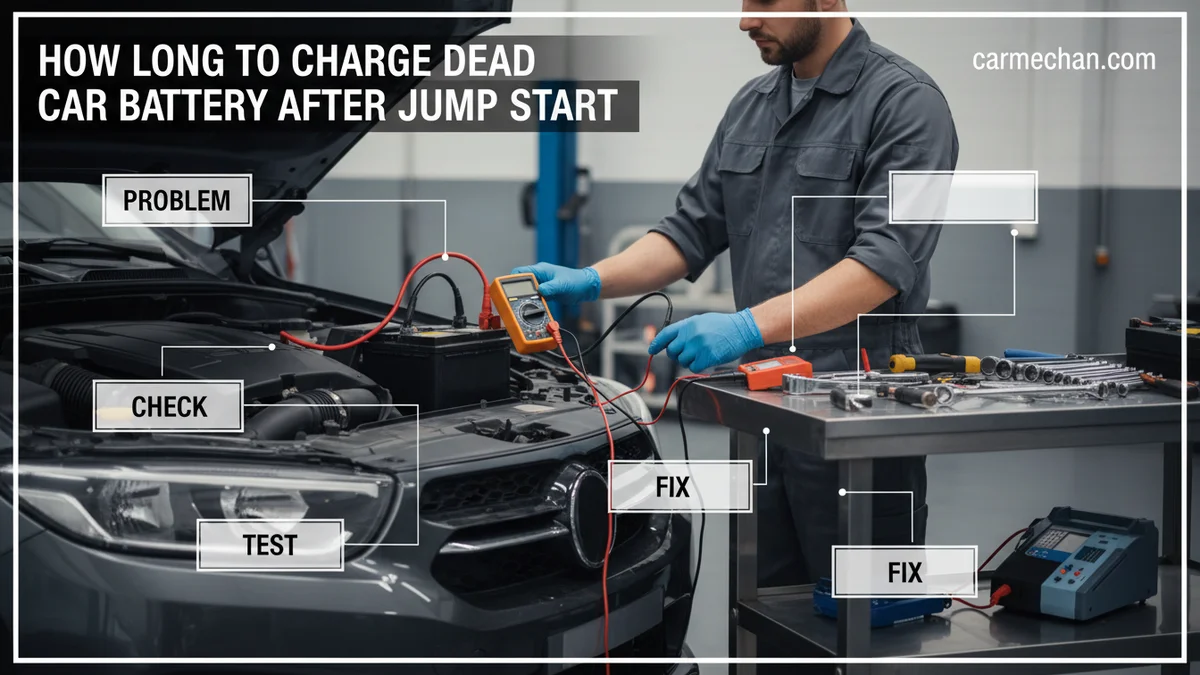
A simple multimeter can provide a quick assessment of your battery’s voltage. To get an accurate reading, ensure your car has been off for at least a few hours. A fully charged car battery should read around 12.6 volts or higher when the engine is off .
If your reading is consistently below 12.4 volts, the battery may be weak or deeply discharged. this test is a basic check, not a definitive diagnosis of battery life or capacity.
Seek Professional Test
For a comprehensive evaluation, we highly recommend a professional battery load test. Auto parts stores or mechanics often offer this service for free. A load tester assesses the battery’s ability to hold voltage under simulated starting conditions. This test can reveal internal issues that a simple voltage check cannot.
If the battery fails a load test, replacement is almost certainly necessary. Understanding these results will help you decide on the next steps, whether it’s further charging or replacing the battery.
Slow Charging vs Quick Driving for Dead Car Batteries
When dealing with a dead car battery, you have two primary methods for recharging: relying on your car’s alternator through driving or using a dedicated battery charger. Each method has distinct advantages and limitations for battery health.
Benefits of Slow Charging
Slow charging, often done with a battery tender or a smart charger, is the most gentle and effective way to fully restore a deeply discharged battery. These chargers deliver a steady, controlled current over several hours, sometimes overnight. This slow, deliberate process ensures the battery cells are fully replenished without overheating or causing damage.
It significantly prolongs battery life and restores its full capacity. Many battery manufacturers recommend a slow charge for maximum battery health.
Limits of Quick Driving
While driving recharges your battery, it’s not ideal for a truly dead battery. Your alternator is designed to maintain a charge, not to fully recover a deeply discharged battery efficiently. It works harder after a jump start, potentially straining the alternator itself. A quick drive might provide enough charge to start the car again but often leaves the battery only partially charged.
This can lead to a shorter lifespan for the battery. It also risks future starting issues.
Choosing Best Method
For immediate needs after a jump, driving is a viable option to get you going. However, for a battery that was completely dead, or if you suspect underlying issues, a dedicated battery charger is the superior choice. If driving isn’t feasible, or if your battery consistently struggles, investing in a good quality smart charger is a wise decision.
This ensures a healthier, more complete charge. This leads us to the critical question: when does your battery move beyond simple recharging and need replacement?
When to Replace a Car Battery After a Jump Start?
It’s an unfortunate truth that a jump start can sometimes only be a temporary fix. Knowing when to replace your car battery after a jump is crucial to avoid being stranded again in 2026. Several factors indicate your battery might be beyond recovery.
Recognize Failure Indicators
If your car repeatedly needs a jump start, even after sufficient driving, your battery is likely failing. Other clear signs include the battery not holding a charge for more than a few days, even when fully charged. A noticeably swollen or cracked battery case, or a strong sulfur smell, are also definite indicators of internal damage.
These symptoms suggest the battery cells are compromised and cannot store energy effectively.
Consider Battery Age
Age is a significant factor in battery performance. Most car batteries last between 3-5 years, though this can vary based on climate and usage . If your battery is approaching or exceeding this age range, its capacity naturally diminishes.
A jump start on an old battery is often a signal that its time is coming to an end. Proactive replacement is often less stressful than reactive failure.
Avoid Costly Delays
Delaying battery replacement can lead to more than just inconvenience. A failing battery can put extra strain on your car’s alternator, potentially causing premature wear or failure of that component. A completely dead battery can also lead to issues with your vehicle’s complex electronic systems, requiring costly resets or diagnostics.
Replacing a questionable battery promptly is a small investment that can prevent larger, more expensive repairs down the road. To avoid these issues, adopting preventative measures is key to long-term battery health.
7 Smart Steps to Prevent Future Battery Failures
Preventing future battery failures is far easier and less stressful than dealing with a dead battery. By adopting a few simple habits and maintenance routines, you can significantly extend your battery’s lifespan and reliability into 2026 and beyond.
Perform Routine Checks
Regularly inspect your battery terminals for corrosion (a fuzzy blue-green substance). Clean them with a wire brush and a baking soda-water solution. Ensure the battery cables are securely fastened. Check the battery tray for any signs of rust or excessive movement. A loose battery can vibrate, causing internal damage.
These simple visual checks can preempt many common issues.
Minimize Power Drains
Avoid leaving lights on, doors ajar, or accessories running when the engine is off. Even small parasitic drains, like a forgotten phone charger or a faulty interior light switch, can slowly deplete your battery. Ensure all accessories are switched off before you leave your vehicle.
Modern cars have complex electronics that draw a minimal constant current, but excessive draws shorten battery life. If you have aftermarket accessories, ensure they are professionally installed to avoid unnecessary draws.
Drive Consistently
Short, infrequent drives are detrimental to battery health. They don’t allow the alternator enough time to fully recharge the battery. Aim for regular drives of at least 20-30 minutes, especially if your car sits for extended periods. This keeps the battery optimally charged and prolongs its life. Consider combining errands into one longer trip to benefit your battery.
Manage Climate Impact
Extreme temperatures, both hot and cold, put significant stress on your car battery. In hot climates, the electrolyte can evaporate faster, accelerating internal corrosion. In cold weather, the chemical reaction slows, reducing cranking power. Park in shaded areas in summer and use a battery blanket in severe winter conditions. These measures can mitigate environmental damage.
Use Battery Maintainer
For vehicles stored for long periods, like classic cars or seasonal vehicles, a battery maintainer (also called a trickle charger) is invaluable. It delivers a small, continuous charge to keep the battery at its optimal voltage. This prevents self-discharge and ensures the battery is ready to go when you are.
It’s a smart investment for vehicles that are not driven daily.
Following these steps will help you avoid the frustration of a dead battery. Always prioritize preventative care to ensure your vehicle is reliable.
What to Do Next for Your Car Battery
Successfully jumping your car is a great start, but the journey to full battery recovery often extends beyond that initial spark. driving after a jump starts the recharge process, but a truly dead battery typically needs more than an alternator to regain its full capacity.
We’ve highlighted the necessity of a 30-60 minute drive, the importance of testing your battery’s health, and the advantages of dedicated slow charging for deep discharges. By recognizing warning signs and understanding your battery’s age, you can decide if it’s time for a replacement.
Ultimately, proactive maintenance and smart charging habits are your best defense against future battery issues. Don’t wait for another jump start to realize your battery needs attention. Take the steps today to ensure a reliable start every time you turn the key.
Frequently Asked Questions About Car Battery Charging
Can I Just Drive My Car for 15 Minutes After a Jump Start?
Driving for only 15 minutes after a jump start is often insufficient for a full recharge, especially for a deeply discharged battery. While it might get your car running, aiming for 30-60 minutes at highway speeds is better to adequately replenish the battery’s charge. A dedicated charger ensures a more complete and healthier charge.
What Drains a Car Battery When the Car Is Off?
Several factors can drain a car battery when the car is off, known as parasitic drains. Common culprits include faulty wiring, aftermarket accessories like alarms or stereo systems, interior lights left on, or a malfunctioning alternator diode. Modern vehicles also have continuous draws for their electronic systems.
How Do I Know If My Alternator or Battery Is Bad After a Jump?
If your car starts immediately after a jump but quickly dies once the jump cables are removed, it likely points to a failing alternator. If the car runs fine after the jump but struggles to start again later, even after driving, the battery itself is probably failing to hold a charge. A professional test confirms this.
Is It Better to Idle or Drive After a Jump Start?
Driving is generally better than idling after a jump start for recharging your car battery. Driving at consistent speeds, especially on a highway, allows the alternator to operate at higher RPMs and generate more consistent power. Idling charges much slower and less efficiently, if at all, for a significantly drained battery.
How Often Should I Check My Car Battery’s Health?
You should check your car battery’s health at least twice a year, typically before winter and summer. Extreme temperatures put significant stress on batteries. Regular visual inspections for corrosion and occasional voltage checks with a multimeter can help identify potential issues before they leave you stranded unexpectedly.