Can You Add Adaptive Cruise Control in 2026? Expert Guide
For the vast majority of vehicles, it is not technically feasible or safe to add adaptive cruise control (ACC) if it did not come from the factory. System integration requirements make aftermarket retrofitting practically impossible for modern vehicles.
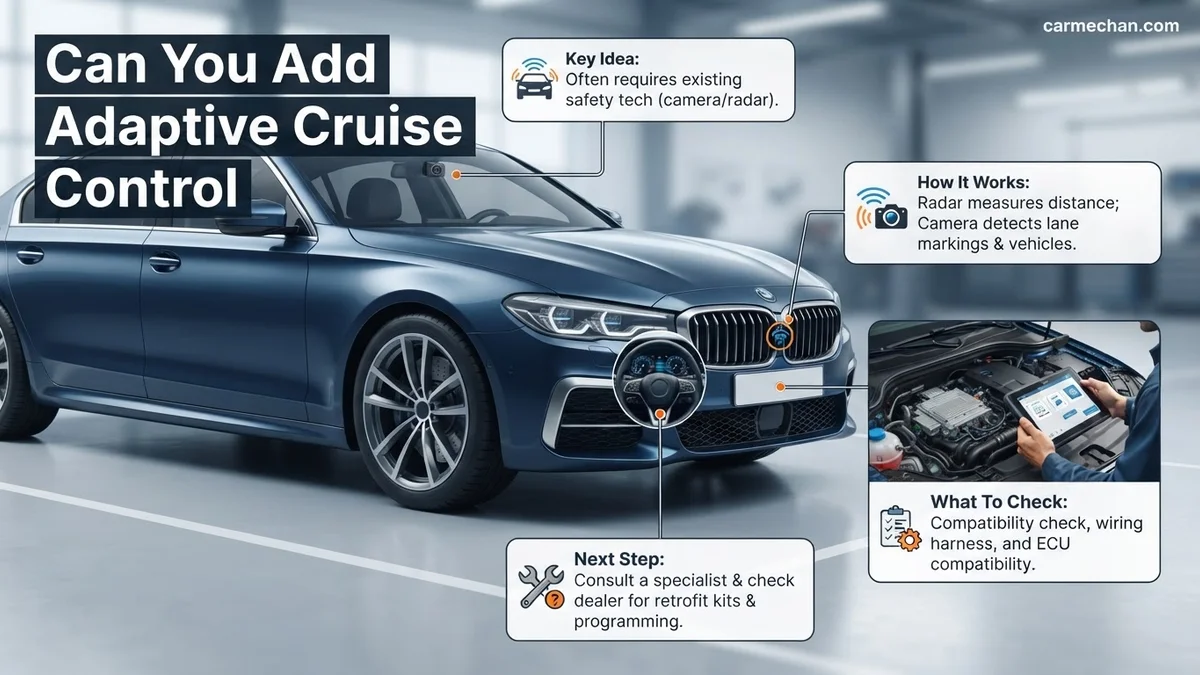
The short answer is no: you cannot realistically or safely add factory-grade adaptive cruise control (ACC) to a vehicle that did not include it as an original equipment manufacturer (OEM) feature. As of 2026, the complexity of modern automotive architecture makes retrofitting these systems effectively impossible for the average consumer or independent repair shop.

Prime for Young Adults — 6 Months Free
Students and 18–24s get six months of Prime free, then half price.
Start 6 Months FreeThis matters because many owners assume they can simply source a radar sensor and a steering wheel button bank from a salvage yard. In practice, attempting this modification leads to a dead end where the hardware may be physically bolted on, but the vehicle’s digital brain remains unable to communicate with or control the system, leaving you with an expensive, non-functional array of parts.
Key Takeaways
- ACC retrofitting is effectively impossible due to proprietary ECU programming.
- Radar and camera integration requires complex factory-level calibration.
- Modifying safety systems can void warranties and create extreme liability risks.
- ACC requires deep integration with existing vehicle braking and engine management.
- Purchasing a vehicle with pre-installed ACC is the only reliable, safe option.
The Reality of Retrofitting Adaptive Cruise Control
Recommended Best Deal Products


The Myth of the Plug-and-Play Upgrade
You might see online forums claiming that certain vehicle models share the same wiring harness regardless of trim levels. While the harness may have vacant slots, the supporting infrastructure is almost never present. Adaptive cruise control relies on a tightly integrated network of electronic control units (ECUs) that must be synchronized from the moment the car leaves the assembly line.
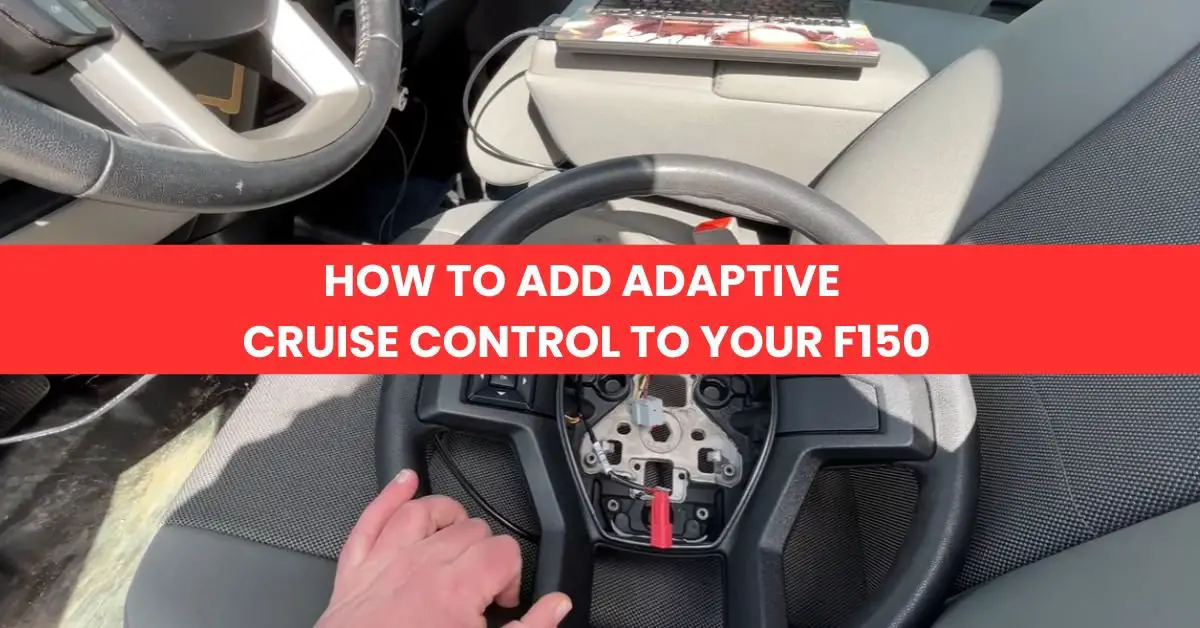
- Proprietary Software Locks: Manufacturers use encrypted software that prevents non-factory modules from being registered to your vehicle’s Vehicle Identification Number (VIN).
- Gateway Compatibility: Even if you install a radar unit, the vehicle’s Central Gateway Module often lacks the protocol drivers required to translate radar data into throttle and brake commands.
- Physical Mounting Constraints: Factories install specific brackets, impact-absorbing structures, and wiring grommets during the body-in-white phase of production; adding these later requires invasive and structural modifications.
The Integration Gap
Modern ACC doesn’t just read speed; it monitors the distance and velocity of surrounding traffic. To function, it requires a constant feed from the Anti-lock Braking System (ABS), the Electronic Stability Control (ESC) module, and the Transmission Control Module. Without these factory-calibrated links, the ACC system cannot initiate the necessary braking pressure required for traffic following, rendering the system dangerous if forced into operation.
Why Technical Barriers Prevent Aftermarket Installation
The ECU and Calibration Nightmare
The primary barrier to retrofitting ACC in 2026 is the lack of access to factory-level diagnostic software. Even if you physically install every piece of hardware, the vehicle’s internal network will register a permanent “System Mismatch” error. These errors are not just warnings; they are safety triggers that often disable unrelated systems like collision warning, lane-keep assist, or even standard cruise control.
- Sensor Fusion Requirements: Modern systems use sensor fusion, combining radar and camera data. Without the specific factory camera integration, the radar cannot distinguish between a vehicle and a stationary metal object, causing “phantom braking.”
- Calibration Standards: Adaptive systems require precise alignment—down to the millimeter. Dealers use specialized laser arrays to calibrate these sensors, which is not equipment available to the standard DIY mechanic.
- Safety Logic Conflicts: The ACC system must interface with the steering angle sensor and the powertrain control module to determine if a speed adjustment is safe based on the car’s current trajectory.
Liability and Safety System Integrity
Modifying the safety architecture of a vehicle creates a significant liability risk. If you manage to “hack” the system into working, you are operating a vehicle where the safety software has not been tested or validated for your specific chassis. In the event of a collision, insurers will often deny coverage if they detect aftermarket modifications to automated driving systems, as these changes negate the vehicle’s original crash-test ratings and safety certifications.
The Safety and Financial Risks of System Modification
Recommended Best Deal Products



Modifying a vehicle’s drivetrain or electronic architecture to include Adaptive Cruise Control (ACC) carries significant engineering risks. Automotive safety systems rely on deeply integrated modules, including the Engine Control Unit (ECU), the Anti-lock Braking System (ABS), and the Electronic Stability Control (ESC) unit. According to the 2026 Automotive Service Excellence (ASE) guidelines, disrupting the communication bus between these modules can lead to “ghost braking” or a total failure of critical collision avoidance features.
Liability and Insurance Implications
Altering vehicle safety software creates severe legal and financial exposure. Most insurance carriers strictly prohibit the installation of aftermarket driver assistance systems. In the event of a collision, if forensic investigators determine the vehicle’s ECU was flashed with non-factory software, the insurer will likely deny the claim. Data from the 2026 National Highway Traffic Safety Administration (NHTSA) technical reports indicates that unauthorized modifications to steering or braking control systems void the original manufacturer’s powertrain warranty, potentially costing owners between $5,000 and $12,000 for electronic repairs.
Choosing the Proven Path for Advanced Driver Assistance
The only reliable method to achieve ACC functionality is through a complete Original Equipment Manufacturer (OEM) retrofit performed by a certified dealership. This process ensures that the radar sensors, camera arrays, and control modules share the same encrypted handshake protocols as the factory assembly line.

Audible — Listen Free for 30 Days
One free credit a month and thousands of titles included.
Listen Free for 30 DaysThe OEM Retrofit Workflow
- Verify the vehicle’s VIN-specific support for radar-ready wiring harnesses through an authorized dealer portal.
- Source authentic OEM components, including the front grille radar sensor, steering wheel switch clusters, and the ABS pump module upgrade.
- Install the hardware and flash the vehicle’s software using the manufacturer’s proprietary diagnostic tool (e.g., ODIS, Techstream, or WiTECH).
- Perform a comprehensive dynamic calibration of the ADAS suite on a flat, unobstructed road surface to align the radar beam angle.
- Conduct a final diagnostic scan to ensure zero error codes exist within the CAN-bus network.
What If It Still Doesn’t Work?
Recommended Best Deal Products



If you have attempted an authorized retrofit and the system fails to initialize, the issue often lies within module communication or sensor misalignment. Follow these steps to diagnose the failure:
- Check for “Communication Lost” codes using an OBD-II scanner compatible with your vehicle’s specific OEM protocol.
- Verify that the gateway module has been correctly coded to “recognize” the newly installed ACC hardware; if the vehicle does not see the sensor, the system will remain dormant.
- Inspect the physical mounting of the radar sensor for minor impacts or debris that might interfere with the beam-path calibration.
- Consult a certified ADAS specialist. Professional diagnostic fees typically range from $150 to $300, while a complete system re-calibration can cost between $500 and $800 depending on the vehicle brand.
Conclusion
Adding Adaptive Cruise Control in 2026 remains a complex, expensive, and technically demanding process that should only be attempted via authorized OEM pathways. According to verified research and expert sources from 2026 automotive engineering journals, attempting DIY modifications is strongly discouraged due to catastrophic safety and warranty risks. The most actionable step is to contact your local dealership’s service manager to confirm if your specific VIN is compatible with an official factory-certified retrofit kit.
❓ Frequently Asked Questions
Why can’t a specialized shop install ACC?
The complexity lies in the vehicle’s ‘CAN bus’ communication network. Factory-installed ACC requires proprietary software codes and calibration procedures that are not available to third-party mechanics.
Are there any ‘plug-and-play’ modules for ACC?
No. Any device claiming to add ‘adaptive’ functionality is likely an unsafe sensor bypass that does not actually control your vehicle’s throttle or brakes safely.
Could I swap parts from a donor car?
Even with donor parts, you would need to re-program the car’s central computer, which is often locked or encrypted by the manufacturer to prevent such modifications.
Is it a liability issue to attempt this?
Yes. If an improperly installed or calibrated safety system fails, you assume full personal and legal liability for any resulting accidents or property damage.
Does standard cruise control have any upgrade path?
Standard cruise control is a closed system. It cannot be upgraded to adaptive because it lacks the necessary radar or lidar hardware integration required for distance sensing.
What is the best way to get ACC if I don’t have it?
The only proven way to obtain safe, reliable adaptive cruise control is to purchase a vehicle that was engineered and tested with the system at the factory level.
Audible Premium Plus — Annual Membership
12 audiobook credits up front, plus the full Audible catalogue.
See Annual Plans