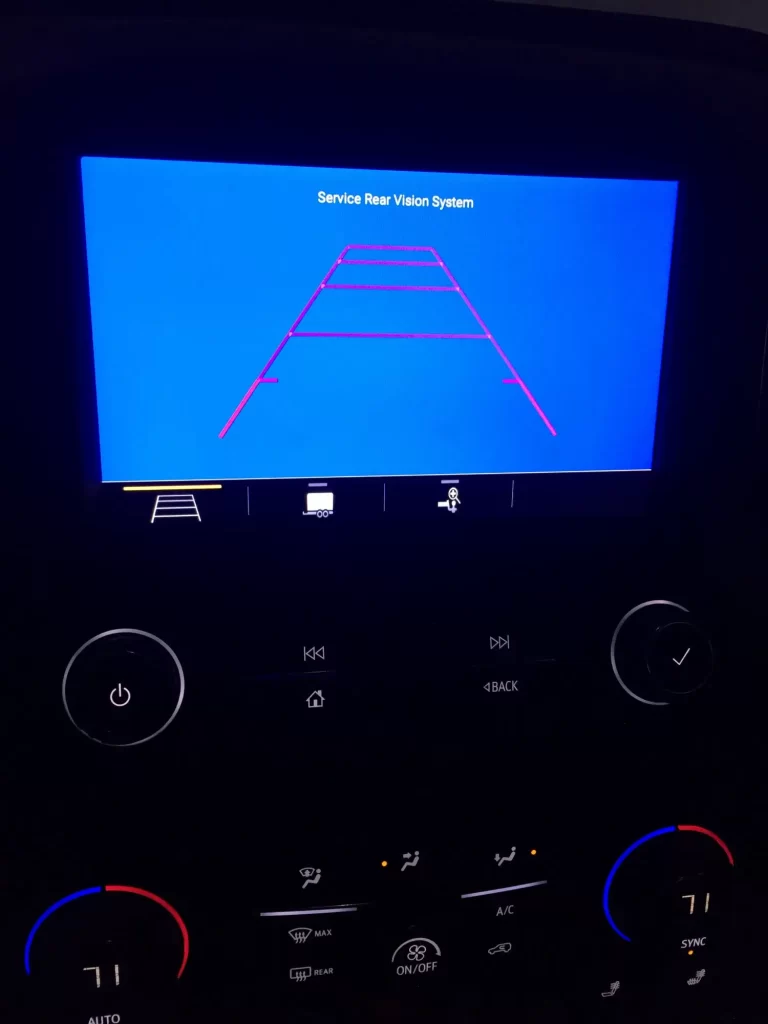
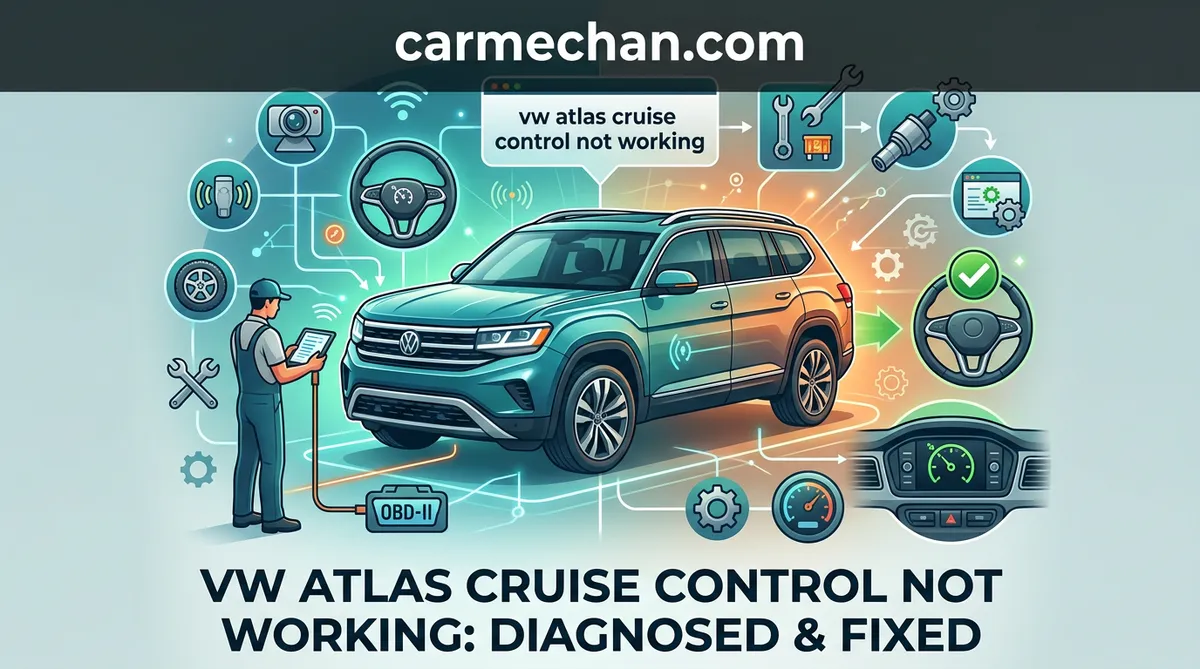
vw atlas cruise control not working: Diagnosed & Fixed
Is your VW Atlas cruise control system failing just when you need it for a long highway drive? Many owners report the frustration of engaging their Adaptive Cruise Control (ACC) only to be met with a persistent “ACC Error” or “Front Assist Unavailable” message on the digital cockpit. Whether the system refuses to engage entirely or shuts down mid-journey, these electronic gremlins can be unsettling. In this guide, we break down the primary causes of VW Atlas cruise control malfunctions and provide a clear path to troubleshooting and fixing these issues effectively.
Primary Causes of VW Atlas Cruise Control Not Working
Recommended Best Deal Products


Modern Volkswagen vehicles utilize a complex suite of sensors that must communicate in perfect harmony. When one link in this chain—the radar, the stability controller, or the communications network—reports data outside of expected parameters, the safety logic is programmed to disable cruise control immediately to prevent an unintended acceleration or braking event.
📤 Share Image
Why Radar Sensor Obstruction Triggers Errors
The heart of your cruise control system is the Front Assist radar sensor, typically mounted behind the prominent Volkswagen emblem on the front grille. This sensor calculates distance to the vehicle ahead. If this emblem is obscured by heavy mud, thick slush, or a layer of road salt, the radar cannot “see” the road, triggering an automatic safety shutdown. You will often see an explicit “ACC Error” message on the dash because the system recognizes a lack of signal clarity, deeming the automated following distance function unreliable.

Environmental Factors: Rain, Snow, and Ice
Severe weather is a frequent culprit. Research indicates that the radar frequency used by VW sensors can be temporarily disrupted by heavy precipitation or ice accumulation. Furthermore, if you are driving through deep standing water, the spray can coat the emblem, effectively blinding the sensor. In these cases, the system does not have a “hardware failure,” but rather a “functional limitation” due to environmental interference.

The Link Between ABS, ESC, and Cruise Failure
Cruise control is a safety-critical system that relies heavily on the ABS (Anti-lock Braking System) and ESC (Electronic Stability Control) modules. Because the cruise control must be able to modulate the brakes, any fault code detected within the ABS/ESC system—even a minor one like a faulty wheel speed sensor—will cause the vehicle’s computer to kill the cruise control function as a fail-safe measure. If your ABS light is illuminated alongside your cruise control fault, the issue is almost certainly with the stability electronics rather than the cruise control switch itself.
Industry Data
Cases caused by minor sensor obstructions
Electronic component or wiring faults
How to Fix VW Atlas Cruise Control Not Working Issues
📋
Troubleshooting Steps
Recommended Best Deal Products


Use a soft microfiber cloth and a mild automotive-safe detergent to gently clean the front Volkswagen emblem. Avoid pressure washers or harsh solvents, as they can degrade the special radio-transparent coating on the emblem, leading to permanent sensor calibration issues.
Minor software glitches in the Electronic Control Unit (ECU) can often be cleared by a “hard reboot.” Park the vehicle in a safe location, turn the ignition off, and let the car sit for 15 minutes. This allows the internal modules to enter a “sleep” state and clear temporary memory faults.
Connect an OBD-II scanner capable of reading VW-specific manufacturer codes. Generic scanners may only show “P” codes, but you need one that reads “C” (Chassis) or “U” (Network/CAN Bus) codes to pinpoint if a specific wheel speed sensor is failing, which is a common cause for cruise control deactivation.
Diagnosing Steering Wheel and Electronic System Faults
If your sensor is clean and your scan tool shows no active ABS codes, the issue may reside within the steering assembly. The steering wheel acts as the primary interface for your cruise control commands, and it contains several components that can wear over time.

Prime for Young Adults — 6 Months Free
Students and 18–24s get six months of Prime free, then half price.
Start 6 Months FreeTesting Multi-function Steering Wheel Buttons
If the cruise control buttons feel “mushy,” stick, or fail to produce an audible/tactile “click” response, the switch assembly itself may be failing. Because these buttons transmit signals via the CAN Bus, a corroded contact can send a corrupted signal that the ECU interprets as an “invalid request,” leading the system to disable cruise control as a protective measure. If you notice that your radio volume or menu navigation buttons also act sporadically, the steering wheel control module is the primary suspect.
Clock Spring Issues and Cruise Disconnection
The clock spring is a ribbon-cable assembly that allows electrical connections to remain intact while the steering wheel rotates. If the clock spring is failing, you may notice that the cruise control only cuts out when the wheel is turned to a specific angle, or that the airbag light intermittently flickers. This is a tell-tale sign that the electrical ribbon inside the column has a break, causing a temporary loss of communication between the steering wheel buttons and the steering control module.
When to Seek Professional Help for Cruise Control Failures
Recommended Best Deal Products

While many fixes are accessible to the DIY enthusiast, certain conditions necessitate an expert touch to ensure the vehicle remains safe to operate on public roads.
- Radar Alignment After Front-End Damage: If you have recently been in a minor collision or had the front bumper removed, the radar sensor may be physically misaligned. Dealer-grade diagnostic tools (such as VAS 6154) are required to perform a “Radar Calibration.” This is a highly precise process that cannot be bypassed with standard tools.
- Interpretation of DTCs: Diagnostic Trouble Codes (DTCs) can be misleading. For example, a “Communication Lost with Radar Sensor” code could indicate a failed sensor, but it is equally likely to be a corroded harness connector or a faulty gateway module. An expert will perform a “pin-out” test on the wiring rather than simply swapping expensive parts.
- System Updates: Volkswagen occasionally releases firmware updates for the driver assistance modules to improve stability and performance. If your vehicle continues to experience software-related glitches after a reset, a dealership-authorized update is the only solution.
Never attempt to disassemble the radar sensor housing or tamper with the wiring harnesses behind the steering wheel airbag unless you are a certified technician. These components are linked to safety-critical systems and improper handling can cause inadvertent deployment or total system failure.
Summary of Solutions
Most cruise control issues on the Atlas stem from sensor obstructions or minor software glitches. Always start with a physical inspection of the front radar sensor before assuming a major electronic fault. Furthermore, use OBD-II diagnostic tools to read trouble codes to avoid unnecessary part replacements. If your troubleshooting steps are unsuccessful, consult an authorized Volkswagen service center to ensure your radar system remains safety-compliant.
Vw Atlas Cruise Control Not Working: Frequently Asked Questions
Why does my VW Atlas say ‘ACC Error’?
An ‘ACC Error’ indicates that the Adaptive Cruise Control radar system has detected a malfunction. This is most commonly caused by a blocked radar sensor behind the front VW logo, heavy rain or snow interfering with the radar beam, or a communication failure between the radar module and the vehicle’s central computer. It essentially puts the system in ‘fail-safe’ mode to prevent improper speed adjustments.
Can a dirty emblem cause cruise control to stop working?
Yes, absolutely. The radar sensor for the Adaptive Cruise Control is mounted directly behind the front grille’s VW emblem. If the emblem is covered in heavy road grime, thick ice, or mud, the radar signal is obstructed. When the system detects that it cannot ‘see’ clearly, it will automatically deactivate the cruise control to ensure driver safety, resulting in a persistent dashboard warning.
Will a bad wheel speed sensor turn off cruise control?
Yes. Cruise control relies on precise input from the vehicle’s wheel speed sensors to maintain a constant speed. If a sensor fails or sends erratic data, the system cannot verify how fast the vehicle is moving. Consequently, the car will disable the cruise control and likely display multiple dashboard lights, such as the ABS or ESC indicators, alongside the cruise control fault.
How do I reset the cruise control system on my Atlas?
To reset the system, first ensure the sensor is clean. Then, perform a ‘hard reboot’ by shutting off the engine and letting the vehicle sit for at least 15 minutes. Alternatively, disconnecting the negative battery terminal for 10 minutes can force the electronic control modules to clear temporary fault codes. If the light returns immediately, there is likely a permanent physical or electrical fault that requires repair.

Audible Premium Plus — Annual Membership
12 audiobook credits up front, plus the full Audible catalogue.
See Annual PlansWhy does my cruise control turn off when it rains?
Heavy rain, sleet, or snow can refract or block the radar waves emitted by the ACC system. When the sensor receives excessive signal ‘noise’ from raindrops or water spray, it determines it can no longer safely track the distance to the vehicle ahead. This is a safety feature; the system purposefully disables itself during inclement weather to prevent incorrect braking or acceleration decisions.