What Does Rwd Mean On A Car RWD on a Car Explained 2026
RWD on a car means Rear-Wheel Drive, a drivetrain configuration where the engine’s power is sent exclusively to the rear wheels, pushing the car forward. This setup typically offers superior weight distribution, enhancing handling, acceleration, and a more engaging driving experience, especially in performance-oriented vehicles.
So, what does RWD mean on a car? RWD stands for Rear-Wheel Drive, a fundamental drivetrain configuration where the engine’s power is delivered exclusively to the rear wheels. This setup propels the vehicle forward by pushing it, creating a distinct driving dynamic cherished by many automotive enthusiasts.

Audible — Listen Free for 30 Days
One free credit a month and thousands of titles included.
Listen Free for 30 DaysUnderstanding RWD is crucial for anyone exploring car options, from first-time buyers to seasoned enthusiasts. It significantly influences a car’s performance, handling characteristics, and overall driving feel. This comprehensive guide will explain how RWD works, its key advantages and disadvantages, and how it compares to other drivetrains by 2026, helping you make informed decisions about your next vehicle.
Key Takeaways
- RWD powers only the rear wheels.
- Offers balanced weight distribution.
- Provides a distinct, engaging driving feel.
- Can struggle in low-traction conditions.
- Common in performance cars and trucks.
What Is Rear Wheel Drive a Core Definition
Rear-Wheel Drive (RWD) fundamentally describes an automotive drivetrain system where the engine’s power is directed solely to the back wheels. In this configuration, the front wheels are responsible only for steering, while the rear wheels handle the task of propulsion.
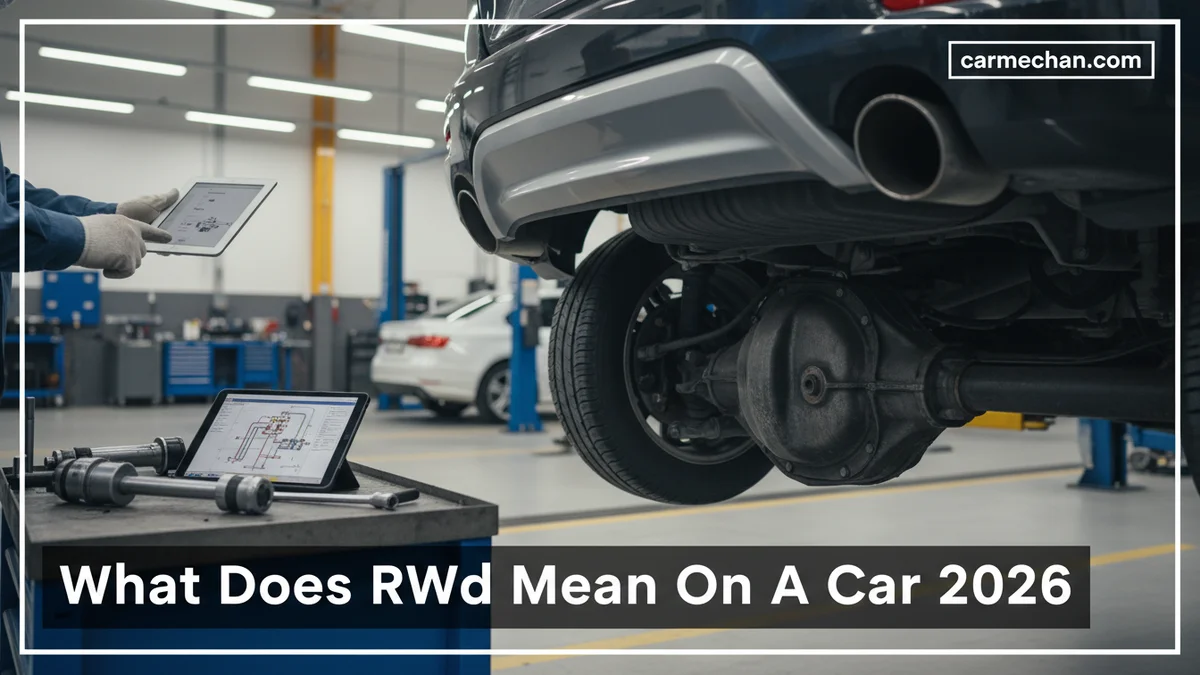
This method of power delivery is a traditional approach to automotive engineering. Early automobiles, almost without exception, utilized a rear-wheel drive layout. It has remained a popular choice for certain vehicle types due to its inherent mechanical advantages and specific driving characteristics.
The core principle is simple: power generated by the engine is transferred through a series of components to push the vehicle from the rear. This setup results in a clear separation of duties for the front and rear axles, which impacts everything from weight distribution to handling dynamics.
Understanding this basic definition helps to grasp the deeper implications of an RWD vehicle.
How Does Rear Wheel Drive Actually Work
The fundamental principle of Rear-Wheel Drive involves a clear path of power from the engine to the rear wheels. In most RWD vehicles, the engine is mounted longitudinally, meaning it is aligned from front to back within the car’s chassis. This orientation allows for a straightforward connection to the rest of the drivetrain.
Power first exits the engine and travels into the transmission, which adjusts the gear ratios for different speeds and power requirements. From the transmission, the torque is then sent through a long rotating shaft called a driveshaft. This driveshaft runs along the length of the car, typically under the cabin floor, connecting the transmission to the rear axle.
At the rear axle, the driveshaft connects to a component known as the differential. The differential is a complex gear system that performs two critical functions. First, it changes the direction of the power flow, sending it outwards to the left and right rear wheels.

Prime for Young Adults — 6 Months Free
Students and 18–24s get six months of Prime free, then half price.
Start 6 Months FreeSecond, and crucially, it allows the rear wheels to rotate at different speeds when cornering. This difference in speed is essential for smooth turns, as the outer wheel travels a greater distance than the inner wheel.
Finally, axles extend from the differential to each rear wheel, transmitting the power that ultimately propels the car forward. This entire sequence illustrates how the engine’s force effectively pushes the vehicle from behind. This mechanical setup directly influences how a vehicle performs and feels on the road, setting the stage for its distinct advantages.
5 Key Benefits of Rear Wheel Drive Systems
Rear-Wheel Drive offers distinct advantages that enhance the driving experience in various scenarios. These benefits are particularly appealing for those who prioritize performance and handling.
First, RWD typically provides improved weight distribution. With the engine often up front and the transmission/driveshaft/differential components moving weight towards the rear, the car achieves a more balanced front-to-rear weight ratio. This optimal balance, often cited as near 50/50 for performance cars, significantly enhances stability and cornering agility .
Second, drivers experience better handling and steering feel. Since the front wheels are solely for steering, they are not burdened with delivering power. This allows for a purer, more responsive steering input, giving the driver a greater connection to the road. You can feel the car’s dynamics more intuitively.
Third, RWD can offer stronger acceleration, especially from a standstill. As the car accelerates, weight naturally shifts towards the rear, pressing the drive wheels into the road. This phenomenon increases traction on the rear wheels, allowing for a more efficient transfer of power to the ground without excessive wheelspin, particularly under hard acceleration.
Fourth, RWD designs often lead to a simpler front-end structure. Without the need for drive axles and complex steering mechanisms, the front suspension can be engineered for optimal ride comfort and handling precision. This contributes to the refined feel many RWD cars offer.
Finally, RWD configurations are often preferred for vehicles with enhanced towing capacity, like pickup trucks. The push from the rear wheels provides superior control and stability when hauling heavy loads. The design inherently handles longitudinal forces better, making it ideal for strenuous tasks.
However, despite these compelling benefits, Rear-Wheel Drive systems also present certain challenges that drivers should consider.

Prime Gaming — Free In-Game Loot
Free monthly games, in-game content and a Twitch channel sub.
Claim Free Loot4 Common Drawbacks of RWD for Drivers
While RWD offers many advantages, it also comes with specific limitations that can affect a driver’s experience, particularly in certain conditions.
One significant drawback is reduced traction in adverse weather conditions, such as snow, ice, or heavy rain. Because the majority of the vehicle’s weight is over the front wheels and not directly over the rear drive wheels, these wheels can struggle to find grip. This can lead to easier wheelspin and reduced control, making RWD less practical in regions with harsh winters .
Another concern is the potentially higher manufacturing cost. The RWD drivetrain requires additional components like a driveshaft and a more complex rear axle assembly. This can translate into a slightly higher price point for RWD vehicles compared to their FWD counterparts, affecting both initial purchase and potential repair costs over time.
Interior space considerations are also a factor. The driveshaft, which runs from the front to the rear of the car, necessitates a raised tunnel along the center of the cabin. This transmission tunnel can encroach on interior space, particularly for rear passengers, reducing legroom or comfort in the middle seat.
Finally, RWD vehicles are more prone to oversteer, especially when accelerating aggressively through turns or on slippery surfaces. Oversteer occurs when the rear wheels lose traction and slide outwards, causing the car to turn more sharply than intended. While performance drivers can use this to their advantage, it can be unnerving and challenging for less experienced drivers to manage safely.
These specific pros and cons highlight why RWD is a distinct choice, leading many to compare it directly with other drivetrain types to find the best fit for their needs.
RWD vs FWD vs AWD Which Drivetrain Is Best
Choosing a drivetrain often involves weighing the merits of Rear-Wheel Drive, Front-Wheel Drive (FWD), and All-Wheel Drive (AWD). Each system offers a different balance of performance, efficiency, and capability.
When comparing RWD vs FWD, the key distinctions emerge in handling and traction. FWD vehicles, where the engine’s power goes only to the front wheels, generally offer better traction in low-grip conditions because the engine’s weight directly presses down on the drive wheels. They are also typically more fuel-efficient and less expensive to manufacture due to a simpler, more compact drivetrain .
However, FWD can suffer from “torque steer” during hard acceleration, where the steering wheel pulls to one side, and generally provides a less engaging driving feel than RWD.
RWD vs AWD presents a different scenario. AWD systems send power to all four wheels, either full-time or on-demand, offering superior traction and stability across a wider range of conditions, particularly in severe weather or light off-roading. This capability comes at the cost of increased complexity, higher weight, and usually lower fuel efficiency compared to both FWD and RWD.
While AWD provides maximum grip, RWD prioritizes balanced handling and a direct connection to the road for performance driving.
Ultimately, the “best” drivetrain depends on your priorities. For everyday commuting in fair weather and budget-consciousness, FWD often makes sense. For performance driving, a more engaging experience, or heavy-duty tasks like towing, RWD excels. If you regularly face harsh weather, need off-road capability, or desire maximum all-around traction, AWD is the preferred choice.
Understanding these differences helps us appreciate why RWD is chosen for specific types of vehicles.
What 8 Types of Cars Often Use RWD
Rear-Wheel Drive is a preferred drivetrain in several distinct vehicle categories, each valuing its unique characteristics.
Sports cars and performance sedans frequently use RWD for their superior handling, balanced weight distribution, and direct steering feel. Examples include many models from BMW and Porsche, designed for enthusiastic driving.
Luxury vehicles also often feature RWD, contributing to a smooth, refined ride and sophisticated handling dynamics. Brands like Mercedes-Benz, Lexus, and Cadillac frequently build their flagship models with this setup.
Pickup trucks are a prime example of RWD utilization, particularly for their towing and hauling capabilities. The rear wheels provide the necessary push and stability when carrying heavy loads or pulling trailers.
Commercial vans, such as those used for deliveries, benefit from RWD’s design for carrying significant cargo weights. This ensures reliable performance even when fully loaded.
Classic cars from earlier eras predominantly featured RWD, reflecting its historical prevalence in automotive engineering. Many beloved vintage models still showcase this traditional layout.
Muscle cars are synonymous with RWD, leveraging its ability to put down significant power from large engines for powerful straight-line acceleration and an aggressive driving character.
Some SUVs, particularly those built on truck platforms or high-performance variants, also employ RWD for towing prowess or sportier dynamics. These often offer optional AWD systems for added versatility.
Finally, electric vehicles (EVs) are an emerging trend for RWD. With electric motors being compact and efficient, many EV manufacturers are opting for RWD for efficiency, packaging, and enjoyable driving dynamics, such as the Tesla Model 3.
Deciphering Your Drivetrain Needs by 2026
Understanding what RWD means on a car is more than just knowing an acronym; it’s grasping a fundamental aspect of vehicle dynamics. We’ve explored how Rear-Wheel Drive systems function, delivering power to the rear wheels to push your car forward. We’ve also weighed its considerable benefits, such as enhanced handling and balanced weight distribution, against its drawbacks, including potential traction issues in severe weather.
Comparing RWD to FWD and AWD highlights that no single drivetrain is universally superior; the best choice depends on your specific driving conditions, personal preferences, and lifestyle. As automotive technology continues to evolve into 2026, RWD remains a compelling option for those prioritizing a connected, engaging driving experience, especially in performance and luxury segments.
We encourage you to consider these factors carefully when researching your next vehicle. Test driving different drivetrain configurations can provide invaluable real-world insight into what truly suits your needs. Make an informed decision that aligns with how you drive and where you live.
Common Questions About RWD Cars
Is RWD Good for Daily Driving?
RWD can be good for daily driving, especially in fair weather, offering a refined feel and superior handling. However, it may require more caution or specialized tires in snowy or icy conditions, impacting its practicality for some daily commutes where maximum traction is needed.
What’s the Difference Between RWD and 4×4?
RWD powers only the rear two wheels, while 4×4 (four-wheel drive) can send power to all four wheels, often with selectable modes. 4×4 is designed for off-road conditions and extreme traction, whereas RWD focuses on on-road performance and handling balance.
Is RWD More Expensive to Maintain?
Generally, RWD might have slightly higher maintenance costs due to additional components like a driveshaft and differential, compared to a simpler FWD system. However, modern RWD systems are highly reliable, and costs are often comparable to other drivetrain types over the vehicle’s lifespan.
Does RWD Affect Fuel Efficiency?
RWD can sometimes be slightly less fuel-efficient than FWD due to increased drivetrain losses from the driveshaft and differential. However, advancements in engineering mean the difference is often minimal, with driving style and engine size having a much larger impact on overall fuel economy.
Why Do Sports Cars Use RWD?
Sports cars use RWD for its superior weight distribution, which enhances balance and handling during aggressive driving. It also allows for more precise steering as the front wheels are not burdened with propulsion, offering a more engaging and direct driving experience.