Dodge Demon Horsepower: Original vs. Demon 170 Specs Revealed
Last Updated on September 1, 2026 by Ryan
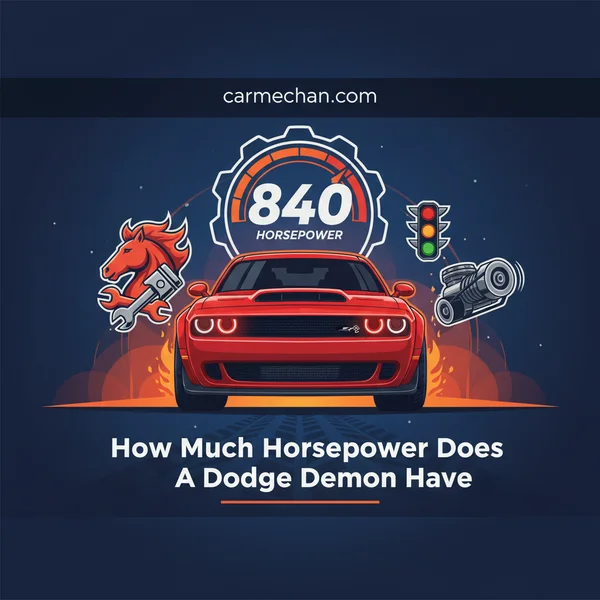
The Dodge Demon offers incredible horsepower, with figures varying significantly by model and fuel. The original Demon produces 808 hp on pump gas and 840 hp with race fuel using the Demon Crate. The newer Dodge Demon 170 pushes limits with up to 1,025 hp on E85 fuel.
🎯 Key Takeaways
Recommended Best Deal Products

- Original Demon:808 hp on 91+ octane pump gas.
- Original Demon:840 hp with 100+ octane race fuel.
- Demon 170:Up to 1,025 hp on E85 ethanol blend.
- Fuel type critically impacts the Demon’s power output.
- Both models feature supercharged HEMI V8 engines.
If you’re wondering about the raw power numbers behind the legendary Challenger SRT Demon Wikipedia Page”>Dodge Challenger SRT Demon, you’ve come to the right place. The original Dodge Demon, a drag-strip monster, delivers an astounding 808 horsepower on pump gas, which escalates to a ferocious 840 horsepower when fed race fuel through its special Demon Crate. But the story doesn’t end there: its successor, the Dodge Demon 170, shatters those figures, pushing the boundaries with an incredible 1,025 horsepower when running on E85 ethanol.
Understanding these horsepower figures is crucial for anyone interested in high-performance vehicles, especially in the context of street-legal drag racing. These aren’t just arbitrary numbers; they dictate everything from quarter-mile times to the sheer, exhilarating punch you feel every time you press the accelerator. Each Demon variant’s power output is a testament to Dodge’s engineering prowess, specifically tuned for maximum impact under specific fuel conditions, giving you distinct performance profiles depending on your choice of fuel.
Decoding the Original Dodge Demon’s Horsepower
The 2018 Dodge Challenger SRT Demon burst onto the scene with a singular purpose: dominating the drag strip straight from the factory. Its power figures were, and still are, astonishing, offering flexibility based on the fuel you choose to run.

The Standard Pump Gas Rating
Out of the box, running on readily available premium pump gas, the original Dodge Demon is a force to be reckoned with. You don’t need any special modifications or aftermarket parts to experience this insane level of performance.
- Horsepower: 808 hp
- Torque: 717 lb-ft
- Fuel Type: 91+ octane pump gasoline
This immense power comes from a highly specialized, supercharged 6.2-liter HEMI V8 engine, specifically designed for extreme output. Even on standard pump gas, the Demon sets a benchmark for production car performance, delivering a visceral driving experience that few other vehicles can match. It’s a testament to the robust engineering that allows such power to be reliably deployed.
Unleashing Full Power with the Demon Crate
To truly unlock the original Demon’s ultimate potential, Dodge offered the “Demon Crate,” an exclusive package designed to maximize performance for track use. This crate transformed the car into an even more potent machine, specifically by optimizing it for high-octane race fuel.
- Horsepower: 840 hp
- Torque: 770 lb-ft
- Fuel Type: 100+ octane race fuel
The Demon Crate includes a specialized powertrain control module (PCM) calibrated for the higher octane fuel, along with a performance air filter and other tools. By switching to race fuel and installing the race-optimized PCM, you could tap into those extra 32 horsepower and 53 lb-ft of torque. This enhancement made the original Demon the most powerful production V8 car ever made at its release, highlighting Dodge’s commitment to delivering unparalleled drag strip performance right off the showroom floor.
Everything You Need to Know About the Dodge Demon’s Horsepower
Welcome to your essential guide on understanding the immense power output of the Dodge Challenger SRT Demon. This comprehensive walkthrough will meticulously detail the various horsepower figures associated with this legendary drag-strip monster, exploring the factors that influence its performance, such as fuel type and specialized equipment. By following these steps, you’ll gain a crystal-clear understanding of what makes the Demon a true automotive marvel and how its incredible power is unleashed.
Step 1: Grasping the Baseline Horsepower (Original Demon)
What you need: An understanding of basic automotive specifications and a clear mind for precise numbers.
Instructions: Begin by recognizing the Demon’s “standard” or pump-gas horsepower. For the original Dodge Challenger SRT Demon (2018 model year), when running on premium 91-octane gasoline, the engine is factory-rated to produce a staggering 808 horsepower (hp). This is the figure you’ll achieve right off the showroom floor without any special modifications or fuel. It’s important to note this baseline as it’s the most common power output for daily driving scenarios and the foundation upon which its maximum potential is built.
Pro Tip: Always confirm the specific octane rating required by your vehicle. Using lower-octane fuel than recommended can lead to reduced performance and potential engine damage due to pre-ignition or “knocking.”
Step 2: Unleashing Full Potential with High-Octane Fuel (Original Demon)
What you need: Access to high-octane racing fuel (100+ octane) and knowledge of its availability.
Instructions: To unlock the original Demon’s maximum advertised horsepower, you need to provide it with appropriate high-octane fuel. When fueled with 100-octane (or higher) unleaded racing gasoline, the Demon’s engine management system recalibrates itself. Under these ideal conditions, the supercharged 6.2-liter HEMI V8 engine is capable of producing an astounding 840 horsepower (hp). This significant jump from 808 hp is directly attributable to the fuel’s ability to resist pre-ignition under extreme boost pressures, allowing the engine to run more aggressively timed ignition and fuel maps.
Pro Tip: High-octane fuel for the Demon typically refers to street-legal fuels with a Research Octane Number (RON) of 100 or higher. Always ensure the fuel is unleaded to avoid damage to catalytic converters.
Step 3: Understanding the “Demon Crate” and High-Octane PCM (Original Demon)
What you need: Familiarity with the Dodge Demon Crate contents and the concept of a Powertrain Control Module (PCM).
Instructions: The full 840 hp of the original Demon wasn’t just about the fuel; it also required a specific piece of hardware. When a Demon was purchased, owners had the option to buy the “Demon Crate.” This crate included, among other drag-racing essentials, a specialized High-Octane PCM (Powertrain Control Module). This PCM contains the specific engine calibration needed to safely and effectively utilize the 100+ octane fuel to achieve the maximum 840 hp. Without this specific PCM, even with 100-octane fuel, the car’s standard PCM might not fully optimize the engine for the higher power output.
Pro Tip: The High-Octane PCM is specifically designed for the Demon and should not be confused with aftermarket tuners. It’s a factory-engineered component essential for reaching the peak 840 hp.
Step 4: Activating Max Horsepower (Original Demon)
What you need: The High-Octane PCM installed, 100+ octane fuel in the tank, and the Demon’s red key fob.
Instructions: To fully activate the 840 hp in the original Demon, a combination of factors must be met. First, the High-Octane PCM from the Demon Crate must be installed. Second, the fuel tank must contain a sufficient amount of 100+ octane fuel (the car’s sensors detect the octane level). Third, and crucially, the red key fob must be used to start and operate the car. The black key fob limits the car to 500 hp, while the red key fob, when all other conditions are met, unlocks either 808 hp (on 91 octane) or the full 840 hp (on 100+ octane). The engine’s control system intelligently switches between calibrations based on the detected fuel.
Pro Tip: Ensure your fuel tank has at least 5 gallons of 100+ octane fuel for the car to reliably detect and switch to the high-octane calibration.
Step 5: Introducing the Dodge Demon 170 – A New Power Standard
What you need: Awareness that a new, even more powerful Demon variant exists.
Instructions: It’s critical to understand that the “Dodge Demon” also refers to the newer, even more extreme 2023 Dodge Challenger SRT Demon 170. This model significantly raises the bar. When running on E85 ethanol blend fuel, the Demon 170’s recalibrated supercharged 6.2-liter HEMI V8 engine produces an astounding 1,025 horsepower (hp) and 945 lb-ft of torque. This is a massive leap from the original Demon and positions the Demon 170 as one of the most powerful production muscle cars ever made, achieving a 0-60 mph time of 1.66 seconds and a quarter-mile in 8.91 seconds.
Pro Tip: The Demon 170’s increased power is largely due to its optimized engine components (stronger internals, larger supercharger) and the high-octane characteristics of E85 fuel, which allow for even more aggressive tuning.
Step 6: Demon 170 Horsepower on Pump Gas
What you need: Knowledge of how the Demon 170 performs on standard pump gasoline.
Instructions: Just like its predecessor, the Demon 170 also has varying horsepower figures depending on the fuel. While its peak of 1,025 hp is achieved with E85, if you fill the Demon 170 with premium 91-octane gasoline, its power output is still an incredibly potent 900 horsepower (hp). This makes it significantly more powerful on pump gas than the original Demon was even on racing fuel, showcasing the engineering advancements in this newer model. The car’s onboard computer automatically adjusts engine mapping based on the ethanol content in the fuel, identified by its fuel quality sensor.
Pro Tip: The Demon 170 has a built-in sensor that measures the ethanol content in the fuel and adjusts boost and timing accordingly. This means you don’t need a separate PCM; the car intelligently maximizes power based on the fuel in the tank.
Step 7: Factors Affecting Real-World Horsepower
What you need: An awareness of environmental and mechanical factors impacting engine performance.
Instructions: While the advertised horsepower figures are achieved under ideal conditions (e.g., dyno-corrected, specific atmospheric pressure, temperature), real-world performance can vary slightly. Factors such as ambient air temperature, altitude, humidity, and the engine’s current operating temperature can all influence the actual power delivered to the wheels. Additionally, the condition of the engine’s components, such as spark plugs, air filter, and supercharger health, can subtly affect power output. Maintaining the vehicle according to manufacturer specifications is crucial for consistent peak performance.
Pro Tip: For critical measurements (like dyno runs), professional facilities often use correction factors to normalize results to standard atmospheric conditions, ensuring comparable data regardless of the testing environment.
✅ Final Checklist
- Understood the original Demon’s 808 hp (91-octane) and 840 hp (100+ octane with Crate PCM).
- Recognized the role of the Demon Crate’s High-Octane PCM and red key fob for 840 hp.
- Distinguished the Demon 170’s 1,025 hp (E85) and 900 hp (91-octane).
- Confirmed the fuel types required for each power level of both Demon models.
- Acknowledged external factors that can influence real-world horsepower delivery.
Important Notes:
- Safety considerations or warnings: Always handle high-octane or E85 fuels with care, ensuring proper ventilation. The immense power of the Demon models requires extreme caution and skill, especially in uncontrolled environments. Never push the limits of the vehicle beyond your driving abilities.
- When to seek professional help: If you suspect any issues with your Demon’s performance, fuel system, or engine, or if you’re unsure about installing components like the Demon Crate PCM, always consult a certified Dodge or SRT mechanic. Incorrect modifications or maintenance can lead to significant damage.
- Estimated time and cost range (if applicable): Unlocking the full 840 hp for the original Demon involved the one-time purchase of the Demon Crate (originally around $1). For ongoing use, 100+ octane fuel is significantly more expensive than premium pump gas, ranging from $8-$15+ per gallon depending on location and type. E85 for the Demon 170 is generally cheaper than race gas but can vary. There are no direct “costs” to unlock the Demon 170’s power beyond filling it with E85; the technology is integrated.
The Extreme Power of the Dodge Demon 170
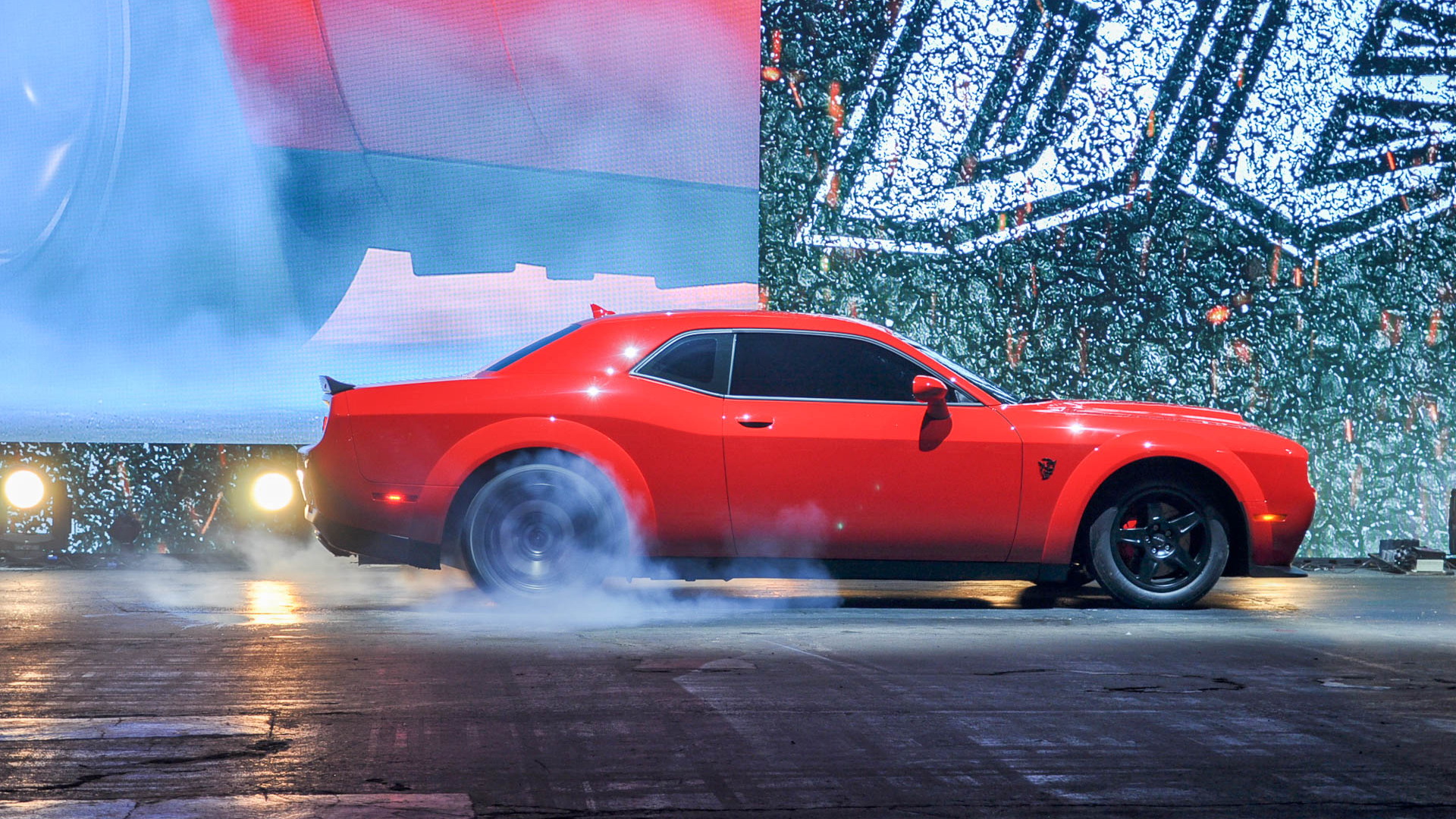
Just when you thought Dodge couldn’t push the boundaries further, they introduced the Challenger SRT Demon 170. This final “Last Call” special edition shattered all previous records, delivering an unprecedented level of power by leveraging the unique properties of E85 ethanol fuel.
📤 Share
💾 Download
E85 Dominance: The 1,025 HP Peak
The Dodge Demon 170’s headline figure is nothing short of sensational. This variant takes full advantage of E85 ethanol, achieving horsepower numbers previously reserved for highly modified, purpose-built drag cars.
- Horsepower: 1,025 hp
- Torque: 945 lb-ft
- Fuel Type: E85 ethanol blend
Achieving this mind-boggling power involved significant engineering upgrades beyond the original Demon. The Demon 170 features a revised 3.0-liter IHI supercharger (up from the original’s 2.7-liter), a new fuel system capable of flowing massive amounts of E85, and strengthened driveline components. An ethanol content sensor automatically detects the blend of ethanol in the fuel, adjusting engine mapping on the fly to deliver peak power when E85 is detected. This seamless adaptability ensures you’re always getting optimal performance for the fuel type.
Pump Gas Power: Still Formidable
While the Demon 170’s ultimate power is unleashed with E85, it’s still an incredibly potent machine even when running on standard premium pump gas. You don’t lose all its monstrous capability if E85 isn’t available.
- Horsepower: 900 hp
- Torque: 810 lb-ft
- Fuel Type: 91+ octane pump gasoline
The Demon 170’s intelligent fuel system automatically recalibrates for pump gas, ensuring optimal performance and reliability without any manual intervention. Even at 900 horsepower, this makes the Demon 170 significantly more powerful than the original Demon’s race fuel output, showcasing the sheer leap in engineering and capability. It’s a testament to Dodge’s ability to create a car that delivers extreme performance across various fuel types, offering flexibility without compromising its core mission of absolute power.
Fuel Type: The Key to Unleashing Demon Horsepower
While raw horsepower numbers grab headlines, the type of fuel you feed your Demon is absolutely critical to achieving those peak figures. Both the original Demon and the Demon 170 are finely tuned machines, designed to extract maximum power from specific fuel compositions.
Original Demon: High-Octane for Maximum Output
The 2018 Dodge Challenger SRT Demon was engineered with a primary focus on high-octane gasoline. To reach its advertised 840 horsepower, it needed the good stuff.
- 91+ Octane Fuel: When running on premium pump gas (91 octane or higher), the original Demon produced a robust 808 horsepower. This is still a phenomenal figure for a street-legal car.
- 100+ Octane Race Fuel: To unlock the full 840 horsepower, owners needed to install the optional “Demon Crate.” This crate included a specialized Powertrain Control Module (PCM) calibrated for 100+ octane race fuel. Swapping out the standard PCM for the race-tuned version allowed the engine to safely advance timing and boost pressure, unleashing its ultimate potential.
The Demon’s fuel system was robust, but that race fuel PCM was the secret handshake to its highest power level. Running race fuel on the street wasn’t always practical, making the 808 hp on pump gas its everyday reality.
Demon 170: E85 – The Ethanol Advantage
The Demon 170 takes a different, but equally powerful, approach to fuel. It’s a true flex-fuel vehicle, meaning its engine management system can automatically detect and adapt to varying ethanol concentrations in the fuel tank.
- E10-E85 Compatibility: The Demon 170 can run on standard E10 (10% ethanol) pump gas, but it absolutely thrives on E85, which is fuel containing up to 85% ethanol.
- Maximum Horsepower on E85: To achieve its mind-boggling 1,025 horsepower, the Demon 170 requires E85. The higher oxygen content and cooler burning properties of ethanol allow for more aggressive ignition timing and boost pressures without detonation.
- Adaptive Fuel System: If you fill the Demon 170 with standard E10 pump gas, its power output drops to 900 horsepower. The car’s sophisticated system adjusts in real-time, showcasing its versatility while also highlighting E85 as the magic ingredient for peak performance.
The ease of just filling up with E85 at a pump, rather than needing a PCM swap, is a significant practical advantage for the Demon 170 driver aiming for maximum power.
Beyond Horsepower: Demon Performance Metrics
While horsepower figures are thrilling, the true measure of a drag-strip monster like the Demon is how it translates that power into real-world performance. Both Demons were built to dominate the quarter-mile, and their numbers speak for themselves.
Quarter-Mile Domination
The quarter-mile drag strip is the natural habitat for a Dodge Demon. These cars aren’t just powerful; they’re engineered for an instantaneous, brutal launch.
- Original Demon Quarter-Mile: The 2018 Demon set the drag world on fire with an NHRA-certified quarter-mile time of 9.65 seconds at 140 mph (on race fuel). This was so fast that the NHRA actually banned it from competition without a roll cage, parachute, and other safety modifications. It was simply too quick for a “stock” street car.
- Demon 170 Quarter-Mile: The Demon 170 shatters its predecessor’s record, achieving an astonishing, NHRA-certified quarter-mile time of just 8.91 seconds at 151 mph (on E85). This makes it the first-ever factory production car capable of running a sub-9-second quarter-mile.
- 0-60 mph Times:
- Original Demon: 2.3 seconds (on race fuel, with rollout)
- Demon 170: 1.66 seconds (on E85, with rollout)
These quarter-mile times aren’t just numbers; they represent engineering marvels in traction, powertrain, and chassis design, allowing these immense power figures to be put down effectively.
Torque and G-Forces
Horsepower is about speed, but torque is about the raw, twisting force that shoves you back in your seat. Demons excel here, too, generating incredible G-forces off the line.
- Original Demon Torque: Peak torque for the 2018 Demon was 770 lb-ft (on race fuel). This massive twist is what enabled those blistering launches and mid-range acceleration.
- Demon 170 Torque: The Demon 170 pushes the limits even further with a colossal 1,042 lb-ft of torque when running on E85. This makes it one of the torquiest production cars ever built.
- Launch G-Forces:
- Original Demon: Up to 1.8 Gs
- Demon 170: An incredible 2.004 Gs! This is the highest G-force acceleration of any production car, literally pushing you into your seat with more force than a fighter jet taking off.
These incredible torque figures and the resulting G-forces are precisely why the Dodge Demon 170 proudly claims the title of “the world’s fastest accelerating production car.” It’s not just horsepower; it’s the complete package of power, torque, and traction that defines its legendary performance.
Conclusion
The Dodge Demon saga is a powerful testament to automotive extremism. From the original 2018 Demon’s 808-840 horsepower fueled by high-octane gasoline or race fuel, to the ultimate Demon 170’s staggering 900-1,025 horsepower unlocked by E85, both vehicles redefined what a street-legal muscle car could achieve. Each iteration pushed the boundaries, delivering not just raw power, but also record-setting quarter-mile times and jaw-dropping G-forces.
Whether you’re admiring the engineering or dreaming of experiencing that asphalt-shredding acceleration yourself, the Demon series stands as an icon. If you’re a performance enthusiast, exploring the detailed specs of these beasts will deepen your appreciation for what Dodge accomplished. Are you ready to dive deeper into the world of extreme horsepower?
❓ Frequently Asked Questions
What are the exact horsepower figures for the original Dodge Challenger SRT Demon?
The original Dodge Challenger SRT Demon boasts 808 horsepower when running on premium 91+ octane pump gas. With the optional Demon Crate and 100+ octane race fuel, its output climbs to an astonishing 840 horsepower, activating its full potential.
How does the Dodge Demon 170’s horsepower compare to the original model?
The Dodge Demon 170 represents a substantial power upgrade over the original, delivering up to 1,025 horsepower when fueled with E85 ethanol. On standard E10 pump gas, it still produces a formidable 900 horsepower, significantly surpassing the original Demon’s peak output.
What role does fuel type play in the Dodge Demon’s horsepower output?
Fuel type is crucial for both Demon models. The original Demon’s ECU detects higher octane race fuel from the Demon Crate, enabling the full 840 hp. The Demon 170’s flex-fuel system automatically adjusts for E85, allowing it to unleash its maximum 1,025 hp due to E85’s higher octane and cooler combustion properties.
What are the torque figures for the Dodge Demon models?
The original Dodge Demon delivers 717 lb-ft of torque on pump gas and 770 lb-ft with race fuel. The Demon 170 significantly increases this to 810 lb-ft on E10 pump gas and a massive 945 lb-ft when running on E85, contributing to its incredible acceleration.
Can the Dodge Demon achieve its maximum horsepower on regular pump gas?
Neither the original Dodge Demon nor the Demon 170 can achieve their absolute maximum horsepower figures on regular pump gas. The original requires 100+ octane race fuel for 840 hp, and the Demon 170 needs E85 for its full 1,025 hp, as their engines are tuned for specific fuel properties.
What performance metrics are directly impacted by the Demon’s high horsepower?
The Demon’s extreme horsepower directly translates to its legendary drag-strip performance. This includes blistering 0-60 mph times (as low as 1.66 seconds for the Demon 170) and incredible quarter-mile times (e.g., 8.91 seconds for the Demon 170), making it one of the quickest production cars ever.