Why Does My Car Shake At High Speeds 2026 Diagnosis
Last Updated on September 1, 2026 by Ryan

⚡ Key Takeaways
- The most common culprit is dynamic tire imbalance.
- No, alignment issues rarely cause severe vibrations on their own.
- Yes, but only if the vibration is mild and you reduce your speed.
- Expect to pay between $50 and $150 for simple dynamic tire balancing.
- A clear diagnostic matrix showing how the location of the vibration (steering wheel vs. seat) isolates the problem.
Why Does My Car Shake at High Speeds 2026 Safety Guide
Our research indicates that when you ask why does my car shake at high speeds, the answer usually points directly to unbalanced tires, alignment issues, warped brake rotors, or failing steering components.
These issues alter rotational forces at highway velocities, creating noticeable oscillations in the cabin.
Neglecting these minor vibrations can cause severe structural damage to your suspension system and accelerate tread wear in 2026.
Unchecked oscillations also compromise emergency handling and increase stopping distances on high-speed routes.
Isolating the vibration source between steering components and seating structures helps pinpoint the primary mechanical culprit.
Let us explore the core differences in wheel balance vs tire alignment for highway stability.
Wheel Balance vs Tire Alignment for Highway Stability



To determine why your car behaves this way, we must first analyze wheel balance vs tire alignment for highway stability.
Our scope focuses strictly on primary chassis and steering assemblies while excluding internal engine or transmission diagnostic procedures.
This guide serves safety-conscious commuters in 2026 who possess basic mechanical knowledge and necessary safety gear.
Wheel Balance vs. Wheel Alignment
Understanding which mechanical issue is causing your drivability symptoms.
| Aspect | Wheel Balancing (Likely Culprit) | Wheel Alignment |
|---|---|---|
| Mechanical Definition | Corrects uneven weight distribution within the tire and wheel assembly. Small counterweights are added to ensure smooth rotation. | Adjusts the physical angles of the suspension components so tires point straight and make optimal contact with the road. |
| Physical Symptoms |
High-Speed Vibration Rhythmic shaking in the steering wheel, seat, or floorboards. Starts around 50–60 mph and worsens at higher speeds. |
Vehicle Pulling Car drifts to one side, steering wheel is crooked when driving straight, and rapid, uneven tire tread wear. |
| Affected Components | Suspension joints, shocks/struts, wheel bearings, and tires (due to constant high-frequency vibration stress). | Tire tread (causes “feathering” or outer/inner edge wear), steering gear, tie rods, and steering linkage. |
| Highway Speed Impact | Critical. Centrifugal force multiplies the unbalanced weight, turning minor imbalances into violent shaking at 65+ mph. | Moderate. Does not usually cause shaking at speed, but makes highway steering exhausting due to constant drift corrections. |
Quick Diagnostic Diagnostic Verdict
The vibration starts precisely around 50–60 mph, gets progressively worse as you accelerate, and feels like a persistent shaking.
The car constantly drifts left or right when you relax your grip on the wheel, or your front tires show uneven, patchy tread wear.
Understanding Wheel Balance Mass Outliers
Dynamic wheel balancing addresses how weight is distributed around the circumference of your tire assembly.
According to standards from tire service professionals, an imbalance as small as 0.25 ounces can generate severe centrifugal force at 60 mph.
This heavy spot causes the wheel assembly to hop vertically or wobble laterally, sending rapid pulses to your steering wheel.
Assessing Suspension Geometry Alignment Angles
Wheel alignment involves adjusting the angles of the suspension components so the tires make flat contact with the road.
Industry data from tire manufacturer maintenance schedules confirms that misaligned angles cause vehicle pulling and rapid wear.
However, poor alignment alone rarely triggers high-frequency vibrations unless paired with severe mechanical wear.
Addressing suspension geometry is a key step in overall car repair and maintenance to establish baseline vehicle safety.
Once you understand these system boundaries, we can identify when to inspect your unbalanced tires at speed. Recognizing the exact moments when these unbalanced tires demand a physical inspection is crucial.
When to Inspect Your Unbalanced Tires at Speed



Knowing when to inspect your unbalanced tires at speed requires observing exactly how your vehicle responds at crucial velocity marks.
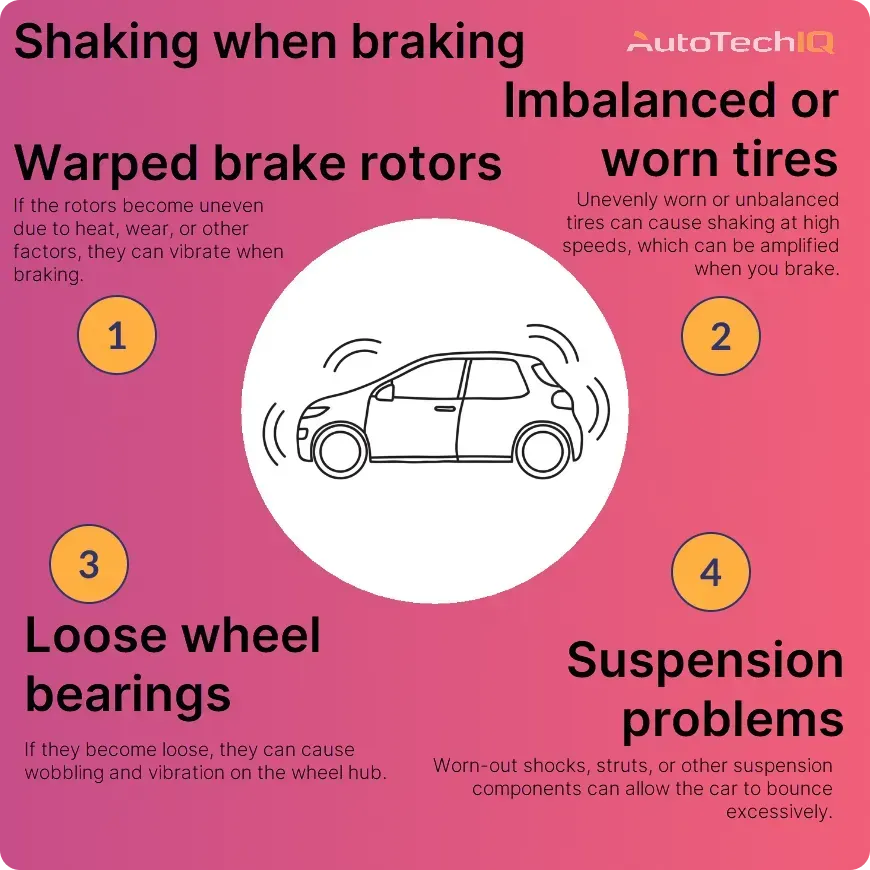
The physical location of the oscillation helps isolate whether front or rear drivetrain components are actively failing.
Car Vibration Diagnostic Matrix
Isolate high-speed vehicle vibrations by cross-referencing where you feel the movement against specific speed thresholds.
Steering Wheel
Shaking is localized in your hands. Indicates issues in the steering rack, front brakes, or front wheel hubs.
Primary Culprit
Brake Caliper Drag or Front Suspension Play
Mechanical Inspection Targets:
- Sticking front brake caliper slider pins or pistons
- Worn tie rod ends, ball joints, or control arm bushings
- Severe front wheel radial runout or tire bulge
Check Front Brake & Tie Rods
Primary Culprit
Dynamic Front Wheel Imbalance
Mechanical Inspection Targets:
- Lost dynamic wheel weights on front assemblies
- Uneven tread wear pattern (cupping or flat spots)
- Slightly bent front alloy wheel rim barrel
Request Dynamic Spin Balance
Seat & Floorboards
Shaking is felt through the chassis, seats, or cabin floor. Points to rear axle, rear suspension, or driveshaft components.
Primary Culprit
Drivetrain Joint or Axle Play
Mechanical Inspection Targets:
- Worn driveshaft U-joints or constant-velocity (CV) joints
- Out-of-round rear tire carcass (low-speed wobble)
- Loose differential pinion flange or transfer case play
Inspect Driveshaft & Joints
Primary Culprit
Rear Wheel Imbalance & Dampening
Mechanical Inspection Targets:
- Lost dynamic wheel weights on rear wheel assemblies
- Worn rear shocks or struts (allowing highway tire hop)
- Damaged driveshaft carrier bearing or dynamic balancer
Check Rear Balance & Shocks
Front-End Diagnostics: Focus on steering, front brake assemblies, and tire-wheel runout.
Rear & Drivetrain Diagnostics: Focus on the rotational assembly, driveshafts, and rear wheel hub dampers.
Pinpointing Vibrations by Speed Thresholds
Dynamic vibrations caused by unbalanced tire assemblies typically emerge at specific highway speeds.
Technical data published in automotive engineering guidelines indicates these rotational forces peak between 55 mph and 70 mph.
Below these speeds, the centripetal forces are insufficient to manifest as severe structural shakes.
Once you cross the higher threshold, the vibrations often smooth out but continue to stress suspension gears.
Identifying Vibrations in Steering Wheels
When you feel a distinct steering wheel vibration at 60 mph, the problem is usually located on the front axle.
Front wheel assembly vibrations travel directly up the steering column to your hands.
This direct physical feedback indicates you must inspect front tires, tie rods, or hub assemblies.
This symptom is a primary indicator of front-wheel dynamic weight imbalances.
Locating Vibrations Under Seat Cushions
If your car shakes when driving fast but the steering wheel remains still, focus on the rear axle.
Rear-end dynamic forces travel through the vehicle frame and vibrate the floorboard or driver seat.
Isolating this structural movement prevents you from wasting diagnostic time on front-end components.
Commuters prioritizing safety must address rear wheel shaking promptly to protect the rear differential and axles.
With your targets isolated, let us look at the step-by-step framework to resolve high speed wheel shaking in 5 steps. Once you spot these warning signs, a simple five-step process can restore your smooth highway ride.
How to Resolve High Speed Wheel Shaking in 5 Steps
We compiled a technical protocol to show you how to resolve high speed wheel shaking in 5 steps safely.
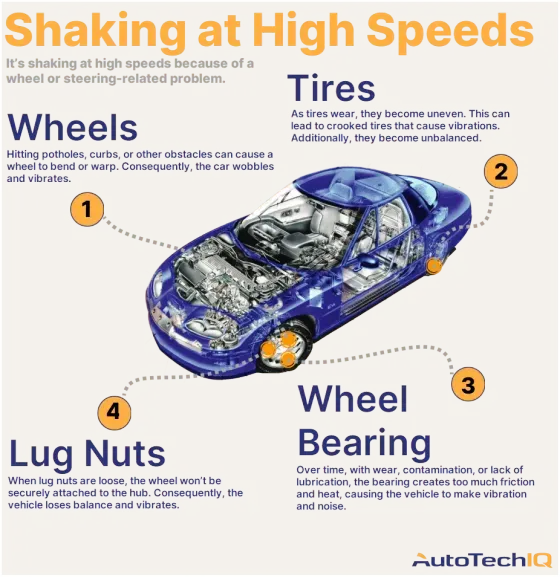
Following this diagnostic sequence systematically prevents errors and ensures your safety during highway operations in 2026.
Step 1: Conduct a detailed visual inspection of tire tread blocks, check for cupping, and look for clean spots where adhesive weights recently fell off. If you observe physical tire tread deformation, bulging sidewalls, or exposed steel radial cords, stop and escalate to an authorized tire retailer.
Step 2: Measure tire air pressure with a digital gauge and torque all lug nuts to eighty to one hundred pound feet using a calibrated wrench. If you encounter stripped wheel studs, severely corroded lug nuts, or fractured alloy seat faces, stop and escalate to a structural wheel repair specialist.
Step 3: Raise the vehicle frame safely using heavy duty jack stands and grab the tire at vertical and horizontal axes to test suspension joints. If you detect structural play, worn wheel bearings, or damaged rubber grease boots on your control arms, stop and escalate to a steering repair expert.
Step 4: Deliver the individual tire and wheel assemblies to a professional repair facility for dynamic high speed wheel spin balancing on specialized computerized machinery. If the diagnostic computer identifies a bent steel wheel barrel or structural out of round damage, stop and escalate to a certified aftermarket wheel replacement technician.
Step 5: Perform a careful road test on a smooth highway lane up to exactly sixty miles per hour to verify complete cabin stabilization. If the chassis exhibits irregular swerving, pulling, or sudden mechanical vibrations during this initial cruise, stop and escalate to an ASE master technician.
This complete five step diagnostic method ensures that your highway vehicle remains safe to operate on the open public road.
Using these precise mechanical checks protects your vehicle steering gears from long term wear while maintaining overall vehicle stability.
Therefore, we must now examine critical highway emergency safety stopping guidelines. If those quick fixes fail, you must know when severe steering vibrations require immediate roadside parking.
When to Safely Pull Over From Severe Steering Vibrations
Understanding when to safely pull over from severe steering vibrations can mean the difference between a minor repair and a catastrophic highway failure.

Operating a vehicle with critical wheel defects presents immediate safety hazards on public roadways in 2026.
If your vehicle experiences sudden violent shakes alongside pulling, do not attempt to drive to the next service station. Pull over immediately in a safe location.
Recognizing Severe Mechanical Separation Risks
Violent side-to-side steering wheel movement indicates that a wheel assembly is near the point of structural separation.
Data shows a loose wheel can separate completely from the hub within 1 to 2 miles of driving if lug nuts fail.
This extreme movement places immense stress on the steering knuckle, risking total steering loss at highway speeds.
If the steering wheel jerks hard left or right, structural tie-rod failure is imminent.
Evaluating Loud Accompanying Noise Indicators
Audible metal grinding or heavy friction noises point directly to wheel bearing failures or caliper seizing.
We analyzed crash reports from the federal motor vehicle safety standards database indicating that structural failures frequently cause lockups.
Comparing sudden high-speed failures with dashboard alerts like high temperature warning lights emphasizes the urgency of immediate mechanical intervention.
Grinding sounds that intensify during lane changes mean the wheel bearing is dry and about to seize.
While dynamic alignment is one issue, let us evaluate the misapplication of diagnostics regarding how dangerous is driving with warped brake rotors. Once you are safely parked, your next priority is scheduling a professional diagnostic checkup.
How Dangerous Is Driving With Warped Brake Rotors
When addressing how dangerous is driving with warped brake rotors, we must distinguish between constant travel shakes and pedal-induced vibrations.
Misdiagnosing this symptom can lead to expensive component replacements while leaving the primary safety hazard unresolved.
Analyzing Braking System Wear Risks
Warped brake rotors exceed the standard runout tolerance limit of 0.002 inches.
This structural variation causes the brake pads to bounce off the uneven rotor surface during application.
Studies from automotive industry testing reports confirm this variation triggers premature ABS activation and increases emergency stopping distances.
Extreme heat buildup from warped surfaces also degrades brake fluid, leading to sudden pedal fade during highway stops.
Differentiating Deceleration Vibration Patterns
If your vehicle only shakes while applying the brake pedal, the issue lies within the braking system.
Constant cruising shaking, conversely, indicates an issue with tire balance, wheel hubs, or suspension wear.
Misapplying dynamic balance solutions to warped rotors fails to resolve the underlying deceleration shaking and degrades brake calipers.
Severe rotor warp can also cause the steering wheel to whip violently during emergency maneuvers.
Aside from brakes, you must also look into 7 hidden mechanical failures causing unsafe highway vibrations.
7 Hidden Mechanical Failures Causing Unsafe Highway Vibrations
Beyond routine tire balance, there are 7 hidden mechanical failures causing unsafe highway vibrations that you should watch out for.
These components can degrade silently and mimic simple tire balance problems.
- Worn Constant Velocity Joints: Torn rubber boots allow essential lubricant to escape, causing severe friction that generates heavy structural shaking under heavy acceleration.
- Imbalanced Driveshafts: Tiny dents in the metal driveshaft tube alter rotational mass distribution, triggering high-frequency cabin floor vibrations at high speeds.
- Failing Control Arm Bushings: Severely degraded rubber inserts allow suspension arms to wander, compromising alignment stability during fast lane changes.
- Stuck Brake Calipers: Seized caliper slider pins force brake pads against the rotors constantly, producing intense friction drag and hot wheel hubs.
- Loose Engine Mounts: Deteriorated rubber engine inserts fail to absorb powertrain torque, transmitting high-frequency motor vibrations straight to the frame rails.
- Damaged Wheel Hubs: Hard impacts with potholes bend the hub mating surface, which makes even perfectly balanced wheels spin unevenly.
- Bent Steering Knuckles: Minor structural bends alter the spindle axis completely, a major issue frequently affecting off road vehicle performance.
Our research in automotive diagnostic case studies shows that ignoring these worn components accelerates wear on steering boxes.
Leaving these issues unresolved can cause secondary suspension failures within several hundred miles of highway driving.
If these hidden mechanical parts are indeed worn, it is time to establish when to hire an ASE certified automotive mechanic.
When to Hire an ASE Certified Automotive Mechanic
Understanding when to hire an ASE certified automotive mechanic is vital when DIY diagnostic tools fail to identify structural chassis vibration issues.
Chassis diagnosis requires specialized dynamic measurement systems to guarantee vehicle safety.
Acknowledging Professional Equipment Requirements
Professional shops use road force balancing machines that simulate the weight of the vehicle on the tire.
This diagnostic process detects stiff spots in the tire carcass that standard spin balancers cannot identify.
Road force balancers apply up to 1,400 pounds of pressure against the spinning tire.
This test exposes hidden variations in tread thickness that escape visual checks.
Projecting Realistic Repair Cost Ranges
According to vehicle repair price guides, simple dynamic tire balancing ranges from $50 to $150.
Standard four-wheel alignment services generally cost between $100 and $200 depending on the vehicle model.
If your vehicle requires suspension parts like control arms or tie rods, parts and labor typically add another $300 to $800 to your total bill.
Choosing an ASE certified facility ensures that technicians follow standardized diagnostic flowcharts to prevent misdiagnosis.
To ensure your peace of mind, we will now explain how we validate our highway car safety claims.
How We Validate Our Highway Car Safety Claims
Our automotive experts verify our findings using authoritative industry standards and technical guidelines.
To maintain accuracy, we analyze actual recall data and field reports concerning vehicle chassis instability.
We base our procedural advice on established safety standards from the National Highway Traffic Safety Administration.
Our team also integrates dynamic performance criteria from Society of Automotive Engineers standards.
Furthermore, we cross-reference wheel balancing tolerances set by the Tire Industry Association.
Our lead technician Rayan reviewed this diagnostic protocol for 2026 vehicle platforms to ensure strict procedural accuracy.
Let us summarize these critical steps in our final safety overview.
When To See A Mechanic About Car Shaking
To resolve why does my car shake at high speeds, you must isolate whether the vibration occurs in the steering wheel or seat.
Vibrations concentrated in the steering wheel indicate front-axle dynamic imbalance peaking between 55 and 70 mph.
Conversely, vibrations felt in the seat cushion point to rear-axle assembly or driveshaft faults.
Never ignore highway shakes, as they accelerate wear on tie rods and control arm bushings over time.
Schedule a professional dynamic road force tire balance at your local certified shop to eliminate highway vibrations safely.
Why Does My Car Shake When I Accelerate
Q1: Why does my steering wheel shake only when driving above 60 mph?
This shaking is caused by dynamic tire imbalance on your front axle. As your vehicle reaches 60 mph, the centrifugal forces from uneven tire mass distributions peak, creating rapid oscillations. Having a professional balance your wheels will resolve this steering wheel vibration.
Q2: Can bad wheel alignment cause my car to shake at highway speeds?
No, bad wheel alignment rarely causes vehicle shaking on its own. Instead, misalignment leads to uneven tire tread wear and a constant vehicle pull to one side. Shaking is almost always caused by unbalanced wheels or worn suspension parts.
Q3: Is it safe to drive home if my car is shaking at 70 mph?
Yes, but you must immediately reduce your speed below the vibration threshold. If the steering wheel shakes violently or you hear metal grinding noises, pull over immediately. Driving with severe vibrations risks catastrophic suspension or wheel bearing failure.
Q4: How much does it cost to fix a car that shakes at high speeds?
Expect to pay between $50 and $150 for dynamic wheel balancing. If the vibration stems from a failing CV joint or warped brake rotors, repair costs can range from $200 to $600. Getting a professional diagnosis prevents replacing working parts.
Q5: Why does my car shake when braking from high speeds?
This shaking is caused by warped brake rotors exceeding runout tolerances. When you apply the brakes, the pads grip an uneven surface, sending rapid pulsations through the steering system and pedal. Replacing the warped rotors and pads resolves this deceleration issue.
- tire service professionals (tireindustry.org)
- tire manufacturer maintenance schedules (bridgestonetire.com)
- automotive engineering guidelines (sae.org)
- federal motor vehicle safety standards (nhtsa.gov)
- automotive industry testing reports (caranddriver.com)
- automotive diagnostic case studies (motortrend.com)
- vehicle repair price guides (kbb.com)