Why Does My Car Creak When I Turn Fix Your Car’s 2026
Last Updated on September 1, 2026 by Albert Duke
When your car creaks during a turn, it often signals wear in the suspension or steering components like ball joints or bushings. Addressing these noises promptly is crucial, as they can indicate anything from minor wear to critical safety issues affecting steering stability.
When your car creaks as you turn, it often signals a potential problem within its complex steering and suspension systems. This unsettling noise can range from a minor annoyance to a serious indicator of impending component failure. Prompt diagnosis and action are crucial to maintain your vehicle’s safety and performance.
This guide helps you understand the common reasons behind that turning creak. We will explore how to identify the source of the noise. You will also learn when you can tackle a fix yourself and when professional mechanical help is essential.
Understanding these issues allows you to make informed decisions for your vehicle.
Key Takeaways
- Creaking often means suspension wear or steering issues.
- Common culprits include ball joints, bushings, sway bar links.
- Listen carefully to pinpoint the exact sound location.
- Some creaks are urgent safety concerns requiring immediate action.
- Understand when to attempt DIY fixes versus see a mechanic.
5 Main Causes Your Car Creaks When Turning
Various components in your car’s steering and suspension system can cause creaking noises when they wear out. Identifying the specific sound and conditions helps pinpoint the exact problem.

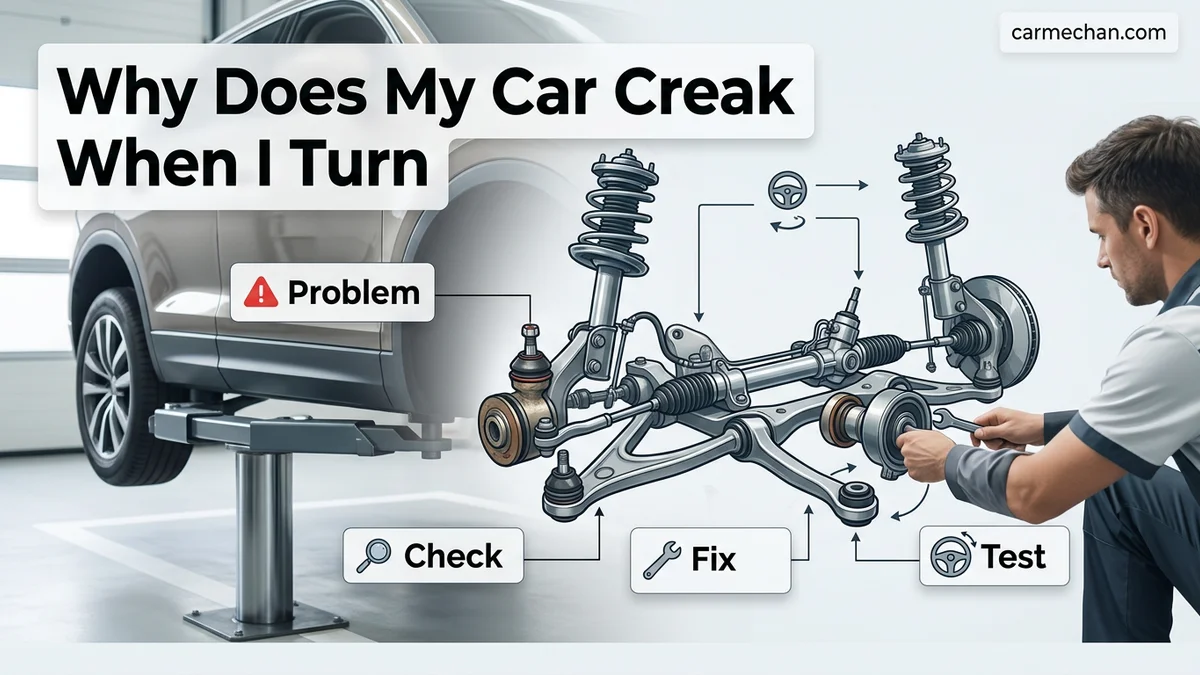
Worn Ball Joints
Ball joints connect the control arms to the steering knuckles. They allow for wheel movement while maintaining steering control. When their protective boots tear, dirt and water enter, leading to corrosion and lack of lubrication.
- Creaking often occurs at slow speeds.
- The sound might worsen when turning sharply or going over small bumps.
- A dry, metal-on-metal groan is a common symptom.
Ball joints typically last between 70,000 to 100,000 miles, but harsh driving conditions can shorten this significantly .
Failing Bushings
Bushings are rubber or polyurethane components that cushion metal parts. They are found in control arms, sway bars, and other suspension points. Over time, these materials dry out, crack, or compress.
- A high-pitched squeak or a low creak during turns is typical.
- The noise may be more noticeable in cold weather.
- It can occur when the suspension moves up and down or side to side.
Worn bushings create play in the suspension, leading to noise and reduced handling precision. Rubber bushings can degrade significantly after five to seven years .
Loose Sway Bars
Sway bars, also known as anti-roll bars, reduce body roll during turns. They are connected to the chassis and suspension arms by end links and bushings. If these connections become loose or worn, they can creak.
- A metallic creaking or clunking sound occurs during turns.
- Noise might be heard when driving over uneven surfaces.
- The sound often indicates worn sway bar bushings or end links.
Loose sway bar components can impact vehicle stability and ride comfort. Regular inspection is advised during routine maintenance.
Damaged Tie Rods
Tie rod ends connect the steering rack to the steering knuckles. They are critical for accurate steering. Similar to ball joints, their boots can tear, leading to lubricant loss and wear.
- A creaking, popping, or clunking sound may be heard during turns.
- You might feel looseness or vibration in the steering wheel.
- Uneven tire wear is another common sign of tie rod issues.
Damaged tie rods compromise steering responsiveness and wheel alignment. They must be replaced promptly to ensure safety.
Strut Mount Wear
Strut mounts connect the top of your vehicle’s struts to its chassis. They contain a bearing that allows the strut to rotate with the steering. When these mounts wear out, they can produce noise.
- A popping, clunking, or creaking sound can occur when turning the steering wheel.
- The noise is often heard when turning at low speeds or while stationary.
- You might also experience increased road noise or vibrations.
Worn strut mounts reduce ride quality and steering precision. Addressing these issues helps maintain control and comfort.
Knowing these potential sources is the first step; next, you need to become a detective and pinpoint the exact location of your car’s mysterious creak.
How to Pinpoint Your Car’s Creaking Sound
Accurately diagnosing the source of a creaking noise requires careful observation and systematic testing. Safety is paramount during any inspection.
Listen for Clues
Pay close attention to when and how the sound occurs. Does it happen only when turning left or right? Is it at low speeds or when going over bumps? Try these scenarios:
- Slow Turns: Drive slowly in a quiet area, turning the wheel fully left and right.
- Over Bumps: Listen as you drive over speed bumps or uneven surfaces.
- Parked Test: With the car stationary and engine off, turn the steering wheel slowly from lock to lock.
- Assisted Test: Have a friend turn the steering wheel while you listen from outside the car.
Noting these details provides vital clues for diagnosis.
Inspect Components
Before you begin, ensure your car is on a level surface. Use jack stands and wheel chocks for safety if lifting the vehicle. Never rely solely on a jack.
- Visual Check: Look for torn rubber boots on ball joints, tie rod ends, and CV axles.
- Bushings: Inspect control arm and sway bar bushings for cracks, dryness, or excessive wear.
- Loose Parts: Gently shake each wheel at 12 and 6 o’clock (for ball joints) and 3 and 9 o’clock (for tie rods) to check for play.
Look for any visible damage, leaks, or signs of movement in these areas.
Perform Bounce Test
The bounce test can reveal issues with shocks, struts, and sometimes worn bushings. This simple test is done while the car is on the ground.
- Push Down: Firmly push down on each corner of your car.
- Observe: The car should bounce down and up once, then settle.
- Listen & Feel: Excessive bouncing or a creaking sound during this motion can indicate worn suspension components.
This test provides a quick overview of suspension health. [HUMAN DATA PLACEHOLDERS: Image or short video link demonstrating a safe bounce test]
Steering Wheel Check
A quick check of the steering wheel itself can sometimes isolate the noise to the steering column rather than the suspension.
- Engine Off: Turn the steering wheel back and forth slightly while the engine is off.
- Listen: If you hear creaking, the issue might be in the steering column or its components.
- Power Steering: With the engine running, turn the wheel slowly. Listen for groaning, which could indicate low power steering fluid or a failing pump.
This helps differentiate between suspension and steering column issues. [HUMAN DATA PLACEHOLDERS: Image or short video link demonstrating how to check for steering wheel play]
Once you have a better idea of the potential culprit, it’s crucial to understand just how serious the problem might be for your vehicle and your safety.
Is a Creaking Noise When Turning Dangerous?
The severity of a creaking noise when turning can vary widely. It is essential to assess whether the sound indicates a minor issue or a critical safety hazard.

Immediate Safety Risks
Certain creaking noises signal immediate danger and require urgent attention. Ignoring these can lead to catastrophic failure.
- Severely Worn Ball Joints: If a ball joint fails, the wheel can separate from the suspension, causing a complete loss of steering control. This is extremely dangerous, especially at speed.
- Damaged Tie Rods: A broken tie rod means you lose the ability to steer the corresponding wheel.
- Compromised Steering: Any noise that impacts your ability to steer or control the vehicle is a severe risk.
According to automotive safety data, suspension and steering failures contribute to a significant number of accidents annually .
Long Term Problems
Even if not immediately dangerous, persistent creaks can lead to more extensive and costly repairs over time. Wear on one component often accelerates wear on others.
- Accelerated Wear: Worn bushings or ball joints put additional stress on other suspension parts, like control arms and tires.
- Reduced Handling: Progressive wear can degrade your car’s handling, making it less predictable in emergencies.
- Uneven Tire Wear: Misalignment caused by worn components leads to premature tire replacement.
Addressing minor issues early prevents them from escalating into major expenses.
When to Stop Driving
Knowing when to park your car and call a tow truck is critical for your safety and the safety of others.
- Sudden, Loud Noise: Any new, sudden, or extremely loud creaking, popping, or clunking sound.
- Steering Difficulty: If you experience difficulty steering, excessive play in the wheel, or a feeling of looseness.
- Visual Signs of Failure: If you see any suspension components visibly bent, broken, or completely detached.
If you suspect a critical failure, do not drive the vehicle. Seek professional assistance immediately.
Once you understand the risks, the next step involves deciding whether to attempt a repair yourself or trust your vehicle to a professional.
When to Attempt DIY Fixes Versus Call a Mechanic
The choice between fixing a creaking noise yourself and taking it to a professional mechanic depends on the problem’s complexity and your mechanical skill level.
Easy DIY Solutions
Some creaking noises can be resolved with minimal tools and basic automotive knowledge.
- Lubrication: For dry rubber bushings, a silicone-based spray lubricant can often provide a temporary or even long-term fix. Apply carefully to accessible bushing surfaces.
- Tightening: Loose sway bar end links or bolts on suspension components can sometimes be tightened, provided they are not damaged.
- Power Steering Fluid: Check and top off low power steering fluid levels if your creak is a groaning sound from the steering pump.
Always consult your car’s service manual before attempting any DIY work.
Complex Repair Needs
Many suspension and steering repairs are best left to experienced professionals due to specialized tools, safety risks, and the need for precision.
- Component Replacement: Replacing ball joints, control arms, or struts often requires presses, specialized wrenches, and significant experience.
- Alignment: After replacing most suspension components, a professional wheel alignment is necessary to ensure proper handling and tire wear.
- Critical Safety Parts: Any repair involving critical safety components like steering racks or major suspension linkages should be done by a certified mechanic.
These tasks can be dangerous and technically challenging without the right equipment and expertise.
Professional Evaluation
When in doubt, a professional diagnosis is always the safest and most reliable option. A mechanic can accurately pinpoint the issue and advise on the best course of action.
- Describe the Noise: Clearly explain when and how the creak occurs, its sound, and any associated driving conditions.
- Ask Questions: Inquire about the root cause, necessary repairs, potential long-term implications, and expected lifespan of new parts.
- Get an Estimate: Request a detailed written estimate before any work begins.
A good mechanic will clearly explain their findings and recommendations.
Repair Cost Overview
Repair costs vary significantly based on the part, vehicle make, and labor rates in your area. Here are some general ranges for 2026:
- Ball Joint Replacement: Expect to pay between $250-$500 per side, including parts and labor .
- Control Arm Bushings: Costs might range from $200-$400 per arm for bushing replacement .
- Strut Mount Replacement: This typically costs $350-$700 per axle, covering parts and labor .
Always get multiple quotes to ensure fair pricing. investing in quality parts and professional installation can save money in the long run.
Your Next Steps for a Quiet Ride
Understanding why your car creaks when you turn is the first step toward a solution. We have covered common culprits like ball joints and bushings, diagnostic tips, and safety implications. By carefully listening and inspecting, you can often narrow down the problem.
Prioritize safety by addressing any concerning noises promptly. Decide whether a simple DIY fix is appropriate or if professional help is required. Never hesitate to consult a certified mechanic if you are unsure or uncomfortable with a repair.
Taking action now ensures your vehicle remains safe, reliable, and quiet on the road.
5 Common Questions About Car Creaking
Is a Creaking Noise When Turning Always a Serious Problem?
No, not always. It can range from minor wear to critical safety concerns. While some creaks might just be dry rubber bushings, others, like those from severely worn ball joints, indicate immediate danger and require prompt attention. Always diagnose it promptly.
Can Low Power Steering Fluid Cause My Car to Creak When I Turn?
Yes, low power steering fluid or a failing power steering pump can sometimes cause groaning or creaking noises, particularly at full lock or during slow turns. This is distinct from suspension creaks, but worth checking as part of a comprehensive diagnosis.
What’s the Difference Between a Creak and a Clunk From My Suspension?
A creak is typically a high-pitched, rubbing, or squeaking sound, often from dry or worn rubber components. A clunk is a heavier, more impactful sound, usually indicating metal-on-metal contact, excessive play in joints, or loose components like sway bar links.
How Much Does It Typically Cost to Fix Suspension Components That Cause Creaking?
Repair costs vary significantly by component and vehicle. Ball joint replacement might range from $250-$500 per side, while control arm bushings could be $200-$400 per arm. Strut mount replacement often costs $350-$700 per axle, including parts and labor.
Can I Lubricate My Suspension to Stop the Creaking Noise?
Sometimes. For rubber bushings, a silicone-based lubricant can temporarily quiet creaks if they are merely dry. However, for genuinely worn metal-on-metal joints like ball joints, lubrication is only a very temporary fix, and replacement remains the only safe, long-term solution.