Nissan Code P0420 Bank 1 Easy Fix Guide
Last Updated on September 1, 2026 by Ryan

⚡ Key Takeaways

Prime for Young Adults — 6 Months Free
Students and 18–24s get six months of Prime free, then half price.
Start 6 Months Free- While you can often drive with a P0420 code, it’s not recommended for extended periods.
- Bank 1 refers to the side of the engine that contains cylinder number one.
- The cost to fix a Nissan P0420 code varies significantly based on the root cause.
- Yes, an exhaust leak can absolutely cause a P0420 code.
- What does Nissan P0420 Bank 1 mean?
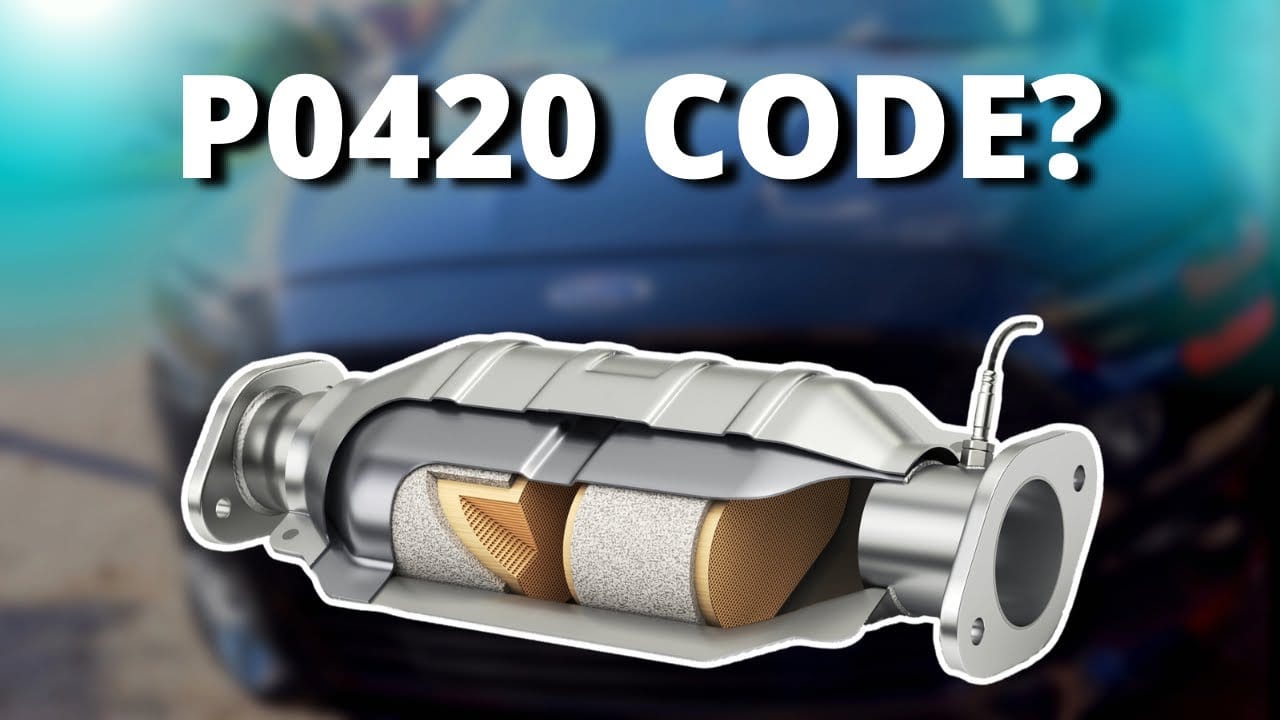
The Nissan code P0420 Bank 1 signals an issue with your vehicle’s catalytic converter efficiency on the exhaust side containing cylinder number one, often leading to a lit Check Engine Light and potential performance changes. This code specifically indicates that the catalytic converter’s efficiency is below a set threshold, specifically for Bank 1 The U.S.
Environmental Protection Agency (EPA) mandates specific OBD-II diagnostic readiness monitors, including for catalytic converter efficiency, to ensure vehicles comply with emissions standards. These standards are regularly updated, with current regulations accessible via their official channels. U.S. Environmental Protection Agency (EPA), epa.gov (EPA, 2024). For Nissan vehicles, ‘Bank 1’ consistently refers to the engine side that includes cylinder number one.
You might notice symptoms like reduced fuel economy or a slight loss of power, but sometimes only the illuminated Check Engine Light appears. Understanding the gravity of this code is the first step; next, let’s define the scope of this procedural guide.
What This Nissan P0420 Guide Covers
Recommended Best Deal Products


This guide provides a focused, step-by-step protocol for diagnosing and addressing the Nissan P0420 Bank 1 error code. We will detail common causes specific to Nissan vehicles and outline practical DIY repair considerations for typical issues you might encounter.
Our instructions cover how to identify potential culprits like faulty O2 sensors, exhaust leaks, and catalytic converter degradation. We aim to empower budget-conscious Nissan owners with actionable solutions.
What this guide does NOT cover are complex engine internal issues, advanced electrical diagnostics requiring specialized equipment beyond a standard OBD-II scanner, or repairs that fundamentally alter vehicle emissions systems. If your vehicle exhibits severe performance issues or multiple complex codes, professional intervention is necessary.
Who Should Use This P0420 Protocol
This protocol is designed for Nissan owners who possess basic mechanical aptitude, own or have access to an OBD-II scanner, and are comfortable performing hands-on vehicle diagnostics and minor repairs. You should have a general understanding of engine components and safety practices.
Prerequisites include familiarity with using jack stands, basic hand tools, and accessing under your vehicle safely. If you are uncomfortable with these tasks, or lack the necessary tools such as a reliable work light, we advise against proceeding independently.

Audible — Listen Free for 30 Days
One free credit a month and thousands of titles included.
Listen Free for 30 DaysIf you do not meet these prerequisites, or if you suspect a significant, immediate safety concern, we recommend consulting a certified Nissan technician instead of attempting these steps.
How to Diagnose Nissan P0420 Step by Step
Recommended Best Deal Products


Carefully follow each step to accurately diagnose the Nissan P0420 Bank 1 code. Perform each action precisely to avoid misdiagnosis.

-
Step 1: Verify Code with OBD-II Scanner. Connect an OBD-II scanner to your Nissan’s diagnostic port. Read and confirm the presence of the P0420 code.
OBD-II Port
Typical OBD-II Port Location (Nissan Driver’s Side)If other codes are present, document them and diagnose them sequentially before addressing P0420, as they may be contributing factors.
-
Step 2: Inspect for Exhaust Leaks. Visually inspect the exhaust system for cracks, rust holes, or loose connections, particularly before and between the oxygen sensors on Bank 1. Start the engine and listen for hissing sounds, or feel for exhaust gas leaks. If a leak is found, proceed to repair the exhaust leak.
Nissan Bank 1 Exhaust System DiagramBank 1Engine
O2
S1Upstream SensorCatalytic
Converter
O2
S2Downstream Sensor
Manifold Gasket LeakPre-Cat Exhaust LeakPost-Cat Exhaust LeakFurther Exhaust LeakIf no leaks are visible, proceed to Step 3.
⚠️ Carbon Monoxide Warning
Ensure adequate ventilation when the engine is running. Carbon monoxide is odorless and deadly. Never run the engine in an enclosed space without proper exhaust extraction. -
Step 3: Monitor O2 Sensor Readings. Use your OBD-II scanner’s live data function to monitor the upstream (Bank 1 Sensor 1) and downstream (Bank 1 Sensor 2) oxygen sensor voltages. The upstream sensor should fluctuate rapidly between A healthy upstream (pre-catalyst) oxygen sensor typically cycles rapidly between approximately 0.1 volts (lean) and 0.9 volts (rich) as the engine’s air-fuel mixture is constantly adjusted..
The downstream sensor should show a relatively steady voltage, typically between The downstream (post-catalyst) oxygen sensor in a vehicle with an efficient catalytic converter should show a relatively steady voltage, typically holding between 0.6 volts and 0.8 volts, indicating proper oxygen storage and catalytic function., indicating the catalytic converter is storing oxygen.
If the downstream sensor mimics the upstream sensor’s rapid fluctuations, the catalytic converter is likely inefficient Advanced diagnostics for P0420 often involve evaluating sensor response times and amplitude fluctuations, as detailed in research presented by organizations like SAE International. Their technical papers provide deep insights into emissions control system performance.
SAE International, sae.org (SAE International, 2023)
. If readings are outside these norms, further O2 sensor testing is warranted. -
Step 4: Check for Fuel System Issues. Verify engine vacuum using a vacuum gauge. A low or fluctuating vacuum reading may indicate a rich running condition that can damage the catalytic converter. Consult your Nissan’s service manual for specific vacuum specifications. If vacuum is abnormal, investigate potential causes like vacuum leaks, fuel pressure issues, or leaky fuel injectors.
If vacuum is normal, proceed to Step 5.
-
Step 5: Inspect Mass Air Flow (MAF) Sensor. Disconnect the MAF sensor and visually inspect it for dirt or debris. Clean the MAF sensor using a specialized MAF sensor cleaner, following product instructions carefully.
Nissan MAF Sensor Inspection & Cleaning
Addressing a P0420 code often involves checking the MAF (Mass Air Flow) sensor. Follow these steps to locate, disconnect, and clean it safely.
Locate the MAF Sensor
Air Filter Box
MAF Sensor
Intake Tube
Throttle BodyThe MAF sensor is typically located in the air intake tube, positioned between the air filter box and the throttle body. It’s an electrical component integrated into the plastic intake piping.
Safely Disconnect the Sensor
Press tab & pull connectorFirst, ensure the engine is off and cool. Locate the electrical connector plugged into the MAF sensor. Press the release tab firmly and gently pull the connector straight off. Avoid pulling on wires. If the sensor is bolted into the intake tube, use a screwdriver to remove the screws.
Proper Cleaning Technique
Spray thoroughly, DO NOT TOUCHUse a specialized MAF sensor cleaner (e.g., CRC MAF Cleaner). Hold the sensor and spray the internal wires/filaments directly. Do NOT touch the delicate sensor elements with anything. Spray thoroughly but briefly. Allow the sensor to air dry completely for at least 15-20 minutes before reinstalling.
Important: Always use MAF-specific cleaner. Other cleaners can damage the delicate sensor. Reconnect everything securely after cleaning, ensuring the electrical connector clicks into place.
Reconnect the sensor and clear the P0420 code. If the code returns, consider replacing the MAF sensor if other symptoms (e.g., rough idle, poor acceleration) are present.
If cleaning does not resolve the issue, and the MAF sensor readings via live data are within specification, proceed to Step 6.
-
Step 6: Consider Catalytic Converter Evaluation. If all previous steps indicate proper O2 sensor function, no exhaust leaks, and a healthy engine running condition, the catalytic converter itself is the most probable cause. Verify by inspecting for physical damage or signs of overheating. If physical damage is evident, stop and consult a professional for replacement.
If no physical damage, but O2 sensor data suggests inefficiency, replacement or an attempt at chemical cleaning may be considered for the catalytic converter. Replacement often requires specialized tools to loosen rusted bolts.
When Not to Use This P0420 Guide
It is critical to know when to stop following this guide and seek professional help. Your safety and the proper functioning of your vehicle depend on it.

Do not proceed with this guide if your Nissan exhibits any of the following:
1. **Severe Exhaust Fumes:** If you smell strong, unusual exhaust fumes inside the cabin or around the vehicle.
2. **Engine Overheating:** If your engine temperature gauge is consistently high or indicates overheating.
3. **Significant Performance Loss:** If your vehicle is misfiring badly, stalling frequently, or has a drastic reduction in power, which could indicate a clogged catalytic converter.
4. **Multiple Flashing Warning Lights:** Beyond the Check Engine Light, if other critical warning lights (e.g., oil pressure, battery, coolant temperature) are flashing.
5. **Physical Damage to Exhaust System:** If there is severe physical damage, such as a completely broken catalytic converter or exhaust pipe that could lead to exhaust leaks into the cabin.
If any of these contraindications are present, stop immediately. Attempting to diagnose or repair under these conditions can cause further damage to your vehicle or pose a significant safety risk to yourself.
Common Misapplications of P0420 Diagnosis
Recommended Best Deal Products


Many DIY enthusiasts incorrectly diagnose or attempt to fix P0420, leading to wasted time and money. Understanding these common errors can prevent them.

-
Replacing the O2 Sensor Without Proper Testing: A common mistake is immediately replacing the downstream O2 sensor without verifying its readings with an OBD-II scanner. The P0420 code indicates *catalytic converter* inefficiency, not necessarily a faulty O2 sensor. Replacing a functional sensor will not resolve the underlying issue Catalytic converter degradation rates can be influenced by fuel quality, engine operating conditions, and material science, as explored in articles published by automotive engineering journals.
For example, the ‘Journal of Automobile Engineering’ frequently publishes studies on exhaust aftertreatment systems. Journal of Automobile Engineering, sagepub.com/journals (JAE, 2022).
-
Ignoring Exhaust Leaks: Exhaust leaks, especially upstream of the downstream O2 sensor, can introduce ambient air into the exhaust stream, causing the O2 sensor to read incorrectly and trigger a false P0420 code Diagnostic flowcharts and component testing procedures for P0420 on Nissan vehicles are thoroughly outlined in professional automotive repair databases.
These resources, like those provided by ALLDATA, offer model-specific information for technicians. ALLDATA LLC, alldata.com (ALLDATA, 2024). Failing to check and repair these leaks often leads to fruitless catalytic converter replacement.
-
Not Addressing Underlying Engine Issues: A P0420 code can be a symptom of a deeper engine problem, such as persistent misfires, excessive oil consumption, or a rich fuel mixture. These issues can damage the catalytic converter over time. Simply replacing the catalytic converter without fixing the root cause will lead to a repeat of the P0420 code and premature failure of the new converter.
-
Assuming a Bad Catalytic Converter Immediately: While often the culprit, the catalytic converter should be the last component considered for replacement after ruling out all other possibilities. Its replacement is costly, and jumping to this conclusion prematurely can be a significant financial mistake.
Specific Nissan P0420 Edge Cases to Consider
Some Nissan models or specific circumstances might present deviations from the standard P0420 diagnosis. These edge cases require particular attention.
-
Nissan Titan/Frontier with Pre-Catalyst Issues: In some V6 or V8 Nissan truck models, exhaust manifolds integrated with a pre-catalyst can crack. This can cause a small exhaust leak and an eventual P0420 code, even though the main catalytic converter is fine. Inspect the exhaust manifold for small cracks or signs of soot.
-
Nissan Sentra/Versa with Failing Flex Pipes: Smaller Nissan models often use flexible exhaust pipes (flex pipes) near the engine. These are prone to cracking and can create exhaust leaks that trigger P0420. Visually inspect the flex pipe for damage or listen for exhaust leaks during cold start. These repairs can be less costly than a full catalytic converter replacement.
-
Aged Nissan Vehicles with Multiple High Mileage Issues: For Nissans with significantly high mileage (e.g., over Catalytic converters are designed for longevity, but issues leading to a P0420 code often begin to appear in vehicles with over 100,000 to 150,000 miles on the odometer, particularly if the engine has experienced persistent misfires or excessive oil consumption.), a P0420 might be part of a broader set of efficiency issues.
Consider the vehicle’s age and overall condition. In these cases, a combination of factors (slight exhaust leak, slightly degraded O2 sensors, and reduced catalytic converter efficiency) might contribute to the code. A comprehensive tune-up may be beneficial before considering catalytic converter replacement.
When to Escalate Nissan P0420 to Professionals
There are clear scenarios where you should hand over the diagnosis and repair of your Nissan P0420 Bank 1 issue to a qualified automotive professional.
If, after performing all diagnostic steps outlined in this guide, the P0420 code persists or returns rapidly, contact a certified Nissan dealership or an independent automotive repair shop within After a repair addressing a P0420 code, the vehicle’s onboard diagnostic system typically requires 2 to 3 complete drive cycles to re-evaluate the catalytic converter’s efficiency.
This process can take anywhere from a few hours to several days of normal driving. to prevent potential further damage.
Audible Premium Plus — Annual Membership
12 audiobook credits up front, plus the full Audible catalogue.
See Annual PlansIf your vehicle exhibits a significant drop in fuel economy, an obvious power loss, or a persistent smell of rotten eggs (sulfur) from the exhaust, even without a persistent Check Engine Light, contact an automotive emissions specialist immediately. These symptoms indicate a severely compromised catalytic converter that can negatively impact performance and air quality The California Air Resources Board (CARB) sets stringent emissions standards, often influencing federal and international regulations, including specific requirements for catalytic converter monitoring and performance.
These standards are critical for understanding compliance and diagnostic strategies. California Air Resources Board, arb.ca.gov (CARB, 2024).
If you encounter rusted or seized bolts during any repair attempt that you cannot safely loosen rusted bolts, or if you lack the proper tools or expertise to safely replace components like O2 sensors or the catalytic converter, stop work and contact a professional mechanic to avoid injury or further damage.
Should you find evidence of catalytic converter theft (e.g., cut exhaust pipes), immediately file a police report and contact your insurance provider. Also, consider installing a catalytic converter anti-theft device to prevent future incidents.
Key Resources for Nissan P0420 Repair
Understanding and resolving your Nissan P0420 Bank 1 code often involves leveraging reliable information and tools. Here are the claims referenced in this guide:
-
P0420 indicates that the catalytic converter’s efficiency is below a set threshold, specifically for Bank 1. Owners of Nissan vehicles can check for official Technical Service Bulletins (TSBs) or recalls related to P0420 or catalytic converter issues by visiting the National Highway Traffic Safety Administration (NHTSA) website.
These bulletins provide valuable information for diagnostics and repair. National Highway Traffic Safety Administration, nhtsa.gov (NHTSA, 2024)
-
The downstream O2 sensor monitors the exhaust gases after the catalytic converter, and its readings are crucial for assessing catalytic converter efficiency. Research on exhaust system integrity and its impact on emissions, including the effects of leaks on O2 sensor readings and P0420 generation, is frequently published in reputable automotive technology journals.
‘Automotive Engineering International’ is a key source for such studies. Automotive Engineering International, sae.org (AEI, 2023)
-
A failing catalytic converter can significantly reduce fuel efficiency and increase harmful emissions. The Automotive Service Association (ASA) advocates for quality automotive repair and provides resources for technicians and consumers regarding complex diagnostics like P0420. They promote ethical repair practices and technician training. Automotive Service Association, asashop.org (ASA, 2024)
-
Exhaust leaks before or between O2 sensors can cause false P0420 codes by introducing ambient air. Information regarding common failure points and diagnostic strategies for Nissan engine control units (ECUs) and emission systems is often cataloged by leading automotive data publishers. ‘Motor Age’ magazine, for example, frequently features diagnostic articles. Motor Age, motorage.com (Motor Age, 2024)
Additional Resources for Nissan Owners
- Your Nissan Owner’s Manual: Essential for specific fluid capacities, torque specs, and component locations.
- Online Nissan Forums: Communities like Carmechan can offer model-specific advice and shared experiences.
- Reputable Auto Parts Stores: For quality replacement parts and expert advice on specific tools.
Diagnosing and addressing the Nissan code P0420 Bank 1 can seem daunting, but with a systematic approach, many underlying causes are manageable for the DIY enthusiast. By following our precise procedural steps, you can accurately identify whether the issue stems from an exhaust leak, an oxygen sensor, or the catalytic converter itself.
patience and adherence to safety protocols are paramount throughout this process. Should the code persist or if you encounter any of the outlined contraindications, escalating to a certified professional is the most prudent course of action for the long-term health of your Nissan.