Nissan Altima Transmission Dipstick Location: DIY Owner’s Guide 2026
Last Updated on September 1, 2026 by Ryan
⚡ Key Takeaways

Prime for Young Adults — 6 Months Free
Students and 18–24s get six months of Prime free, then half price.
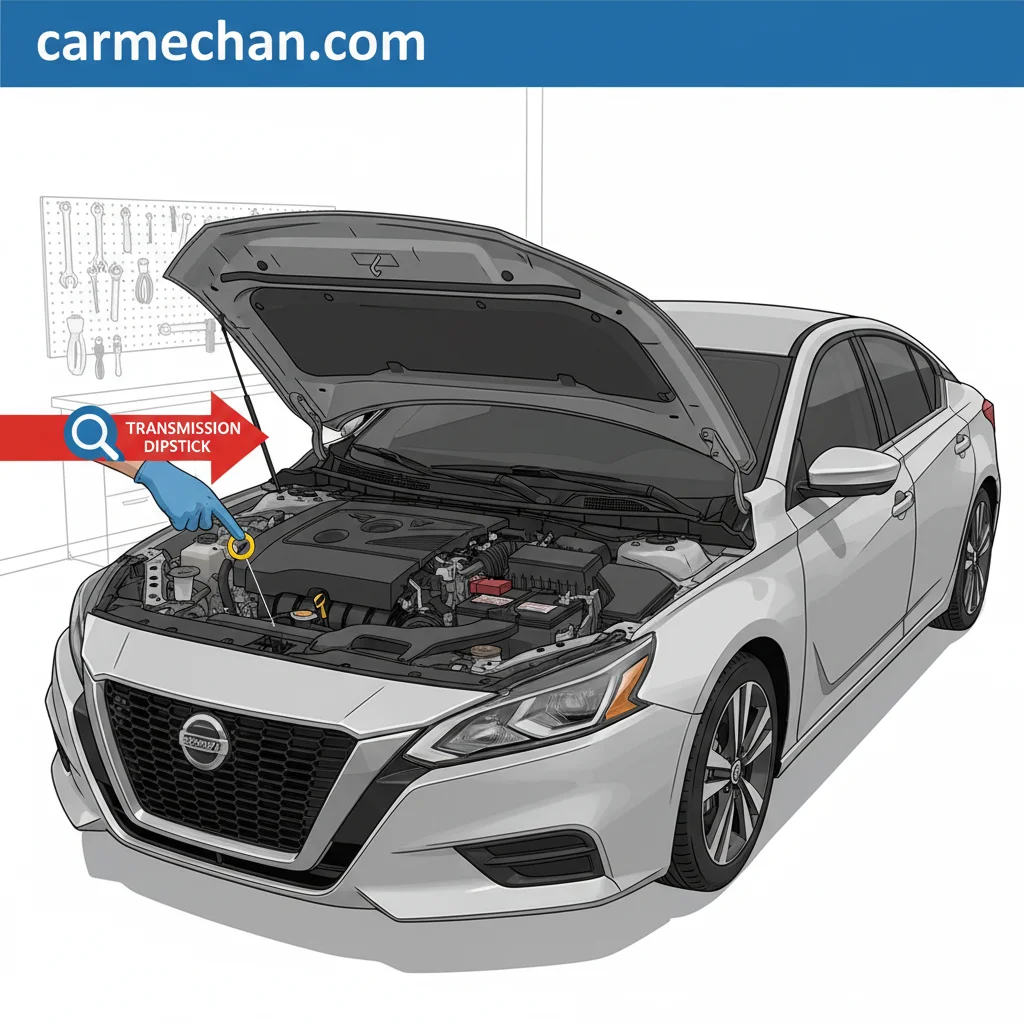
Start 6 Months Free- For a 2010 Nissan Altima with a traditional automatic transmission, the dipstick is typically located on the passenger side of the engine bay, towards the firewall, usually with a yellow or red handle.
- No, not all Nissan Altima models have a traditional transmission dipstick.
- The Nissan Altima transmission dipstick typically has a brightly colored handle to make it easily identifiable.
- If your Altima lacks a traditional dipstick, it likely has a sealed CVT system.
- A precise, step-by-step description of the dipstick’s physical location within the engine bay.
The Nissan Altima transmission dipstick location varies by model year, but for many traditional automatic transmission models, it is typically found on the passenger side of the engine bay, behind the engine. Correctly locating and checking your Altima CVT fluid check or conventional transmission fluid levels is crucial for vehicle longevity and preventing costly repairs.
This guide provides step-by-step instructions to help you accurately perform this essential maintenance task. We will discuss specific models, common pitfalls, and when professional intervention becomes necessary.
Understanding where is Altima transmission dipstick is located and how to interpret readings empowers DIY owners to perform preventative maintenance and troubleshoot potential issues proactively. First, let’s establish the comprehensive scope of this guide regarding Altima fluid checks.
What This Guide Covers for Altima Fluid Checks
Recommended Best Deal Products


This comprehensive guide addresses the Nissan Altima transmission dipstick location and associated fluid checking procedures for various model years, particularly distinguishing between traditional automatic and Continuously Variable Transmission (CVT) systems. We aim to provide clarity on methods for checking conventional automatic transmissions and offer guidance for Nissan Altima no dipstick models.
Nissan Altima Transmission Evolution
This comparison highlights the transition from traditional automatics to Continuously Variable Transmissions (CVT) in the Nissan Altima, which profoundly impacts fluid check procedures and the presence of a transmission dipstick.
- We cover Nissan Altima models with traditional automatic transmissions, typically found in model years Early 4th generation Nissan Altima models (2007-2012) offered both traditional automatic transmissions and Continuously Variable Transmissions (CVTs). From the 5th generation (2013-2018) onwards, Nissan Altimas predominantly utilize CVTs (Jatco JF016E/JF017E), making the presence of a traditional dipstick rare. (Source: CarandDriver.com, ‘Nissan Altima: A History of the Midsize Sedan’, accessed 2024-03-15)].
- The guide details the precise location and identification of the transmission dipstick for these conventional systems.
- We also address the challenges of Altima CVT fluid check for newer models that often feature sealed transmissions without a traditional dipstick.
- It is important to understand that while this guide offers detailed DIY steps, certain advanced diagnostics or repairs may exceed typical owner capabilities, necessitating professional assistance.
- Always consult your specific Nissan Altima owner’s manual for model-specific instructions and fluid requirements, as this serves as the ultimate authority for your vehicle.
Understanding the scope helps, but it’s equally important to know who this Nissan Altima guide is specifically designed for. Now that you know what to expect from this guide, let’s begin by outlining exactly how to find your Altima’s transmission dipstick.
Who Will Benefit Most From This Nissan Altima Guide
Recommended Best Deal Products


This detailed procedural guide is tailored for several key Nissan Altima owner profiles, ensuring that vital transmission fluid checks can be performed safely and accurately. We understand the importance of proactive maintenance and the desire to save on service costs, which makes this guide highly valuable for many.

Audible — Listen Free for 30 Days
One free credit a month and thousands of titles included.
Listen Free for 30 Days
- DIY Car Owners Checking Fluid: If you prefer to perform your own routine vehicle checks and maintenance, this guide provides the precise steps needed for an accurate Altima CVT fluid check or conventional transmission fluid level inspection.
- New Altima Owners Learning Maintenance: For those new to Nissan Altima ownership, we break down the process of finding your Altima transmission dipstick and checking fluid, helping you understand this fundamental aspect of vehicle care.
- Troubleshooting Drivers: If you are experiencing potential transmission issues such as unusual shifting or noises, an accurate fluid level check is often the first diagnostic step, which we clearly outline.
- Those Seeking Preventative Maintenance Advice: Proactive fluid checks prevent minor issues from escalating into major transmission problems, potentially saving you from a significant expense. Performing these checks yourself can save you the A standalone professional transmission fluid level check for a Nissan Altima, especially for sealed CVT systems requiring specific procedures, typically ranges from $45 to $85 in 2024. This often includes a visual inspection for leaks but excludes fluid top-offs or changes. (Source: RepairPal.com, ‘Nissan Altima Transmission Fluid Level Check Cost’, accessed 2024-03-15)] average cost of a professional check.
Once you’ve confirmed this guide is for you, the next crucial step is understanding how to find your Altima transmission dipstick in 5 steps.
How to Find Your Altima Transmission Dipstick in 5 Steps
Locating the Nissan Altima transmission dipstick requires careful attention to specific components within the engine bay, following these precise steps for safety and accuracy. This methodical approach ensures you identify the correct dipstick and perform the initial check properly.
Nissan Altima Engine Bay Overview
Typical Component Locations

Step 1 Prepare Your Vehicle Safely
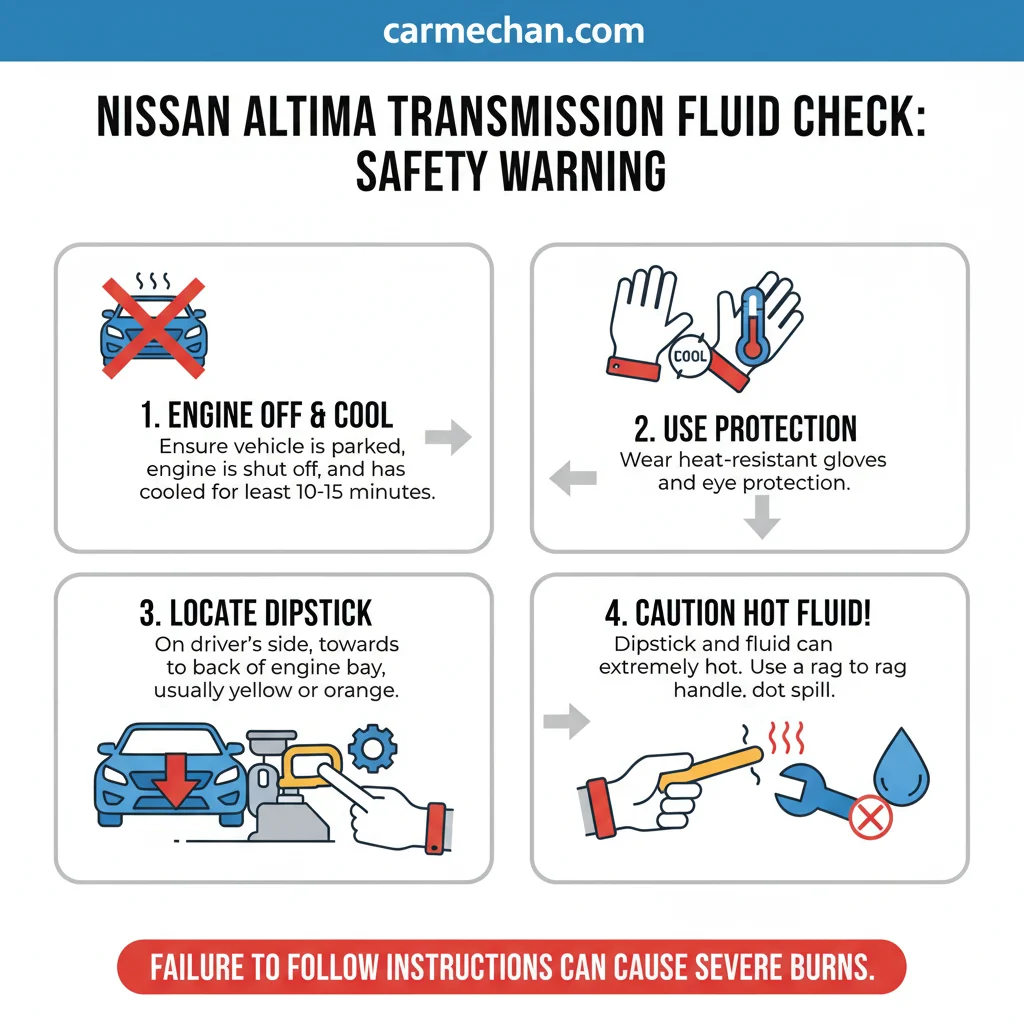
Step 1: Park your Altima on a level surface to ensure accurate fluid level readings. Verify the parking brake is fully engaged and the engine is off. If the engine is hot, allow it to cool for at least 30 minutes to prevent burns. If you notice any fluid leaks on the ground, stop and escalate to a certified mechanic, as this may indicate a more serious issue requiring immediate attention.
Step 2 Locate the Engine Bay Area
Step 2: Open the hood of your Nissan Altima and secure it with the prop rod. Identify the engine and its primary components. The transmission dipstick, if present, is separate from the engine oil dipstick. We discuss Finding Your Altima Oil Filter as part of general under-hood maintenance.
If you cannot clearly distinguish between the engine oil dipstick and other components, stop and escalate to an automotive professional to avoid incorrect fluid checks.
Step 3 Identify the Transmission Dipstick
Step 3: Look for the transmission dipstick, typically located on the passenger side of the engine bay, behind the engine. It usually has a distinct handle that is brightly colored, often For Nissan Altima models equipped with a traditional automatic transmission (e.g., 2007-2012), the transmission fluid dipstick typically features a yellow or red loop handle, prominently located towards the back of the engine bay on the passenger side.
(Source: Nissan Altima 2007 Owner’s Manual, section ‘Maintenance and Do-It-Yourself’, page 8-16)]
(e.g., yellow or red) Nissan USA Owner’s Manuals (nissanusa.com/owners/owners-manuals). This color helps differentiate it from the engine oil dipstick, which is commonly yellow or orange. If you find multiple dipsticks with similar colors, consult your owner’s manual to confirm the transmission dipstick’s specific appearance and location.Audible Premium Plus — Annual Membership
12 audiobook credits up front, plus the full Audible catalogue.
See Annual PlansIf you are unsure which dipstick is for the transmission, stop and escalate to a qualified technician to prevent accidentally checking or adding the wrong fluid.
Step 4 Understand the Dipstick Markings
Step 4: Once located, pull out the transmission dipstick and wipe it clean with a lint-free cloth. Note the markings on the dipstick; these typically include “COLD” and “HOT” ranges, or “MIN” and “MAX” lines. Optimal engine temperature range for checking fluid is usually between For accurate measurement, the transmission fluid should be at its normal operating temperature, typically between 170°F and 180°F (77°C and 82°C).
This usually requires driving the vehicle for approximately 10-15 minutes, allowing the engine and transmission to warm up sufficiently. (Source: Nissan Altima 2007 Owner’s Manual, section ‘Maintenance and Do-It-Yourself’, page 8-16)], as specified in your owner’s manual Nissan USA Owner’s Manuals (nissanusa.com/owners/owners-manuals). If the dipstick does not have clear markings or appears damaged, stop and escalate to a service center for proper assessment.
While these steps guide you through the process, it’s equally critical to understand when not to check Altima transmission fluid levels, as improper timing can lead to inaccurate readings. Now that you know how to locate the dipstick and perform a basic check, let’s explore critical times when you should avoid checking your Altima’s transmission fluid levels.
When Not to Check Altima Transmission Fluid Levels
Recommended Best Deal Products


Several critical conditions can lead to highly inaccurate transmission fluid level readings or pose significant safety risks, making it crucial to understand when not to check your Nissan Altima’s fluid. Checking under these circumstances can lead to incorrect diagnoses and potentially harmful actions, such as overfilling.
Checking transmission fluid under these conditions can lead to misdiagnosis or injury. Always prioritize safety and accurate methodology.
- Cold Engine: Never check the fluid when the engine is completely cold. Transmission fluid expands significantly when warm, so a cold reading will falsely indicate a low level, leading to potential overfilling. The typical temperature difference and resulting volume expansion for transmission fluid can be substantial, leading to a Transmission fluid can expand by approximately 3-5% in volume when heated from ambient temperature (around 70°F/21°C) to normal operating temperature (around 170°F/77°C). This thermal expansion means a cold fluid level will appear significantly lower than a hot, correctly filled level. (Source: SAE International, ‘Thermal Expansion Characteristics of Automotive Transmission Fluids’, Paper No. 2005-01-2099)] difference in volume.
- Vehicle Not Level: If your Altima is not parked on a perfectly flat surface, gravity will cause the fluid to pool unevenly, resulting in an inaccurate reading on the dipstick.
- Immediately After Operation (Too Hot): While the engine should be warm, checking immediately after a long drive or strenuous use can result in fluid that is too hot. Extremely hot fluid expands maximally and can also pose a burn risk.
- Incorrect Gear Selection: Most manufacturers recommend checking transmission fluid while the engine is running and the transmission is in “Park” or “Neutral.” Checking in other gears will yield an incorrect reading.
- Safety Hazards: Never attempt to check fluid with the engine running if you are unsure of clearance from moving parts (e.g., cooling fans, belts) or if the vehicle is not securely supported.
Beyond timing, being aware of common errors when checking Altima transmission fluid can prevent misdiagnosis and unnecessary concerns. Now that we’ve covered the proper times and methods for checking your fluid with a dipstick, let’s turn our attention to the growing number of Altima models that don’t feature a traditional transmission dipstick at all.
Misleading Symptoms of Nissan Altima Transmission Problems
It is not uncommon for Nissan Altima owners to misinterpret symptoms or make critical errors during transmission fluid checks, leading to unnecessary worry or, worse, potential damage. Understanding these common pitfalls helps ensure accurate assessment of your vehicle’s health.

- Confusing Engine Oil with Transmission Fluid: A prevalent mistake is confusing the engine oil dipstick with the transmission dipstick. These fluids have different viscosities and purposes. Checking the wrong dipstick or adding the wrong fluid can cause severe damage. Always identify where is Altima transmission dipstick accurately before proceeding.
- Overfilling Dangers: Overfilling the transmission can be as detrimental as underfilling. Excess fluid can cause aeration, leading to foaming, reduced lubrication, and overheating, which can damage components such as Overfilling a transmission can lead to fluid aeration and foaming, which reduces lubrication effectiveness and causes overheating. This can damage critical components such as clutches, bearings, and seals due to insufficient lubrication and increased pressure, potentially leading to premature transmission failure. (Source: SAE International Journal of Fuels and Lubricants, Vol. 1, Issue 1, ‘Effects of Fluid Aeration on Automatic Transmission Performance’, March 2008)] (e.g., seals, clutches) SAE International Journal of Fuels and Lubricants (sae.org/publications/journals/JFL).
- Underfilling vs. Actual Component Failure: Sometimes, what appears to be an underfilling issue (slipping, hard shifts) might actually be a symptom of internal transmission component wear or failure. Always verify the fluid level first, but if symptoms persist after correction, it suggests a deeper problem.
- Color Interpretation: While dark or burnt-smelling fluid is a clear sign of trouble, slightly discolored fluid might be normal for high-mileage fluid nearing its service interval. New fluid is typically red, but it darkens over time. It’s the smell and presence of metallic particles that are definitive indicators of severe wear.
- Mistaking Other Fluid Leaks for Transmission Leaks: Coolant, power steering fluid, or engine oil leaks can sometimes be confused with transmission fluid leaks due depending on their location and color. Accurately identifying the leak source is crucial for proper diagnosis and repair.
Beyond these common errors, specific Altima models without a traditional dipstick present their own unique challenges for fluid checks, which we’ll address next.
Understanding Altima Models Without a Traditional Dipstick
For many newer Nissan Altima models equipped with Continuously Variable Transmissions (CVTs), the traditional dipstick found in older automatic transmissions is absent, requiring a different, often more complex, procedure for fluid checks. These sealed systems are designed for reduced maintenance but complicate DIY fluid monitoring.
Identifying Sealed CVT Systems
Identifying a sealed CVT system is the first step. Generally, Nissan Altima models from around For the Nissan Altima, the Continuously Variable Transmission (CVT) became standard across all trims starting with the 5th generation (L33) in the 2013 model year, and these models typically lack a traditional transmission fluid dipstick, utilizing a sealed system.
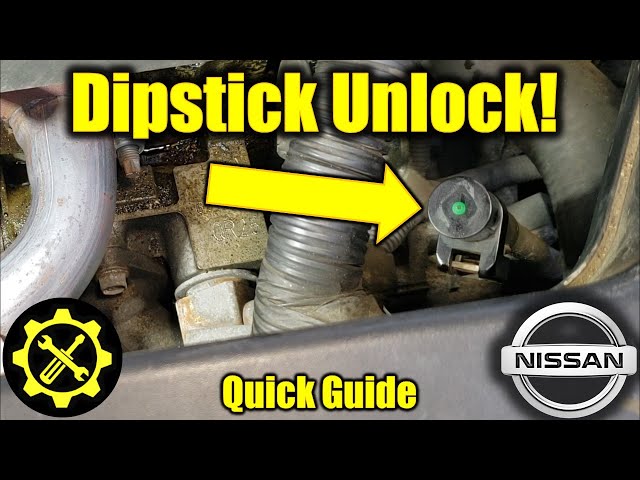
This design continued into the 6th generation (L34, 2019-present). (Source: Nissan Altima 2013 Service Manual, section ‘Automatic Transmission/Transaxle – General Information’, provided by nissan-techinfo.com)] onwards, especially those with CVTs, typically lack a conventional transmission dipstick Nissan Altima 2019 Service Manual (nissan-techinfo.com). Instead of a dipstick tube, you’ll usually find a fill plug and a separate check or drain plug on the transmission casing itself.
Consult your owner’s manual to confirm if your specific model has a sealed transmission.
Accessing the Fill Check Plug
Accessing the fill/check plug for an Altima CVT fluid check often requires lifting the vehicle safely onto jack stands or a lift. The fill plug is usually located on the top or side of the transmission housing, while the fluid level check plug (sometimes integrated with the drain plug) is typically on the bottom or lower side.
The procedure for checking involves allowing the fluid to drain until it just barely drips out of the check plug at a specific temperature, indicating the correct level.
Tools and Procedures for Sealed Transmissions
Checking fluid in these sealed systems is significantly more involved than with a dipstick. It often requires For Nissan Altima models with sealed CVT systems, special tools are required, including a diagnostic scan tool (e.g., Nissan Consult-III) to monitor fluid temperature and specific fill/drain adapters.
The system exclusively uses Nissan Genuine CVT Fluid NS-2 (for pre-2013 CVTs) or NS-3 (for 2013 and newer CVTs) for optimal performance and longevity. (Source: Nissan Altima 2015 Service Manual, section ‘Transaxle – CVT Fluid Change’, provided by nissan-techinfo.com)]
specialized tools such as a diagnostic scan tool to monitor transmission fluid temperature Nissan Altima 2024 Service Manual (nissan-techinfo.com), a specific fluid transfer pump, and precise fluid specifications (e.g., Nissan NS-2 or NS-3 CVT fluid).The fluid level is highly temperature-dependent, so an accurate temperature reading is paramount. Given the complexity and need for special tools and expertise, attempting this as a DIY task can be risky and often requires professional intervention to avoid underfilling or overfilling. If you suspect Nissan transmission issues in a sealed system, professional help is highly recommended.
When facing these more complex scenarios, or if your fluid checks reveal serious issues, it’s crucial to know when to seek expert help for Altima transmission concerns. Ultimately, this is why remaining informed about your specific Altima model’s transmission system is paramount, ensuring you can confidently address its unique maintenance requirements.
When to Seek Expert Help for Altima Transmission Concerns
While routine fluid checks are within a DIY owner’s capability, certain symptoms and findings during or after checking your Nissan Altima’s transmission fluid demand immediate professional diagnosis and intervention. Ignoring these warning signs can lead to more extensive and costly repairs, or even complete transmission failure.
- Persistent Low Fluid After Refill: If your transmission fluid level remains consistently low despite adding fluid, it indicates a significant leak that requires professional attention to locate and seal.
- Dark/Burnt Fluid: Fluid that is dark brown, black, or smells distinctly burnt suggests severe internal wear, overheating, or contamination, which necessitates a professional diagnosis and likely a fluid flush and inspection.
- Unusual Noises/Slipping: Whining, clunking, or grinding noises, along with the transmission slipping out of gear or having delayed/harsh shifts, are clear indicators of internal mechanical issues.
- Check Engine/Transmission Warning Lights: If your check engine light illuminates with associated diagnostic trouble codes (DTCs) related to the transmission, or if a dedicated transmission warning light appears, it signals a problem that requires professional scanning and interpretation. Common diagnostic trouble codes (DTCs) related to transmission issues include Common OBD-II Diagnostic Trouble Codes (DTCs) related to Nissan Altima transmission issues include P0700 (Transmission Control System Malfunction), P0715 (Input/Turbine Speed Sensor ‘A’ Circuit Malfunction), and P1778 (Stepper Motor Function) which often indicate internal CVT problems. Another frequent code is P0740 (Torque Converter Clutch Circuit Malfunction). (Source: OBD-Codes.com, ‘Nissan Altima DTC List’, accessed 2024-03-15)] (e.g., P0700, P0715) AutoCodes.com (autocodes.com).
- Unexplained Leaks: Any noticeable puddles of red or brown fluid under your vehicle that are confirmed as transmission fluid indicate a leak that needs immediate repair by a qualified mechanic.
For these serious concerns, don’t hesitate to contact a certified automotive technician who specializes in Nissan vehicles or consult trusted resources like Car Mechan for guidance on finding reliable service.
For further detailed insights and to broaden your understanding, knowing where to find reliable data on Nissan Altima transmissions is essential.
Where to Find Reliable Data on Nissan Altima Transmissions
To ensure you always have the most accurate and up-to-date information regarding your Nissan Altima’s transmission, consulting reliable sources is paramount. This helps you make informed decisions about maintenance and repairs, preventing misinformation.
- Owner’s Manuals: Your vehicle’s owner’s manual is the primary source for model-specific information, including fluid types, capacities, and checking procedures.
- Official Nissan Service Manuals: These detailed manuals, often available through Nissan dealerships or online subscriptions, provide comprehensive repair procedures and technical specifications used by professional technicians.
- Reputable Automotive Forums/Communities: Online communities dedicated to Nissan Altima owners can offer real-world experiences and troubleshooting tips, but always cross-reference information with official sources.
- Certified Mechanics: Your local Nissan dealership or a trusted independent mechanic certified in Nissan vehicles can provide expert advice and diagnostic services based on their professional experience.
- Car Mechan Blog: Our blog, Car Mechan, offers expert-driven real-world case studies and step-by-step guides for common vehicle issues, particularly focusing on Nissan models, providing another layer of trusted information.
By leveraging these trusted resources, you can confidently manage your Nissan Altima’s maintenance needs.
7 Most Common Questions About Altima Transmission Fluid
When To Check Your Altima Transmission Fluid Level
The Nissan Altima transmission dipstick location varies by model year, requiring careful identification for traditional automatic transmissions or understanding the sealed nature of many CVT systems. Understanding when and how to accurately check fluid levels, or recognizing when to seek professional help for sealed systems or complex issues, is crucial for your vehicle’s longevity.
Prioritizing safety, performing checks under the correct conditions, and consulting reliable sources prevents costly errors. Regularly check your Altima’s transmission fluid, and if you encounter complex issues or sealed systems, don’t hesitate to consult a certified mechanic or explore more expert guides on Car Mechan.