Humming Noise In Car Getting Louder With Speed Fix 2026
Last Updated on September 1, 2026 by Albert Duke
A humming noise in your car getting louder with speed often signals a problem with components related to your wheels, tires, or drivetrain. Common culprits include worn wheel bearings, uneven tire wear, or issues within the differential or driveshaft.

Prime for Young Adults — 6 Months Free
Students and 18–24s get six months of Prime free, then half price.
Start 6 Months FreeAccurate diagnosis requires careful listening and specific testing to pinpoint the source, determining if you need a simple fix or professional auto repair.
A humming noise in your car getting louder with speed often signals a problem with components related to your wheels, tires, or drivetrain. Common culprits include worn wheel bearings, uneven tire wear, or issues within the differential or driveshaft.
Accurate diagnosis requires careful listening and specific testing to pinpoint the source, determining if you need a simple fix or professional auto repair.
When you hear a humming noise in your car getting louder with speed, it’s a clear signal your vehicle needs attention. This sound often indicates a developing mechanical issue that could worsen over time. Ignoring it can lead to more costly repairs or even safety hazards as you drive in 2026.
This guide will help you understand the potential causes, diagnose the problem, and decide on the best course of action.
Key Takeaways
Recommended Best Deal Products


- Speed-dependent humming signals wear.
- Wheel bearings are a common cause.
- Tire condition impacts noise levels.
- Drivetrain components can also hum.
- Diagnose before attempting repairs.
7 Most Common Causes of Humming Car Noise
A persistent humming noise in your car that intensifies with speed usually points to a few common culprits, primarily within the wheels, tires, or drivetrain.

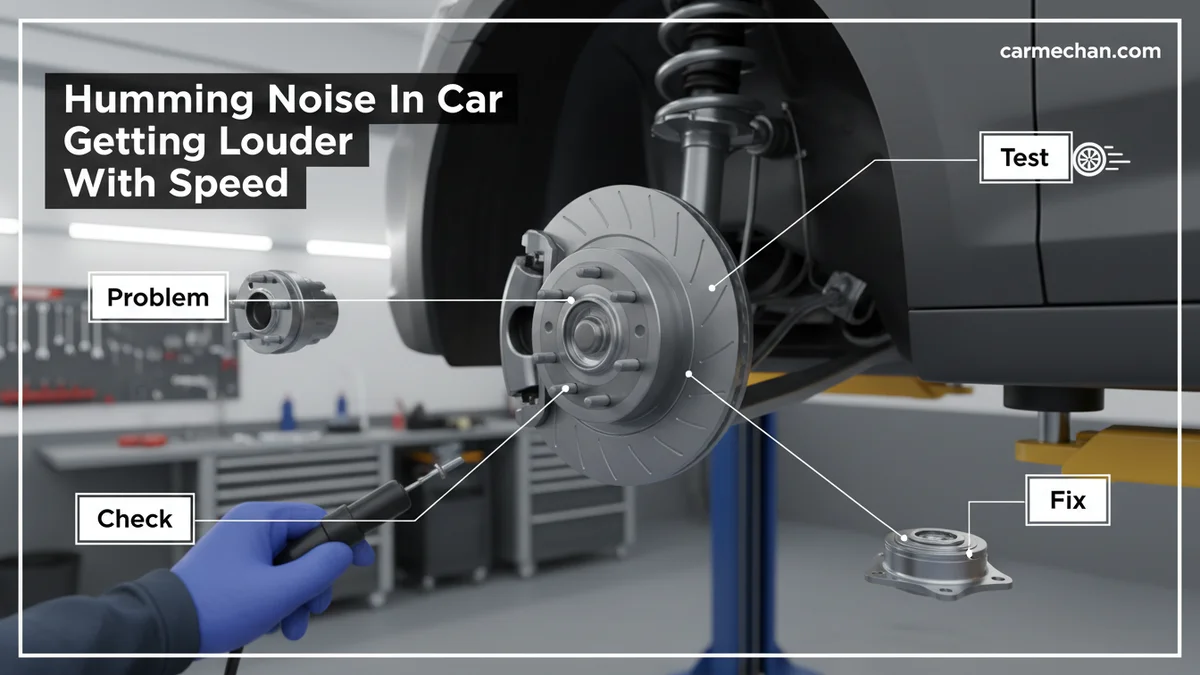
Worn Wheel Bearings
Wheel bearings allow your wheels to spin freely. When they wear out, the internal rollers or balls become loose or pitted, creating friction and a grinding or humming noise. This hum gets louder with speed because the bearing spins faster. It might change or intensify when turning, as weight shifts to the affected side.
Uneven Tire Wear
Tires with uneven wear patterns, such as cupping, feathering, or flat spots, can generate a distinctive humming or roaring sound. This noise typically increases with vehicle speed as the irregular tread impacts the road more frequently. A tire rotation might temporarily alleviate the sound if the wear is not severe.

Audible — Listen Free for 30 Days
One free credit a month and thousands of titles included.
Listen Free for 30 DaysFailing Differential Gears
The differential allows your wheels to turn at different speeds when cornering. Worn or damaged gears inside the differential can produce a distinct whine or hum, especially noticeable during acceleration or deceleration. The noise intensifies with speed as the gears rotate faster under load.
Driveshaft Carrier Bearing
Vehicles with two-piece driveshafts often have a carrier bearing that supports the shaft. If this bearing wears out, it can create a humming or vibrating noise that gets louder as vehicle speed increases. The rubber insulation around the bearing can also deteriorate, leading to increased noise and vibration.
Transmission Bearing Wear
Internal bearings within the transmission can wear down over time, especially in manual transmissions or older automatic units. This wear can result in a humming or whining sound that varies with speed and gear selection. The noise often becomes more pronounced as engine RPMs and road speed climb.
CV Joint Degradation
Constant Velocity (CV) joints, found in front-wheel-drive and some all-wheel-drive vehicles, allow the driveshaft to transmit power smoothly during steering and suspension movement. A failing CV joint typically makes a clicking or popping sound when turning, but a constant humming can indicate severe internal wear, particularly at higher speeds.
Power Steering Pump Issues
While less common to be speed-dependent, a failing power steering pump can sometimes produce a groaning or humming sound, especially when turning the wheel. If the noise persists at speed without turning, it could indicate a more severe internal pump issue or low fluid levels, which can be misdiagnosed as other hums.
Understanding these potential causes is the first step, but pinpointing the exact source requires a more systematic approach.
How to Pinpoint Car Humming Source in 5 Steps
Recommended Best Deal Products


Diagnosing a humming noise in your car requires a methodical approach, focusing on specific characteristics and testing procedures.
Listen Attentively Inside
Pay close attention to where the sound seems to originate inside the cabin. Is it coming from the front, rear, or a specific side? Does it change pitch or volume when you accelerate, decelerate, or turn the steering wheel? Noticing these nuances helps narrow down the potential component responsible for the noise.
Perform Road Tests Safely
Find a safe, open road to conduct controlled tests. Listen if the hum changes when you slightly swerve left or right at speed. A wheel bearing noise often intensifies when weight shifts to the failing side. Note if the noise persists when you briefly put the car in neutral and coast, which can differentiate engine/transmission issues from wheel-related ones.
Audible Premium Plus — Annual Membership
12 audiobook credits up front, plus the full Audible catalogue.
See Annual PlansLift and Inspect Components
Once you suspect a specific area, safely lift the vehicle on a level surface using a jack and always securing it with jack stands. With the wheel off the ground, try to wobble it at 12 and 6 o’clock and then 3 and 9 o’clock.
Any play or looseness could indicate a bad wheel bearing. Spin the wheel by hand and listen for grinding or roughness.
Check Fluid Levels Visually
Low fluid levels in the differential or transmission can often lead to humming or whining noises due to increased friction and heat. Check your vehicle’s owner’s manual for the correct procedure to inspect these fluid levels. Ensure the fluid looks clean and is at the appropriate mark on the dipstick or fill plug.
Verify Tire Condition
Visually inspect all four tires for signs of uneven wear patterns, such as feathering, cupping, or scalloping. Run your hand over the tread to feel for irregularities that might not be visible. Sometimes, simply rotating and balancing the tires can significantly reduce or eliminate certain humming noises. Consistent tire maintenance can prevent such issues.
While these steps help isolate the issue, some noises can be easily mistaken for others, especially between wheel and tire problems.
Wheel Bearings Vs. Tire Issues 3 Differences
It’s common to confuse the distinct humming noises produced by failing wheel bearings and irregular tire wear, but key differences exist.

Sound Character Changes
A bad wheel bearing often produces a more constant, low-pitched growl or hum that intensifies with speed, regardless of road surface. It might have a metallic undertone. In contrast, tire noise tends to be more of a rhythmic roar or drone that can change subtly with different road textures.
The sound from worn tires might also feel “rougher” through the floorboard.
Steering Input Reactions
The most telling sign for a wheel bearing is how the noise reacts to turning. When you turn, the vehicle’s weight shifts. If the hum gets louder when turning right, it often indicates a problem with the left-side wheel bearing, as that bearing is under increased load.
Conversely, tire noise generally remains consistent during turns, changing only slightly with speed or acceleration, not directional shifts.
Visual Wear Indicators
Tire issues that cause humming are almost always accompanied by visible signs of uneven wear on the tire tread itself, such as cupping, feathering, or flat spots. A quick visual and tactile inspection of the tire surface can confirm this. Wheel bearing issues, however, rarely present with any external visual cues on the wheel or tire.
The only visual sign might be excessive play when the wheel is lifted.
Once you’ve identified the likely cause, the next crucial decision is whether it’s a repair you can tackle or if professional help is warranted.
When to Call Professional Auto Repair
Recommended Best Deal Products


While some car maintenance is suitable for DIY enthusiasts, certain humming noises signal problems that are best left to professional auto repair technicians.
Complex Diagnostics Needed
Some humming noises, particularly those originating from the transmission or differential, require specialized diagnostic tools and training to accurately pinpoint. Mechanics use advanced listening devices and scan tools to read internal sensor data. Incorrect diagnosis can lead to unnecessary or incorrect repairs, wasting time and money.
Specialized Tools Required
Replacing components like wheel bearings, driveshafts, or internal transmission parts often demands specific presses, pullers, and alignment equipment. Without these specialized tools, attempting a DIY repair can be dangerous and cause further damage to surrounding components. Professional shops have the right equipment for precise and safe work.
Safety Concerns Arise
Driving with a severe humming noise, especially from a compromised wheel bearing or critical drivetrain component, poses significant safety risks. A failing wheel bearing, for example, can seize or cause a wheel to detach, leading to a loss of control.
Professional repair ensures your vehicle’s critical systems are restored to safe operating standards.
Understanding when to seek professional help also involves knowing what kind of costs to anticipate for these types of repairs.
How Much Does Humming Noise Repair Cost?
Repairing a humming noise in your car involves a range of potential costs, depending on the diagnosed problem and whether you choose DIY or professional service.
Wheel Bearing Replacement
For a single wheel bearing replacement, expect to pay between $300 to $700 per wheel in 2026, including parts and labor. Parts alone typically cost $100 to $250. This cost can fluctuate significantly based on vehicle make, model, and whether it’s a hub assembly or just the bearing.
Tire Related Services
If uneven tire wear is the culprit, a tire rotation and balance might cost $40 to $80. However, if new tires are needed, costs range from $100 to $300 per tire, plus mounting and balancing. Prompt attention to tire maintenance can prevent premature wear and the associated humming noises.
Drivetrain Component Fixes
Repairs to the differential or driveshaft are generally more expensive. A differential fluid change costs around $100 to $250. Replacing differential gears or a driveshaft carrier bearing could range from $500 to $1,500. Transmission repairs can be significantly higher, often starting from $1,500 and going upwards, depending on the extent of internal damage.
Understanding these potential expenses helps you make informed decisions about your car’s care and prioritize necessary repairs.
Diagnosing a humming noise in your car that gets louder with speed is crucial for both your vehicle’s health and your safety in 2026. By systematically approaching the issue, from attentive listening to professional consultation, you can effectively address the problem. timely diagnosis and repair prevent minor issues from escalating into major, costly breakdowns.
Frequently Asked Questions About Car Humming Noises
Is a Humming Noise in a Car Dangerous?
A humming noise in a car can be dangerous, especially if it originates from a worn wheel bearing or a failing drivetrain component. These issues can compromise vehicle stability or lead to catastrophic failure if left unaddressed. Prompt diagnosis and repair are crucial for safety.
How Long Can I Drive With a Humming Noise From My Car?
Driving with a humming noise for an extended period is not recommended, as it often indicates progressive wear. While you might drive for a short time, the underlying issue will worsen, potentially causing more damage, increasing repair costs, or leading to an unsafe driving condition. Seek diagnosis quickly.
Can Bad Tires Cause a Loud Humming Noise at Speed?
Yes, bad tires are a very common cause of a loud humming noise that increases with speed. Uneven tread wear, cupping, or feathering patterns can create distinct sounds that transmit through the vehicle. Tire rotation, balancing, or replacement can often resolve this issue.
How Do You Check for a Bad Wheel Bearing Causing Humming?
To check for a bad wheel bearing, listen for a hum that changes with turning (louder on one side). You can also lift the wheel, grasp the tire at 12 and 6 o’clock, and try to wobble it. Excessive play or grinding sounds during rotation indicate a potential issue.
Does a Differential Make a Humming Noise When It Goes Bad?
Yes, a failing differential can produce a distinct humming or whining noise, particularly noticeable during acceleration or deceleration. This sound often indicates worn gears, low fluid levels, or improper backlash settings. Addressing differential issues promptly is important to prevent major drivetrain failure.