2014 Jeep Patriot TPMS Reset Button Location: Clarified
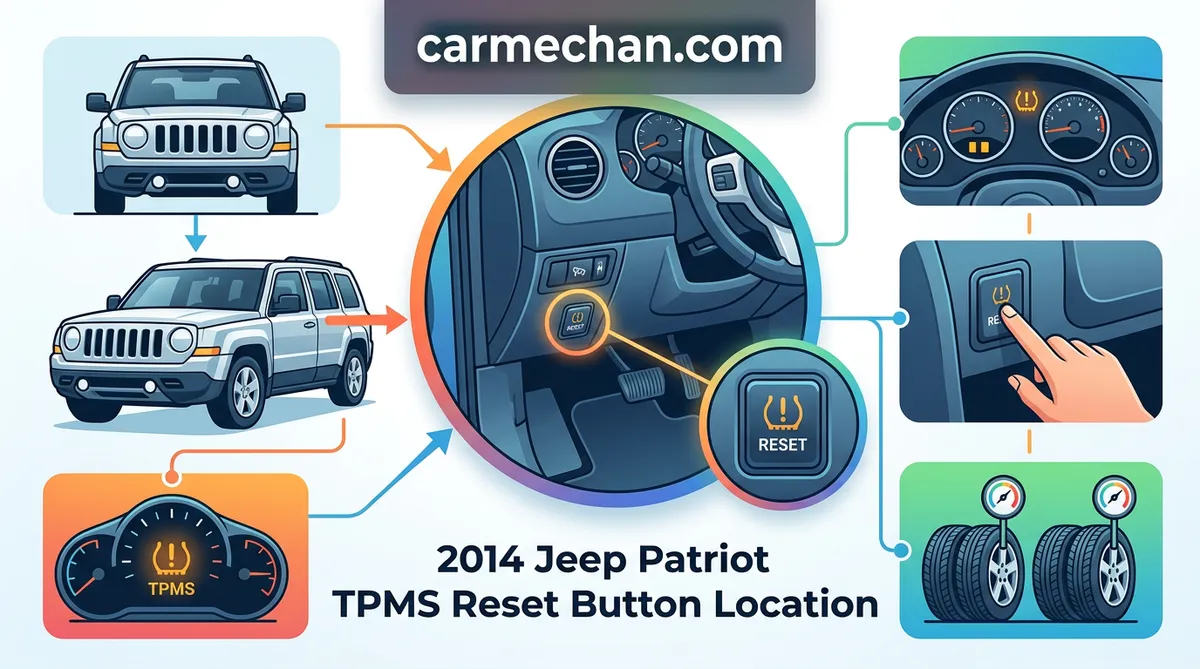
Are you staring at your dashboard, desperately searching for a hidden 2014 Jeep Patriot TPMS reset button that just doesn’t seem to exist? Many owners waste significant time hunting for a physical switch or a hidden menu option that simply isn’t part of this vehicle’s design architecture. Unlike some other manufacturers that provide a manual override or a “set” button under the steering column, the Patriot utilizes an automated system. In this guide, we will clear up the confusion regarding the reset process and get your tire pressure light turned off for good using the correct factory auto-relearn method.

Understanding the 2014 Jeep Patriot TPMS Reset Button Location Reality
Recommended Best Deal Products


📤 Share Image
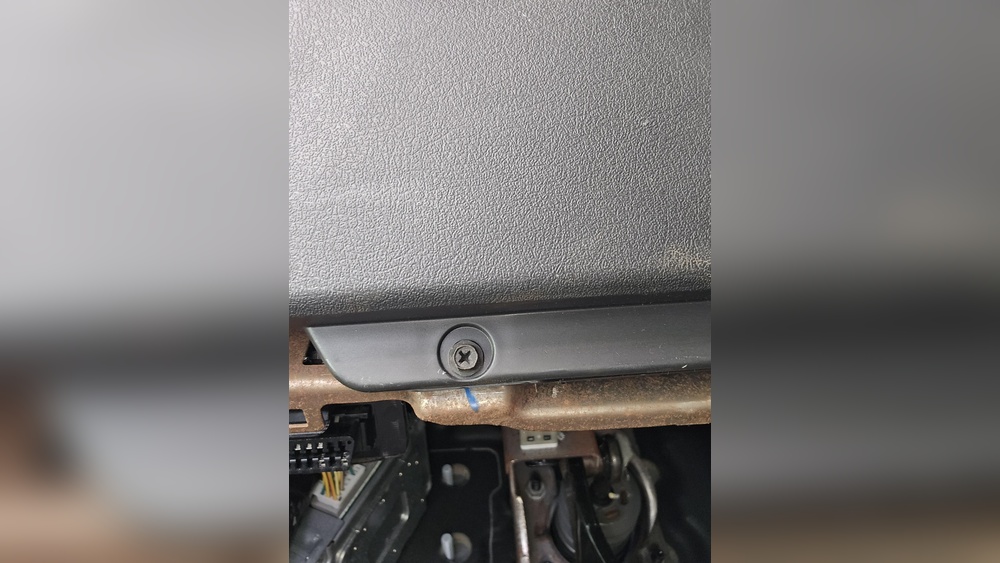
Why No Reset Button Exists on Your Patriot
If you have spent hours looking for a button inside the glove box, under the dash, or deep within the EVIC (Electronic Vehicle Information Center) menus, you are not alone. The 2014 Jeep Patriot TPMS reset button location is nonexistent because the system is engineered to operate on a “passive” logic. Automotive engineers designed this specific generation to remove human error; by eliminating a manual reset button, they ensure that the driver cannot “trick” the system into accepting incorrect or unsafe tire pressures.

How the TPMS Control Module Functions
The TPMS control module acts as the “brain” for your tire safety system. Located within the vehicle’s Body Control Module (BCM), it constantly polls information from individual 315 MHz radio-frequency sensors mounted inside each wheel assembly. These sensors transmit real-time data regarding tire pressure and temperature. When the system detects a value falling outside the pre-programmed factory threshold, it triggers the dashboard indicator. Because the system is “always on” and actively communicating, it does not require a manual trigger to reboot or search for sensors; it performs these tasks continuously in the background.
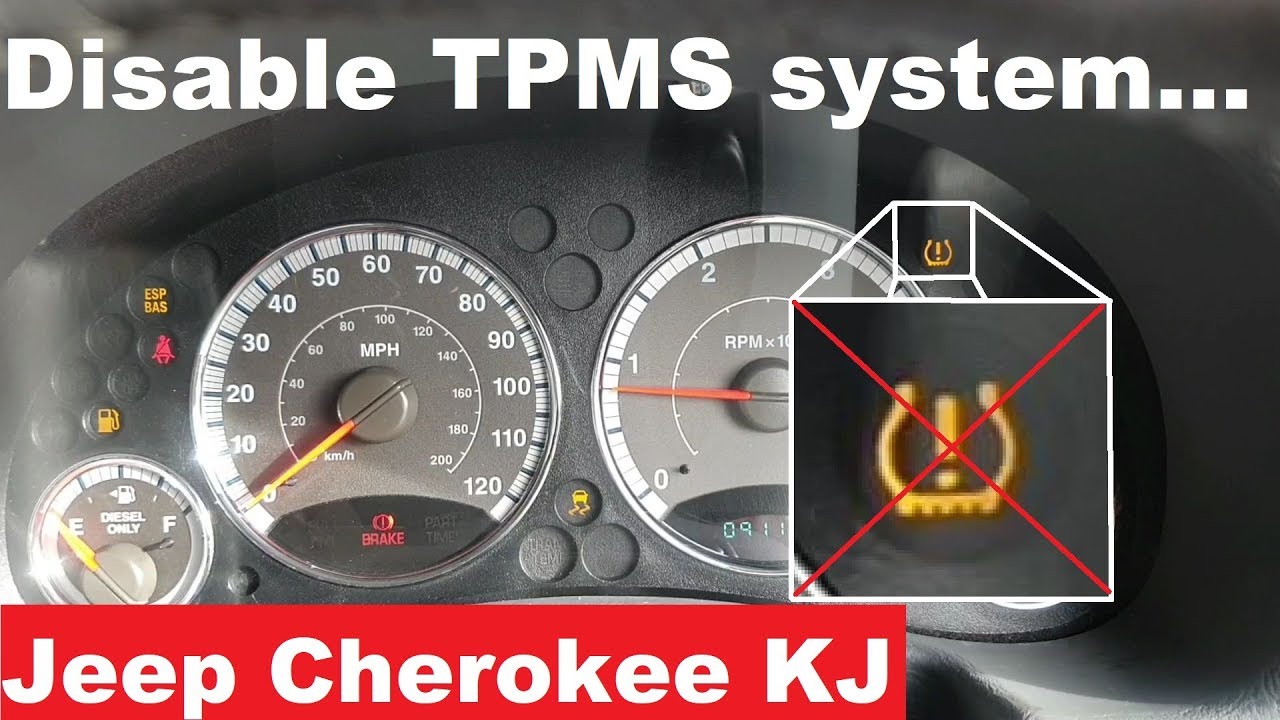
Identifying a Faulty Sensor vs. Low Pressure
It is critical to distinguish between a pressure warning and a system fault. A solid TPMS warning light almost always signifies that one or more tires are below the recommended PSI. However, a flashing light—typically for the first 60 to 90 seconds upon starting the engine—indicates a system malfunction. This usually means a sensor has a dead battery, has been damaged during a tire change, or the module itself is failing to receive a signal. If the light flashes, no amount of adding air will resolve the issue.
By The Numbers
Operating Frequency
Average Sensor Battery Life
Step-by-Step Guide: Resetting the TPMS Light Through Auto-Relearn
📋
Auto-Relearn Procedure
Recommended Best Deal Products


Use a high-quality manual tire pressure gauge to check each tire. Refer to the sticker located on your driver-side door jamb for the exact manufacturer-recommended PSI. Do not rely on the readings from a gas station pump, which are often inaccurate.
Inflate every tire, including the spare if it contains a sensor, to the door jamb specification. If a tire is significantly low, the sensor may be in a “sleep” mode; inflating it to the correct pressure wakes the sensor up.
Drive the vehicle for at least 10–15 minutes at speeds above 20 mph. This sustained rotation allows the TPMS module to successfully “re-acquire” the signal from all four sensors. The light will extinguish automatically once the system confirms valid pressure data from all corners.
When to Expect the Dashboard Alert to Clear
Patience is the final requirement. The system does not typically reset the moment you add air. It requires the wheels to be in motion to activate the sensors’ internal accelerometers. If the light does not turn off within 20 minutes of driving, double-check your tire pressures, as a single tire sitting just a few pounds below the threshold is often the culprit.
Troubleshooting 2014 Jeep Patriot TPMS Reset Button Location Errors
Why Your TPMS Light Stays On After Filling
If the light persists despite proper inflation, you may be experiencing a “hidden” sensor failure or atmospheric interference. Common reasons include:

Audible — Listen Free for 30 Days
One free credit a month and thousands of titles included.
Listen Free for 30 Days- Cold Temperature Drops: As ambient temperatures drop, tire pressure naturally decreases (typically 1 PSI per 10-degree drop). You may need to add air during the transition from autumn to winter.
- Sensor Battery Exhaustion: Sensors have a finite battery life. If your 2014 model is still running on original sensors, the batteries may simply be depleted, preventing them from broadcasting a signal to the vehicle’s computer.
- Radio Frequency Interference: Aftermarket dash cams, cell phone chargers, or other electronic devices plugged into 12V outlets can occasionally cause RF noise that interferes with the 315 MHz signal.
The Dangers of Over-Inflating Your Tires
A common pitfall is over-inflating tires in a desperate attempt to trigger the system. Do not exceed the “Max PSI” listed on the tire sidewall. Over-inflation creates a dangerous, harsh ride and increases the risk of tire failure by reducing the tire’s contact patch, which negatively impacts braking distance and handling. Always stick to the door jamb recommendation—not the tire sidewall maximum.
If your TPMS light is flashing, your vehicle has entered a fault state. Driving on tires with unknown pressure is risky. Use a manual gauge immediately, and if the pressures are correct but the light continues to flash, consult a professional mechanic with a dedicated TPMS scan tool to identify which specific sensor has failed.
When to Consult a Mechanic for System Faults
If the auto-relearn cycle fails and your tire pressures are verified to be perfect, you need a professional diagnostic scan. A technician can use a tool to “ping” each sensor individually to check for a response. If a sensor does not respond to the scan tool, it confirms the unit is dead and requires physical replacement at a tire shop.
✅ Why Auto-Relearn Works
- Eliminates manual input errors
- Factory-integrated safety logic
- Reduces reliance on complex electronics
- Automatically updates upon wheel rotation
❌ Potential Pitfalls
- Sensors can “sleep” if under-inflated
- Cold weather affects accuracy
- Battery failure cannot be fixed
- Scan tools required for deep faults
If you have recently rotated your tires, the TPMS system will automatically update the positions of the sensors after a few miles of driving. You do not need to perform any manual relearning steps or button presses for this process.
The 2014 Jeep Patriot is designed for simplicity, which is why it lacks a physical TPMS reset button. The system relies entirely on an automated “auto-relearn” process that triggers when the vehicle detects correct tire pressure and sufficient wheel rotation. By maintaining your tires to factory specifications and understanding that a flashing light indicates a hardware failure rather than a low-pressure issue, you can effectively manage the system without unnecessary service visits. Should you find that the light remains persistent after proper inflation, it is a clear signal that a sensor has reached the end of its battery life and requires professional attention. Check your tire pressure with a reliable manual gauge today and take your Patriot for a short drive to clear that warning light.
2014 Jeep Patriot Tpms Reset Button Location: Frequently Asked Questions
Recommended Best Deal Products


Do I need a scan tool to reset the Jeep Patriot TPMS?
No, a scan tool is not required for standard pressure adjustments. The 2014 Jeep Patriot system is self-learning. Once the tires are inflated to the recommended PSI and the vehicle is driven at highway speeds for a sufficient duration, the system automatically detects the new pressures and updates the dashboard, effectively performing a reset without any external diagnostic hardware or manual button input.
How do I turn off the tire pressure light after adding air?
To turn off the light, ensure all four tires (and the spare, if equipped with a sensor) are inflated to the exact PSI specified on your driver-side door jamb sticker. Once properly inflated, drive the vehicle at speeds above 15 mph for at least 15 to 20 minutes. The system will sense the pressure increase, recognize the correct parameters, and shut off the indicator light automatically.
Why does my TPMS light stay on after inflating tires?
If the light persists, the most common reason is that the pressure has not reached the specific trigger threshold, or the spare tire is low. If all tires are confirmed at the correct PSI, a sensor may have reached the end of its battery life, or the system may be detecting a hardware fault. In these cases, the ECU requires an OBDII scan to pinpoint which specific sensor is failing.
No scan tool is needed for standard pressure adjustments?
Correct. The 2014 Jeep Patriot is engineered for convenience, meaning the TPMS handles calibration independently. Provided the sensors are functioning properly, they will transmit pressure data to the vehicle’s computer as soon as the tires are inflated and the wheels begin to rotate. No manual override or scan tool intervention is required for routine tire maintenance or seasonal pressure adjustments.
Audible Premium Plus — Annual Membership
12 audiobook credits up front, plus the full Audible catalogue.
See Annual PlansThe spare tire must be checked?
Yes, many 2014 Jeep Patriot trim levels include a TPMS sensor inside the spare tire. If that sensor detects low pressure, it will trigger the dashboard warning light, even if your road tires are perfectly inflated. Always check the pressure of your spare tire as part of your troubleshooting process, as it is a common yet frequently overlooked cause for a persistent TPMS warning.