How Deep Is My Car Scratch? Fix Damage Right in 2026 Guide
Last Updated on September 1, 2026 by Albert Duke
Understanding how deep your car scratch is involves examining which paint layers are affected, from the clear coat to the bare metal. This crucial diagnostic step determines whether a DIY fix is possible or if professional repair is necessary.

Prime for Young Adults — 6 Months Free
Students and 18–24s get six months of Prime free, then half price.
Start 6 Months FreeWhen you ask “how deep is my car scratch,” you are seeking clarity on paint damage and its repair implications. Discovering a scratch on your vehicle can be frustrating, but accurately assessing its depth is the first critical step toward an effective solution. Misjudging a scratch can lead to costly repairs or even long-term damage like rust.
Our article provides a comprehensive diagnostic guide for car owners. We will equip you with the knowledge and practical tests needed to precisely determine the severity of your car’s scratch. This understanding empowers you to choose the most appropriate repair method in 2026, whether it is a DIY solution or professional intervention.
To truly understand a scratch’s severity, we must first examine the foundational structure of your car’s finish: its paint layers.
Key Takeaways
Recommended Best Deal Products


- Car paint has multiple layers protecting the metal.
- Scratch depth dictates repair difficulty and cost.
- Simple tests can help determine scratch severity.
- DIY fixes are only for clear coat and shallow base coat issues.
- Deep scratches require professional intervention for best results.
How Many Layers Make Up Car Paint?
Your car’s paint finish is not a single layer; it is a complex system designed for aesthetics and protection. Understanding these individual layers helps you interpret scratch depth accurately. Each layer plays a vital role in protecting your vehicle’s metal body.

Outer Clear Coat
This is the outermost layer, a transparent urethane-based coating that provides gloss and UV protection. It’s the car’s first line of defense against environmental elements and minor abrasions. A typical clear coat thickness ranges from 1.5-2 mils (38-50 microns) on modern vehicles .
Color Base Coat
Directly beneath the clear coat lies the base coat, which gives your car its specific color. This layer offers no protection from the elements on its own. It relies entirely on the clear coat for its durability and shine. Damage to this layer means color loss in the affected area.
Underlying Primer Layer
The primer layer adheres to the vehicle’s bare metal, providing a smooth, uniform surface for the base coat. It also offers essential corrosion resistance, preventing rust from forming on the metal. Primer often appears gray, white, or red.
Bare Metal Substrate
This is the innermost layer: the car’s actual body panel. Once a scratch penetrates all the way to the bare metal, the vehicle becomes highly susceptible to rust and further structural damage. The entire paint system, from primer to clear coat, usually measures 4-6 mils (100-150 microns) in total thickness.

Audible — Listen Free for 30 Days
One free credit a month and thousands of titles included.
Listen Free for 30 DaysDIAGRAM: Car paint layers (clear coat, base coat, primer, metal)
Knowing these layers provides the context to categorize the severity of any scratch you encounter, from superficial to serious.
4 Common Car Scratch Depths Explained
Recommended Best Deal Products


Scratches manifest in various forms, each indicating a different level of paint system penetration. We can generally categorize car scratches into four main types based on their depth. Accurately identifying these helps determine the best course of action for your vehicle.
Clear Coat Scratches
These are the most superficial types of scratches, affecting only the clear, protective top layer of paint. They often appear as fine, hazy lines, sometimes visible only in certain lighting or angles. You might see a faint white appearance within the scratch itself. Clear coat scratches rarely pose an immediate rust risk and can frequently be removed through polishing.
Base Coat Scratches
When a scratch goes deeper than the clear coat and penetrates the base coat, you will notice a loss of your car’s body color in the affected area. The primer layer might be partially or fully exposed. These scratches are more visible and cannot be polished out because they have removed actual color.
They present a moderate rust risk if left untreated, as the clear coat’s protection is compromised.
Primer Deep Scratches
A scratch that reaches the primer layer is significantly deeper. You will typically see a gray, white, or sometimes reddish color inside the scratch, which is the primer itself. At this stage, the metal is still protected, but the aesthetic damage is much more pronounced.
Repair usually involves filling the scratch and repainting. The risk of rust is higher here compared to base coat scratches.
Metal Panel Scratches
These are the most severe types of scratches, penetrating all layers of paint down to the bare metal of your car’s body. You will see shiny, exposed metal within the scratch. Metal panel scratches represent a significant rust risk, especially in humid or wet climates.
Audible Premium Plus — Annual Membership
12 audiobook credits up front, plus the full Audible catalogue.
See Annual PlansImmediate action is necessary to prevent extensive corrosion and potential structural weakening. These nearly always require professional repair.
VISUAL EXAMPLES: Photo examples of each scratch type (clear coat, base coat, primer, metal)
Accurately identifying these scratch types is made easier by employing a few practical assessment techniques.
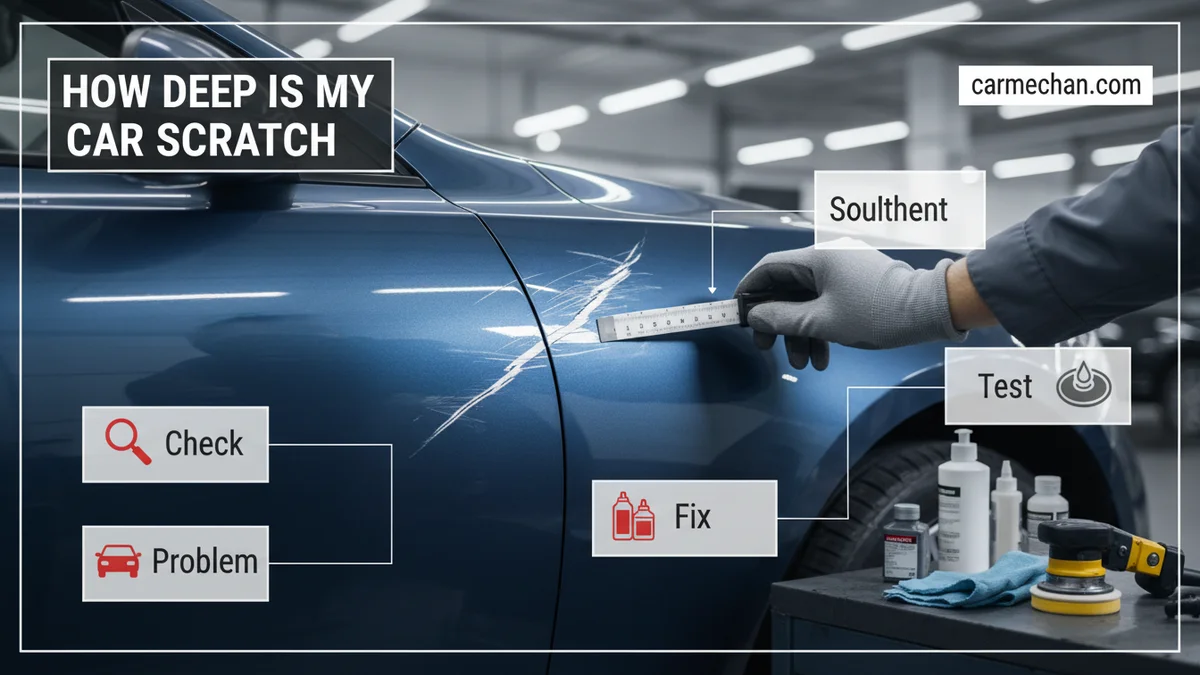
3 Easy Ways To Test Scratch Depth
Determining how deep is my car scratch doesn’t require specialized tools; several straightforward methods can help you gauge the damage. We recommend these three common tests to assess scratch depth effectively and precisely.

Fingernail Test Method
This is a classic and very reliable test. Gently run your fingernail across the scratch. If your fingernail catches in the scratch, it indicates the damage has likely penetrated beyond the clear coat into the base coat or deeper. If your fingernail glides smoothly over it, the scratch is probably superficial, limited to the clear coat.
Always perform this test gently to avoid causing further damage.
The Simple Water Test
Clean the scratched area thoroughly and then lightly spray or drip water onto the scratch. If the scratch disappears or becomes significantly less visible when wet, it means the damage is confined to the clear coat. The water temporarily fills the shallow grooves, mimicking a polished surface.
If the scratch remains clearly visible and unchanged, it has penetrated deeper than the clear coat.
Thorough Visual Inspection
Examine the scratch closely under different lighting conditions. Direct sunlight or a flashlight can reveal the true depth. Look for discoloration or exposed underlying layers. A white or hazy appearance usually signals a clear coat scratch. If you see the bare metal glinting through, it is a deep metal scratch.
Pay attention to the color of the exposed material within the scratch to identify the layer affected.
IMAGES: Illustrative photos for fingernail test, water test application
TABLE: Quick reference guide for scratch identification and next steps (linking depth to repair feasibility)
Once you have a clearer understanding of your scratch’s depth, the next step involves deciding the best course of action for repair, weighing DIY options against professional services.
When To Hire Professional Scratch Repair
Recommended Best Deal Products


After assessing how deep your car scratch is, the crucial question becomes: ‘Can I fix this myself, or do I need a professional?’ The answer depends heavily on the scratch’s depth and severity. Understanding these thresholds saves you time, money, and potential frustration.
DIY Repair Scenarios
Superficial clear coat scratches are often excellent candidates for DIY repair. These can typically be buffed out using a car polish or a dedicated scratch remover compound. Some very shallow base coat scratches might also be improved with touch-up paint pens that match your vehicle’s color code. Patience and careful application are key for successful DIY outcomes.
Professional Repair Triggers
You need professional expertise for scratches that penetrate the primer or reach the bare metal. These deeper damages require specialized tools, expert color matching, and techniques like panel repair or repainting. Professionals can properly prepare the surface, apply primer and base coat layers, and re-apply clear coat to ensure durability and a seamless finish.
This also prevents rust from forming on exposed metal.
Cost Influencing Factors
Professional repair costs in 2026 vary widely depending on scratch depth, location, vehicle type, and paint color. Expect to pay between . Deeper scratches on complex body panels or unique paint finishes will naturally incur higher costs.
Always get multiple quotes from reputable body shops.
COMPARISON TABLE: DIY vs. Professional Repair suitability based on scratch type.
Regardless of whether you choose a DIY approach or professional repair, taking immediate steps after discovering a scratch can make a significant difference in the outcome.
What To Do Immediately After A Car Scratch
Discovering a scratch on your car can be unsettling, but prompt action can prevent further damage and simplify eventual repair. We recommend these crucial immediate steps to manage the situation effectively.
Clean The Affected Area
As soon as you notice a scratch, gently clean the area with mild car soap and water. Use a soft microfiber cloth to remove any dirt, debris, or loose paint particles. This prevents contaminants from being driven deeper into the scratch. A clean surface is essential for accurate assessment and any temporary protection measures.
Document All Damage
Take clear photos and videos of the scratch from various angles and distances. Include close-ups that show the depth and general area. Document the date, time, and circumstances under which the scratch occurred. This documentation is invaluable for insurance claims or future repair discussions, providing a clear record of the initial damage.
Consider Temporary Protection
If the scratch has exposed the bare metal, temporary protection is crucial to prevent rust, especially if you cannot repair it immediately. A small piece of clear automotive tape can temporarily cover the area, sealing it from moisture. For deeper, metal-exposing scratches, a dab of touch-up primer can offer short-term rust inhibition.
Ensure the area is clean and dry before applying any temporary fix.
Understanding these steps helps you manage a scratch effectively, leading to the ultimate decision of how to proceed with the repair process. Now, let’s address some common questions you might have.
Ready to Fix Your Car Scratch?
Accurately determining how deep is my car scratch is the cornerstone of effective and economical repair. By understanding your car’s paint layers and applying simple diagnostic tests, you can confidently assess the severity of any damage. This knowledge empowers you to decide if a DIY solution is feasible or if professional expertise is truly required.
Taking prompt action, from cleaning the scratch to documenting it, protects your vehicle from further harm. Whether it’s a minor clear coat blemish or a deep metal gouge, informed decisions lead to the best outcomes for your car’s appearance and longevity. Equip yourself with this diagnostic power and keep your vehicle looking its best.
Common Questions About Car Scratches
Can a car scratch really be buffed out completely?
Yes, light clear coat scratches often disappear completely with proper buffing and polishing. If the scratch penetrates beyond the clear coat into the color layer, buffing alone will not remove it, though it might improve its appearance slightly.
What is the best way to prevent future car scratches?
The best prevention involves careful washing techniques, parking away from high-traffic areas, and applying a quality wax or ceramic coating. Regular maintenance helps protect your clear coat from minor abrasions and environmental damage.
How long can I wait to repair a deep scratch?
You should repair a deep scratch that exposes primer or bare metal as soon as possible. Exposed metal can begin to rust within days, especially in humid or wet conditions. Prompt repair prevents widespread corrosion and additional damage.
Will my car insurance cover scratch repair?
Insurance coverage for scratch repair depends on your policy and the cause of the scratch. Comprehensive coverage often covers damage from vandalism or environmental factors. Collision coverage applies if the scratch resulted from an accident. Check your specific policy details.
Is it okay to use touch up paint for any scratch?
Touch-up paint is ideal for small, deeper scratches that have reached the base coat or primer. It provides color and protection but rarely creates a perfectly smooth, invisible finish. It is not effective for superficial clear coat scratches or very large areas of damage.