Buick Encore Years to Avoid: Reliability Issues & Warnings
Last Updated on September 1, 2026 by Ryan
The 2013-2016 Buick Encore model years are generally identified as the most problematic, primarily due to prevalent issues with turbocharger failures, transmission difficulties, and various electrical glitches. These specific years often lead to significant repair costs and ownership frustrations, making them critical to evaluate carefully before purchase.
🎯 Key Takeaways


- Avoid 2013-2016 Encores due to common issues.
- Watch for turbo, transmission, and electrical problems.
- Consider 2017+ models for improved reliability.
- Always get a thorough pre-purchase inspection.
- Check service records for recurring repairs.
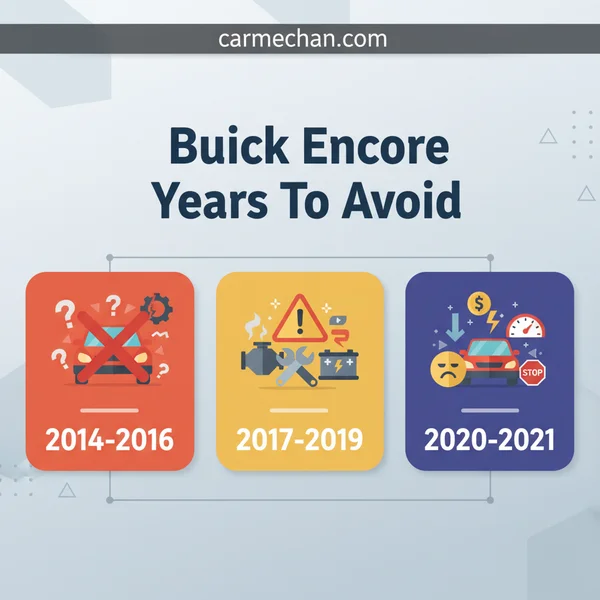
When considering a used Encore Overview on Wikipedia”>Buick Encore, it’s crucial to identify which model years carry a higher risk of significant reliability issues. Our research indicates that the 2013 through 2016 model years, and to a lesser extent the 2017 Encore, are the most problematic and should be approached with extreme caution or ideally avoided altogether. These early generations are plagued by frequent and costly mechanical failures, particularly with the engine, turbocharger, and transmission components.
Understanding these specific problematic years and their associated defects can save you from substantial financial headaches and unexpected breakdowns. Investing in a problematic Encore year could mean facing repair bills that quickly diminish any initial savings from buying used. You deserve a reliable vehicle, and being informed is your best defense against purchasing a money pit.
Identifying Problematic Buick Encore Years


The Most Troubling Model Years
Based on extensive owner complaints to the National Highway Traffic Safety Administration (NHTSA), expert reviews from Consumer Reports, and discussions across various automotive forums, the 2013, 2014, 2015, and 2016 Buick Encores stand out as consistently unreliable. These years frequently demonstrate a pattern of serious mechanical failures that often manifest well before reaching 100,000 miles. The 2017 model year, while showing some minor improvements, still carries over several of these underlying issues, making it a questionable choice as well.
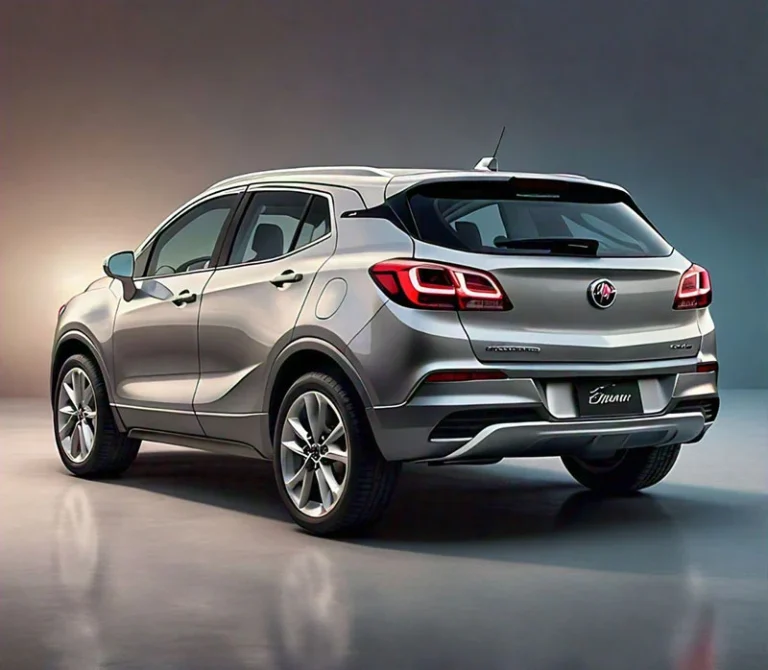
- 2013-2014 Buick Encore: These initial launch years faced the brunt of design flaws, particularly with the 1.4L turbocharged engine and its accompanying components. Turbocharger failures and severe transmission issues are rampant.
- 2015-2016 Buick Encore: While General Motors made minor revisions, these years continued to struggle with many of the same core mechanical problems, indicating that the fundamental design weaknesses persisted. Engine misfires and transmission slippage remain common.
- 2017 Buick Encore: Although slightly better in terms of raw complaint volume, critical issues like premature turbocharger failure and transmission problems still appear, suggesting that not all weaknesses were fully addressed.
These specific years represent a period where the Encore’s mechanical integrity was frequently compromised, leading to frustrated owners and expensive garage visits. Your due diligence should heavily focus on avoiding these periods if long-term reliability is a priority.
Common Issues and Their Impact for Avoidable Years

2013-2016: Engine, Turbocharger, and Transmission Faults
The earliest Buick Encore models, specifically from 2013 to 2016, are notorious for a triad of severe mechanical problems that can lead to high repair costs and significant inconvenience. These issues often appear unexpectedly and can severely impact the vehicle’s drivability and safety.
- Premature Turbocharger Failure: This is arguably the most cited and critical problem for these years. The 1.4-liter turbocharged engine’s turbocharger assembly is prone to failing well before typical mileage expectations, sometimes as low as 50,000-80,000 miles. A failing turbocharger results in a dramatic loss of engine power, often accompanied by whistling noises, blue smoke from the exhaust, and an illuminated check engine light. The replacement cost for a turbocharger can range from $1,500 to $3,000 or more, depending on labor rates and whether ancillary parts also need replacing. This issue makes the vehicle unsafe to drive due to sudden power loss, especially at highway speeds.
- Transmission Solenoid Issues and Failure: Owners frequently report harsh or erratic shifting, delayed engagement, and outright transmission failure. These symptoms are often linked to faulty transmission solenoids, which regulate fluid flow. However, these issues can quickly escalate into complete transmission replacement. Repairs involving solenoid replacement can cost $800 to $1,500, while a full transmission replacement can easily exceed $3,000 to $4,500. This problem can leave you stranded and creates a significant safety hazard due to unpredictable gear changes.
- Engine Misfires and Coolant Leaks: Beyond the turbocharger, the 1.4L engine itself frequently suffers from misfires, often indicated by rough idling, reduced power, and a flashing check engine light. These can be complex to diagnose, stemming from ignition coils, spark plugs, or even more serious internal engine issues. Furthermore, reports of coolant leaks, often from the thermostat housing or water pump, are common. An engine misfire diagnosis and repair can range from a few hundred dollars for simple fixes to well over $1,000 for more complex engine work. Coolant leaks, if ignored, can lead to engine overheating and catastrophic damage, costing thousands to repair.
These persistent and costly issues for the 2013-2016 Buick Encores demonstrate a fundamental lack of reliability. The frequency and severity of these problems make these years financially risky and potentially unsafe choices for used car buyers.
2017: Carryover Concerns and New Glitches
While the 2017 Buick Encore saw some interior updates, many of the mechanical vulnerabilities from earlier years regrettably persisted. This model year still shows a significant number of complaints related to the powertrain, mirroring the severe issues of its predecessors.
- Continued Turbocharger Vulnerability: Despite minor tweaks, the 2017 Encore’s 1.4L turbo engine is still susceptible to premature turbocharger failure, albeit potentially at a slightly lower incidence than the very first model years. The repair costs remain high, identical to those for earlier models ($1,500-$3,000+).
- Persistent Transmission Anomalies: Reports of rough shifting, shuddering, and occasional transmission failures continue for the 2017 model year. While possibly less frequent than 2013-2014, these issues are still significant enough to warrant caution, with repair costs ranging from hundreds to several thousands of dollars for full replacement.
- Electrical System Glitches: Beyond the core powertrain issues, the 2017 Encore also saw an increase in complaints regarding its electrical system. These range from minor annoyances with the infotainment system and dashboard displays to more critical sensor malfunctions that can affect engine performance or safety features. Diagnosing and repairing electrical issues can be unpredictable in cost, potentially leading to lengthy and expensive garage visits.
The 2017 Encore, therefore, doesn’t represent a significant leap in reliability over its problematic predecessors. The continued presence of major mechanical issues, compounded by emerging electrical concerns, makes it another year that prospective buyers should approach with considerable skepticism. The risk of high-cost repairs and unexpected breakdowns remains a tangible threat.
More Reliable Buick Encore Model Years
While some early Buick Encore model years present more significant reliability hurdles, not all Encores are created equal. Later models, particularly those benefiting from design refreshes and continuous improvements, generally offer a more reassuring ownership experience.
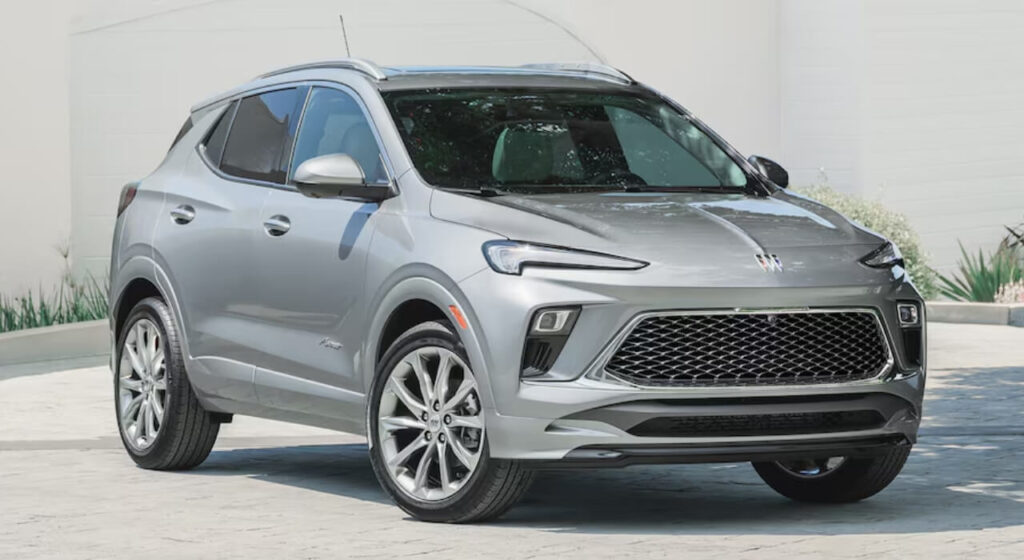
Identifying Safer Bets
For those interested in a used Buick Encore, shifting your focus to the 2017 model year and newer is a prudent strategy. The 2017 model marked a significant refresh for the Encore, bringing updated styling, an improved interior, and crucially, some refinements under the hood. While the core 1.4-liter turbocharged engine largely remained, GM often implements small, iterative improvements throughout a model’s lifecycle that can address earlier weaknesses.
- 2017-2019 Models: These years generally see a reduction in the sheer volume of severe complaints compared to their predecessors. Owners still report occasional issues, but the frequency and severity seem to taper off.
- 2020-2022 Models: As the first generation neared its end, these models represent the most refined versions of the original Encore design. By this point, many of the initial kinks from the early production runs had been addressed through updates and manufacturing process improvements.
What Improved in Later Models?
It’s important to note that the fundamental powertrain – the 1.4L turbo engine and 6-speed automatic transmission – remained largely unchanged. However, improvements often come from better material quality in surrounding components, updated software calibrations for the engine and transmission, and better diagnostic tools for mechanics. While a 2017+ Encore isn’t immune to issues, the likelihood of encountering catastrophic failures, particularly with the transmission, appears to be diminished.
Focusing on these later first-generation models gives you a better chance of finding an Encore that has benefited from GM’s learning curve and has had more time to prove its long-term durability on the road.
Essential Tips for Buying a Used Buick Encore
Regardless of the model year you’re considering, purchasing a used vehicle always comes with a degree of risk. For a Buick Encore, especially given its documented past reliability concerns, taking extra precautions is not just advisable—it’s essential. Thorough due diligence can save you significant headaches and expenses down the line.
Pre-Purchase Inspection is Key
Never buy any used car, especially an Encore, without a professional pre-purchase inspection (PPI). This isn’t just a quick look-over; it’s a comprehensive diagnostic by an independent mechanic who specializes in GM vehicles, if possible. They can spot hidden problems that a seller might not disclose or even know about.
- Engine Health: The mechanic should specifically check for signs of turbocharger wear (oil leaks, strange noises), coolant leaks, and any abnormal engine noises. Ask for a compression test and a check of the PCV system.
- Transmission Performance: During a test drive and on the lift, have the mechanic evaluate transmission shifting for smoothness, delays, or harshness. Check the transmission fluid condition and look for leaks.
- Electrical System: Ensure all infotainment features, climate control, power windows, and sensors (like parking assist) are fully functional.
- Suspension and Brakes: Listen for unusual noises over bumps, inspect shock absorbers, and check brake pad and rotor wear.
Scrutinize Service History
A vehicle’s service history is its medical record. A comprehensive history reveals how well the car has been maintained and if any recurring issues have been addressed. Always request a CARFAX or AutoCheck report, but don’t stop there.
- Regular Maintenance: Look for consistent oil changes, transmission fluid services (especially important for the Encore), and other scheduled maintenance performed by certified technicians.
- Repair Records: Pay close attention to any major repairs, particularly those related to the engine or transmission. Were they fixed properly, or were they recurring problems?
- Recalls: Ensure all applicable safety recalls have been addressed. This is vital for your safety and the car’s proper functioning.
If a seller cannot provide a clear service history, proceed with extreme caution or consider looking elsewhere. A well-maintained Encore, even from a slightly riskier year, can be a better bet than a “safer” year with a questionable past.
Conclusion
The Buick Encore offers an attractive package of compact size, upscale features, and fuel efficiency. However, its journey hasn’t been without bumps, particularly concerning reliability in its earlier model years. By understanding which Buick Encore years to avoid – primarily 2013-2016 – you can navigate the used car market with greater confidence.
Focus your search on the generally more refined 2017 and newer models, and never underestimate the power of a thorough pre-purchase inspection and a meticulous review of service records. While no used car is a guaranteed trouble-free experience, armed with this knowledge, you’re better positioned to find a reliable Buick Encore that serves your needs for years to come. Drive smart, and happy hunting!
❓ Frequently Asked Questions
What specific problems make the 2013-2016 Buick Encore years avoidable?
These years are frequently cited for premature turbocharger failures, leading to significant power loss and expensive repairs, along with transmission solenoid issues causing rough shifts and electrical system glitches impacting infotainment or sensors. These issues often appear well before 100,000 miles, making them a significant concern for used car buyers.
How much do typical repairs cost for the identified problematic Encore years?
Repairs for a failed turbocharger can range from $1,500 to $3,000 or more, while transmission work could be even higher, often exceeding $2,000-$4,000 depending on the specific component. Minor electrical issues might be hundreds, but recurring problems can add up quickly, diminishing the car’s value.
Are there any Buick Encore years considered reliable or safe to buy?
Yes, the 2017 and newer Buick Encore models generally show improved reliability, with fewer widespread reports of major mechanical issues compared to their predecessors. These later models often benefit from updated components and engineering refinements that address earlier design flaws, offering a more dependable ownership experience.
What should I look for during a pre-purchase inspection for a Buick Encore, especially from a potentially problematic year?
A comprehensive pre-purchase inspection should specifically check for signs of turbocharger wear or failure (e.g., smoking exhaust, loss of power), smooth transmission shifts, and fully functional electronics. Ask for detailed service records to see if common issues have already been addressed, like turbo replacements or transmission maintenance.
What are some common warning signs of turbocharger failure in a Buick Encore?
Common warning signs include a noticeable loss of acceleration and power, a whining or high-pitched sound coming from the engine bay, excessive blue or black smoke from the exhaust, and the ‘check engine’ light illuminating on the dashboard. Ignoring these symptoms can lead to complete turbo failure and potential engine damage.
Are there specific trim levels or engines within the Buick Encore that are more prone to issues?
The main engine across all early problematic years (2013-2016) is the 1.4L turbocharged four-cylinder engine, which is the primary source of the turbocharger reliability concerns. While specific trim levels don’t inherently create more problems, the critical component issues are tied to this engine across the lineup.