Kia K5 TPMS Reset Button Location: Clarified for 2026 Models
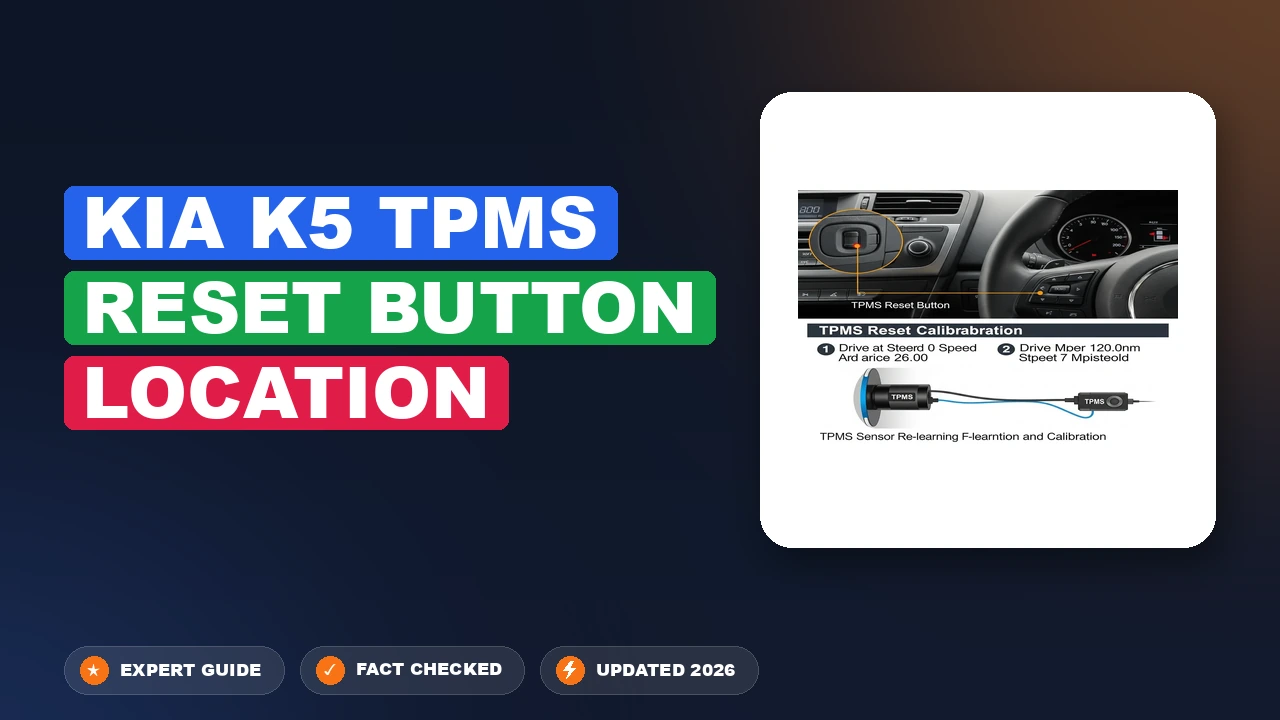
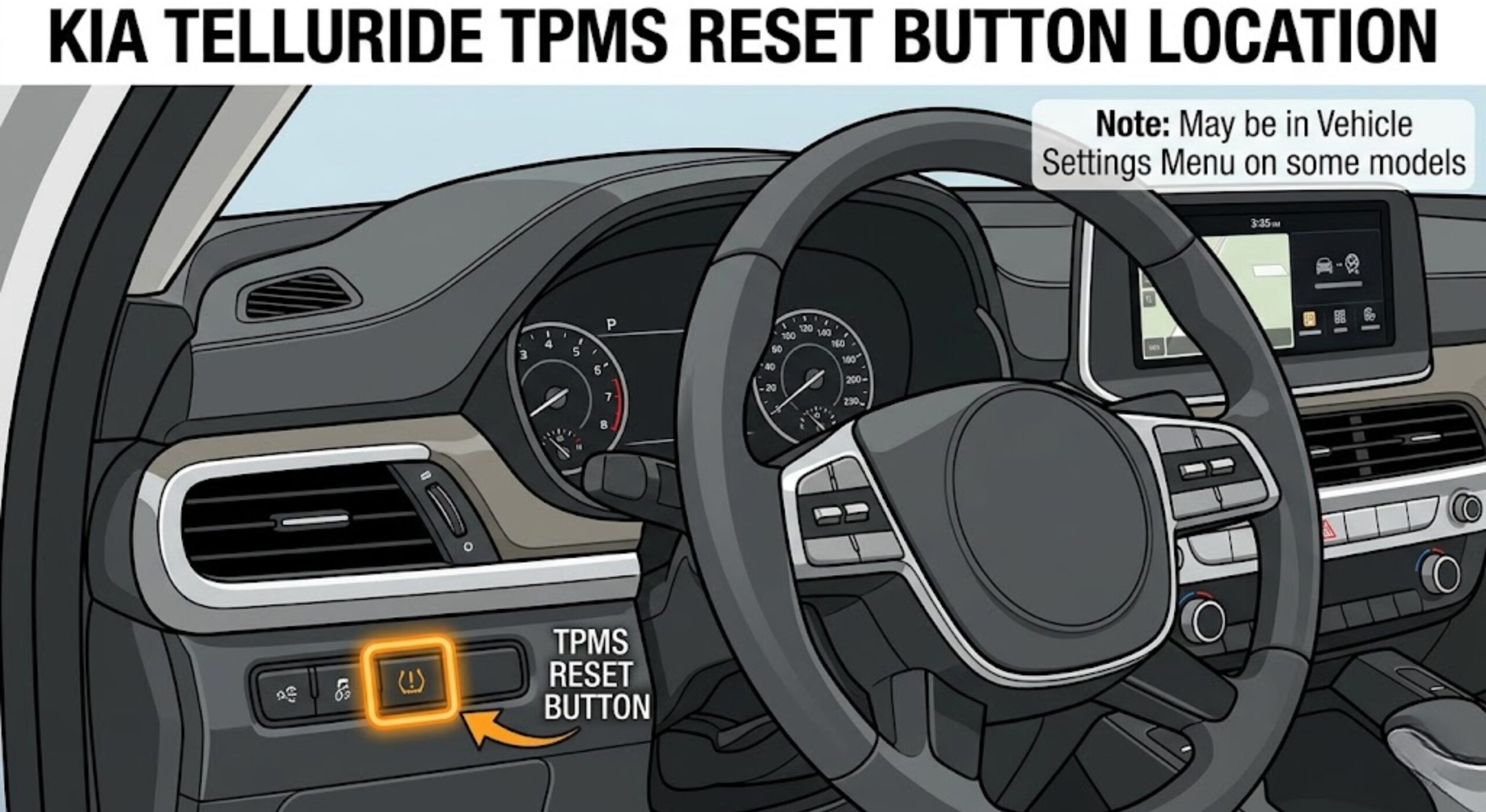
You have successfully inflated your tires, verified the pressures, and checked the sidewalls—yet the amber TPMS icon remains illuminated on your instrument cluster. Naturally, you begin scanning the cabin for that familiar button to trigger a system reset, but you find nothing. The reality for Kia K5 owners is that searching for a physical button is a futile task because, by design, the modern Kia architecture has moved away from manual interference.
Why Your Vehicle Architecture Eliminates the Need for a Manual Reset



📤 Share Image

Direct TPMS Sensors Explained
The Kia K5 utilizes a Direct Tire Pressure Monitoring System (TPMS). This architecture employs highly sensitive electronic sensors mounted inside each wheel assembly, integrated directly into the valve stem or strapped to the rim. Unlike indirect systems—which calculate tire rotation speed via ABS sensors—direct TPMS measures the actual air pressure and temperature within the tire cavity. This provides a much higher degree of accuracy and reliability, sending real-time data directly to your car’s Engine Control Unit (ECU) and subsequently to your instrument cluster display.

Understanding Auto-Calibration Technology
Because the sensors are always active and “talking” to the vehicle’s receiver, the system does not require a manual trigger to acknowledge new air. Once the system detects that all tires are at the appropriate pressure, it performs an internal reboot. This is a clean, automated process. The shift away from physical buttons was implemented to reduce user error, as traditional systems often required specific, complex sequences of button presses that led to frustration and improper system initialization.
Industry Data: TPMS Reliability
System Accuracy
Average Re-learn Time
Mastering the Kia K5 TPMS Reset Procedure Through Driving


📋
Step-by-Step Guide


Before adjusting, ensure your vehicle has sat parked for at least three hours or been driven for less than one mile. Use a high-quality digital gauge to check each tire. Do not rely on the maximum PSI printed on the tire sidewall; use the specific placard located on the driver’s side door jamb.
Once inflated, drive your K5 for 15–30 minutes at speeds consistently above 25 mph. This continuous movement allows the sensor frequencies to initialize and communicate with the vehicle’s receiver, forcing a system update to factory defaults.
Troubleshooting Persistent TPMS Warning Light Signals
If the dashboard light persists despite correct inflation, you may be dealing with a component-level issue rather than a simple pressure fluctuation. Understanding the language of the instrument cluster is essential.
- The Flashing Light: If your TPMS light flashes for 60 to 90 seconds before remaining solid, this indicates a fault within the system hardware itself—likely a dead sensor battery or a damaged receiver module.
- Cold Weather Impacts: As temperatures drop, air density increases and internal tire pressure naturally decreases. It is common for this to trigger a warning in winter months. Always perform a “fresh start” by adjusting your tire pressure once the ambient temperature stabilizes.
- Sensor End-of-Life: If your K5 is approaching the 5-to-7-year mark, the internal lithium batteries in the TPMS sensors may be reaching the end of their service life. These components are not user-serviceable.
- System Interference: In rare cases, aftermarket electronics or external signal interference can disrupt communication between the sensor and the instrument cluster.
Important Safety Considerations and Maintenance Pitfalls
Never attempt to inflate tires to the “Max PSI” listed on the sidewall of the tire. This figure is the maximum load-bearing pressure for the tire casing, not the safe operating pressure for your vehicle’s handling or suspension characteristics. Over-inflation significantly compromises traction and increases the risk of a blowout.
A common pitfall is the assumption that the light will reset while the vehicle is idling in a driveway. The system is designed to trigger a status update only after a sustained period of motion. Furthermore, ensure you are using a reliable, calibrated gauge rather than the low-accuracy sticks provided at many gas station air pumps. Consistency is the primary factor in ensuring your sensors provide accurate, real-time data back to your system.
✅ Correct Practices
- Check PSI when tires are cold.
- Use door jamb placard values.
- Maintain consistent driving speed.
- Use digital, calibrated gauges.
❌ Dangerous Mistakes
- Relying on sidewall max PSI.
- Over-inflating to “compensate.”
- Expecting a parked reset.
- Ignoring persistent flashing lights.
Final Recommendations for Your TPMS Maintenance
By understanding that your Kia K5 relies on an automated, sensor-driven architecture, you can avoid the frustration of hunting for a non-existent button. To restore your system to its default state, prioritize proper cold-tire inflation based on the vehicle placard and commit to a consistent 15-30 minute drive cycle to initialize the sensors. If your TPMS light continues to flash after a thorough re-learn cycle, schedule an appointment with your local Kia service center to check for physical sensor damage or battery failure.
Kia k5 Tpms Reset Button Location: Frequently Asked Questions
Do I need a scan tool to reset the Kia K5 TPMS?
No, you do not need a diagnostic scan tool to reset the TPMS on a Kia K5. The system is engineered to automatically detect tire pressures and sensor IDs through the vehicle’s onboard computer. As long as your sensors are functioning correctly, the system will perform its own reset once the vehicle has been driven for a sufficient amount of time at operating speeds.
How long do I need to drive for the light to go off?
To allow the TPMS to perform a fresh start, you should drive the vehicle for approximately 10 to 20 minutes at speeds consistently above 15 mph. This duration provides the TPMS receiver enough data from the wheel-mounted sensors to confirm that the new tire pressure readings are stable and accurate, allowing the indicator light to extinguish automatically.
Why does my TPMS light stay on after I filled the tires?
If the light remains on, the system likely hasn’t completed its automatic recalibration cycle yet. Ensure you have inflated the tires to the exact pressure specified on the driver’s door jamb placard. If the light stays on after significant driving, you may have a faulty sensor or a puncture that is causing a slow leak, preventing the system from confirming the pressure is corrected.
Can I turn off the TPMS light permanently?
It is not recommended or possible to permanently disable the TPMS light, as it is a critical safety system mandated by federal law to alert you to unsafe driving conditions. If the light is malfunctioning, the underlying hardware—such as a dead sensor battery or a damaged receiver—should be repaired by a qualified technician to ensure the system remains functional for your safety.
Does tire rotation affect the TPMS settings?
Tire rotation does not negatively impact the TPMS, but it does require the system to ‘re-map’ the sensor locations. The Kia K5’s auto-learn functionality handles this mapping seamlessly. After rotating your tires, the system will automatically recognize the new position of each sensor during the first few miles of driving, ensuring that the dashboard accurately displays which tire has low pressure.