Proven Fix Car Jerks While Driving at Constant Speed 2026
Last Updated on September 1, 2026 by Albert Duke
If your car jerks while driving at a constant speed, it often signals an issue with the fuel, ignition, or transmission system. Diagnosing the precise cause involves checking for engine codes, inspecting key components, and understanding common symptoms to determine the best course of action.

Audible — Listen Free for 30 Days
One free credit a month and thousands of titles included.
Listen Free for 30 DaysUnderstanding why your car jerks while driving at a constant speed reveals a common issue stemming from several underlying problems. This can be a frustrating and concerning experience for any driver in 2026. We know you seek answers and solutions.
This guide will help you diagnose the root causes of your vehicle’s hesitation, outline effective troubleshooting steps, and discuss potential fixes. We aim to empower you with knowledge to address this problem confidently. We will explore both DIY solutions and when professional help becomes necessary.
Understanding these potential causes is the first step towards an effective solution.
Key Takeaways
- Constant speed jerking indicates fuel, ignition, or transmission problems.
- DIY diagnosis starts with checking engine lights and scanning codes.
- Many common issues have simple, cost-effective DIY solutions.
- Seek professional help for complex problems or persistent warnings.
- Regular maintenance is key to preventing future vehicle hesitation.
7 Specific Causes for a Car Jerking at Constant Speed
When your car jerks while driving at constant speed, we often find the root cause lies within a handful of specific areas. These issues can range from minor annoyances to serious mechanical concerns. Identifying the precise culprit is key to a lasting fix.

Fuel System Faults
A compromised fuel system often causes jerking. This includes a clogged fuel filter, a failing fuel pump not delivering consistent pressure, or dirty fuel injectors. Inconsistent fuel delivery starves the engine, leading to hesitation and jerking at steady speeds. Learn more about fuel system maintenance from an automotive expert.
Ignition System Failures
Ignition problems can also manifest as jerking. Worn spark plugs, faulty ignition coils, or damaged spark plug wires disrupt the combustion process. This leads to misfires that feel like jerks or stutters as your vehicle maintains speed.
Transmission Performance Issues
Your transmission is another common source of constant speed jerking. Issues might include low or dirty transmission fluid, a failing torque converter, or faulty transmission sensors. These problems can cause the transmission to slip or engage harshly, resulting in noticeable jerks.
Engine Sensor Malfunctions
Modern vehicles rely heavily on sensors to optimize engine performance. A faulty Mass Airflow (MAF) sensor, Oxygen (O2) sensor, or Throttle Position Sensor (TPS) can send incorrect data to the engine control unit (ECU). This leads to improper fuel-air mixture and subsequent jerking.

Prime for Young Adults — 6 Months Free
Students and 18–24s get six months of Prime free, then half price.
Start 6 Months FreeUnexpected Vacuum Leaks
Vacuum leaks occur when unmetered air enters the engine, disrupting the precise fuel-air ratio. Cracked or loose vacuum hoses are common culprits. This imbalance can cause the engine to run lean, resulting in hesitation or jerking, especially under steady load.
Aging Component Wear
Various worn-out components contribute to engine instability. A failing PCV valve or deteriorated engine mounts can cause vibration and jerking sensations. These issues might worsen over time, making the vehicle feel unstable at constant speeds.
Software Glitch Explanations
Sometimes, the problem isn’t mechanical but electronic. A software glitch within the engine control unit (ECU) can lead to erratic engine behavior. These issues might require a diagnostic scan tool and specialized software updates from a dealership in 2026.
Now that we understand the potential culprits, let us explore how you can pinpoint the exact issue.
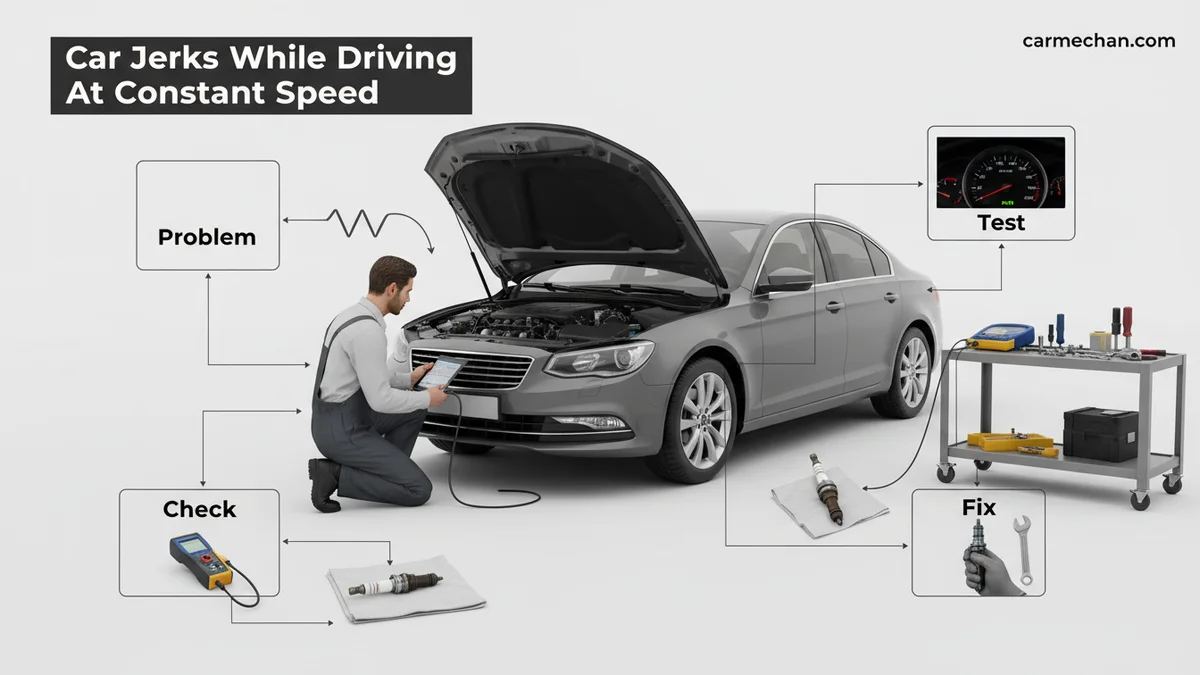
How to Diagnose Constant Speed Jerking in 4 Steps
Diagnosing why your car jerks at a constant speed begins with a systematic approach that any driver can follow. We encourage careful observation and a logical progression of checks. This helps identify the source of the problem efficiently.
Review Dashboard Lights
Always start by checking your dashboard for any illuminated warning lights. A “Check Engine Light” is a primary indicator of a problem. Other lights, like a transmission warning, can also point towards specific system failures causing jerking.
Access Diagnostic Codes
If the Check Engine Light is on, use an OBD-II scanner to read diagnostic trouble codes (DTCs). Common codes related to jerking include P0171 (lean condition), P030X (misfire in cylinder X), or P0420 (catalytic converter efficiency below threshold). These codes provide valuable clues. Understanding Common OBD2 Codes.
Conduct Visual Checks
Perform thorough visual inspections under the hood. Look for cracked vacuum lines, loose electrical connectors on spark plugs or sensors, and signs of fluid leaks. Check your engine oil and transmission fluid levels and quality. Sometimes, a simple visual check reveals the culprit.
Simulate Driving Conditions
Pay attention to when the jerking occurs. Is it only at a specific speed? Does it happen during acceleration or only when maintaining speed? Noticing patterns in driving conditions can help narrow down the diagnostic process. This detailed observation is crucial for accurate troubleshooting.

Prime Gaming — Free In-Game Loot
Free monthly games, in-game content and a Twitch channel sub.
Claim Free LootOnce you have identified potential problem areas, several simple fixes might resolve the jerking.
6 Common DIY Fixes for Steady Speed Jerks
For many drivers, addressing car jerking at constant speed can begin with practical, do-it-yourself solutions. These fixes are often straightforward and can save you significant repair costs. Always prioritize safety during any vehicle maintenance.

Swap Old Spark Plugs
Worn spark plugs are a frequent cause of misfires and jerking. Replacing them can restore proper engine combustion. Ensure you use the correct type and gap them properly according to your vehicle’s specifications. This is a common and effective DIY repair.
Clean the MAF Sensor
A dirty Mass Airflow (MAF) sensor sends inaccurate readings, leading to poor fuel-air mixtures. Use a specialized MAF sensor cleaning spray to gently clean the sensor element. CRC Mass Air Flow Sensor Cleaner is a highly recommended product. Avoid touching the delicate sensor wires directly.
Install New Fuel Filter
A clogged fuel filter restricts fuel flow, causing the engine to hesitate. Replacing the fuel filter is a relatively simple DIY task on many vehicles. This ensures a consistent supply of clean fuel to your engine for optimal performance.
Tighten Loose Hoses
Inspect all vacuum lines and intake hoses for cracks, tears, or loose connections. Secure any loose clamps or replace damaged hoses. Fixing these simple leaks can often resolve unexplained engine jerking. This prevents unmetered air from entering the system.
Reset Engine Computer
Sometimes, a temporary glitch in the ECU causes erratic behavior. Disconnecting the car battery for 15-30 minutes can reset the engine computer. This clears learned parameters and sometimes resolves minor electronic issues. Always follow proper battery disconnection procedures.
Apply Fuel System Additives
Using a high-quality fuel system cleaner can clear deposits from fuel injectors and other components. Follow the product instructions carefully. Chevron Techron fuel system cleaners are recognized for their efficacy. This can improve fuel delivery and reduce jerking caused by carbon buildup.
While some issues are DIY-friendly, others demand the expertise of a professional mechanic.
When to Consult a Mechanic for Vehicle Jerking
Recognizing the signs that warrant professional attention for car jerking can prevent further damage and ensure your safety. While DIY efforts are commendable, some problems require specialized tools and diagnostic expertise. Prioritize your vehicle’s health and your safety.
Warning Lights Illuminate
If your “Check Engine Light” remains illuminated after basic troubleshooting, or if a “Transmission Warning” light appears, it’s time for professional diagnosis. These indicators often point to more complex underlying issues that require immediate attention.
Persistent Complex Issues
When the jerking persists despite your DIY efforts, or if the problem seems intermittent and hard to pinpoint, a mechanic’s expertise is invaluable. They have advanced diagnostic equipment to delve deeper into intricate system failures.
Advanced Diagnostics Required
Issues like internal engine problems, complex electrical faults, or specific sensor failures often require specialized diagnostic tools. These tools are typically beyond what a home mechanic possesses. A professional scan can isolate these elusive problems.
Transmission Concerns Increase
Transmission problems, such as rough shifting or delayed engagement, should always be addressed by a specialist. Internal transmission damage can be expensive to repair if neglected. Timely intervention can often prevent catastrophic failure.
Understanding when to seek professional help often leads to questions about potential repair costs.
What Is the Average Cost to Fix Jerking Issues
Addressing a car that jerks while driving at constant speed inevitably brings up questions about the financial implications of repairs. Costs vary widely based on the specific issue, vehicle make, and location. We provide general estimates for your planning.
Minor Component Repair Costs
Simple fixes like spark plug replacement typically cost between $100-$300 in 2026, including parts and labor. The average cost for a spark plug replacement, including parts and labor, typically ranges from $150 to $250. A fuel filter change usually falls in the $50-$150 range. These are generally the least expensive repairs.
Sensor Replacement Pricing
Replacing a faulty MAF sensor or O2 sensor can cost anywhere from $150 to $400. The average cost for a MAF sensor replacement is between $200-$350. The price depends on the sensor’s location and ease of access. Sensor replacement costs include both the part and installation labor.
Transmission System Repair Bills
Transmission issues can be significantly more expensive. A transmission fluid change might be $150-$300. However, minor repairs like solenoid replacement could be $300-$800. The average cost for a transmission fluid change is $200, while a minor solenoid repair can be $550. Major transmission overhauls or replacements can easily run into several thousands of dollars.
Diagnostic Service Fee Ranges
Most mechanics charge a diagnostic fee to properly identify the problem. This fee typically ranges from $80 to $150. A typical diagnostic service fee ranges from $90 to $120, depending on the shop. This charge is often waived or applied towards the cost of the repair if you choose to have the work done at their shop.
Beyond understanding repair costs, adopting preventative measures can help avoid future jerking incidents.
5 Smart Ways to Prevent Future Car Hesitation
Preventing your car from jerking at constant speed in the future involves consistent care and mindful driving habits. Proactive maintenance is always more cost-effective than reactive repairs. We advocate for these simple practices to keep your vehicle running smoothly.
Follow Maintenance Schedules
Adhere strictly to your manufacturer’s recommended maintenance schedule. Regular oil changes, fluid checks, and filter replacements are crucial. The NHTSA encourages routine vehicle maintenance for safety and longevity. This proactive approach addresses potential issues before they escalate.
Utilize Premium Fuel
Using the correct octane and quality fuel helps prevent deposit buildup in your engine and fuel system. If your car requires premium, always use it. High-quality fuel promotes cleaner combustion and reduces the chances of hesitation.
Exchange Worn Components
Timely replacement of wear items like spark plugs, fuel filters, and air filters is essential. These components degrade over time, leading to reduced performance and potential jerking. Proactive replacement maintains peak engine efficiency.
Maintain Sensor Cleanliness
Periodically clean critical engine sensors like the MAF sensor, especially if you drive in dusty environments. Keeping these sensors free of contaminants ensures they send accurate data to the ECU. This helps maintain the proper fuel-air mixture.
Adopt Smooth Driving
Aggressive driving, such as sudden acceleration and deceleration, puts undue stress on engine and transmission components. Practicing smooth, gradual driving habits reduces wear and tear. This helps extend the life of your vehicle’s critical systems.
By understanding these insights, you are well-equipped to tackle your vehicle’s jerking issues.
Conclusion Steady Your Ride for 2026
Experiencing your car jerks while driving at a constant speed can be unsettling, but it is a problem with identifiable causes and solutions. We’ve explored everything from fuel and ignition system faults to sensor malfunctions and transmission issues. This comprehensive guide empowers you to diagnose and address the problem effectively in 2026.
Whether you choose a DIY approach for simpler fixes or decide to consult a professional mechanic for complex issues, prompt action is key. Ignoring these symptoms can lead to more severe and costly repairs down the line. regular maintenance and attentive driving habits are your best defense against future vehicle hesitation.
Take control of your vehicle’s health and ensure a smooth, reliable driving experience for years to come.
Frequently Asked Questions About Car Jerking
Can a Dirty Fuel Filter Cause Car Jerking at Constant Speed?
Yes, a clogged or dirty fuel filter restricts fuel flow to the engine, leading to inconsistent fuel delivery. This often causes the engine to hesitate or jerk as it struggles to maintain a steady speed due to fuel starvation.
Why Does My Car Only Jerk When Holding a Steady Speed?
Jerking only at a steady speed often points to issues with consistent fuel delivery, ignition timing, or sensor input. The engine’s computer struggles to maintain the precise fuel-air mixture required for cruising. This indicates components like the MAF or O2 sensor might be faulty.
Is It Safe to Drive My Car If It Jerks Occasionally?
Occasional jerking might not immediately be dangerous, but it’s a clear warning sign. Continued driving could worsen the underlying problem, potentially leading to a breakdown or more serious damage. We advise diagnosing and fixing the issue promptly for safety.
How Much Does a Mechanic Charge to Diagnose Car Jerking?
A mechanic typically charges a diagnostic fee ranging from $80 to $150 to identify the cause of car jerking. This fee often covers the use of specialized diagnostic equipment and the technician’s time. This charge may be applied towards the repair cost.
Can Low Transmission Fluid Cause Car Jerking?
Absolutely, low or dirty transmission fluid is a common cause of car jerking or hesitation. Insufficient fluid pressure can prevent smooth gear engagement. This results in noticeable jolts as the transmission struggles to maintain proper operation. Always check your fluid levels.