Ford Expedition Years to Avoid: Ultimate Reliability Guide
Last Updated on September 1, 2026 by Ryan
When buying a used Ford Expedition, it’s crucial to be aware of specific model years known for significant mechanical issues, particularly those from the early 2000s and mid-2000s. These years often present problems like spark plug ejection, transmission failures, and cam phaser issues. Thorough research and a pre-purchase inspection are vital to avoid costly repairs.
🎯 Key Takeaways


- Avoid 2004-2008 Expedition models due to engine and transmission woes.
- Be wary of 5.4L Triton V8 engines from certain years.
- Always get a pre-purchase inspection by a trusted mechanic.
- Check for extensive rust, especially on older models.
- Consider 2010+ models for improved reliability.
If you are considering a used Ford Expedition, you are likely seeking a robust, spacious SUV. However, not all model years offer the same reliability. Some specific Ford Expedition model years are notorious for significant, expensive, and recurring mechanical and electrical issues that can quickly turn a great deal into a money pit. Knowing exactly which years to steer clear of can save you thousands in unexpected repairs and a great deal of frustration.
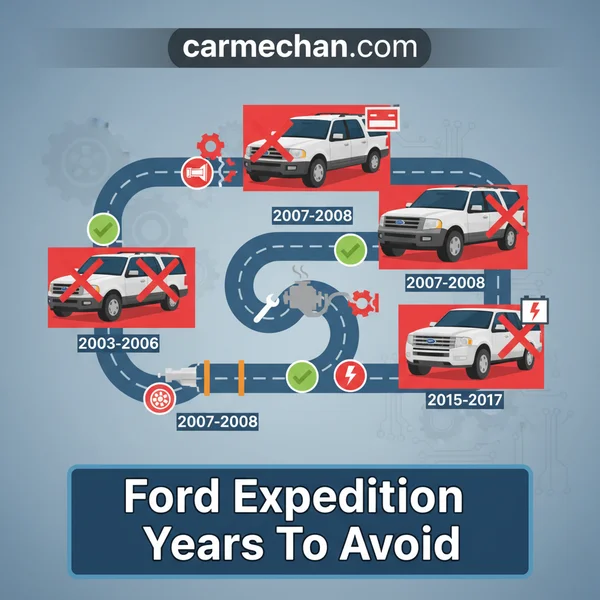
This guide cuts directly to the chase, pinpointing the Expedition years you should approach with extreme caution. We will detail the primary flaws, their typical symptoms, and the hefty costs associated with fixing them. Our goal is to equip you with the critical knowledge needed to make an informed decision and avoid a high-risk purchase.
Identifying High-Risk Ford Expedition Model Years


When searching for a used Ford Expedition, you need to be particularly vigilant about certain production runs. The most problematic years fall largely within the second generation and the early years of the third generation, primarily due to inherited engine design flaws and evolving transmission technologies.
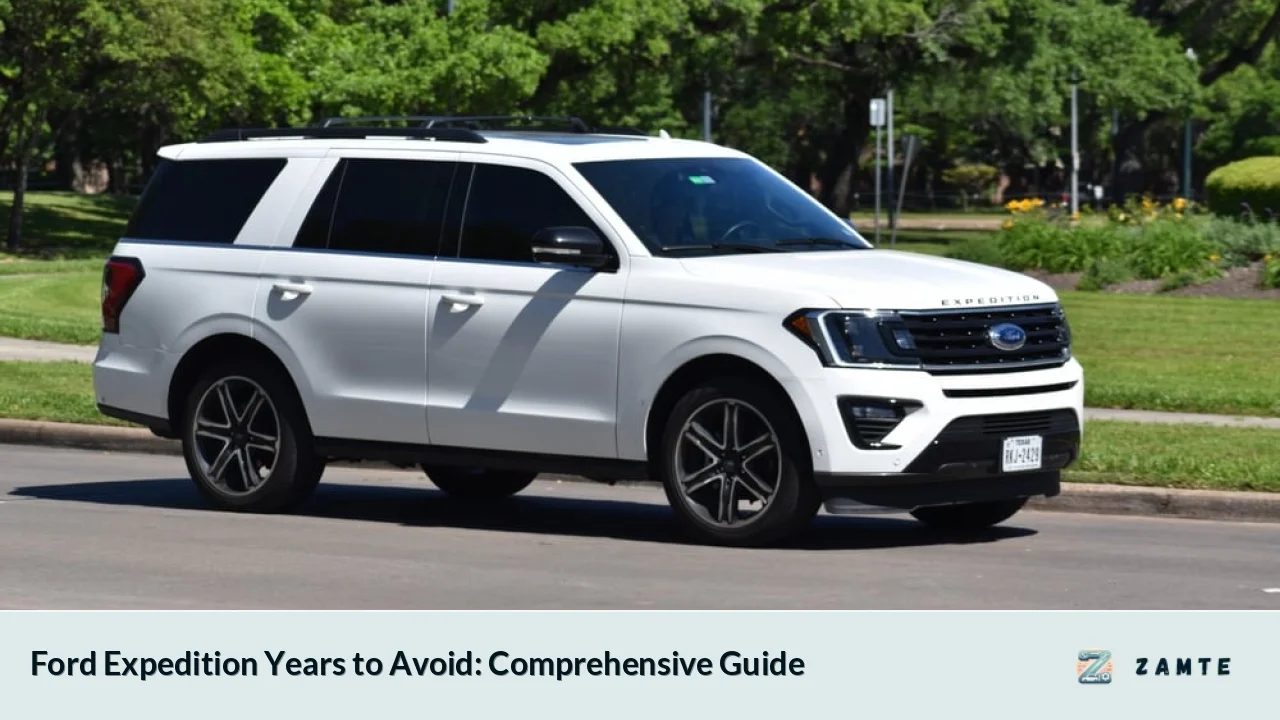
The Problematic Second Generation (2003-2006)
The second-generation Ford Expedition, especially the model years from 2003 to 2006, is a high-risk zone for buyers. These years prominently feature the 5.4L 3-valve Triton V8 engine, which, while powerful, became infamous for several critical design flaws. Transmission reliability also took a hit in this period, adding to the list of potential headaches.
- 2003-2006: High prevalence of major powertrain issues, including engine and transmission failures.
- Specific to the 5.4L 3V Triton: Spark plug ejection/breakage and cam phaser failures are chronic problems.
- Suspension: Air suspension compressor failures are common, leading to significant repair or conversion costs.
Early Third Generation Challenges (2007-2008)
While the third generation, starting in 2007, brought some improvements, the 2007 and 2008 model years still carried over many of the same notorious issues from the prior generation. The 5.4L 3V engine remained a powertrain option, meaning its inherent flaws persisted. Furthermore, other components began to show wear and tear, indicating these years weren’t entirely free from risk.
- 2007-2008: Continued susceptibility to 5.4L 3V engine problems like cam phaser and spark plug issues.
- Transmission: Despite upgrades, early models could still experience premature transmission wear or failure.
- Body & Chassis: Reports of premature rust, particularly around the rear liftgate and wheel wells, started to emerge.
Common Mechanical Failures and Associated Costs by Year

Understanding the specific problems for these Expedition years is crucial, as they often involve complex repairs and hefty bills. These are not minor inconveniences; they are core mechanical failures that impact vehicle safety, performance, and long-term ownership.
Engine Nightmares: Spark Plugs and Cam Phasers
The 5.4L 3-valve Triton V8 engine, found in most 2003-2008 Expeditions, is infamous for two major, expensive flaws:
- Spark Plug Ejection/Breakage (2003-2008):
- Nature: The original two-piece spark plugs in these engines are prone to breaking during removal, or in some cases, can eject themselves from the cylinder head while driving. This is due to an inadequate number of threads in the aluminum cylinder head.
- Symptoms: Misfires, rough idling, reduced power, loud ticking/tapping noises, or sudden loss of power if a plug ejects.
- Cost: Removing broken plugs can cost $500 to $1,500 per plug, as special tools and significant labor are required. An ejection often requires cylinder head repair or replacement, pushing costs much higher.
- Cam Phaser Failure (2003-2008):
- Nature: Cam phasers are vital components of the variable valve timing (VVT) system. They can fail, leading to improper valve timing.
- Symptoms: A distinct ticking or knocking noise from the engine, especially at idle or low RPMs, reduced fuel economy, loss of power, and illuminated “check engine” light.
- Cost: Repair involves replacing the cam phasers, often along with timing chains, tensioners, and guides. This is a labor-intensive job, typically costing between $1,500 and $3,000, or more if further engine damage has occurred.
Transmission Troubles and Suspension Sag
Beyond the engine, other critical systems in these Expedition years also exhibit significant reliability concerns:
- Transmission Failures (2003-2006):
- Nature: The 4R70W and 4R75E automatic transmissions used in these model years are susceptible to premature failure, particularly the valve body and solenoids.
- Symptoms: Hard shifts, slipping gears, delayed engagement, loss of specific gears, or complete transmission failure.
- Cost: A transmission rebuild or replacement is one of the most expensive repairs, ranging from $2,000 to $4,000 or even more, depending on the extent of the damage and whether you opt for a new or remanufactured unit.
- Air Suspension Compressor Failure (2003-2006):
- Nature: Expeditions equipped with the optional air suspension often suffer from compressor failure, leading to a loss of ride height.
- Symptoms: The rear of the vehicle sags, a loud compressor noise, or the “air suspension fault” light illuminates.
- Cost: Replacing the compressor alone can cost $500 to $1,000. Many owners choose to convert to a traditional coil spring suspension, which can cost $1,000 to $2,000, but offers a permanent fix to the recurring compressor issue.
Ford Expedition Generations: Reliability Trends and Improvements
Understanding how the Expedition has evolved across its generations can shed light on its reliability journey. Ford has continuously refined the vehicle, addressing common issues and introducing new technologies.
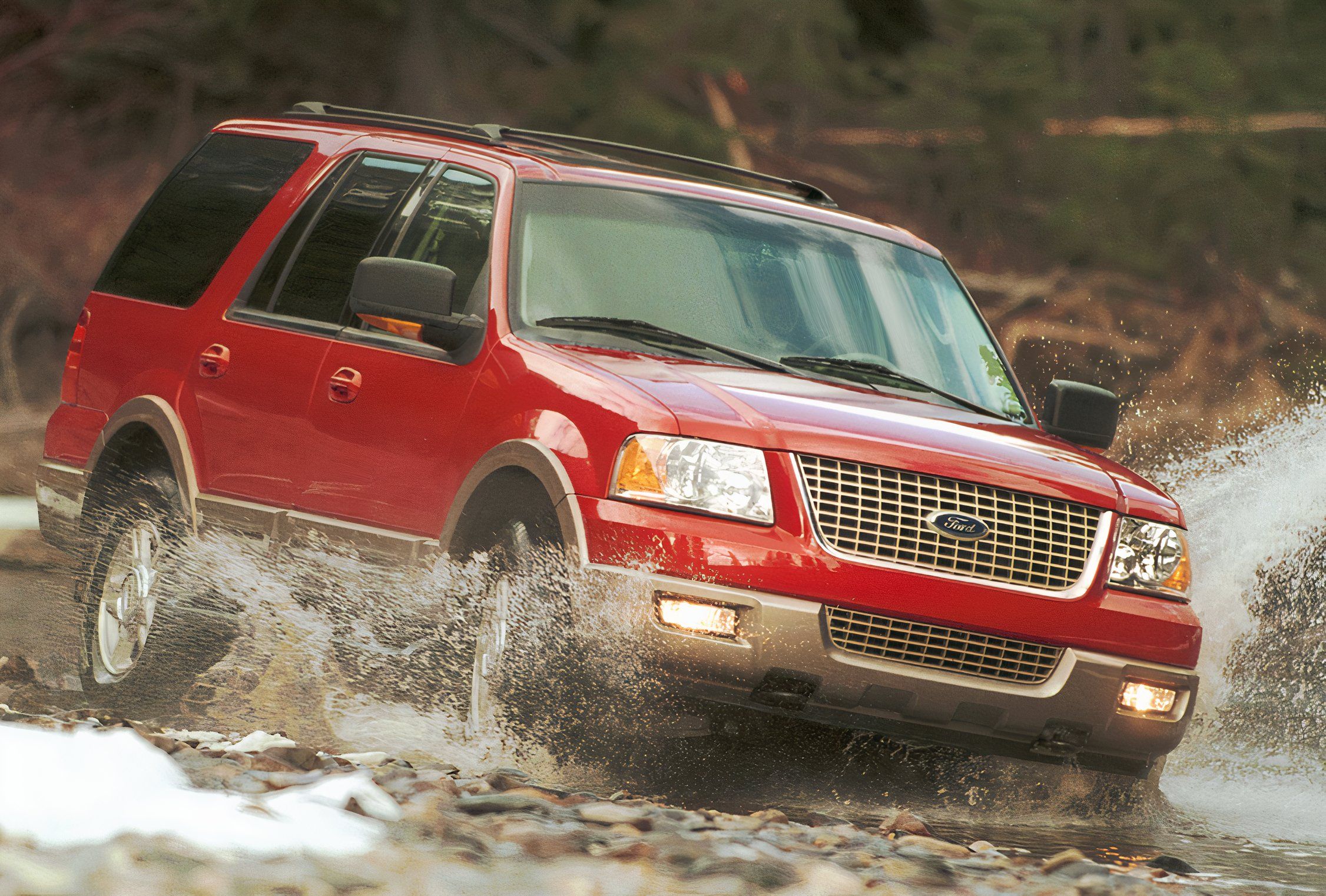
First and Second Generations: Learning and Adapting (1997-2006)
The initial Expedition models were groundbreaking for their time, offering unparalleled space and capability. However, the first generation (1997-2002) is well-known for certain teething problems. These included issues with spark plug ejection (especially on the 5.4L Triton V8), transmission failures, and rust on the frame. While a testament to Ford’s ambition, these early models often require more vigilant maintenance today.
The second generation (2003-2006) saw significant improvements in design and engineering. Ford largely mitigated the spark plug issues and introduced more refined components. However, vigilance is still key with these models. Owners might encounter concerns like timing chain wear, particular electrical glitches, and continuing transmission fluid maintenance needs. These early models, while affordable, truly benefit from a thorough inspection before purchase.
Later Generations: Steady Progress and Modern Challenges (2007-Present)
The third generation (2007-2017) represents a more significant leap in reliability and comfort. Many of these years are considered solid choices, especially models from 2009 onwards. The earlier years of this generation, particularly 2007-2008, had some lingering issues like potential HVAC system failures and power steering pump problems. However, the introduction of the EcoBoost engine in 2015 brought both enhanced performance and new maintenance considerations, such as turbocharger longevity and carbon buildup.
The current fourth generation (2018-Present) is arguably the most refined and reliable Expedition yet. Ford focused heavily on advanced safety features, lighter construction (aluminum body panels), and the continued refinement of the EcoBoost V6. While typically showing fewer major mechanical faults, modern vehicles come with complex electronics. Potential issues often revolve around infotainment systems, sensors, or more intricate suspension components that can be costly to repair if they fail. Still, these newer models generally offer peace of mind and significantly improved fuel economy.
Smart Buying Strategies for a Used Ford Expedition
Finding a reliable Ford Expedition, even among the potentially problematic years, isn’t just luck. It’s about smart, informed decision-making. Here’s how to navigate the used car market with confidence.
The Non-Negotiable: Pre-Purchase Inspection (PPI)
No matter the year or mileage, a professional pre-purchase inspection (PPI) by an independent, trusted mechanic is paramount. This isn’t just a suggestion; it’s a critical step that can save you thousands of dollars and countless headaches. A mechanic specializing in Fords or large SUVs can:
- Identify common Expedition weaknesses specific to that year.
- Spot hidden issues like frame rust, worn suspension components, or fluid leaks.
- Evaluate the engine, transmission, and drivetrain for signs of neglect or impending failure.
- Check the condition of tires, brakes, and crucial electrical systems.
This objective assessment provides a clear picture of the vehicle’s true condition, giving you powerful negotiation leverage or the wisdom to walk away.
Decoding Vehicle History and Maintenance Records
A vehicle’s history report, like those from CarFax or AutoCheck, is your first line of defense. Always run one to check for:
- Accidents, flood damage, or salvage titles.
- Odometer discrepancies.
- The number of previous owners and their geographical locations (important for rust concerns).
Equally important are comprehensive maintenance records. These tell a story about how the previous owner cared for the vehicle. Look for evidence of:
- Regular oil changes and filter replacements.
- Timely transmission fluid service (crucial for Expedition transmissions).
- Brake pad and rotor replacements.
- Any major repairs or recalls addressed.
A well-documented service history is a strong indicator of a diligently maintained vehicle, significantly reducing your risk.
Your Journey to Expedition Ownership
Navigating the world of used Ford Expeditions doesn’t have to be a minefield. While specific years present higher risks due to known mechanical issues, many reliable options exist across its generations. By being informed about the potential pitfalls and leveraging smart buying strategies, you can confidently find an Expedition that meets your family’s needs for years to come.
Remember, diligence pays off. Prioritize a thorough pre-purchase inspection and a meticulous review of the vehicle’s history. With the right approach, you’ll soon be enjoying the comfort, capability, and versatility that a Ford Expedition uniquely offers. Drive smart, drive happy!
❓ Frequently Asked Questions
Which specific Ford Expedition model years should be avoided, and why?
The 2004, 2005, 2006, 2007, and 2008 model years are frequently highlighted for major issues. These include spark plug ejection, cam phaser problems in the 5.4L Triton engine, and widespread transmission failures that can be extremely costly to repair.
What are the most common and expensive problems in the problematic Expedition years?
Beyond the 5.4L engine’s spark plug and cam phaser issues, transmission failure (especially 4R70W/75W and some 6R transmissions), rusted frames, power steering leaks, and suspension compressor failures are costly concerns. Repairs for these can often exceed the vehicle’s remaining value.
Are there any specific engine types or transmissions to watch out for in a used Expedition?
Absolutely, the 3-valve 5.4L Triton V8 engine, particularly in models before 2008, is infamous for its spark plug design and timing chain/cam phaser issues. Certain 4R70W/75W automatic transmissions in earlier generations also have a reputation for premature failure.
How does the generation of the Expedition impact its reliability?
The second generation (2003-2006) and early third generation (2007-2008) are generally considered the least reliable due to the problematic 5.4L engine and transmission designs. Reliability saw significant improvements in later third (2009-2014) and especially fourth generation (2018+) models.
What steps can I take to ensure I don’t buy a problematic Ford Expedition?
Always arrange a pre-purchase inspection by an independent mechanic specializing in Fords. Check service records for consistent maintenance, run a VIN report for accident history and recalls, and pay close attention to engine noise (ticking, knocking) and transmission shifting during a test drive.
Which Ford Expedition years are generally considered more reliable alternatives?
For better reliability, consider models from 2010 to 2014, as many of the earlier engine and transmission issues were addressed. The 2015 and newer models, particularly those with the EcoBoost V6 engine, are generally regarded as even more dependable choices.