Ford Edge TPMS Reset Without Tool: Executed Precisely
Seeing a Tire Pressure Monitoring System (TPMS) warning light on your dashboard doesn’t always necessitate a trip to the dealership or the purchase of expensive proprietary diagnostic hardware. Many Ford Edge owners struggle with persistent dashboard alerts that remain illuminated even after tires are properly inflated, leading to widespread confusion regarding how to clear the system. This guide provides the exact sequences needed for a Ford Edge TPMS reset without tool, covering model-specific methods to get your system back to factory standards and ensure your vehicle’s safety monitoring is operating as intended.

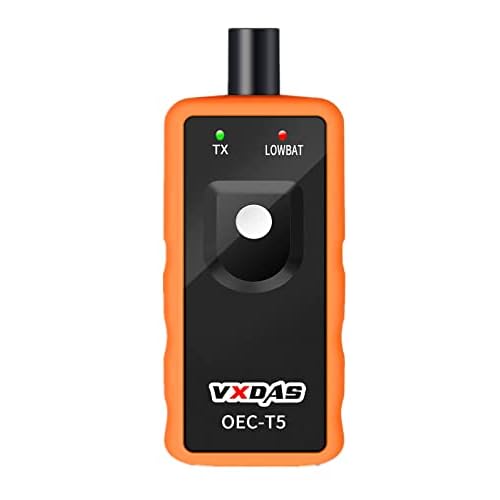

Understanding the Ford Edge TPMS Reset Without Tool and Indicator Mechanics

📤 Share Image
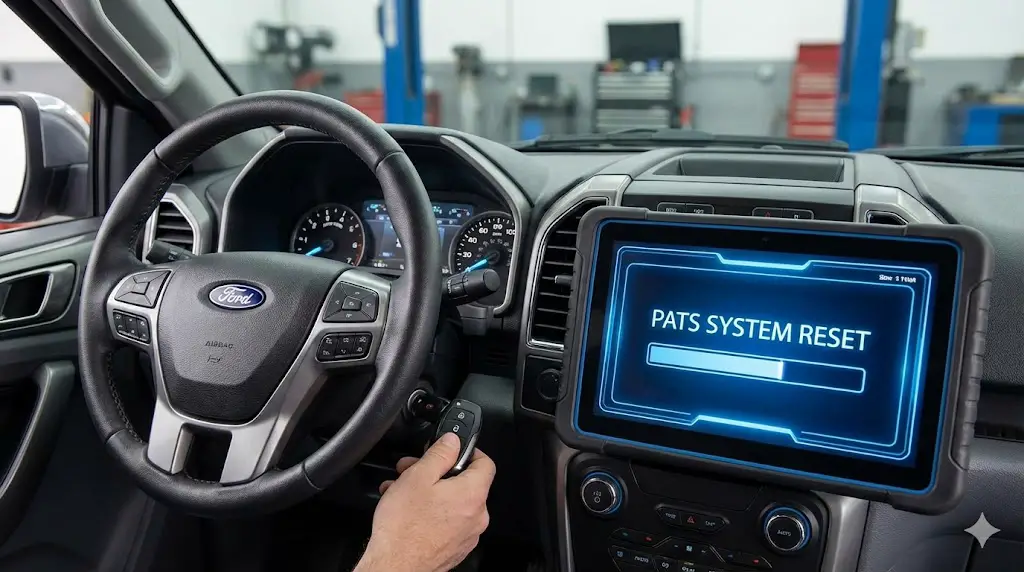
Solid vs. Blinking TPMS Indicators
The TPMS light on your instrument cluster acts as a diagnostic gateway. It is critical to distinguish between a solid light and a flashing (blinking) one. A solid, steady light indicates low pressure in one or more tires, signaling you to verify your pressures against the door placard specification. Conversely, a flashing light—usually for 60 to 90 seconds before turning solid—points to a systemic failure. This is often a communication error between a TPMS sensor and the Body Control Module (BCM), or a dead internal sensor battery. Attempting a reset when a sensor has internally failed will not resolve the issue; the component itself must be replaced.
The Impact of Weather on Tire Sensor Accuracy
Ambient temperature fluctuations represent the most common cause of false-positive warnings. Industry data confirms that tire pressure drops approximately 1 PSI for every 10-degree Fahrenheit decrease in ambient temperature. In cold climates, this mechanical reality often triggers the sensor’s threshold, even if the tire is structurally sound. Always rely on the tire pressure gauge reading over visual inspection and ensure you inflate to the door placard (not the maximum PSI listed on the tire sidewall) to maintain accurate system calibration.
By The Numbers
Drop per 10°F change
Typical Sensor Life
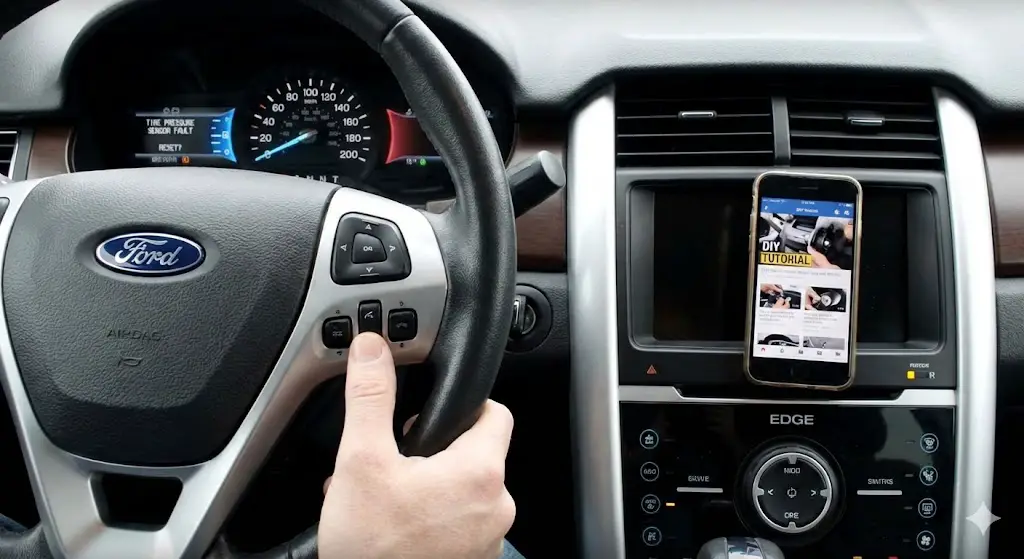
Performing a Manual Ford Edge TPMS Reset Without Tool
📋
Step-by-Step Guide
Before starting, verify all four tires are inflated to the exact PSI specified on your driver’s side door placard. Ensure no debris or metal caps are blocking the valve stem sensor. A cold tire pressure check is required for accuracy.
Turn the ignition to the “OFF” position. Press and release the brake pedal once. Turn the ignition from “OFF” to “RUN” (engine off) three times, ending in “RUN”. Press and release the brake pedal once more. Turn the ignition to “OFF”, then back to “RUN”. You should hear the horn honk once, confirming the system has entered training mode.
Starting with the Driver-Side Front tire, increase or decrease tire pressure (typically by letting air out for 5–10 seconds) until the horn chirps. Move sequentially to the Passenger-Side Front, then Passenger-Side Rear, and finally Driver-Side Rear, repeating the pressure adjustment at each valve stem. A final honk indicates a successful refresh of all sensor IDs.
If the horn does not chirp during the sequence, the BCM may have timed out. The system has a specific “Training Mode” time limit (usually 2 minutes). If it fails, start the entire ignition sequence again from the beginning.
Diagnosing Persistent TPMS Faults After Reset Attempt
If your manual efforts fail to clear the dash light, the problem likely lies deeper within the hardware. Before assuming the BCM is at fault, investigate these specific failure points:
Aging TPMS Sensors: Most original equipment sensors utilize lithium batteries designed for a 5–10 year lifespan. If your Ford Edge is nearing or past this age, the batteries are likely exhausted, rendering the sensors incapable of broadcasting data.
Radio Frequency (RF) Interference: Aftermarket dash cams, GPS trackers, or high-power cell phone chargers can create RF noise that blocks the weak signals emitted by your tire sensors. Temporarily disable these electronics to see if the light clears.
The Spare Tire Factor: Many Ford Edge models equipped with a full-size spare include a fifth TPMS sensor. If the spare is low, the system will trigger a warning even if your four road tires are perfect.
OBDII Port Diagnostics: If manual procedures are ineffective, the system may have logged a Permanent Diagnostic Trouble Code (DTC). A professional scanner at a tire shop can access the OBDII port to pinpoint exactly which wheel sensor is failing to report, saving you from a process of elimination.


Do not attempt to drive on an underinflated tire for long distances to reach a service station. Beyond the risk to the tire structure, the sensor itself may sustain internal damage if the tire sidewall collapses, turning a simple, free reset into a costly hardware replacement.
Manual Relearn vs. Auto-Learn Ford Systems Explained
It is vital to identify your specific model year’s requirements. Older Ford Edge models (typically pre-2015) almost universally require the manual pressure-change sequence described above. Newer models have moved toward “Auto-Learn” capability, where the BCM detects new sensor IDs simply by driving the vehicle.
The Auto-Learn Drive Cycle Explained
For models equipped with Auto-Learn, the system is designed to provide a “fresh start” without requiring manual intervention. Once the sensors are mounted and pressure is correct, the vehicle needs to be driven for approximately 15 to 20 minutes at speeds consistently above 20 mph. During this drive, the Body Control Module will automatically search for and initialize the new sensor IDs. If your vehicle uses this system, performing a manual reset sequence is unnecessary and will generally not be recognized by the vehicle.
Restoring System Integrity and Final Considerations
Achieving a clean, factory-standard status for your tire monitoring system is entirely possible when you understand the specific requirements of your Ford Edge. By following the steps outlined, you can effectively initialize the sensors and eliminate the frustration of a persistent warning light.
To summarize your approach:
Confirm tire pressure using a high-quality, calibrated gauge to match the exact door placard specifications; never guess based on sidewall limits.
Utilize the ignition/brake sequence carefully to enter training mode on models that do not support auto-learn.
Identify your system type—manual or auto-learn—as performing the wrong procedure will lead to wasted time and zero results.
Account for battery degradation if your vehicle is older; if manual attempts to trigger the sensors fail after three attempts, it is highly likely that one or more sensors have reached their end-of-life.
If these steps fail to clear your light, consult a local tire shop to scan for a dead sensor battery. No amount of manual resetting will successfully restore a sensor that no longer holds a charge or can no longer broadcast its signal to the vehicle’s computer. Proper maintenance of these components not only ensures a quiet, light-free dashboard but also guarantees your safety by providing real-time data on your tires’ health.
Ford Edge Tpms Reset Without Tool: Frequently Asked Questions
Do I really need a tool to reset the TPMS on a Ford Edge?
Not necessarily. Most Ford Edge models support a manual relearn procedure using the brake pedal and ignition sequences. However, if your TPMS sensors are dead, damaged, or unresponsive, no manual reset sequence will work. In these specific cases of hardware failure, you would need an OBD-II diagnostic scan tool or a dedicated TPMS activation tool to verify the sensor functionality or program a replacement.
Why does my TPMS light stay on after I fill the tires?
The TPMS light often remains illuminated because the BCM has cached the low-pressure data and has not yet undergone a ‘handshake’ with the sensors to confirm the new pressure levels. Simply adding air is not always enough; you must drive the vehicle above 20 mph for several miles to allow the sensors to transmit updated data, or execute the manual reset procedure to force an immediate system update.
Will replacing a sensor require a full reset?


Yes. Whenever a tire pressure sensor is replaced, the vehicle’s Body Control Module must learn the unique identification code of the new sensor. This is not automatic in most Ford Edge generations. You must initiate the training mode, which tells the computer to stop listening to the old sensor and begin accepting signals from the new, replacement hardware attached to that specific wheel position.
Does my Ford Edge perform an automatic TPMS reset?
Some newer Ford Edge models (typically 2017 and later) feature ‘Auto-Learn’ technology. In these vehicles, after driving for roughly 10–20 minutes at speeds above 20 mph, the BCM automatically detects the new sensor positions and clears the warning light. If your vehicle has this feature, you do not need to perform a manual reset; simply ensure the tire pressure is set to the manufacturer’s recommended cold PSI.
Can cold weather trigger a fake TPMS warning?
Absolutely. Cold weather causes air inside the tires to contract, reducing the pressure by roughly 1 PSI for every 10 degrees Fahrenheit drop. If your tires were already near the low-pressure threshold, the sudden drop often triggers the sensor alert. This is not a malfunction but a system success. Once the tires reach operating temperature from driving, the pressure may rise, and the light should eventually reset itself.