Does adaptive cruise control use brake lights: Clarified
Ever felt nervous when your vehicle slows down automatically on the highway, wondering if the driver behind you can tell? Many motorists assume that because their foot isn’t on the brake pedal, the vehicle behind them is oblivious to their deceleration. This ambiguity often creates tension for drivers who rely on Adaptive Cruise Control (ACC) during heavy traffic. The reality is that your vehicle possesses a sophisticated logic system designed to bridge the gap between machine-controlled deceleration and human-readable signals. In this guide, we break down the engineering behind ACC braking logic, regulatory safety requirements, and the specific thresholds that determine why your vehicle does (or doesn’t) flash its lights.
Does Adaptive Cruise Control Use Brake Lights: How It Actually Works
Recommended Best Deal Products


Modern vehicle safety is governed by the Vehicle Control Module (VCU) and the Electronic Control Unit (ECU). When you engage ACC, these systems do not simply “coast”; they actively monitor the environment using a fusion of radar, LiDAR, and camera systems. Understanding the relationship between these components is vital for demystifying automated braking.
📤 Share Image

ECU Logic and Sensor Inputs
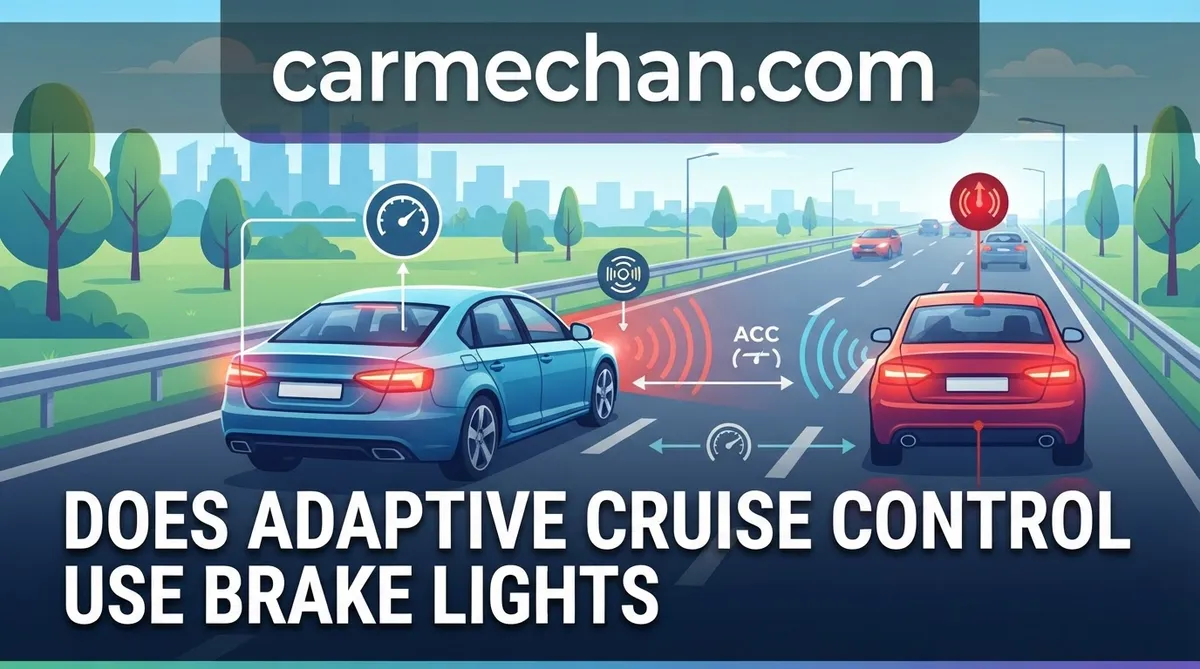
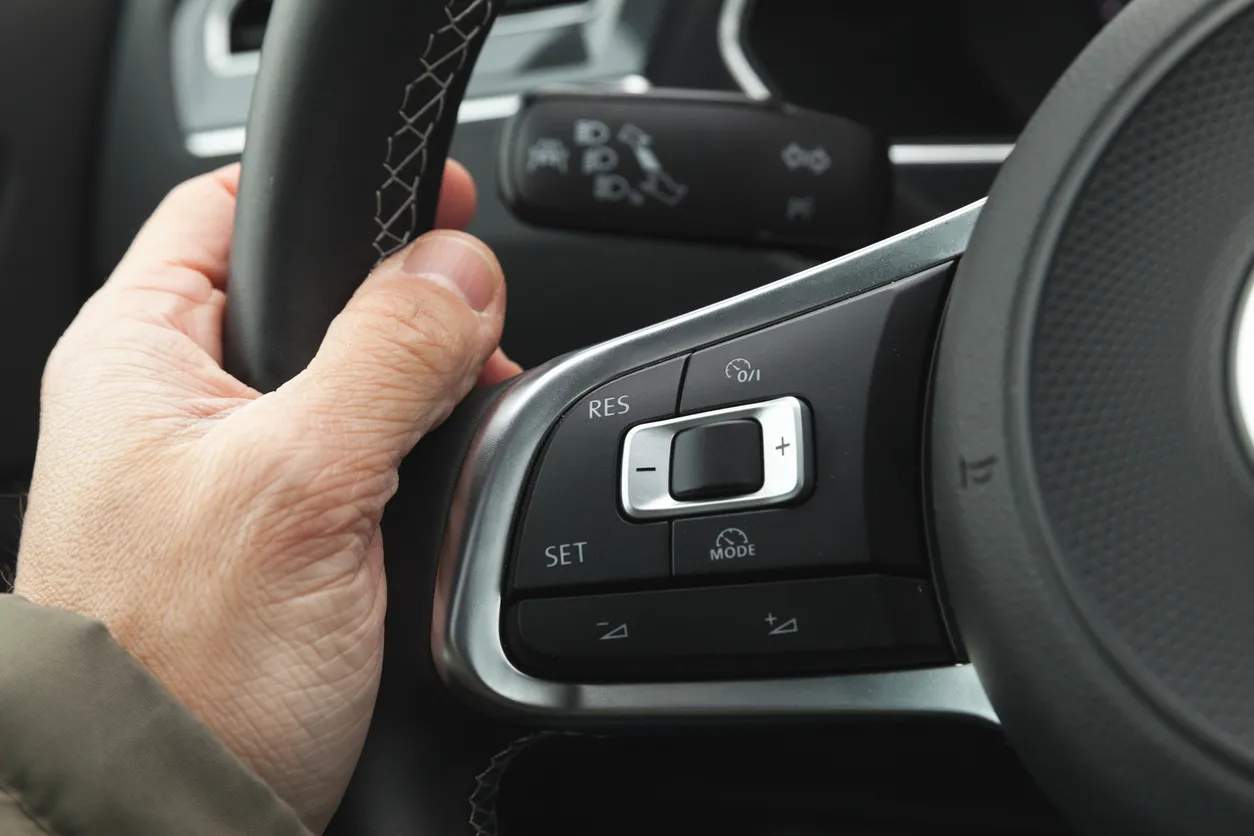
The ACC system acts as an extension of the driver’s intent. It utilizes radar or LiDAR to calculate the distance and closing speed of the vehicle ahead. When the ECU determines that a reduction in speed is required to maintain the set following distance, it assesses the necessary deceleration rate. If the required rate is minimal, the system may simply reduce engine throttle or increase regenerative resistance. However, if the ECU determines a rapid speed reduction is required, it initiates a “brake request” command.
The Role of the Brake Actuator
The brake actuator is the physical hardware that translates electronic signals into hydraulic pressure. In older or simpler systems, the brake light switch was physically tied to the pedal movement. In contemporary vehicles, the ECU bypasses the pedal and instructs the hydraulic modulator to build pressure in the brake lines. Crucially, the system sends a concurrent signal to the Body Control Module (BCM), which is responsible for illuminating the rear brake lights. This ensures that the vehicle is signaling intent to other motorists even without a physical pedal depression.
G-Force Thresholds for Illumination
Research indicates that brake light activation is tied directly to the magnitude of deceleration. Most manufacturers set the deceleration threshold for light activation between 0.1 and 0.3 g-force. If the vehicle slows down at a rate below this threshold—such as easing off the throttle on a slight decline—the brake lights may not illuminate. Once the system crosses this G-force threshold, the ECU mandates the BCM to fire the lights, maintaining a reliable, professional safety standard.
Deceleration vs. Braking: When Does Adaptive Cruise Control Use Brake Lights
It is vital for the driver to distinguish between passive deceleration and active friction braking. The distinction determines whether the following traffic sees your brake lights or simply witnesses your vehicle slowing down.
Regenerative Braking and EV Safety Logic
Electric vehicles (EVs) and hybrids introduce unique complexity. Regenerative braking can slow a vehicle significantly without applying friction brakes. In some older EV models, light regenerative braking did not trigger brake lights, leading to safety concerns. However, modern professional standards now dictate that even regenerative deceleration must trigger the brake lights if the G-force exceeds established safety thresholds.
Passive Coasting vs. Active Deceleration
Passive coasting—such as the vehicle slightly backing off the throttle on a highway curve—is perceived by the ECU as an efficiency maneuver, not a braking event. Consequently, the brake lights remain dark. Only when the ACC system actively requests an increase in hydraulic pressure to maintain following distance do the lights activate.
Understanding CAN bus Communication
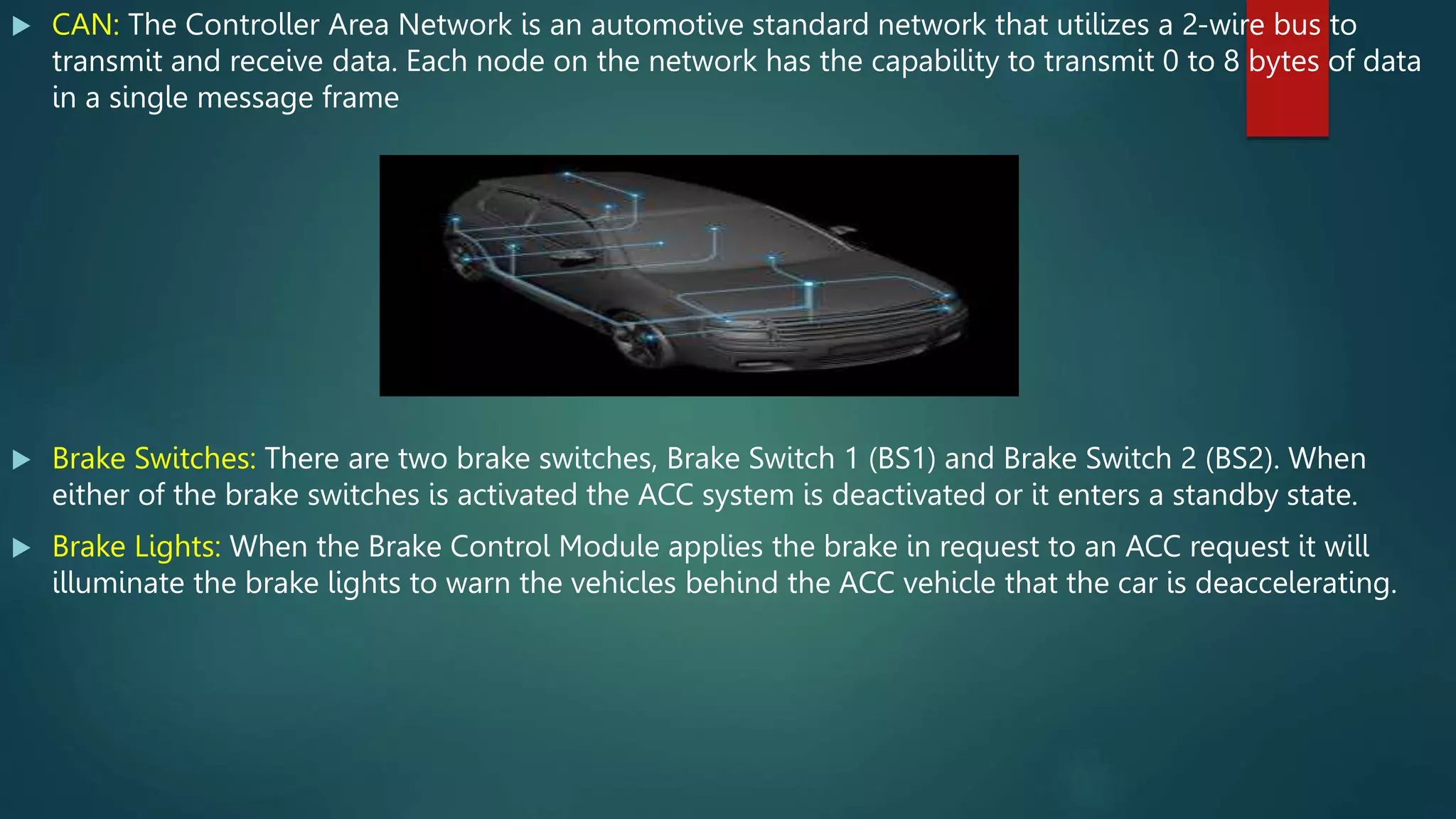
Inside the vehicle, the “Brake Light Request” signal travels over the CAN bus. This is the nervous system of the car. When the ACC ECU sends this packet of information, it tells the BCM to light up the lamps. This communication is instantaneous, ensuring the lights activate within 50-200 milliseconds of the brake request.
Regulatory Standards for Adaptive Cruise Control Brake Light
Recommended Best Deal Products


The industry operates under strict oversight to prevent accidents caused by unexpected speed changes. Global safety regulations, such as those overseen by ECE and FMVSS, require that any vehicle performing a significant, sudden deceleration must provide visual warning to following traffic.
Global Safety Regulations
Regulations mandate that when automated systems trigger a service brake activation, the stop lamps must illuminate. While the specific G-force requirement may vary slightly by region, the principle remains constant: the driver and those behind them must be alerted to speed changes that could compromise safety.
Manufacturer-Specific Safety Programming
Manufacturers often program their systems with higher sensitivity than the law requires to ensure a “quality” driving experience. This is part of the brand’s commitment to safety, ensuring that even under mild braking, the lights are visible to help prevent tailgating or rear-end collisions.
The Driver’s Responsibility
Despite advanced automation, ACC is classified as a Level 2 driver convenience feature. The driver remains legally and operationally responsible for the vehicle. If the system fails to trigger lights due to a sensor obstruction, the driver is expected to intervene immediately.
If you drive in heavy traffic, you can verify your system’s behavior. Have a passenger follow you in another vehicle while your ACC is active. By observing the vehicle’s response during standard highway speed adjustments, you can gain confidence in how your specific make and model handles brake light activation.
Common Limitations: Does Adaptive Cruise Control Use Brake Lights
While ACC systems are highly reliable, they are not infallible. Recognizing the limitations of your vehicle’s software and hardware is essential for maintaining a high safety standard.
- Manufacturer Discrepancies: Do not assume that a system in a 2024 luxury sedan behaves identically to an economy model from 2018. Algorithms vary significantly by manufacturer.
- Sensor Latency: In adverse weather, such as heavy fog or snow, radar/LiDAR sensors can face reduced reliability, which might lead to delayed brake light triggers.
- Regenerative Blind Spots: In some older electric models, the system may prioritize energy efficiency over immediate light activation, resulting in an “unlit” deceleration.
- Maintenance Requirements: If your brake light switch or module is malfunctioning, the ACC system might be unable to trigger the lights even if it is attempting to brake.
Always be prepared to intervene. If the system is not slowing down when you expect it to, or if you feel the deceleration is too subtle for the driver behind you to notice, take manual control of the brake pedal immediately. Never rely on the system as your sole means of communication with other drivers.
By The Numbers
Deceleration Trigger Threshold
Brake Light Response Latency
Summary of Adaptive Cruise Control Safety Protocols
Recommended Best Deal Products
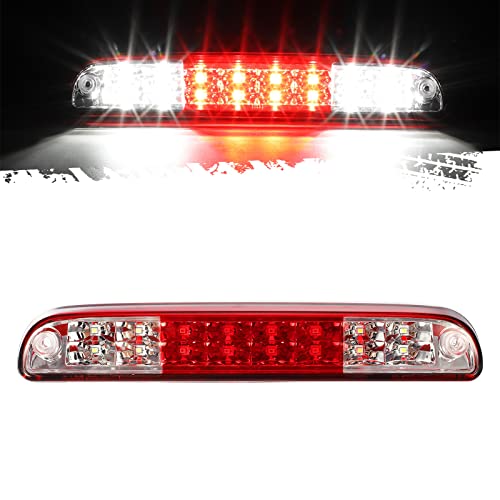


To wrap up our analysis, remember that your vehicle’s brake lights are not just pedal-activated indicators; they are software-controlled safety beacons. The system evaluates real-time G-forces to determine the necessity of alerting other drivers, providing a reliable and trusted layer of communication on the road. Key points to remember include:
- Brake lights are triggered by G-force, not strictly by the physical position of your brake pedal.
- Modern systems are highly capable and programmed to prioritize safety during any significant deceleration event.
- Manual intervention is a safety standard—drivers should never rely solely on the ACC system to communicate intent to other motorists in high-traffic or variable conditions.
Stay safe by remaining engaged with your vehicle’s performance. Always consult your owner’s manual for specific adaptive safety protocols unique to your vehicle’s make and model to ensure you have the most reliable information for your daily commute.
Does Adaptive Cruise Control Use Brake Lights: Frequently Asked Questions
Do brake lights turn on when ACC slows down?
Yes, in nearly all modern vehicles equipped with Adaptive Cruise Control, the brake lights will illuminate when the vehicle’s onboard computer initiates friction braking to maintain a safe distance. This is a critical safety feature designed to signal following traffic that the vehicle is slowing, mirroring the behavior a human driver would perform under the same conditions.
Does the driver behind me know I am slowing down if I don’t touch the pedal?
Yes, they should. If your ACC system determines that the current deceleration requires the use of the friction brakes, the brake lights will activate. However, if the car is only slowing down via engine braking or light regenerative drag—common in hybrids and EVs—the lights may remain off. This is acceptable as long as the rate of deceleration is very gradual.
Why don’t the brake lights turn on when the car coasts to a stop?
Brake lights are triggered by deceleration thresholds defined by vehicle safety regulations. If your vehicle is coasting—moving without active throttle or brake input—the deceleration rate is typically too low to trigger the ‘stop lamp’ requirement. The system only activates the lights when it detects a change in velocity that mimics active braking, ensuring consistent communication to other drivers.
Are there regulations requiring brake lights during autonomous braking?
Yes. Automotive safety standards, such as those found in FMVSS 108 and ECE R48, mandate that any system causing a vehicle to decelerate must provide a visual signal to surrounding drivers if that deceleration exceeds specific parameters. Manufacturers must calibrate their ACC systems to ensure they remain compliant with these global standards, making brake light activation during autonomous braking a legal necessity.
Can I manually override the ACC brake light behavior?
No. The interaction between the ACC controller and the vehicle’s lighting system is hardcoded into the car’s Engine Control Unit (ECU) and Body Control Module (BCM). This is to prevent tampering with safety-critical systems. If you feel the lights are not triggering appropriately, you should never attempt to modify the circuitry; instead, consult a professional technician to perform a system-wide diagnostic check.