Chevy Traverse Cruise Control Not Working: Diagnosed & Fixed
Nothing ruins a long highway drive faster than realizing your Chevy Traverse cruise control isn’t maintaining your speed. Whether you are dealing with an intermittent drop-out or a system that refuses to engage entirely, the loss of this feature is as frustrating as it is inconvenient. Whether it’s a blown fuse, a failing brake switch, or a communication error between vehicle modules, a non-responsive cruise system can be both annoying and difficult to trace. In this guide, we’ll help you diagnose the root cause and walk you through the most common fixes so you can get back to cruise-controlled driving.
Understanding the Root Causes of Chevy Traverse Cruise Control Not Working
Recommended Best Deal Products

📤 Share Image
The Role of the ECM and Sensor Data
Modern cruise control is not a simple mechanical throttle link; it is a sophisticated, software-driven system that relies on a constant stream of data from the Engine Control Module (ECM) and the Body Control Module (BCM). The system constantly monitors your speed, throttle position, and gear selection. If the ECM detects inconsistent data—such as a misfire or a faulty oxygen sensor—it will disable cruise control as a safety precaution to protect the drivetrain.

Why Warning Lights Disable Cruise Control
Research indicates that modern cruise control systems will automatically disable if a Check Engine Light (CEL) or an Electronic Stability Control (ESC) light is present. The cruise module requires “clean” communication from these subsystems to operate safely. If your Traverse detects a fault in the Traction Control System or the ABS, it will inhibit the cruise control to prevent unpredictable throttle behavior.

Common Electrical Path Failures
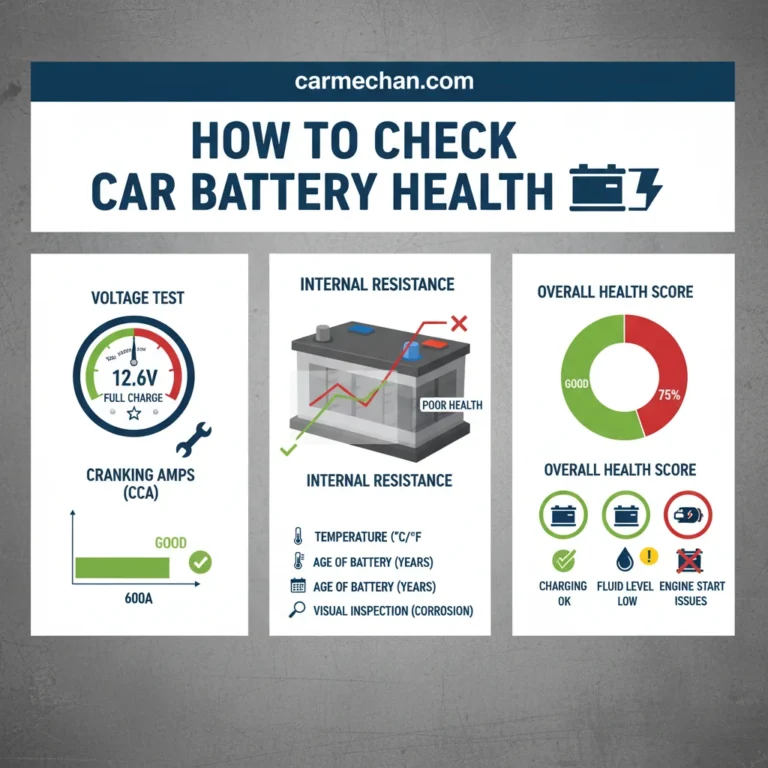
Electrical stability is the backbone of your Chevy’s electronics. Low battery voltage or poor chassis grounding issues can cause erratic electronic module behavior. For example, a loose battery terminal can cause the BCM to receive voltage spikes, leading the system to trigger “false” CAN-bus errors that disable cruise functionality. Always ensure your battery terminals are clean and tight before attempting complex repairs.
Diagnosing Chevy Traverse Cruise Control Not Working Symptoms
To effectively diagnose the issue, you must separate the symptoms of a failed interface from a failed system control. Use the following guide to identify the specific nature of the failure:
- Reading OBD-II Codes for Cruise Errors: Diagnostic scanners capable of reading manufacturer-specific codes are required to identify the root cause. A standard generic scanner often fails to read deep-level chassis (C-codes) that point to cruise issues.
- Checking for Linked ABS or Traction Control Faults: If you see warning lights for ABS or ESC, the cruise control failure is likely a secondary symptom of a faulty wheel speed sensor or hydraulic control unit issue.
- Testing the Clock Spring via Steering Wheel Controls: If the cruise buttons feel “loose” or only function when the steering wheel is turned to a specific angle, the clock spring—the electrical ribbon cable behind the steering wheel—is likely worn or broken.
By The Numbers
Cases tied to sensor/fuse faults
Required CEL status check
Step-by-Step Fixes for Chevy Traverse Cruise Control Not Working
📋
Step-by-Step Guide
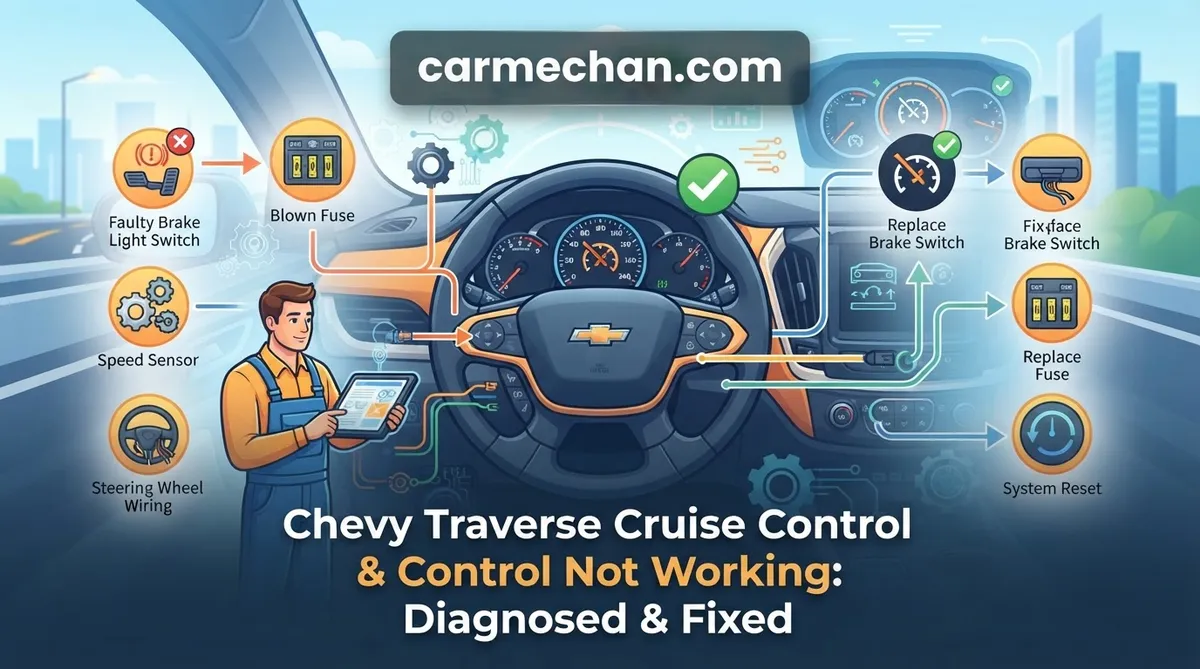
Locate the interior fuse box (typically under the passenger side dash or center console) and the under-hood power distribution center. Use a test light or multimeter to check for continuity across the fuses labeled “CRUISE” or “BCM.”
A faulty brake pedal switch is one of the most common causes for cruise control failure. Locate the switch above the brake pedal arm. Ensure it is firmly seated and that the plunger extends and retracts smoothly. Use a multimeter to verify 12v continuity when the pedal is at rest.
Disconnect the negative battery terminal for at least 15 minutes. This clears the volatile memory in the BCM and ECM, forcing the modules to recalibrate. Reconnect the terminal and test the cruise control on a safe stretch of road.
Advanced Troubleshooting: When Professional Repair Is Necessary
Risks of DIY Clock Spring Replacement
The clock spring is a critical component behind your steering wheel that maintains an electrical connection while the wheel turns. Attempting to replace this part yourself carries significant risks, including accidental airbag deployment. If your diagnostic tests indicate a broken clock spring, this is a job best reserved for qualified technicians who have the specific tools to lock the steering column and manage the SRS (Supplemental Restraint System) safely.
Understanding CAN-bus Communication Faults
Electrical issues in the steering column or along the main chassis harness often manifest as CAN-bus communication errors. When the cruise control module cannot “talk” to the transmission or engine module, it will shut down. These faults require a dealer-level scan tool to identify which specific node in the network is corrupted, and in some cases, the TCM or ECM may require a firmware re-flash to resolve the conflict.
Never attempt to probe or bypass electrical wires leading into the steering column or airbag assembly. Improper handling can cause short circuits that damage the vehicle’s communication modules or lead to dangerous airbag malfunctions.
Final Recommendations for Your Chevy Traverse
Addressing a non-functional cruise control system requires a methodical approach. Start by checking your fuses and the brake pedal switch—they are the most common culprits behind the failure. Remember, do not ignore other dashboard warning lights, as they provide critical clues that explain why the computer has locked out your cruise functionality. Always disconnect the battery before attempting any electrical repairs to protect yourself and your vehicle’s sensitive electronic modules. If these steps haven’t solved your issue, schedule a professional diagnostic scan to pinpoint the specific sensor or module failure to avoid costly guess-work replacements.
Chevy Traverse Cruise Control Not Working: Frequently Asked Questions
Why does my cruise control stop working when it rains?
Moisture can create electrical resistance or short circuits in exposed wiring connectors, particularly near the wheel speed sensors or the brake pedal switch. If the cruise module detects an inconsistent signal due to water intrusion, it will disengage the system as a failsafe to protect the powertrain from erratic acceleration inputs.
Can a blown fuse cause cruise control failure?
Yes, absolutely. The cruise control system is protected by specific fuses in both the under-hood and interior fuse blocks. If the fuse supplying the brake switch or the cruise control module itself blows, the system loses the electrical signal required to engage, effectively killing the cruise function instantly.
Does a check engine light disable cruise control?
Yes. When the Powertrain Control Module (PCM) detects an engine performance issue and triggers a Check Engine Light, it often disables cruise control as a defensive measure. This prevents the cruise control from attempting to maintain speed while the engine is struggling to function within its normal operating parameters.
How do I reset my Chevy cruise control?
There is no ‘reset’ button. Instead, perform a hard reset by disconnecting the negative battery terminal for 15 minutes. This clears the volatile memory in the Body Control Module and may resolve minor electronic glitches. If the system fails to work after reconnection, the underlying diagnostic code must be cleared via an OBD-II scanner.
Is a broken clock spring covered under recall?
While there have been various safety recalls for Chevy steering components, clock springs are usually treated as wear-and-tear items unless a specific VIN-based recall has been issued for your exact model year. Check the official NHTSA website using your VIN to see if your vehicle is included in any open service campaigns.