Car Squeaks When Going Over Bumps Fix Car Squeaks Over 2026
Last Updated on September 1, 2026 by Albert Duke
A car squeaking over bumps often signals a worn or dry suspension component, such as bushings, ball joints, or struts. Identifying the exact source requires careful diagnosis, but many common issues can be lubricated or repaired to restore quiet driving.
A car squeaking over bumps often signals a worn or dry suspension component, such as bushings, ball joints, or struts. Identifying the exact source requires careful diagnosis, but many common issues can be lubricated or repaired to restore quiet driving.
The sound of your car squeaking when going over bumps can be concerning, but it often points to issues within your vehicle’s suspension system. These noises, while sometimes just annoying, can also indicate a more serious problem requiring attention. Understanding the source of these squeaks is the first step toward a quieter, safer driving experience in 2026.
We aim to help you pinpoint why your car makes these sounds, whether it’s the front or rear, and guide you through potential fixes. This article will equip you with the knowledge to diagnose and address the problem effectively. To effectively address these unwelcome sounds, your first step involves systematically identifying their origin.
Key Takeaways


- Suspension components are primary squeak sources.
- DIY diagnosis involves careful listening and inspection.
- Dry rubber bushings are a very frequent cause.
- Professional repair is critical for safety issues.
- Repair costs vary widely by specific part and labor.
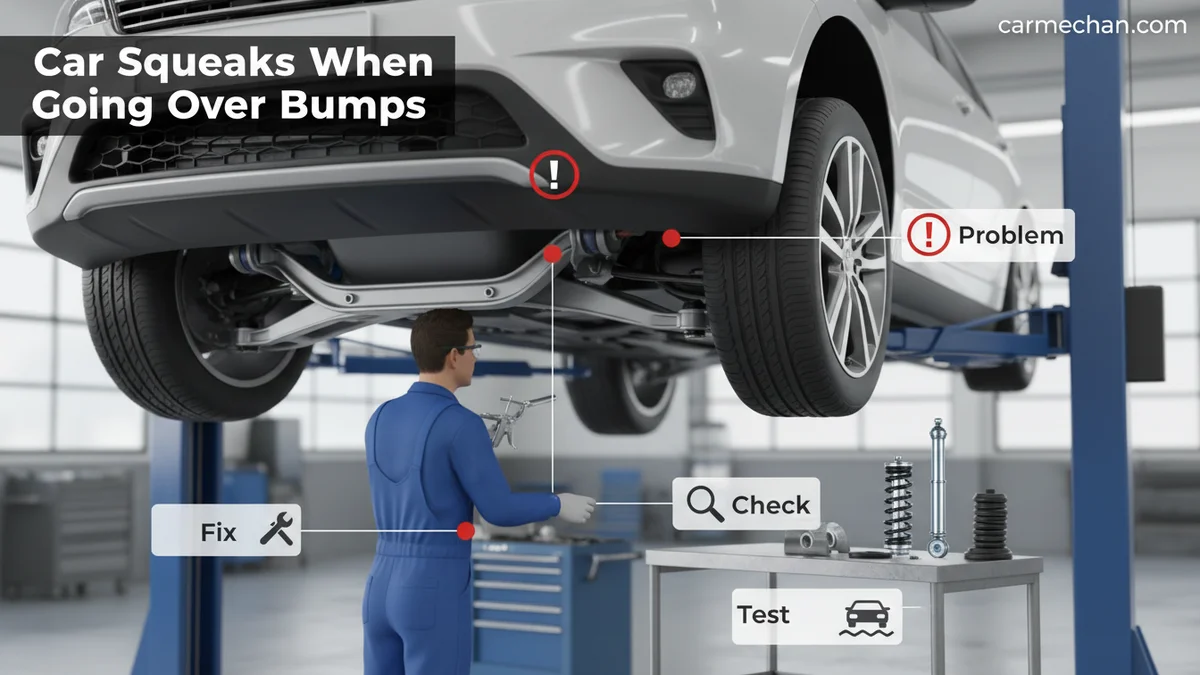
How to Diagnose Your Car Squeak in 5 Steps

Pinpointing the exact source of a car squeak when going over bumps requires a systematic approach. By carefully examining your vehicle, you can narrow down the potential culprits before deciding on a repair. Safety is paramount during this process; always ensure your car is on a level surface and supported correctly if lifting.
Visually Inspect Suspension
Begin by thoroughly inspecting your car’s suspension components when the vehicle is at rest. Look for obvious signs of wear, such as cracked or torn rubber bushings, leaking shocks or struts, or bent components. Pay close attention to control arms, sway bar links, and spring seats.
Check for any accumulation of rust or dirt around moving parts that could be causing friction. A flashlight can help illuminate hard-to-see areas under the vehicle. Note any visual damage or excessive play you observe.
Bounce Test Your Vehicle
With your car parked, firmly push down on each corner of the vehicle, then release. The car should bounce down once and then immediately return to its original position without excessive oscillating. If a corner bounces more than 2-3 times, it could indicate worn shock absorbers or struts.
Listen for any squeaking noises during the compression and rebound phases of the bounce test. This can help isolate whether the noise is coming from a specific corner of the car. Repeat this test on all four corners for a comprehensive assessment.
Listen Closely During Driving
Drive your car slowly over various types of bumps and uneven surfaces in a safe, controlled environment. Try to identify if the squeak originates from the front or rear, and from the left or right side. Listen for changes in the squeak’s pitch or intensity based on speed or severity of the bump.
Driving with a window down can help you hear the sound more clearly. Sometimes, having a passenger listen from different positions inside the cabin can also assist in isolating the noise. This active listening helps correlate the sound with specific driving conditions.
Wiggle Suspect Parts
Safely lift your vehicle using a jack and support it with jack stands. With the wheels off the ground, try to manually wiggle various suspension components. Grasp the wheel at 12 and 6 o’clock and then at 3 and 9 o’clock to check for play in ball joints or wheel bearings.
Use a pry bar (carefully and gently) to check for excessive movement in control arm bushings, sway bar links, and tie rod ends. Any movement beyond what’s expected or accompanied by a squeak during this manual test points to a worn component. Always consult your vehicle’s service manual for proper component inspection techniques.
Road Test Safely
After your preliminary inspections, take your car for another controlled drive, paying close attention to any changes or persistence of the squeak. If you made any temporary adjustments or observations, see how they correlate with the noise. Ensure your test route includes different bump types.
Always prioritize safety during any road test. Avoid busy roads or complex maneuvers while trying to listen for noises. If the squeak is severe or affects handling, limit your driving and proceed with caution. Once you have narrowed down the potential areas, understanding the specific components that typically cause these noises becomes crucial.
7 Most Common Causes of Suspension Squeaks
Several components within your car’s suspension system commonly cause squeaking noises when traversing uneven terrain. Identifying which part is at fault is key to a successful repair. These parts are designed to absorb shocks and maintain wheel contact with the road.
Worn Control Arm Bushings
Control arm bushings are rubber or polyurethane components that cushion the connection between the control arms and the vehicle frame. Over time, these bushings can dry out, crack, or degrade, leading to metal-on-metal contact or excessive movement. This often results in a distinct rubbery squeak or groan, especially over bumps or when turning.
When these bushings wear, they not only cause noise but can also affect handling and alignment. You might feel a looseness in the steering or uneven tire wear. Replacing worn control arm bushings restores ride comfort and steering precision, as explained by automotive experts like those at [EXTERNAL LINK: reputable automotive guide on suspension bushings].
Failed Ball Joints
Ball joints are spherical bearings that connect the control arms to the steering knuckles, allowing for steering and suspension movement. When ball joints fail, their internal lubrication can dry out, or the protective boot can tear, allowing dirt and water to enter. This leads to metal-on-metal friction and a popping or squeaking sound.
A failed ball joint is a serious safety concern as it can lead to catastrophic suspension failure if not addressed. Symptoms often include a clunking noise, wandering steering, or uneven tire wear. Regular inspection for torn boots is crucial.
Damaged Strut Mounts
Strut mounts connect the top of the strut assembly to the vehicle’s chassis. They often contain a rubber isolator and a bearing. Over time, the rubber can degrade, causing a squeak or clunk when going over bumps or turning the steering wheel. The bearing can also wear, leading to noise.
A worn strut mount can also cause misalignment, affecting steering stability. If you hear a thumping or grinding sound from the top of the wheel well, especially over small bumps, a damaged strut mount could be the cause. This component is integral to smooth steering action.
Loose Sway Bar Links
Sway bar links connect the sway bar (also known as an anti-roll bar) to the suspension components, helping to reduce body roll during turns. The bushings or ball-joint-style connections within these links can wear out or become loose. This leads to a distinct clunking or squeaking noise over bumps or when cornering.
Checking for excessive play in the sway bar links is relatively straightforward. A quick visual inspection can often reveal torn rubber boots or loose nuts. Addressing these can significantly improve your car’s handling stability.
Corroded Coil Springs
While less common, coil springs can sometimes squeak, especially if they are corroded, rubbing against themselves, or if the rubber isolators at their ends have worn out. A metallic-on-metallic rubbing sound might indicate spring coils are touching. Rust and debris can also accumulate between spring coils or seats.
This type of squeak is often persistent and can be particularly noticeable on sharp bumps. Replacing worn spring isolators is a common fix for this issue. Severely corroded springs may need replacement, affecting ride height.
Dry Tie Rod Ends
Tie rod ends are crucial steering components that connect the steering rack to the steering knuckle. They contain ball-and-socket joints that can become dry or worn, especially if their protective boots tear. A dry tie rod end can produce a squeaking or clicking noise, particularly when turning the steering wheel or driving over small bumps.
Beyond the noise, worn tie rod ends can cause sloppy steering, alignment issues, and uneven tire wear. This is a critical component for steering control. A detailed guide on [INTERNAL LINK: maintaining steering components] can offer more information.
Old Shock Absorbers
Shock absorbers, or struts (which combine a shock absorber and a spring), dampen suspension oscillation. While primarily known for clunking or thumping when worn, very old or failed shocks can sometimes produce a squeaking sound. This might occur due to internal wear, dried seals, or worn mounting bushings.
A squeak from a shock absorber often indicates it’s at the end of its lifespan and likely not dampening effectively. This compromises ride comfort and vehicle control. Understanding these potential culprits helps you decide if a simple at-home solution is possible, or if professional intervention is required.
How to Lubricate Squeaky Suspension Parts

For many common squeaks, especially those from rubber components, simple lubrication can offer a temporary or even permanent fix. This DIY method is cost-effective but requires careful attention to detail and safety. Ensure you know what type of lubricant is suitable for your components.
Gather Necessary Tools
Before starting, collect all the tools you will need. This typically includes a floor jack, jack stands for safety, wheel chocks, a wire brush for cleaning, shop rags, and the appropriate lubricant. Depending on the component, you might also need wrenches to loosen bolts for better access.
Select a silicone-based grease or spray for rubber bushings, as petroleum-based lubricants can degrade rubber over time. For metal-on-metal contact points, a specialized chassis grease or white lithium grease may be more appropriate. Always refer to your vehicle’s service manual or a product guide for the best lubricant choice.
Clean Affected Components
Once your vehicle is safely lifted and secured on jack stands, clean the area around the squeaking component thoroughly. Use a wire brush to remove any rust, dirt, or debris from the bushing or joint. Cleaning ensures the lubricant can penetrate effectively and adhere to the surfaces.
Use a degreaser or automotive cleaner to remove old grease and grime, wiping it away with a shop rag. A clean surface is crucial for the new lubricant to work properly and for you to observe any further issues. This step prevents abrasive particles from causing more wear.
Apply Appropriate Lubricant
Carefully apply the chosen lubricant to the squeaking component. For rubber bushings, spray silicone lubricant directly into and around the bushing where it meets the metal. For ball joints or tie rod ends that have grease fittings, use a grease gun to inject fresh grease until the boot expands slightly.
If there are no grease fittings, you might need to carefully pry back the rubber boot (if possible without damaging it) to apply grease directly. Work the suspension by hand (e.g., by bouncing the wheel) to help the lubricant penetrate all surfaces. Avoid over-lubricating, which can attract more dirt.
Re-Test After Application
After applying lubricant, lower your car safely off the jack stands. Take it for a test drive over the same types of bumps that previously caused the squeak. Listen carefully to see if the noise has subsided or disappeared entirely. Sometimes, it might take a few bumps for the lubricant to fully settle in.
If the squeak persists, you might need to re-evaluate your diagnosis or consider that the component is too worn for lubrication to be effective. A successful lubrication indicates a dry component, whereas a persistent squeak suggests mechanical wear. While DIY fixes can be satisfying, not all squeaks can be resolved with a simple spray, and knowing when to call in the experts is equally important.
When to Seek Professional Repair for Squeaks
Knowing when a car squeak transcends a minor annoyance and demands professional attention is crucial for both your vehicle’s health and your safety. Ignoring persistent or worsening noises can lead to more costly repairs and potentially dangerous driving conditions. It is always wise to consult a mechanic when in doubt.
Persistent or Worsening Noises
If a squeak continues after lubrication attempts, or if it noticeably gets louder or more frequent, it’s a strong indicator of significant wear. Minor drying issues can often be temporarily fixed, but mechanical wear will only worsen over time. Persistent noises usually mean a component needs replacement rather than just maintenance.
Changes in the sound, such as a squeak turning into a clunk or grind, also signal advanced wear. This progression suggests that internal components are failing. Such sounds should prompt an immediate visit to a certified mechanic to prevent further damage.
Visible Wear or Damage
Any visible signs of damage, such as deeply cracked rubber, torn boots, or bent components, warrant professional inspection. These damages indicate a structural issue that lubrication cannot resolve. Torn boots, for example, allow dirt and moisture into critical joints, accelerating wear.
Fluid leaks from shocks or struts are also clear indicators of component failure. A mechanic can accurately assess the extent of the damage and recommend the necessary repairs. Driving with visibly compromised suspension parts is unsafe and can lead to control issues.
Impact on Vehicle Handling
If the squeaking is accompanied by a noticeable change in how your car handles, professional intervention is urgent. Symptoms like loose steering, a pull to one side, excessive bouncing, or instability when turning are red flags. These indicate that a critical suspension or steering component is failing.
Compromised handling means your vehicle is less responsive and harder to control, significantly increasing accident risk. Even if the squeak is intermittent, if handling is affected, do not delay professional diagnosis. Your safety and the safety of others depend on it.
Understanding Repair Costs
Repair costs for squeaky suspension components vary widely based on the part, vehicle model, and labor rates in your area. For instance, replacing control arm bushings typically costs between $150 and $400 per axle , including parts and labor. Ball joint replacement can range from $200 to $500 per wheel , which often includes a necessary alignment.
Replacing a single strut or shock absorber generally costs from $300 to $800 , depending on the specific vehicle and part quality. These figures are estimates for 2026 and can fluctuate. Always get a detailed quote from a trusted mechanic. Before making any repair decisions, it is critical to understand if the squeak indicates a serious safety concern that requires immediate action.
Is Your Car’s Squeak a Safety Hazard?
While some car squeaks are merely annoying, others signal serious underlying issues that can compromise your vehicle’s safety. Understanding the difference is vital for your well-being and the longevity of your car. Not all noises pose an immediate threat, but many require prompt attention.
Compromised Steering Control
A squeak emanating from critical steering components, such as tie rod ends or ball joints, can be a significant safety concern. When these parts wear out, they introduce excessive play into the steering system. This leads to a loss of precise steering control, making your car feel loose or unresponsive.
Such a condition makes it harder to maintain your lane or react quickly to hazards. If you notice your steering feels imprecise or “wanders” along with a squeak, have it checked immediately. This issue can escalate quickly into a dangerous situation.
Reduced Braking Performance
While less common, some suspension issues causing squeaks can indirectly affect braking performance. For example, severely worn control arm bushings or ball joints can cause uneven tire wear or misalignment. This compromises the tire’s contact patch with the road, leading to reduced braking efficiency.
Additionally, a compromised suspension might not keep tires firmly on the ground during heavy braking, potentially lengthening stopping distances. Any squeak accompanied by a change in braking feel or increased stopping distances should be investigated promptly. Your braking system needs a stable foundation to operate correctly.
Sudden Component Failure Risk
Many squeaks are precursors to complete component failure. A ball joint that has been squeaking for months could suddenly separate. This would lead to a wheel detaching from the suspension, resulting in a severe loss of control. Similarly, a worn strut mount could fail, causing structural damage.
This risk is particularly high for components subjected to constant stress and movement. Ignoring these warning sounds increases the likelihood of an unexpected and potentially catastrophic mechanical failure. Regular inspections are critical to identifying these risks early.
Warning Signs of Danger
Certain symptoms indicate that a squeak is a sign of immediate danger. These include a sudden, loud clunking noise after hitting a bump, extreme looseness in the steering, or a noticeable shift in how the vehicle tracks. If your car suddenly pulls hard to one side or feels uncontrollable, pull over safely.
Any squeak accompanied by a visible sag in one corner of the car or a wheel that appears to be at an unusual angle is an emergency. These signs suggest a major suspension component has failed or is about to fail. Do not continue driving; call for roadside assistance. Armed with this knowledge, you are better equipped to handle any car squeaks, but you may still have some lingering questions.
Addressing Your Car Squeaks Permanently
Successfully identifying and fixing why your car squeaks when going over bumps brings both peace of mind and improved driving safety. By systematically diagnosing the source, understanding common culprits, and knowing when to apply a DIY fix versus seeking professional help, you empower yourself. Remember that timely attention to these noises can prevent more expensive and dangerous problems down the road. Keep your vehicle’s suspension well-maintained and inspected regularly to ensure a quiet and safe ride for 2026 and beyond.
Frequently Asked Questions About Car Squeaks
What Common Car Parts Cause Squeaking Over Bumps?
Common culprits for car squeaks over bumps include worn control arm bushings, failed ball joints, damaged strut mounts, and loose sway bar links. Dry rubber components are a frequent cause. Diagnosing the exact part involves listening and visual inspection.
Can I Lubricate My Car’s Suspension to Stop Squeaking?
Yes, you can often lubricate squeaky suspension parts like bushings using appropriate greases, especially silicone-based lubricants for rubber. This can provide a temporary or sometimes a lasting fix. Always ensure safety precautions when working under your vehicle.
How Do I Know If a Squeak Is Dangerous?
A squeak becomes dangerous if it’s accompanied by compromised steering, reduced braking performance, or visible damage like torn boots or bent components. Any impact on vehicle handling or persistent, worsening noises requires immediate professional attention.
What Is the Average Cost to Fix a Squeaky Suspension?
Repair costs vary significantly but range from $150-$400 for control arm bushings, $200-$500 for ball joints, and $300-$800 for a single strut replacement. These estimates typically include both parts and labor for 2026.
When Should I See a Mechanic for Suspension Squeaks?
You should see a mechanic if DIY lubrication fails, if you observe visible damage, if the squeak affects your car’s handling, or if the noise persists or worsens. Safety-critical components demand professional repair for your protection.