Adaptive Cruise Control with Stop and Go A 2026 Expert Guide
Last Updated on September 1, 2026 by Ryan
Standard adaptive cruise control typically deactivates below certain speeds, whereas Stop and Go functionality allows the vehicle to hold a complete halt and resume movement automatically. This removes the need for manual braking and acceleration in heavy, stop-start traffic conditions.

Prime for Young Adults — 6 Months Free
Students and 18–24s get six months of Prime free, then half price.
Start 6 Months FreeAdaptive Cruise Control (ACC) with Stop and Go transforms highway driving by eliminating the need to manually toggle the system off when traffic patterns break down. Unlike legacy cruise control that disengages once your speed drops below 20 or 25 mph, this modern iteration manages the complete transition from highway speeds to a full halt and back into motion. It effectively turns a passive comfort feature into a low-speed assistant, significantly reducing the fatigue associated with bumper-to-bumper commuting in 2026.
This functionality matters because it bridges the gap between highway cruising and urban congestion. By maintaining a constant, adjustable gap between your front bumper and the vehicle ahead, the system handles the micro-adjustments of throttle and braking that define stop-and-go traffic. Knowing how to rely on these mechanics—and where the boundaries lie—is the key to ensuring you remain a relaxed driver rather than a stressed supervisor of your vehicle’s automation.
Key Takeaways
- Stop and Go extends cruise control utility to complete standstill traffic scenarios.
- System operation relies on radar and camera sensors to detect lead vehicle proximity.
- Most systems require a driver nudge on the gas pedal after prolonged stops.
- Environmental conditions like heavy rain or snow can limit sensor performance.
- Always keep eyes on the road, as these systems remain driver-assistance, not autonomous.
How Adaptive Cruise Control with Stop and Go Functions
Recommended Best Deal Products


Detection and Braking Mechanics
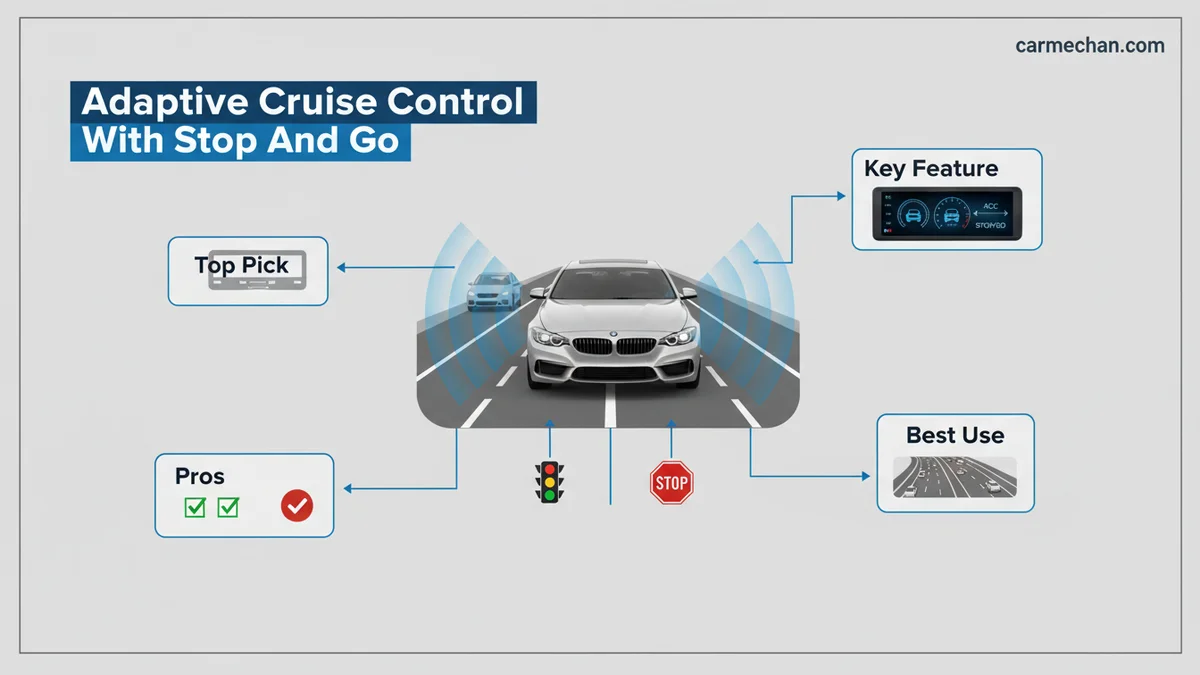
The system relies on a fusion of long-range radar and high-resolution cameras to maintain situational awareness. When you approach a stationary vehicle or traffic comes to a sudden halt, the radar identifies the distance to the target while the cameras confirm the lane position. As the vehicle ahead decelerates, your car modulates the electronic braking system to match that speed, maintaining the preset interval gap you have selected.

- Gradual Deceleration: The system applies smooth, progressive brake pressure to bring you to a full stop without the jerking motion typical of human drivers.
- Stationary Object Logic: Once the vehicle in front is at zero mph, your vehicle locks the brakes to hold the position securely, preventing creeping in traffic jams.
- Dynamic Distance Maintenance: Even at a standstill, the system keeps the radar active to monitor the immediate space, ensuring your vehicle remains stationary if the traffic stays jammed.
Managing the Restart Phase
The transition from a full stop back into movement is where system behaviors vary significantly across 2026 models. Some vehicles require a physical input, while others utilize passive sensors to monitor movement ahead. Once the vehicle in front moves forward, the system detects this change in radar signature. If the stop has been brief, the vehicle may resume speed automatically. If the vehicle has been stationary for several seconds—typically three to five—the system will prompt you to provide a “go” command to ensure you are still paying attention to the road environment.
Step-by-Step Guide to Engaging Stop and Go Systems
Activating the System
Engaging the feature in a 2026 vehicle is straightforward, but the exact sequence determines how the car reacts to the first encounter with traffic. Always ensure your lane-keeping assist is active if you intend to use the system for hands-on, high-stress commuting, as these systems work best in tandem.
- Set your cruise speed: Activate the ACC button and toggle the speed to your desired maximum.
- Select your distance gap: Use the steering wheel controls to choose the distance interval (usually measured in bars or seconds).
- Monitor the dash icons: Ensure the icon changes color, typically from white to green, indicating the system has locked onto a lead vehicle.
Interacting with Traffic Stalls
Once engaged, your primary responsibility shifts to supervising the system’s reaction to stop-and-go conditions. You will notice that the system maintains a specific buffer, often wider than what you might keep in city traffic, to account for safety margins. If traffic remains at a standstill for more than 30 seconds, most 2026 systems will enter a “Standby” or “Timeout” mode. At this stage, the electronic parking brake may engage, or the system will request that you press the resume button or lightly tap the accelerator pedal to indicate you are ready to proceed. By remaining aware of these timeouts, you prevent the vehicle from deactivating unexpectedly in a lane of traffic.
Section 3: Troubleshooting System Timeouts and Restart Requirements
Recommended Best Deal Products


Modern adaptive cruise control (ACC) systems are designed with strict safety protocols regarding stationary traffic. If your vehicle remains at a complete stop for more than three to five seconds, most 2026 models enter a “standby” mode. This prevents unintended acceleration when the vehicle has been stationary for an extended period, such as at a long traffic light.
Handling Extended Standstills
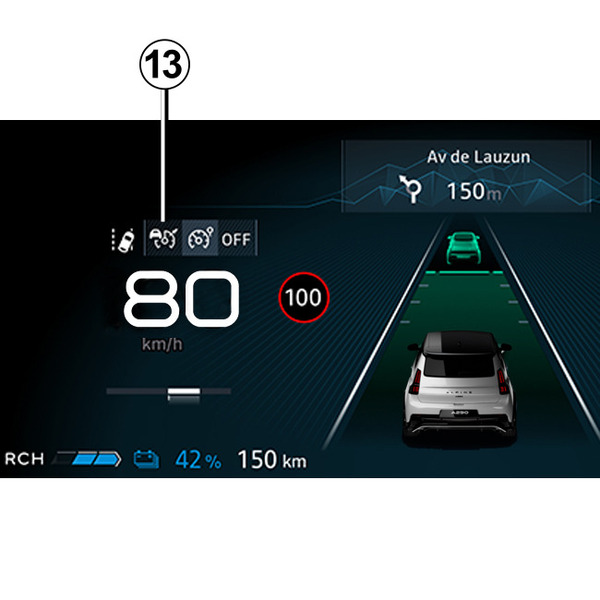
- Monitor the instrument cluster for a “Resume” notification or a flashing set-speed icon.
- Depress the accelerator pedal slightly once traffic begins moving to manually re-engage the system.
- Alternatively, toggle the “Resume” or “RES” button on your steering wheel controls.
- Ensure your eyes remain on the road; the vehicle will not move forward until the driver confirms intent, preventing “phantom” acceleration.
Engineers emphasize that this timeout mechanism is a critical safety barrier. By requiring manual input after a threshold, the system ensures the driver is still attentive. If the radar or camera sensors are obstructed by debris, snow, or mud, the system will trigger a persistent alert and disable itself. Cleaning the forward-facing sensor array is the primary method to restore full operational status.

Audible — Listen Free for 30 Days
One free credit a month and thousands of titles included.
Listen Free for 30 DaysSection 4: Safety Limitations and Managing Edge Cases
While 2026 ACC technology is highly advanced, it is not a fully autonomous driving system. It relies heavily on millimeter-wave radar and high-definition cameras, both of which have specific operating boundaries. Understanding these limits is essential for collision avoidance.
Navigating Challenging Road Conditions
- Sharp Curves: The radar beam may lose track of the vehicle ahead during tight turns or highway off-ramps, potentially leading to a sudden surge in speed.
- Inclement Weather: Heavy rain, dense fog, or blinding snow can degrade sensor accuracy, often causing the system to disengage automatically.
- Stationary Objects: Most ACC systems struggle to detect non-moving obstacles, such as broken-down vehicles or road debris, if the system was not already tracking a moving target.
- Motorcyclists and Pedestrians: Smaller radar cross-sections mean the system may detect these road users later than it would a passenger vehicle.
Experts consistently warn that ACC is a convenience feature, not a safety substitute. According to data from the Insurance Institute for Highway Safety, relying on convenience systems while distracted remains a leading cause of preventable accidents. Always maintain your feet in close proximity to the pedals, prepared to intervene within milliseconds if the system behaves unexpectedly.
What If It Still Doesn’t Work?
Recommended Best Deal Products


If your adaptive cruise control continues to malfunction after performing standard resets and sensor cleaning, a hardware or software issue may exist. Follow these steps before seeking professional diagnostics:
- Check for recent software updates via your vehicle’s over-the-air (OTA) update menu in the infotainment settings.
- Verify that the fuse dedicated to driver-assistance systems has not tripped, as indicated in your 2026 vehicle owner’s manual.
- Inspect the front bumper area for physical damage or alignment issues with the radar sensor housing.
- Consult a certified dealership technician if persistent “System Unavailable” warnings appear.
Professional diagnostics typically involve recalibrating the radar sensors using specialized laser alignment tools. Depending on the manufacturer, costs for recalibration and diagnostic labor in 2026 generally range between $250 and $600. Avoid third-party repair shops that lack authorized manufacturer diagnostic software, as incorrect calibration can lead to erratic braking or acceleration behavior.
Conclusion
Adaptive cruise control with stop and go is a sophisticated tool that demands continuous driver oversight. By understanding the three-to-five-second stationary timeout and recognizing the limitations of radar in complex road geometry, you can safely leverage this technology. According to verified research and expert sources from the National Highway Traffic Safety Administration, driver alertness remains the final, most critical layer of vehicle safety. For your next step, review your vehicle’s specific radar cleaning protocol in your digital owner’s manual to ensure peak performance.
❓ Frequently Asked Questions
What is the mechanical difference between standard ACC and Stop and Go?
Standard ACC disengages when your speed drops below a specific threshold, typically 20-25 mph. Stop and Go incorporates electronic brake pressure management to bring the car to a full zero-mph halt and hold it there until traffic clears.
Why does my car notify me to take control while stopped?
The system issues a timeout warning for safety reasons to ensure the driver has not become distracted. If the system does not receive a steering or pedal input after a set time, it will deactivate to prevent unintended movement.
How does the car detect stationary objects?
The system utilizes long-range radar combined with front-facing cameras to differentiate between moving traffic and stationary objects. It calculates the closing speed to determine if braking is required to reach a controlled stop.
Can I rely on this system in heavy snow?
No, inclement weather can obstruct the front sensors and radar, leading to reduced performance or system alerts. You should always be prepared to take full manual control during poor visibility.
Audible Premium Plus — Annual Membership
12 audiobook credits up front, plus the full Audible catalogue.
See Annual PlansWhat happens if a vehicle cuts in front of me?
The system’s radar detects the new, closer vehicle and automatically adjusts your following distance. It will modulate your brakes to ensure a safe gap is maintained at the speed you set.
Is Stop and Go considered a self-driving feature?
No, it is categorized as Level 1 or 2 driver assistance technology. You are legally and practically responsible for monitoring the road and intervening whenever necessary.