2017 Hyundai Santa Fe TPMS Reset Button Location: Solved
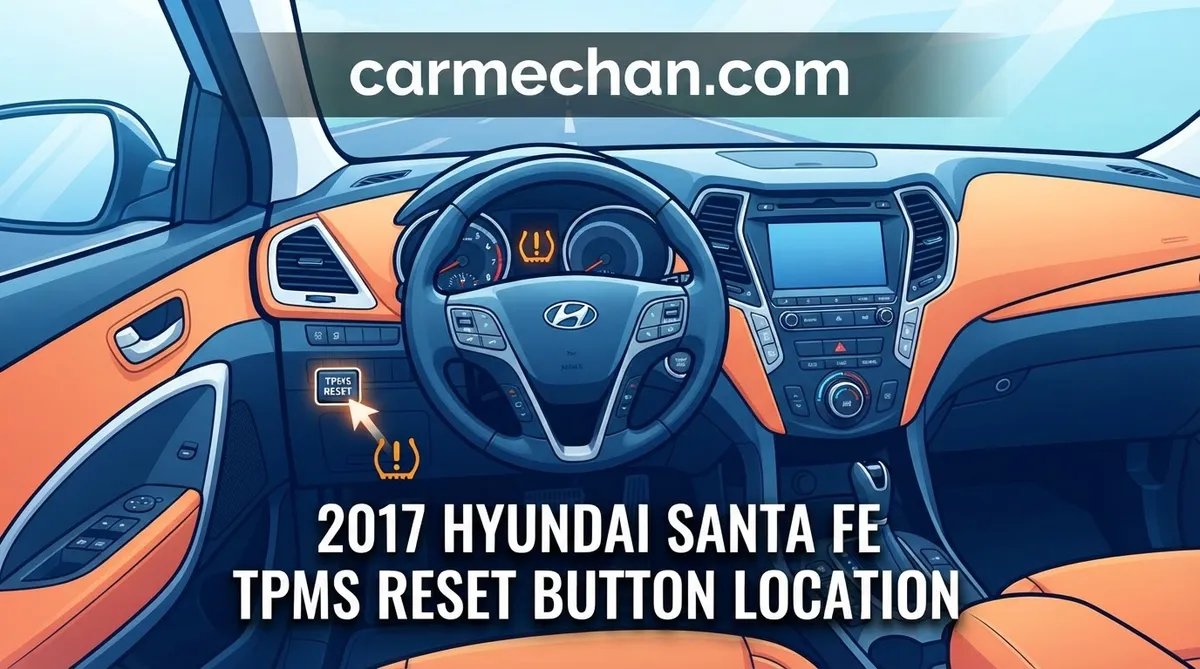
Is your 2017 Hyundai Santa Fe dashboard lit up with a persistent low tire pressure warning, and are you tearing your hair out looking for a reset button that simply isn’t there? Many owners waste hours searching under the steering wheel, inside the glovebox, or behind the center console for a physical Tire Pressure Monitoring System (TPMS) reset button that effectively does not exist on this specific vehicle. In this guide, we will clear up the confusion regarding the 2017 Hyundai Santa Fe TPMS reset button location, explain why your warning light is triggered, and provide the exact steps to clear it correctly and safely.

Demystifying the 2017 Hyundai Santa Fe TPMS Reset Button Location
Recommended Best Deal Products


📤 Share Image

Why You Cannot Find a Physical TPMS Reset Switch
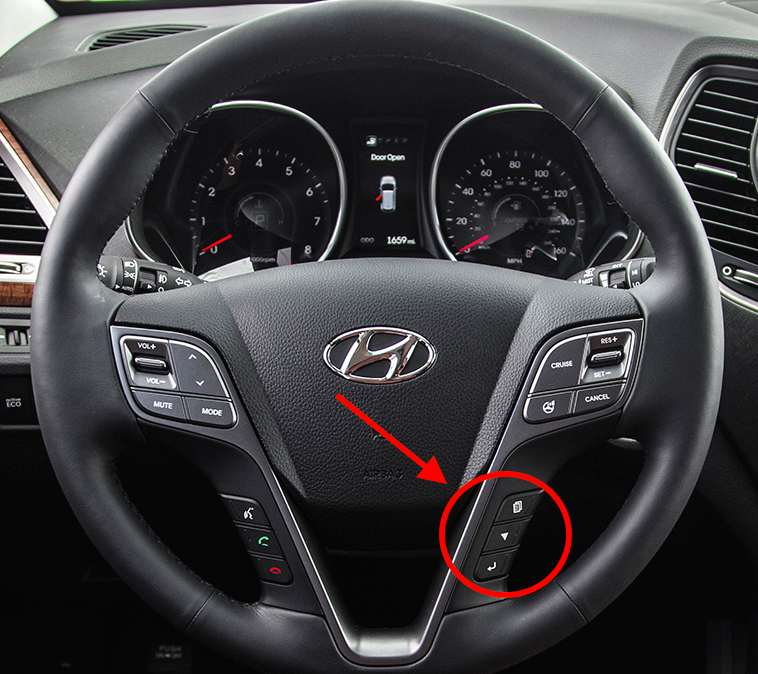
The search for a 2017 Hyundai Santa Fe TPMS reset button location often leads owners to look for features common in older Japanese or European vehicles. In many older automotive platforms, a physical reset button—usually located under the steering column—was required to manually initiate a “handshake” between the sensors and the vehicle’s computer. The 2017 Santa Fe, however, utilizes a more advanced Direct TPMS architecture. This system is designed for user convenience, eliminating the need for manual inputs.
The Truth About the Automatic System Calibration
The 2017 Santa Fe employs a sophisticated TPMS module that continuously polls the four individual sensors located inside your tire valve stems. Because the system is “always on” and “always listening,” there is no requirement for a factory reset or reboot sequence triggered by a switch. When the TPMS module detects pressure within the specified manufacturer range, it automatically updates the instrument cluster status. The system is designed to provide a fresh start by simply correcting the underlying issue rather than forcing the driver to manually acknowledge the correction.
Common Triggers for the TPMS Warning Light
By The Numbers
Temp drop = ~1 PSI loss
Sensor Battery Life
Differentiating Between Low Pressure and System Malfunction
Understanding the difference between a solid and blinking light is critical for any 2017 Santa Fe owner:
- Solid Warning Light: Indicates one or more tires are below the recommended pressure threshold. This is a maintenance issue.
- Blinking Warning Light: Typically flashes for 60 to 90 seconds before turning solid. This indicates a system malfunction, such as a dead TPMS sensor battery, a damaged receiver, or a total loss of signal from one of the wheels.
Temperature Fluctuations and Pressure Thresholds
Tires are highly sensitive to ambient temperature changes. For every 10-degree Fahrenheit drop in outside temperature, your tire pressure typically drops by about 1 PSI. In the winter months, many owners experience “false” alerts—the pressure is not dangerously low, but it has crossed the calibrated trigger threshold of the vehicle’s computer. This is why it is vital to adjust your tire pressure during seasonal shifts rather than searching for a nonexistent reset button.
How to Correctly Initialize Your TPMS
Recommended Best Deal Products


📋
Step-by-Step Guide
Open the driver-side door and locate the tire placard on the door jamb. Do not use the maximum pressure listed on the tire sidewall. Inflate your tires exactly to the manufacturer’s recommended PSI (typically 33-35 PSI for this model).
Use a high-quality tire pressure gauge to ensure all four tires are evenly inflated. Even a slight discrepancy between tires can keep the warning light active.
Drive the vehicle for at least 10–15 minutes at speeds above 20 mph. This provides the TPMS receiver sufficient time to initialize the new sensor data and clear the warning light from your instrument cluster.
Troubleshooting Persistent TPMS Light Issues
Recommended Best Deal Products


Using Diagnostic Tools for Sensor Battery Failure
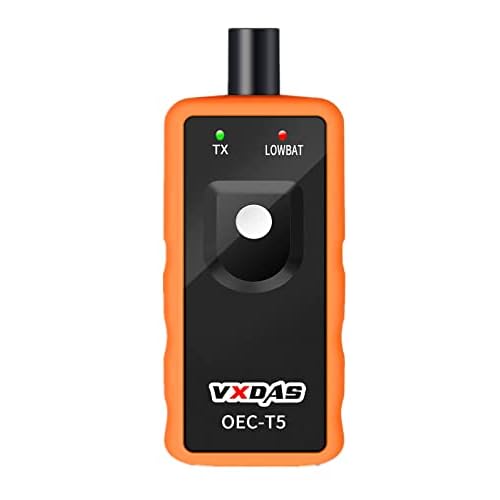
If you have confirmed your tire pressure is correct and the light persists after a drive cycle, you are likely dealing with a hardware failure. Because these sensors are battery-powered, they have a finite lifespan. In a 2017 model, many sensors are approaching the end of their 7-10 year service life. A professional OBD-II diagnostic scanner capable of TPMS programming can identify which specific valve stem sensor is failing to transmit a signal.

Audible — Listen Free for 30 Days
One free credit a month and thousands of titles included.
Listen Free for 30 DaysWhen Professional Dealer Inspection is Necessary
Do not ignore a blinking light by assuming it is just a stubborn pressure warning. If the light blinks, the system has defaulted to a non-functional state. At this point, the most efficient path is to visit a tire shop or local Hyundai dealer. They can quickly restore system functionality by replacing the faulty sensor and performing a final backup verification of the TPMS module. Attempting to force a reset without addressing a dead battery will not provide a default fix; it will only result in continued frustration.
Avoid using store-bought “TPMS reset tools” that claim to force a reset via the OBD-II port unless they are specifically compatible with Hyundai’s 2017 software protocols. Improper tools can interfere with other vehicle electronic modules.
Final Considerations for TPMS Maintenance
In summary, there is no manual reset button for the 2017 Hyundai Santa Fe; the system is fully automated. By ensuring your tire pressures strictly adhere to the manufacturer’s door-jamb placard and allowing the vehicle time to recalibrate during regular driving, you resolve the vast majority of warning light triggers. If you encounter a blinking light, recognize this as a hardware failure rather than a setting that needs adjustment. If your tires are properly inflated and the light remains, take your vehicle to a professional tire service center to check for individual sensor battery depletion. Regular, proactive tire maintenance is the best way to keep your Santa Fe’s safety systems fully operational.
2017 Hyundai Santa Fe Tpms Reset Button Location: Frequently Asked Questions
Where is the TPMS reset button located on a 2017 Santa Fe?
There is no physical TPMS reset button on the 2017 Hyundai Santa Fe. The vehicle is engineered with a self-learning system that automatically detects tire pressure changes. You do not need to press any switches; the system updates itself once it receives valid data from the tire sensors after a short drive.
Why is my TPMS light blinking instead of staying solid?
A solid light usually indicates that one or more tires have low pressure. However, if the TPMS light blinks for about one minute before staying illuminated, this indicates a fault within the system itself. This typically points to a dead sensor battery, a damaged sensor, or a loss of communication between a sensor and the vehicle’s receiver module.
Do I need to visit a dealer to reset the tire pressure light?
You do not need to visit a dealer just to ‘reset’ the light. If the system is functioning correctly, it will reset itself after you correct the tire pressure. However, if the light remains on despite correct pressures, you may need to visit a tire shop or dealer to have them use a scan tool to diagnose which sensor has failed.
How long do I need to drive for the TPMS light to go off?
After inflating your tires to the correct pressure, you typically need to drive the vehicle for 10 to 20 minutes at speeds consistently above 20 mph. This provides the TPMS sensors enough time to establish a stable signal and for the vehicle’s computer to confirm the pressure readings are within the factory-approved range.
Should I follow the tire sidewall PSI or the door placard PSI?
Always follow the PSI listed on the tire placard located on the driver-side B-pillar door jam. The pressure listed on the tire sidewall is the ‘maximum’ safe inflation pressure for that tire, not the pressure recommended by Hyundai for vehicle safety, ride quality, and optimal tire wear.
Audible Premium Plus — Annual Membership
12 audiobook credits up front, plus the full Audible catalogue.
See Annual Plans