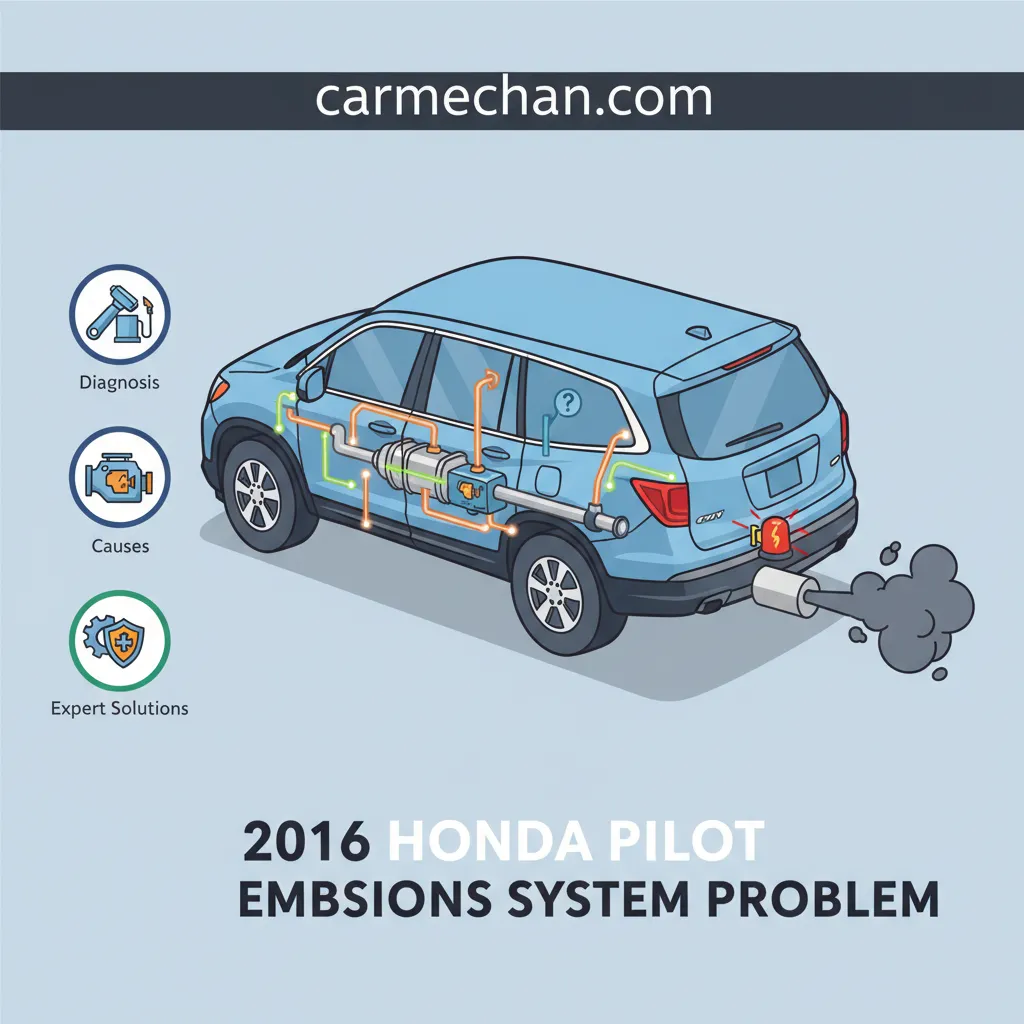
2016 Honda Pilot Emissions System Problem: Diagnosis, Causes, And Expert Solutions
The reliable 2016 Honda Pilot, a favorite among families for its versatility and robust performance, can occasionally present complex challenges, especially when its sophisticated emissions system signals a fault. When the ‘Check Engine’ light illuminates, or performance issues arise, pinpointing the exact emissions system problem in a 2016 Honda Pilot can be daunting due to the intricate network of sensors and components involved. This comprehensive guide will meticulously detail the common symptoms, diagnostic procedures, underlying causes, and expert repair strategies for 2016 Honda Pilot emissions system problems, empowering you with the knowledge to troubleshoot and resolve these issues effectively.
SECTION 1: Understanding the 2016 Honda Pilot’s Emissions Control System Architecture


📤 Share Image
The 2016 Honda Pilot, equipped with the robust J35Y6 V6 engine, incorporates a sophisticated emissions control system designed to meet stringent environmental standards. Specifically, it was engineered to comply with U.S. EPA Tier 2 Bin 5 emission standards, which demand significantly reduced tailpipe emissions. A comprehensive understanding of this architecture is fundamental to accurately diagnose and resolve any issues that may arise.
The Exhaust Gas Recirculation (EGR) System
The EGR system is critical for reducing nitrogen oxide (NOx) emissions, which are harmful pollutants formed at high combustion temperatures. In the 2016 Pilot, the EGR valve precisely meters a small amount of exhaust gas back into the engine’s intake manifold. This inert gas lowers peak combustion temperatures, thereby inhibiting NOx formation. Common failure modes specific to the J35Y6 engine often involve the EGR valve becoming restricted by carbon buildup or experiencing an electrical malfunction, leading to improper gas recirculation and elevated NOx levels.
Evaporative Emission Control (EVAP) System
The EVAP system is designed to prevent fuel vapors from escaping into the atmosphere. This closed system includes several key components: the charcoal canister (which stores fuel vapors), the purge valve (controlling vapor flow to the engine), the vent valve (allowing fresh air into the canister), and the fuel tank pressure sensor (monitoring the system’s integrity). Their collective role is to capture and process fuel vapors, returning them to the engine for combustion instead of releasing them. A scenario detailing EVAP system pressure test methodology involves sealing the system, introducing smoke or nitrogen, and monitoring for pressure drops or visible leaks, indicating a compromised seal or faulty component.
The Catalytic Converter
The catalytic converter is the workhorse of the emissions system, employing a three-way catalyst to convert harmful pollutants—carbon monoxide (CO), nitrogen oxides (NOx), and unburnt hydrocarbons (HC)—into less noxious gases like carbon dioxide (CO2), nitrogen (N2), and water (H2O). Positioned within the exhaust path, it relies on precise exhaust gas temperatures and composition to function effectively. The 2016 Pilot’s J35Y6 engine utilizes a variable cylinder management (VCM) system, which can have specific implications for emissions components like spark plugs and, critically, catalytic converter longevity if misfires occur during cylinder deactivation.
Visually, the exhaust path on the 2016 Pilot features primary catalytic converters immediately downstream of the exhaust manifolds, followed by a secondary converter. Oxygen sensors are strategically placed both before (upstream) and after (downstream) these converters to monitor their efficiency.
Oxygen (O2) and Air-Fuel Ratio (AFR) Sensors
Upstream (pre-catalyst) oxygen (O2) sensors and air-fuel ratio (AFR) sensors are vital for monitoring exhaust gas composition, providing continuous feedback to the Powertrain Control Module (PCM). The PCM uses this data to adjust fuel trims, striving for an optimal air-fuel mixture (stoichiometric ratio) for efficient combustion and catalytic converter operation. Downstream O2 sensors then monitor the exhaust gas after it passes through the catalytic converter to assess its efficiency. For example, if the PCM receives identical high-frequency fluctuating signals from both upstream and downstream O2 sensors, it indicates a failing catalytic converter, as the downstream sensor should show a relatively steady, lower voltage signal, signifying successful pollutant conversion.

SECTION 2: Identifying Common Symptoms of 2016 Honda Pilot Emissions System Malfunctions

Recognizing the early warning signs of an emissions system malfunction in your 2016 Honda Pilot is crucial for timely intervention and preventing more severe, costly damage. These symptoms often manifest clearly, providing specific indicators of underlying issues.
Illumination of the Check Engine Light (CEL)
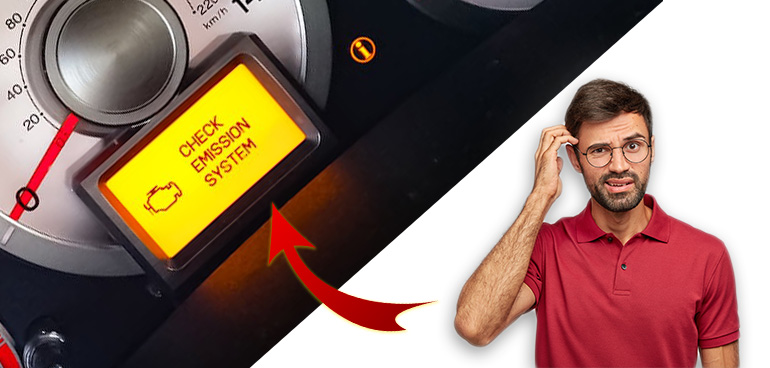
The Check Engine Light (CEL), or Malfunction Indicator Lamp (MIL), is the primary and most common indicator of an emissions system fault. Its illumination signifies that the PCM has detected a parameter outside of its specified operating range. Common Diagnostic Trouble Codes (DTCs) associated with emissions problems in the 2016 Pilot include:
- P0420: Catalyst System Efficiency Below Threshold (Bank 1) – Directly points to a failing catalytic converter.
- P0455: EVAP System Leak Detected – Large Leak – Often related to a loose or faulty fuel cap, cracked hoses, or a faulty purge/vent valve.
- P0171 / P0174: System Too Lean (Bank 1 / Bank 2) – Can be caused by vacuum leaks, a failing MAF sensor, or exhaust leaks, all of which affect the air-fuel mixture and emissions.
- P0401: Exhaust Gas Recirculation Flow Insufficient Detected – Typically indicates a clogged EGR valve or passages.
A scenario where a driver experiences noticeable power loss accompanied by a blinking CEL demands immediate attention, as a blinking light often indicates a severe engine misfire that can cause rapid, irreversible damage to the catalytic converter.
Observable Performance Issues
Emissions system faults can directly impact engine performance. These might include:
- Reduced engine power: Inaccurate O2 sensor readings or a clogged catalytic converter can starve the engine of oxygen or restrict exhaust flow.
- Rough idling: EGR valve malfunctions or vacuum leaks can disrupt the air-fuel mixture at idle.
- Hesitation during acceleration: An engine struggling with incorrect fuel trims or restricted exhaust will feel sluggish.
- Stalling: Severe issues, such as a completely blocked catalytic converter, can prevent the engine from running smoothly or at all.
Changes in Fuel Economy
A noticeable decrease in miles per gallon (MPG) is a common symptom of inefficient combustion, often stemming from emissions system faults. For instance, a failing oxygen sensor providing incorrect data can lead the PCM to command a rich fuel mixture, consuming more fuel than necessary. A failing catalytic converter can reduce fuel efficiency by 10-20%, impacting the average fuel economy for the 2016 Pilot AWD (rated at 22 MPG combined).
Failing Vehicle Emissions Inspections
One of the most direct indicators of an emissions problem is failing a mandatory vehicle emissions inspection. If the vehicle’s exhaust gas composition, specifically NOx, CO, or HC levels, exceeds mandated limits, it unequivocally points to a component failure within the emissions control system. A typical emissions test report failure due to high NOx readings could indicate a malfunctioning EGR system, while high HC and CO often suggest catalytic converter inefficiency or misfires.
Distinctive Odors
Unusual odors are often tell-tale signs:
- A strong smell of raw gasoline frequently indicates an EVAP system leak, such as a cracked hose or, as commonly seen, a loose gas cap, which can easily trigger a P0455 code. Up to 25% of CEL illuminations are related to EVAP system faults, particularly in vehicles over 5 years old.
- A pungent smell resembling sulfur or rotten eggs is a classic sign of an overworked or failing catalytic converter struggling to convert hydrogen sulfide gas.
SECTION 3: Expert Diagnostic Procedures for 2016 Pilot Emissions System Issues
Accurately pinpointing the root cause of emissions system problems in a 2016 Honda Pilot requires a systematic and methodical approach. Relying on guesswork can lead to unnecessary parts replacement and prolonged downtime. Proper OBD-II diagnostics can reduce diagnostic time by up to 50%.
📋
Step-by-Step Diagnostic Guide
Begin by connecting an OBD-II scanner to the vehicle’s diagnostic port. Retrieve any stored Diagnostic Trouble Codes (DTCs) and pay close attention to freeze frame data, which records engine parameters at the exact moment a fault code was set. This provides a snapshot of conditions (e.g., RPM, engine temperature, fuel trims) that can help replicate the fault. Next, monitor live data streams, particularly O2 sensor voltage (for older O2 sensors) or amperage (for newer AFR sensors) and fuel trims (Short Term Fuel Trim – STFT, Long Term Fuel Trim – LTFT). A lean condition, indicated by positive fuel trims (+10% or higher), often points to an unmetered air leak, while negative trims suggest a rich condition.
For P044x or P045x codes, a smoke test on the EVAP system is invaluable. Connect a smoke machine to the EVAP service port (often near the purge valve or canister). Initiate an EVAP system service test via an OBD-II tool to command the purge and vent valves closed, effectively sealing the system. Introduce smoke and visually inspect all vacuum hoses, lines, the charcoal canister, and the gas cap area for escaping smoke, which pinpoints leaks. A simple visual inspection for damaged or disconnected EVAP hoses can sometimes reveal the cause without extensive testing.
Using the OBD-II scanner’s live data function, monitor sensor response times and voltage outputs (for O2 sensors, typically fluctuating between 0.1V and 0.9V rapidly) or amperage (for AFR sensors, showing slight variations around a central value). Compare readings from upstream and downstream sensors. A faulty O2 sensor can decrease fuel efficiency by up to 15% before a CEL illuminates. Slow or flat-lining sensor readings often indicate a failing sensor. For more precise diagnostics, specialized oscilloscopes can be used to measure sensor waveform characteristics.
The average lifespan of a catalytic converter is 100,000-150,000 miles, but it can be shortened by rich fuel mixtures or misfires.
- Back-pressure testing: Insert a pressure gauge into the upstream O2 sensor port. Excessive back pressure (e.g., over 3 psi at 2500 RPM) indicates a blocked converter.
- Infrared thermometer: Measure the temperature of the exhaust pipe just before and just after the catalytic converter. A healthy converter should show a temperature increase of at least 100-200°F (55-110°C) across it, indicating a proper chemical reaction. A minimal temperature differential suggests a “dead” converter.
For a P0401 code, visually inspect the EGR valve and its passages for heavy carbon buildup, which can restrict flow or cause the valve to stick open or closed. Test the valve’s electrical continuity and resistance to specification using a multimeter. Some EGR valves can be commanded open/closed using a bidirectional scan tool, allowing you to observe engine RPM changes (a drop in RPM typically indicates proper EGR flow). A stuck-open EGR valve can cause rough idle and stalling, while a stuck-closed valve leads to higher combustion temperatures and increased NOx emissions.
Always check for Technical Service Bulletins (TSBs) issued by Honda for the 2016 Pilot. Sometimes, seemingly complex emissions issues have known software updates or specific repair procedures that can save significant diagnostic time and effort.
SECTION 4: Common Causes of Emissions System Malfunctions in the 2016 Honda Pilot
Emissions system malfunctions in the 2016 Honda Pilot typically stem from a few key areas, often exacerbated by vehicle age, driving conditions, and maintenance history. Understanding these common causes is essential for effective repair and preventative strategies.
Degradation or Failure of Oxygen and Air-Fuel Ratio Sensors
O2 sensors typically have a service life of 60,000-90,000 miles, though this can vary. These sensors operate in extreme heat and are susceptible to degradation due to age, constant thermal cycling, and contamination. Contaminants such as coolant leaks, engine oil burning, silicone-based sealants, or even certain aftermarket fuel additives can foul the sensor tip, leading to inaccurate exhaust readings. This ultimately results in the PCM receiving incorrect feedback, causing improper fuel mixture adjustments (either too rich or too lean) and triggering CELs, impacting both emissions and fuel economy. An unresolved misfire can also reduce O2 sensor lifespan due to excessive heat and unburnt fuel.
Clogging or Failure of the Catalytic Converter
The catalytic converter is designed for longevity, but its internal ceramic matrix can become clogged or damaged. The primary causes include:
- Sustained rich fuel mixtures: If an engine consistently runs rich (e.g., due to a leaking fuel injector or faulty O2 sensor), excess fuel can enter the converter and overheat it, leading to melting of the catalyst material.
- Engine misfires: Unburnt fuel reaching the hot catalyst during misfires can ignite, creating extreme temperatures that can melt or damage the internal structure. Misfires lasting more than 30 seconds can cause irreversible damage to the catalytic converter. A common scenario is a catalytic converter failure after extended use of an engine with an unresolved misfire.
- Internal physical damage: Impacts to the exhaust system can crack or shatter the ceramic substrate, causing blockages.
- Contaminants: Lead from old fuel (though not an issue for modern vehicles), excessive oil consumption, or antifreeze can coat the catalyst, rendering it ineffective.
Leaks within the EVAP System
EVAP leaks are a frequent cause of CELs, particularly for codes like P0442 (Small Leak) or P0455 (Large Leak). 70% of EVAP system failures are attributed to either the gas cap or the purge/vent valve. Common culprits include:
- A loose, missing, or faulty fuel cap: The simplest and most common cause.
- Cracked vacuum hoses or rubber lines: These degrade over time, especially in hot engine compartments.
- A failing purge valve: Stuck open, it allows unfiltered vapors into the engine; stuck closed, it prevents purging.
- A failing vent valve: Stuck open, it prevents the system from sealing for a leak test; stuck closed, it can cause fueling issues.
- A compromised charcoal canister: Physical damage or saturation can reduce its vapor storage capacity.
Malfunctioning EGR Valve
The EGR valve can fail due to several factors:
- Carbon buildup: Exhaust gases contain particulates that can accumulate on the valve pintle and passages, restricting or completely blocking the flow of exhaust gas. Repeated short trips and stop-and-go driving can exacerbate carbon buildup in the EGR system.
- Electrical failure: The solenoid that controls the EGR valve can fail, preventing it from opening or closing properly.
A stuck-open EGR valve can introduce too much exhaust gas at the wrong time, causing a rough idle or stalling. A stuck-closed valve prevents exhaust gas recirculation, leading to higher combustion temperatures and increased NOx emissions, which can also trigger a CEL.
Issues with the Powertrain Control Module (PCM)
While less common, the PCM itself can be the root cause of emissions system problems. This could involve:
- Software glitches or outdated calibration: Incorrect programming can lead to misinterpretation of sensor inputs or improper management of emissions components.
- Internal component failure: Rare, but internal shorts or component degradation within the PCM can lead to faulty emissions control logic or incorrect CEL triggers.
Never ignore a blinking Check Engine Light. This indicates a severe misfire that is actively damaging your catalytic converter. Continued driving under these conditions can lead to catastrophic and extremely expensive repairs.
SECTION 5: Effective Solutions and Repair Strategies for 2016 Pilot Emissions System Issues
Once the precise cause of an emissions system malfunction has been identified through expert diagnostics, implementing the correct repair strategy is paramount. Effective solutions range from straightforward component replacements to more intricate system overhauls.
Replacing Faulty Oxygen or Air-Fuel Ratio Sensors
When diagnostics confirm a faulty O2 or AFR sensor, replacement is the definitive solution. It is crucial to replace them with OEM-equivalent parts from reputable brands like Denso or NTK, which are often original equipment manufacturers for Honda. These sensors ensure accurate exhaust gas monitoring and restore proper fuel trim adjustments. OEM O2 sensors for the 2016 Pilot typically cost $80-$150 each, excluding labor. Always replace upstream and downstream sensors if they are found to be faulty, and consider replacing them in pairs (e.g., both upstream sensors on a V6) for optimal balance and longevity.
Addressing Catalytic Converter Issues
In cases of severe catalytic converter failure, particularly with persistent P0420 codes, replacement is often required. This is a significant repair, and it’s vital to choose a new, certified catalytic converter that meets EPA and, if applicable, CARB (California Air Resources Board) standards. These are usually more expensive but provide the best performance and longevity.
A new catalytic converter can range from $500 to over $2000, not including labor. It’s essential to differentiate between:
- Direct-fit converters: Designed to bolt directly into the existing exhaust system, matching OEM specifications. These are generally preferred for ease of installation and guaranteed fit.
- Universal converters: Require cutting and welding into the exhaust pipe. While potentially less expensive initially, they may not offer the same performance or fitment precision and necessitate specialized installation.
Crucially, if the catalytic converter failed due to an underlying cause like consistent misfires or an excessively rich fuel mixture, that primary issue must be resolved first. Failing to do so will quickly damage the new converter.
Repairing EVAP System Leaks
Repairing EVAP system leaks can vary in complexity. Simple fixes include:
- Tightening or replacing the gas cap: Often the easiest workaround and first step to debug a P0455.
- Replacing cracked vacuum lines or hoses: Visually inspect and replace any hardened or brittle lines identified during a smoke test.
- Replacing a faulty purge valve or vent valve: These components, if found to be sticking or electrically open/closed, will require replacement. An EVAP purge valve replacement is often a 1-hour job, costing $150-$300 total including parts and labor.
Post-repair, it is essential to perform another smoke test to confirm the seal integrity of the entire system and ensure the solution is complete.
Cleaning or Replacing the EGR Valve
For a malfunctioning EGR valve, the approach depends on the severity of the issue:
- Cleaning: If carbon buildup is the primary cause, the EGR valve and its passages can often be cleaned using specialized solvents and brushes. This can effectively resolve the issue and restore proper flow.
- Replacement: If the valve is severely clogged, physically damaged, or has an electrical failure in its solenoid, replacement is necessary. This is often a relatively straightforward mechanical repair for a seasoned technician.
PCM Re-flashing or Replacement
In rare instances where the PCM is confirmed as the root cause of emissions problems (after ruling out all other components), a software update (re-flash) or, in extreme cases, a complete replacement and programming may be necessary. A re-flash involves updating the PCM’s firmware to the latest calibration from Honda, which can correct emissions control logic or address known software glitches. This usually requires specialized diagnostic tools available at dealerships or advanced independent shops. PCM replacement is a last resort and typically the most expensive repair option.
After any repair involving an emissions component, always clear the Diagnostic Trouble Codes (DTCs) from the PCM. Then, perform a drive cycle (following manufacturer-specific guidelines) to allow the vehicle’s monitors to run and set themselves to “Ready” status. This confirms the repair has been successful and prevents immediate re-illumination of the CEL.
SECTION 6: Preventative Maintenance and Long-Term Care for Your 2016 Honda Pilot Emissions System
Proactive maintenance is the most effective strategy to prolong the life of your 2016 Honda Pilot’s emissions system and prevent costly future problems. By adhering to best practices, you can significantly reduce the likelihood of malfunctions and ensure long-term compliance.
Adhering to Regular Engine Maintenance Schedules
The health of your engine directly impacts the emissions system. Regular maintenance can extend the life of emissions components by 20-30%. Critical tasks include:
- Timely oil changes: Use Honda-approved oil types and viscosity (e.g., 0W-20 synthetic blend) as specified in your owner’s manual. Clean oil reduces engine wear and prevents contaminants from fouling O2 sensors and catalytic converters.
- Spark plug replacement: Worn spark plugs lead to misfires, which, as previously discussed, can cause rapid and irreversible damage to catalytic converters. Replace them according to Honda’s recommended intervals.
- Air filter inspection and replacement: A clean air filter ensures proper air-fuel mixture, improving combustion efficiency. A clean air filter can improve fuel efficiency by up to 10%.
- Fuel injector cleaning: Periodically cleaning fuel injectors prevents them from becoming clogged, ensuring proper fuel atomization and preventing rich running conditions.
Using High-Quality Fuel and Fuel System Cleaners
The quality of fuel significantly impacts sensor longevity and overall engine health. Always use the octane level recommended by Honda. Periodic use of EPA-approved fuel system cleaners (which often contain PEA – polyether amine) can help prevent carbon buildup on intake valves, fuel injectors, and combustion chambers, thereby ensuring cleaner combustion and reducing stress on the catalytic converter and O2 sensors.
Avoiding Repeated Short Trips
For optimal operation, the catalytic converter needs to reach and maintain its optimal operating temperature (typically 800-1500°F). Repeated short trips, especially in cold weather, prevent the catalyst from reaching this temperature, hindering its efficiency and allowing deposits to accumulate. Explaining how cold starts and short drives hinder catalyst warm-up, extended highway driving helps the catalytic converter “cook off” accumulated deposits and perform at its peak, prolonging its lifespan.
Monitoring Tire Pressure and Driving Habits
While seemingly indirect, maintaining correct tire pressure and adopting smooth driving habits (avoiding aggressive acceleration and braking) reduces engine load and improves fuel consumption. This, in turn, lessens the strain on the emissions system components and contributes to their longevity. Higher fuel efficiency generally translates to less exhaust pollution.
Promptly Addressing Any Check Engine Light Illumination
Perhaps the most critical preventative measure is the prompt diagnosis and repair of any illuminated Check Engine Light. Even if no immediate performance issues are noticeable, ignoring the CEL can lead to cascading failures within the emissions system. For example, a minor EVAP leak, if ignored, could lead to prolonged running rich, which in turn could damage an expensive catalytic converter. The average cost of routine maintenance for a Honda Pilot is $400-$600 annually, a small investment compared to the potential cost of major emissions component replacements.
Extended Component Life
Regular maintenance significantly increases the operational lifespan of expensive emissions components like catalytic converters and O2 sensors.
Optimal Fuel Efficiency
A well-maintained emissions system contributes to the engine running efficiently, ensuring your Pilot achieves its best possible fuel economy.
Guaranteed Emissions Compliance
Consistent preventative care helps ensure your vehicle passes mandatory emissions tests, avoiding legal issues and re-inspection hassles.
By understanding the intricate workings of your 2016 Honda Pilot’s emissions system and committing to diligent preventative maintenance, you can significantly reduce the likelihood of encountering problems and ensure your vehicle remains reliable, efficient, and environmentally compliant for years to come.
The 2016 Honda Pilot’s emissions system is complex, relying on components like EGR, EVAP, catalytic converters, and O2 sensors to meet environmental standards. Prompt diagnosis using OBD-II tools and understanding specific DTCs is crucial for effectively troubleshooting symptoms like CEL illumination, reduced performance, or failed emissions tests. Addressing root causes, from sensor failures and EVAP leaks to catalytic converter degradation, with appropriate repairs and consistent preventative maintenance, ensures long-term system integrity and compliance. For optimal performance and environmental compliance, address any emissions system warnings in your 2016 Honda Pilot promptly. Consult a certified technician for accurate diagnosis and repair, or utilize this guide to inform your maintenance and resolution efforts.
Frequently Asked Questions
Why is my 2016 Honda Pilot’s Check Engine Light on for an emissions problem?
The Check Engine Light (CEL) illuminates when the Powertrain Control Module (PCM) detects an irregularity within the emissions system. Common triggers include faulty oxygen sensors, evaporative emission (EVAP) system leaks (like a loose gas cap), a malfunctioning catalytic converter, or issues with the Exhaust Gas Recirculation (EGR) valve. An OBD-II scan is essential to retrieve the specific Diagnostic Trouble Code (DTC) that indicates the precise system fault.
What are common P0420 or P0430 codes in a 2016 Honda Pilot?
P0420 and P0430 indicate ‘Catalyst System Efficiency Below Threshold’ for Bank 1 and Bank 2, respectively. In a 2016 Honda Pilot, this commonly suggests a failing catalytic converter, where the catalyst material is no longer effectively converting exhaust pollutants. However, it can also be triggered by upstream or downstream oxygen sensor malfunctions that falsely report low efficiency. Proper diagnosis involves checking sensor readings and catalytic converter temperature differentials.
Can a faulty gas cap cause emissions problems in my 2016 Pilot?
Yes, a faulty or loose gas cap is a very common cause of emissions system problems, specifically triggering EVAP system leak codes like P0440, P0442, or P0455. The gas cap is a critical component of the sealed EVAP system, which prevents fuel vapors from escaping. If it doesn’t seal properly, the system detects a leak, illuminating the Check Engine Light and indicating an emissions non-compliance issue.
How can I troubleshoot an EVAP system leak in my 2016 Honda Pilot?
Troubleshooting an EVAP leak in your 2016 Pilot typically involves a multi-step process. Start by ensuring the gas cap is tightly sealed. If the CEL persists, inspect all visible vacuum hoses and lines for cracks or disconnections. A professional diagnostic often employs a smoke test, injecting non-toxic smoke into the EVAP system to visually identify the exact location of any leaks, from lines to the purge or vent valve.
What is the typical lifespan of a catalytic converter in a 2016 Honda Pilot?
The catalytic converter in a 2016 Honda Pilot is generally designed to last the life of the vehicle, often exceeding 100,000 to 150,000 miles. However, its lifespan can be significantly shortened by engine issues that send unburnt fuel or excessive oil into the exhaust, such as consistent misfires, rich fuel mixtures, or excessive oil consumption. Physical damage from impacts can also compromise its internal structure and efficiency.