Best Years For Honda Pilot: Ranked For Optimal Reliability And Value
Last Updated on January 26, 2026 by Ryan
Navigating the pre-owned SUV market for a reliable family vehicle can be a complex endeavor, especially when considering a popular model like the Honda Pilot. With multiple generations and numerous model years, potential buyers often face uncertainty regarding which specific years offer the best combination of reliability, value, and essential features without inheriting common problems. This authoritative guide meticulously ranks and curates the best years for the Honda Pilot, leveraging industry data and expert insights to provide must-know information, ensuring you make an informed decision for your next vehicle purchase.

Prime for Young Adults — 6 Months Free
Students and 18–24s get six months of Prime free, then half price.
Start 6 Months FreeUnderstanding Honda Pilot Generations: Key Updates and Performance Shifts
Recommended Best Deal Products


To truly discern the best years for the Honda Pilot, it is essential to first understand the generational shifts that have shaped this popular mid-size SUV. Each iteration brought significant changes in design, powertrain, features, and overall vehicle characteristics, directly influencing their long-term reliability and value proposition.

📤 Share Image
- First Generation (2003-2008): The Utilitarian Pioneer
Launched in 2003, the original Honda Pilot was designed with a clear utilitarian focus, blending SUV ruggedness with Honda’s renowned reliability. It featured a robust 3.5-liter VTEC V6 engine, initially producing 240 horsepower. This generation was characterized by its boxy, functional design and offered an optional Variable Torque Management 4-wheel drive (VTM-4) system, providing confident traction. Its design reflected a segment less concerned with sleek aesthetics and more about practical capability for families.
- Second Generation (2009-2015): The Truck-Like Evolution
The second generation, introduced in 2009, maintained a distinctly truck-like and squared-off aesthetic, diverging from the emerging trend towards more car-like crossovers. It continued with an updated J35 V6 engine, seeing a slight power increase to 250 horsepower. Key refinements focused on enhancing interior space, improving ride comfort, and bolstering its family-hauling credentials. This generation proved highly successful due to its blend of practicality, size, and Honda’s trusted engineering.
- Third Generation (2016-2022): The Modern Crossover Transformation
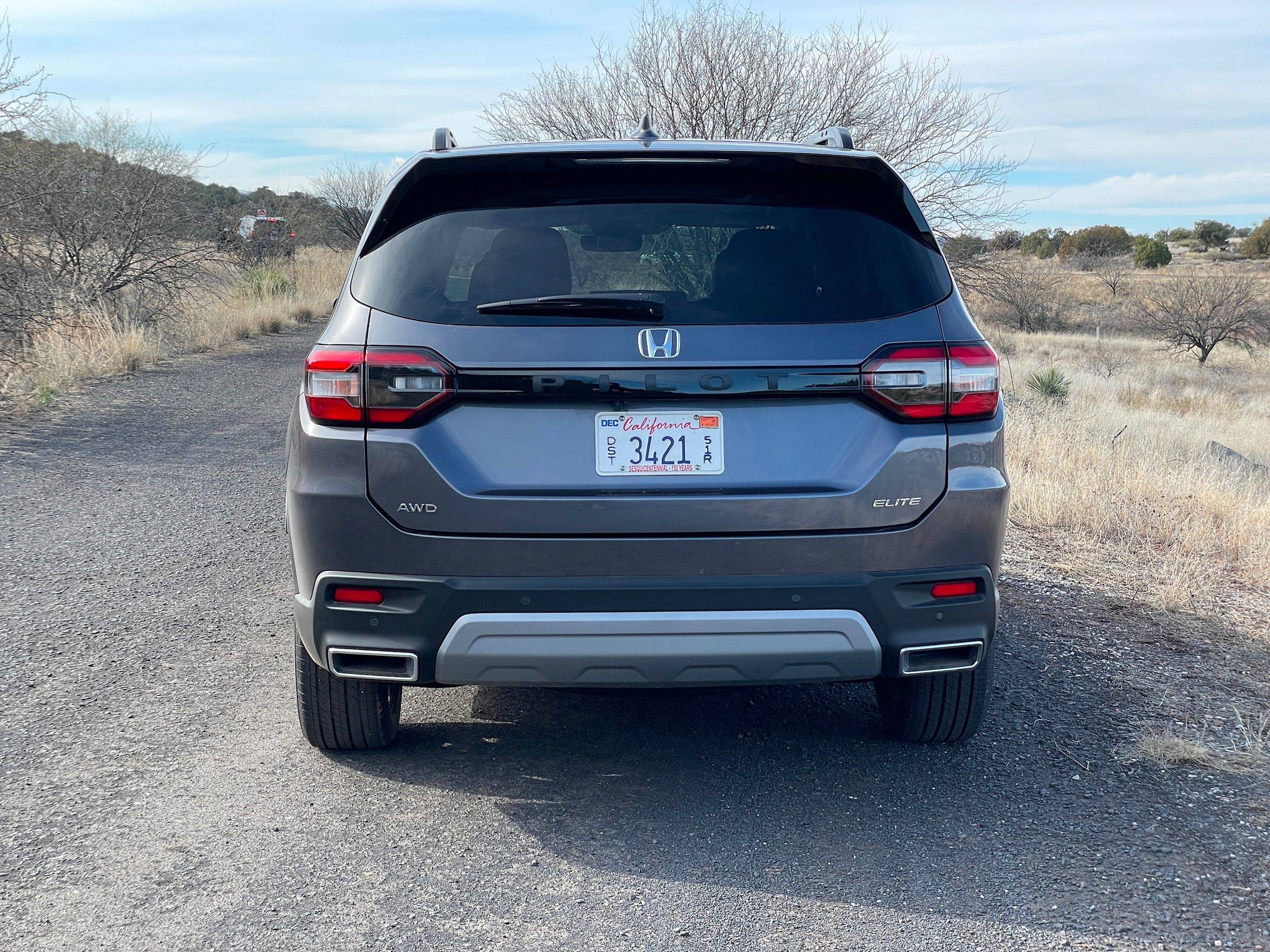
The 2016 redesign marked a significant departure, transforming the Pilot into a much sleeker, more car-like crossover. This generation featured a new 3.5-liter V6 engine, now producing 280 horsepower, paired with either a 6-speed or a new ZF 9-speed automatic transmission. This shift reflected changing market preferences for refined aesthetics and driving dynamics. Crucially, it introduced advanced safety technologies like the Honda Sensing suite, elevating the Pilot’s competitive standing in the segment.
- Fourth Generation (2023-Present): A Return to Ruggedness
The most recent iteration, launched in 2023, signifies a partial return to a more rugged and adventurous design ethos. While packed with updated technology and a refined powertrain, its relative recency limits the availability of comprehensive long-term reliability data. Therefore, while promising, it’s not yet included in our curated list of proven performers.
This overview provides the foundational context for understanding the distinct characteristics that define each collection of Pilot models and informs our subsequent ranked recommendations.
Top-Ranked Honda Pilot Years for Powertrain Reliability and Longevity
When evaluating a used vehicle, powertrain reliability—specifically the engine and transmission—is paramount for long-term ownership satisfaction and managing repair costs. The Honda Pilot has a generally strong reputation in this regard, but certain model years stand out as truly top-ranked for mechanical integrity.
From a mechanical standpoint, the second-generation models (2009-2015), particularly the later years from 2012 to 2015, are often considered a “sweet spot” for powertrain durability. These years are widely regarded for their robust J35A V6 engine, a powerplant with a proven track record for longevity when properly maintained. Paired with a highly durable and well-understood 5-speed automatic transmission, this combination minimizes common mechanical vulnerabilities.
- Models like the 2014 and 2015 Honda Pilot consistently appear on lists by consumer advocacy groups (e.g., Consumer Reports) as among the most reliable SUVs of their era.
- J.D. Power often assigned ‘Great’ or ‘Above Average’ reliability scores to the 2012-2015 Pilot, reflecting strong owner satisfaction with its mechanical performance.
- Anecdotal and real-world accounts frequently highlight second-generation Pilots exceeding 200,000 miles on their original powertrains with routine maintenance, underscoring their enduring build quality.
The first-generation Pilots, especially the 2005-2008 models, also demonstrated strong foundational mechanics, with their V6 engines offering resilience, albeit with older technology and less refined fuel economy. Their VTM-4 AWD system was generally effective and robust for the period.
In contrast, the introduction of the ZF 9-speed automatic transmission in early third-generation models (specifically 2016-2018) introduced a degree of uncertainty. While aimed at improving fuel efficiency and performance, these units were subject to initial reports of software glitches, harsh shifts, and occasional mechanical concerns. Honda subsequently issued software updates and made internal revisions to improve performance and reliability. Therefore, for buyers considering a third-generation Pilot, we generally recommend prioritizing 2019 and later models, where these issues were largely resolved or significantly mitigated. Alternatively, seeking out a 2016-2018 model equipped with the more conventional and generally trouble-free 6-speed automatic transmission (available on lower trims) can be a safer bet.
✅ Pros (2012-2015 Powertrain)
- Bulletproof J35A V6: Widely celebrated for extreme longevity.
- Durable 5-Speed Auto: Simple, proven, and robust transmission.
- Lower Maintenance Complexity: Fewer advanced components mean simpler, often cheaper repairs.
- Predictable Performance: Reliable shifting and power delivery.
❌ Cons (Early 3rd Gen 9-Speed Powertrain)
- ZF 9-Speed Transmission Issues: Initial software glitches, harsh shifts, potential mechanical failures.
- Higher Repair Costs: Advanced transmission can be more complex and expensive to service.
- Less Refined Early Performance: Early models sometimes exhibited inconsistent shifting behavior.
- Owner Uncertainty: Early adopters faced potential frustration with initial reliability.
Regardless of the model year, the importance of a comprehensive service history cannot be overstated. Regular maintenance is the single most critical factor in ensuring powertrain health and longevity for any used Honda Pilot.

Audible — Listen Free for 30 Days
One free credit a month and thousands of titles included.
Listen Free for 30 Days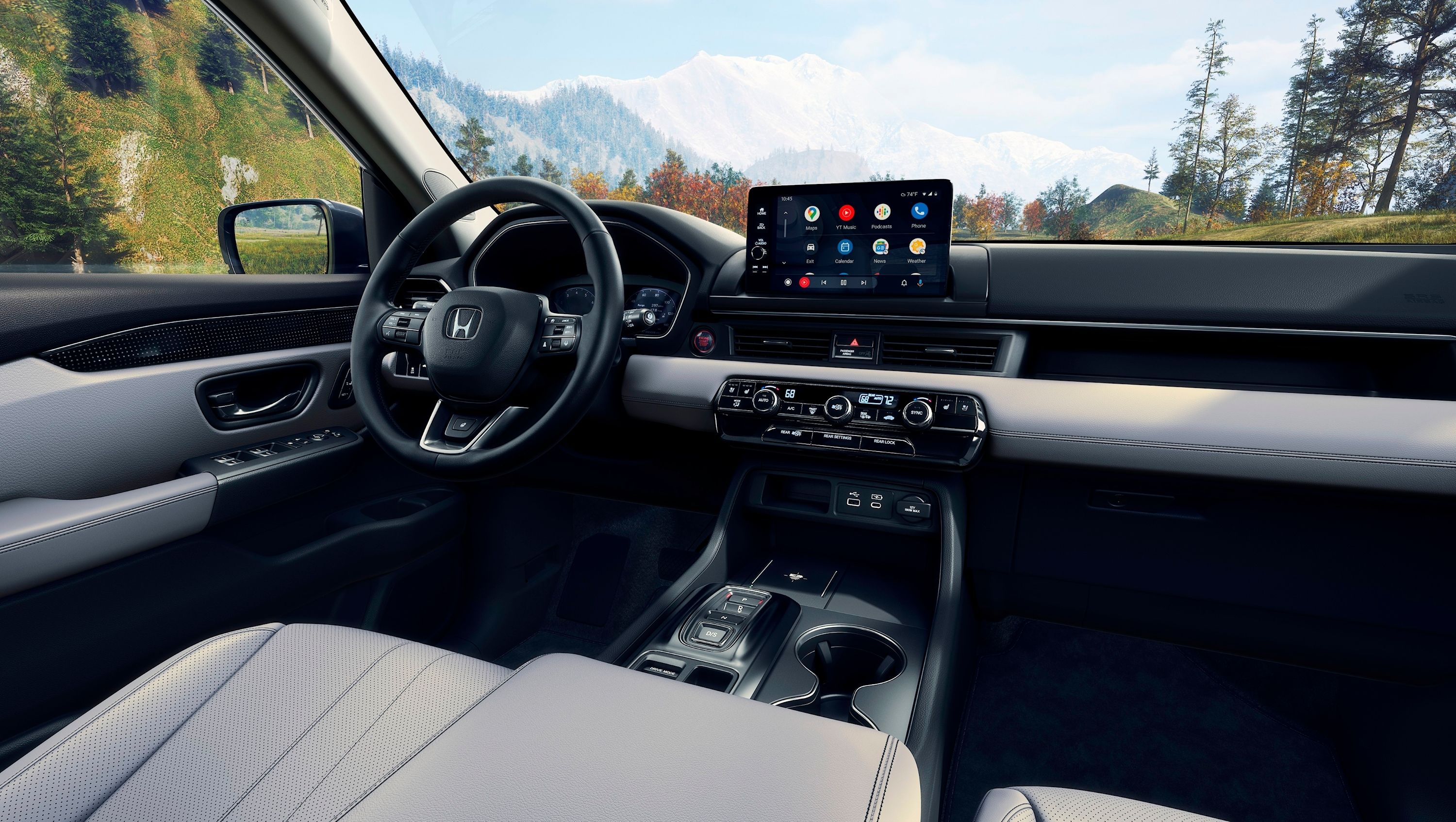
Essential Years for Advanced Safety Features and Technology Integration
Recommended Best Deal Products


For many discerning buyers today, modern safety technologies and up-to-date infotainment systems are essential considerations. The Honda Pilot has progressively integrated these features, with specific model years marking significant leaps in this domain.
The year 2016 stands as the pivotal turning point for advanced safety. With the launch of the third generation, Honda introduced the Honda Sensing suite of safety features, initially available on higher trim levels (EX-L with Navi/RES, Touring, Elite). This comprehensive package included critical driver-assist technologies such as:
- Collision Mitigation Braking System (CMBS): Automatically applies brakes to help avoid or reduce the severity of a collision.
- Road Departure Mitigation (RDM): Helps the driver stay on the road by providing steering assist and braking.
- Adaptive Cruise Control (ACC): Maintains a set following distance behind a detected vehicle.
- Lane Keeping Assist System (LKAS): Helps keep the vehicle centered in a detected lane.
For example, a 2016 Pilot Touring model would include features like adaptive cruise control and lane keeping assist, capabilities that were largely absent in prior generations.
Honda Sensing Suite
Comprehensive safety technologies, including automatic emergency braking and lane assist, significantly enhance driver and passenger protection.
Smartphone Integration
Seamless access to Apple CarPlay and Android Auto for navigation, music, and communication through the vehicle’s display.
Refined Infotainment
Improved user interfaces, larger screens, and additional connectivity options for an enhanced in-car experience.
The 2019 model year proved even more significant for technology integration. For this year, Honda Sensing became standard across all trim levels, meaning even a base 2019 Pilot LX offered advanced safety features that were premium options just a few years prior. Concurrently, the 2019 refresh brought an updated infotainment system, crucially including Apple CarPlay and Android Auto integration, which became a must-have for modern drivers. This marked a significant transition from more basic systems towards fully integrated smartphone functionality.
Later third-generation models, from 2020 to 2022, continued to refine these offerings. They often included further improvements to the infotainment interface, additional USB charging ports, and optional features such as the CabinTalk in-car PA system (allowing the driver to communicate with rear passengers via the vehicle’s speakers) and larger, more sophisticated rear entertainment screens. These years represent the peak of modern technology within the third generation.
Comparing this to the first and second generations, the technological leap is stark. Early Pilots featured standard CD players, rudimentary button-heavy navigation systems (if at all), and basic Bluetooth connectivity in later models. The transition from physical buttons to a more touchscreen-centric, smartphone-integrated control scheme in the third generation fundamentally changed the user experience. The IIHS ‘Top Safety Pick+’ designations for various 3rd gen Pilot years (e.g., 2016+ with specific headlights) and consistent NHTSA 5-star overall safety ratings across generations underscore Honda’s commitment to safety, significantly enhanced by the Honda Sensing suite.
Audible Premium Plus — Annual Membership
12 audiobook credits up front, plus the full Audible catalogue.
See Annual PlansValue Proposition: Honda Pilot Years Offering the Best Return on Investment
Identifying the Honda Pilot years that deliver the best return on investment requires a nuanced understanding of initial purchase cost, depreciation, feature set, and anticipated running costs. The goal is to maximize long-term value, making your used vehicle purchase a smart financial decision.
Honda Pilots are known for their strong resale value, holding depreciation better than many competitors. However, the ‘sweet spot’ for buying used typically falls into the 5-7 year old range. By this point, the initial significant depreciation has occurred (e.g., roughly 38% after 3 years and 50% after 5 years, per industry data from sources like KBB and Edmunds), yet the mechanical integrity remains high, assuming diligent maintenance.
Based on this depreciation curve and combining it with reliability and feature considerations, we recommend specific years for optimal value:
- Second Generation (2012-2015): These years offer an exceptional balance of proven reliability, spaciousness, and practicality at attractive price points. They represent robust, no-nonsense transportation.
- Early to Mid-Third Generation (2017-2018): For buyers desiring more modern features (like available Honda Sensing) but seeking a more favorable price than newer models, these years can be a compelling option. However, as noted previously, scrutinize service records for transmission attention. If a 6-speed equipped model from this era is found, it generally poses less transmission risk and thus better value.
Total cost of ownership (TCO) is another critical factor. This encompasses not only the purchase price but also average maintenance costs, insurance, and fuel efficiency. Maintenance costs for Honda Pilots are generally reasonable due to widely available parts and a robust dealer/independent mechanic network. However, fuel efficiency varies:
- Second-generation models typically achieve around 18 MPG city / 25 MPG highway (FWD).
- Third-generation models, particularly with the 9-speed transmission, showed improved figures, often around 20 MPG city / 27 MPG highway (FWD), due to powertrain enhancements and aerodynamic improvements.
A practical strategy is to consider a slightly older, well-maintained higher trim level over a newer, base model. For instance, a 2015 Pilot EX-L with leather, sunroof, and navigation might be comparably priced to a 2019 Pilot LX (base model) but offer a significantly richer feature set, provided its mechanical condition is solid. Similarly, a 2017 Pilot Touring with 70,000 miles could provide more ‘bang for your buck’ in terms of space, features, and overall capability than a brand new compact SUV at a similar price point, representing a compelling value proposition.
By The Numbers
Average Depreciation (3 Years)
Average Depreciation (5 Years)
Peak Reliability Years
Modern Tech & Safety Years
Curated List: Must-Know Honda Pilot Years to Prioritize (and Exercise Caution With)
Recommended Best Deal Products


Drawing upon decades of industry experience and countless observations, this curated list provides a definitive guide to the Honda Pilot model years you should prioritize, alongside those where a more cautious approach is warranted. This is the must-know selection for any potential buyer.
- Prioritize the 2014-2015 Models: The Reliability Apex
These years represent the pinnacle of the second generation. They feature the battle-tested 3.5-liter V6 engine and the exceptionally durable 5-speed automatic transmission. This combination is often described by mechanics as “bulletproof” for its proven longevity and minimal common issues. These models offer a robust foundation, generous space, and a good balance of features without the added complexity that can sometimes accompany newer technology. They deliver excellent value and peace of mind.
- Consider the 2019-2022 Models: For Modern Safety and Tech
If your budget allows for a slightly newer vehicle and modern safety and technology are high on your list, this collection of third-generation Pilots is highly recommended. By 2019, Honda Sensing became standard across all trims, and the infotainment system received a crucial update to include Apple CarPlay and Android Auto. Furthermore, the initial issues with the ZF 9-speed automatic transmission were largely addressed through software updates and mechanical refinements, leading to a much more refined and reliable driving experience. The difference in user experience between a pre-update 2016 Pilot’s infotainment and a 2019 model is substantial, favoring the latter for seamless connectivity.
- Evaluate 2005-2008 Models: The Budget-Friendly Workhorse
For buyers on a tighter budget who need a robust, spacious, and mechanically straightforward SUV, these later first-generation Pilots are a solid option. While they lack modern amenities and advanced safety features, their core mechanics are strong. They offer a no-frills, reliable transportation solution, embodying the Honda reputation for dependability in an older package.
Buyers considering a 2016-2018 Honda Pilot, particularly those equipped with the ZF 9-speed automatic transmission, must proceed with extreme diligence. These model years were known for initial reliability concerns related to the transmission, including software issues and occasional mechanical failures. While many units have been updated or performed without incident, a comprehensive pre-purchase inspection (PPI) by a trusted mechanic and a thorough review of all service records are absolutely critical. Look for evidence of transmission fluid changes, software updates, or any transmission-related repairs. If a 6-speed equipped model from this era is found, it generally poses less risk from a transmission perspective.
📋
Making Your Honda Pilot Purchase: A Step-by-Step Guide
Determine if reliability and budget (2014-2015, 2005-2008) or modern safety/tech (2019-2022) are most important for your needs. This initial filter will significantly narrow your search.
Always request complete maintenance records. Check for any outstanding recalls specific to the model year you’re considering, especially for 2016-2018 models.
This is non-negotiable. A trusted, independent mechanic should perform a thorough inspection, particularly focusing on the powertrain, suspension, and any advanced electronics.
Drive the vehicle in various conditions (city, highway, hills) to assess engine performance, transmission shifting, braking, and overall comfort. Pay close attention to any unusual noises or vibrations.
Always remember the adage: “Buy the best example you can find, not just the newest.” A meticulously maintained 2014 Pilot will almost invariably outperform a neglected 2017 model in terms of long-term reliability and satisfaction. Condition, driven mileage, and service history often outweigh a mere numerical year difference.
In conclusion, the Honda Pilot remains a perennial popular choice for families needing a reliable, spacious, and versatile SUV. Our ranked recommendations highlight distinct advantages across different generations.
- The 2014-2015 Honda Pilot models represent a pinnacle of reliability and value from the second generation, offering a tried-and-true powertrain.
- For advanced safety and modern tech, 2019-2022 models from the third generation are highly recommended, featuring standard Honda Sensing and improved infotainment.
- Early third-generation models (2016-2018) require careful scrutiny, particularly regarding their 9-speed automatic transmissions, making a thorough inspection essential.
Before finalizing your purchase, conduct a thorough pre-purchase inspection by a certified mechanic, review comprehensive service records, and take an extended test drive to ensure the chosen Honda Pilot year aligns perfectly with your expectations and needs. Your diligent research, informed by this expert guide, will lead you to the ideal Honda Pilot for years of reliable service.
Frequently Asked Questions
What is the most reliable Honda Pilot year?
Based on widespread owner satisfaction and expert reviews, the 2014 and 2015 Honda Pilot models are consistently ranked as the most reliable. These second-generation vehicles feature a durable J35A V6 engine and a robust 5-speed automatic transmission, known for their longevity and fewer reported issues compared to some other model years. They offer a strong balance of proven engineering and practical features.
Are older Honda Pilots good used cars?
Yes, many older Honda Pilot models, particularly those from the late first generation (2005-2008) and the entire second generation (2009-2015), are considered excellent used cars. They offer substantial interior space, comfortable rides, and reputable Honda reliability at an attractive price point. Key is finding a unit with a well-documented maintenance history and passing a pre-purchase inspection.
Which Pilot years have the most common transmission problems?
The early years of the third-generation Honda Pilot, specifically 2016 to 2018 models equipped with the ZF 9-speed automatic transmission, have had the most reported issues. Owners sometimes cited rough shifting, hesitation, or premature failure. While many units performed adequately, later model years saw software updates and potential mechanical refinements that improved overall reliability for this transmission.
When did Honda Sensing become standard on the Pilot?
Honda Sensing, the suite of advanced driver-assist and safety technologies, became standard across all trim levels of the Honda Pilot starting with the 2019 model year. Prior to this, from its introduction in 2016, Honda Sensing was typically available only on higher trim levels (e.g., Touring, Elite) of the third-generation Pilot lineup.
What is the average lifespan of a Honda Pilot?
A well-maintained Honda Pilot can typically last between 200,000 to 250,000 miles, with many owners reporting mileage well beyond that. Factors like consistent oil changes, timely transmission fluid services, and addressing minor issues promptly significantly contribute to its longevity. Pilots are known for their strong engines and durable chassis when properly cared for.