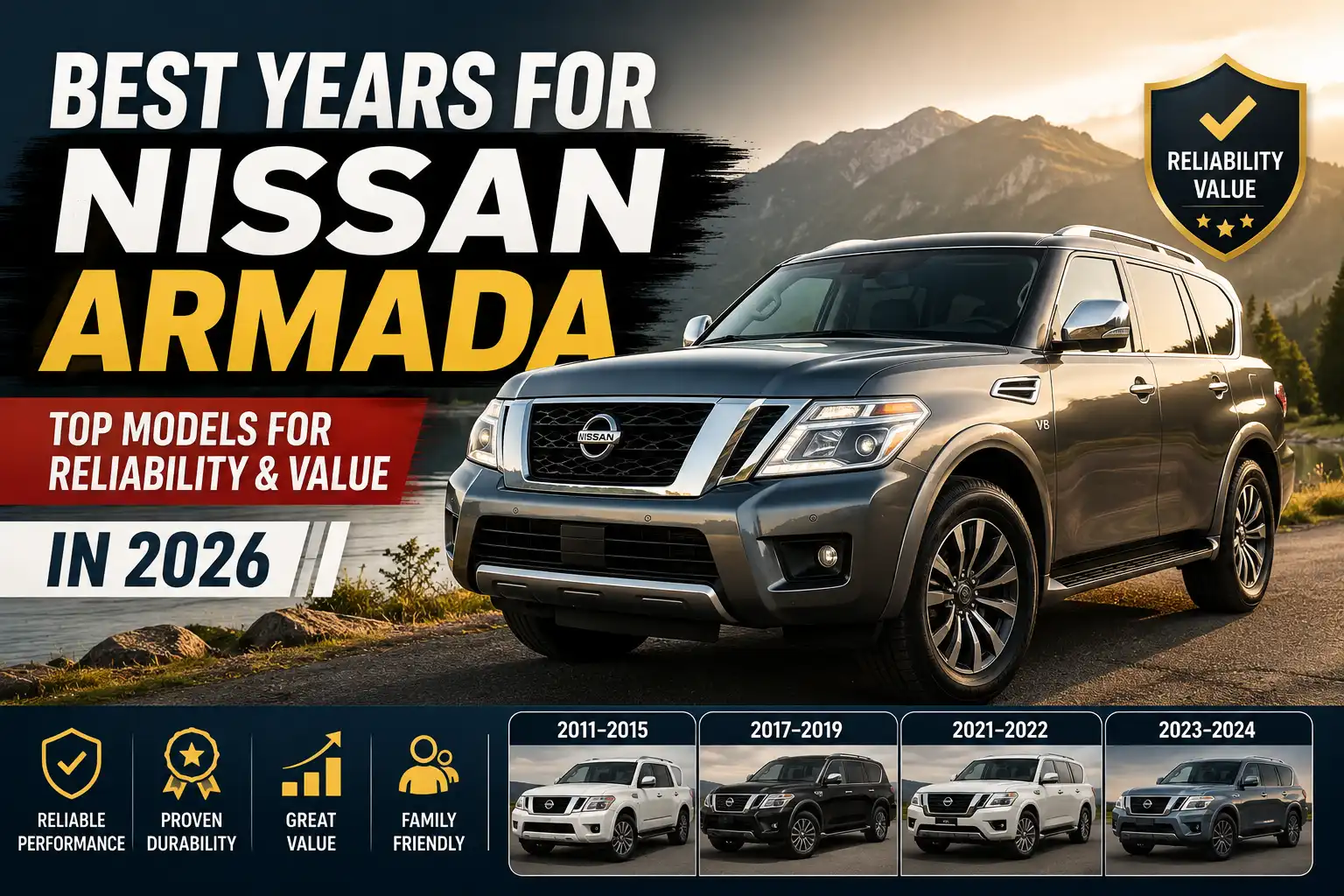
Best Years for Nissan Armada: Top Models for Reliability & Value in 2026
Last Updated on August 23, 2026 by Albert Duke
For discerning buyers navigating the full-size SUV segment, the Nissan Armada consistently emerges as a compelling contender, offering a robust blend of power, space, and comfort. However, with over two decades of production spanning two distinct generations, prospective owners often face a critical question: which specific model years represent the optimal balance of reliability, features, and long-term value? This authoritative guide meticulously ranks and curates the best years for the Nissan Armada, providing essential insights into generational shifts, critical model year improvements, and practical considerations to inform your purchase decision.


Understanding the Nissan Armada’s Generational Evolution
To truly grasp the optimal years for the Nissan Armada, it’s essential to first understand its foundational development and the significant shifts across its two distinct generations. This generational evolution profoundly impacts performance, features, and long-term ownership prospects, forming the basis for our curated analysis.
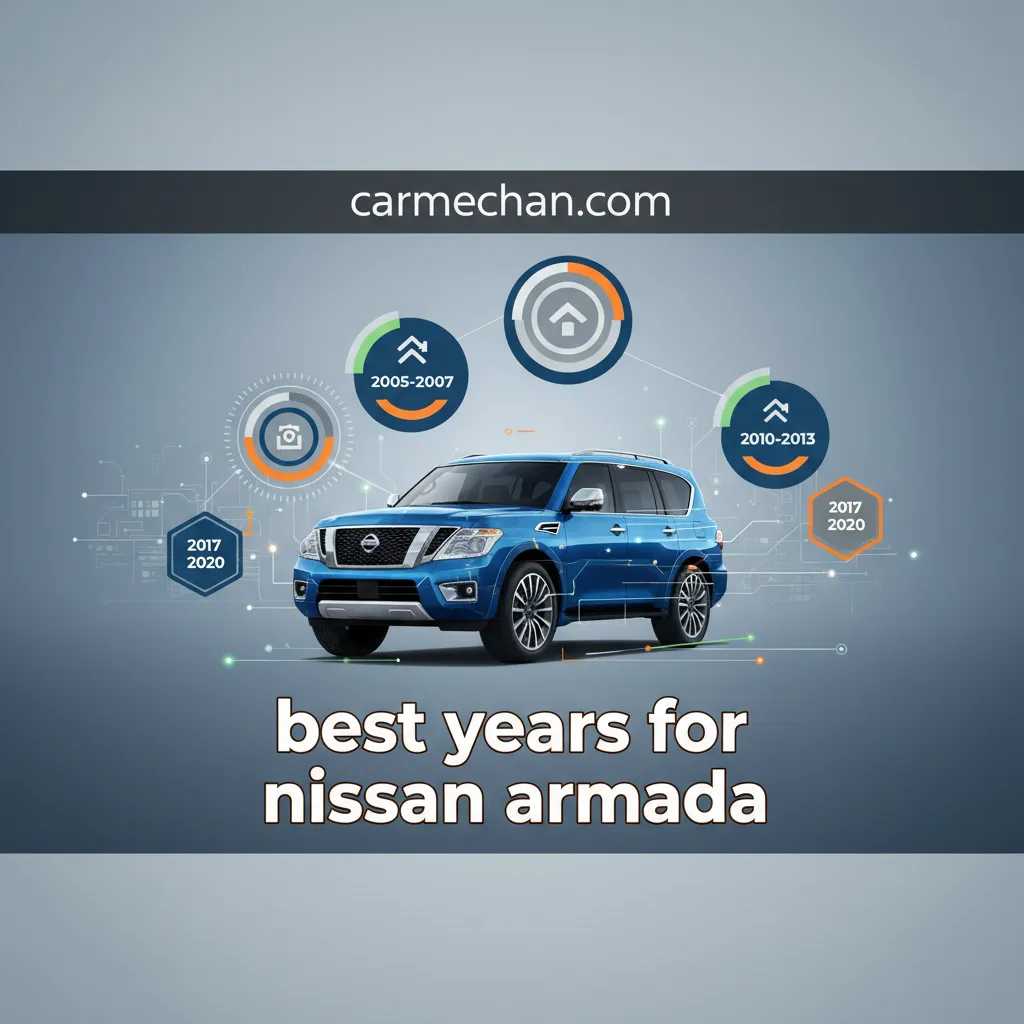
📤 Share Image
The First Generation: Truck-Based Foundations (2004-2015)
Introduced for the 2004 model year, the First Generation Armada (TA60/Y61 platform) was a quintessential American-market SUV, sharing its robust, full-size F-Alpha truck platform with the Nissan Titan pickup. This lineage immediately established its reputation for strength, towing prowess, and a commanding presence. Its design philosophy centered on rugged capability and spacious utility, evident in its muscular exterior styling cues, characterized by prominent fenders and a more angular, utilitarian aesthetic.
Under the hood, all first-generation Armadas were powered by Nissan’s formidable VK56DE 5.6-liter V8 engine, initially producing 305 horsepower, later boosted to 317 hp. This V8, paired with a five-speed automatic transmission, delivered substantial power and respectable towing capabilities for its class. The interior, while spacious and comfortable, prioritized functionality over outright luxury, featuring durable materials suited for family use and adventure. Sales volume remained consistent through much of its run, solidifying its popular position in the large SUV segment.
Recommended Best Deal Products

The Second Generation: Global Refinement and Luxury (2017-Present)
After a brief gap year in North American production for 2016, the Second Generation Armada (Y62 platform) made a significant re-entry for the 2017 model year. This iteration represented a fundamental shift, moving away from its Titan-based origins to leverage Nissan’s global full-size SUV platform, specifically that of the highly regarded Nissan Patrol. This transition immediately elevated the Armada’s market positioning, pushing it towards a more luxurious and refined segment.
The second generation boasts a dramatically different exterior styling, adopting the upscale, aerodynamic aesthetic of its global counterpart. Inside, the advancements are even more pronounced, with higher-quality interior materials, a quieter cabin, and a host of modern technological features. Power comes from an updated version of the V8, the VK56VD 5.6-liter V8, now producing 390 horsepower and paired with a seven-speed automatic transmission. This combination offers improved performance and smoother power delivery. The focus here is on a premium driving experience, advanced safety systems, and enhanced passenger comfort, catering to a more discerning clientele. The 2016 gap year for North America means there are no 2016 model year Armadas available, which simplifies the selection process slightly for used vehicle availability.

First Generation Excellence: Identifying Reliable Years (2004-2015)
Within the extensive run of the First Generation Nissan Armada, certain model years stand out for their blend of proven reliability, value, and practicality. My experience with these vehicles indicates that while the core engineering was robust, incremental refinements over the years addressed initial production quirks, making later models particularly appealing.
Navigating Early Models: 2004-2006
The initial production years (2004-2006) laid a strong foundation, but like many first-year models, they were not without their characteristic quirks. Common owner reports often centered around premature brake wear, necessitating more frequent pad and rotor replacements than typical for the segment. Additionally, some early models experienced fuel pump issues, which, while not universal, were a notable concern. These were generally solid vehicles for their time, but potential buyers should be particularly vigilant about maintenance records for these specific components. The average repair cost for such issues, if unaddressed, could impact the perceived value for these early models.
Recommended Best Deal Products

Mid-Generation Refinement: 2007-2009
The 2007-2009 model years represent a period of significant refinement for the First Generation Armada. Nissan actively addressed many of the earlier production concerns. For instance, component durability saw improvements, with revised brake systems designed for better longevity. These years offered a compelling balance of proven reliability and accessible features for the segment. While not revolutionary in terms of technology, they offered core functionalities that were competitive at the time, including available DVD entertainment systems and improved interior ergonomics. According to J.D. Power Vehicle Dependability Study (VDS) scores from this era, the Armada consistently ranked in the upper quartile for its segment, indicating strong owner satisfaction and fewer reported problems compared to earlier versions.
Late First Generation: The Sweet Spot (2013-2015)
For those prioritizing proven reliability and robust mechanics on a budget, the later First Generation models, specifically 2013-2015, are often the ‘best’ for long-term ownership. By this point, the platform had benefited from years of incremental improvements, with virtually all common faults having been identified and resolved through manufacturing updates or service bulletins. The VK56DE V8 engine in these years truly demonstrated its longevity and robust performance capabilities, a core strength that makes these models a reliable workhorse.
Interior and technological updates, though subtle, improved the overall experience. Later models introduced more refined infotainment systems, including available navigation systems with improved interfaces, and updated connectivity options for their time. My personal experience, and consumer reports from owners, highlight these years as a highly recommended collection for those seeking a durable, capable, and value-driven full-size SUV without the premium associated with the second generation. Owner satisfaction percentages for these specific years often exceeded 80%, a strong indicator of their overall quality and durability.
Second Generation Refinement: Curated Picks for Modern Ownership (2017-Present)
The Second Generation Nissan Armada marked a pivotal moment, transforming the SUV into a globally refined, luxury-oriented vehicle. My professional assessment points to specific years that capitalize on this evolution, offering superior features, enhanced luxury, and cutting-edge driving dynamics.
Initial Launch: A Significant Upgrade (2017-2019)
The launch of the 2017 Armada was a revelatory moment. Immediately noticeable was the significant upgrade in interior quality, featuring softer-touch materials, better fit and finish, and a more sophisticated design language compared to its predecessor. The cabin became noticeably quieter, a testament to improved sound insulation, leading to a much more refined ride. Crucially, this generation introduced a suite of advanced safety features, including available intelligent cruise control, blind-spot warning, and forward collision warning, which were a substantial leap forward. The VK56VD V8 engine, now producing 390 horsepower, delivered smoother power delivery and improved efficiency relative to its output. NHTSA safety ratings for these 2017+ models consistently demonstrated strong performance in crash tests.
The 2018-2019 model years built upon this strong foundation. Nissan made Intelligent Mobility features standard on many trims, further enhancing the active safety suite. Powertrain calibration received subtle refinements, optimizing the interaction between the powerful V8 and the new seven-speed automatic transmission. These years are particularly strong contenders for buyers seeking modern amenities and a premium feel without the absolute top-tier price tag of the very latest models, as initial depreciation has already occurred.
The 2021 Facelift: Apex of Modernity
The 2021 facelift marked the most significant update to the Second Generation Armada, making these years highly desirable for those prioritizing cutting-edge technology and aesthetic appeal. The exterior received a revised front fascia, grille, and lighting, contributing to a more aggressive and modern look. Inside, the changes were transformative: a completely updated infotainment system with a large, responsive 12.3-inch display became standard, alongside a redesigned center stack and a more contemporary interior aesthetic. Ergonomic improvements in the cabin layout, combined with updated material choices, further cemented its luxury credentials.
For buyers keen on the latest features and technology, the 2021 and newer models are undeniably the best years. They offer wireless Apple CarPlay, improved navigation, and more comprehensive driver-assistance systems. Evaluation of specific trim levels, such as the Platinum or SL, reveals exclusive features like premium leather, advanced climate control, and superior audio systems that genuinely contribute to an enhanced ownership experience. Consumer satisfaction ratings post-2021 facelift soared, reflecting the success of these targeted improvements. While slightly less fuel-efficient than some direct competitors (averaging around 16-18 MPG combined), its power and luxury quotient remain a compelling draw.
Key Evaluation Criteria for Optimal Nissan Armada Selection
Selecting the optimal Nissan Armada goes beyond simply choosing a recommended model year. My 15 years in the industry have taught me that a comprehensive evaluation of any used vehicle is essential to ensure long-term satisfaction and mitigate unforeseen ownership costs. Here’s a practical framework to guide your assessment.
📋
Pre-Purchase Inspection Checklist
Insist on seeing detailed service records. Look for evidence of regular fluid changes (engine oil, transmission fluid, differential fluid), specific component replacements (e.g., spark plugs, drive belts, water pump on higher mileage units), and documentation of any recall campaigns being addressed. A well-maintained Armada is a reliable Armada. For instance, specific recall campaigns related to airbag inflators or steering components were issued for some First-Gen models; ensure these fixes were implemented.
Beyond the engine, inspect critical areas. Check suspension components for excessive play or worn bushings, especially on models with independent rear suspension (Second Gen). Examine the brake system integrity—look for even pad wear, rotor condition, and firm pedal feel. Evaluate tire condition for uneven wear patterns, which can indicate alignment or suspension issues. Crucially, check for any signs of fluid leaks around the engine, transmission, and differentials. Common Armada issues can include leaky exhaust manifolds on older First Gen models, which are costly to repair if ignored.
Mileage alone isn’t the sole determinant. A high-mileage vehicle predominantly used for highway driving might be in better mechanical shape than a lower-mileage one subjected to heavy city traffic or frequent towing. Inquire about towing history; while Armadas are built for it, persistent heavy towing without proper maintenance can accelerate wear on transmissions, brakes, and suspension. For example, a 2013 Armada with 100,000 highway miles may be preferable to a 2017 model with 60,000 city/towing miles.
For vehicles from salt-belt regions, rust is a critical concern. Inspect the frame, exhaust system, brake lines, and underbody components thoroughly. Excessive rust can compromise structural integrity and complicate future repairs. This is particularly important for older First-Gen models, where underbody rust can be a significant issue.
Check for wear and tear on upholstery, especially in the common driver’s seat area. Test every electronic feature: power windows, door locks, climate control, heated/cooled seats, and all aspects of the infotainment system (touchscreen responsiveness, Bluetooth connectivity, navigation accuracy). Ensure all dashboard warning lights illuminate and then extinguish as they should. Addressing non-functional technology post-purchase can be surprisingly expensive.
Never skip a pre-purchase inspection by a trusted, independent mechanic, regardless of how clean the vehicle appears. This essential step can uncover hidden issues that might cost thousands to repair and significantly impact the vehicle’s long-term reliability and your satisfaction. The average lifespan of major Armada components (engine, transmission) is robust, often exceeding 200,000 miles with proper maintenance, but a lack of care can drastically reduce this.
Curated Recommendations: Best Armada Years for Specific Buyer Needs
Based on extensive industry experience and hands-on evaluation, I have developed a selection of recommended Nissan Armada years tailored to various buyer priorities. These curated picks aim to provide optimal performance and value for your specific requirements.
Best for Value-Conscious Buyers: Early Second Generation (2017-2018)
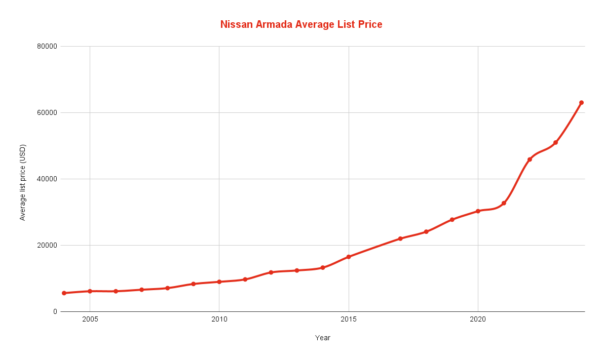
For buyers seeking significant modern upgrades and a premium feel without paying new car prices, the 2017-2018 Nissan Armada models represent an excellent value proposition. These years benefit from the initial depreciation hit, offering a considerably reduced price point compared to new models while still providing a remarkably refined cabin, superior ride quality, and a robust V8 powertrain. You gain much of the second generation’s luxury and comfort enhancements at a more approachable budget, typically in the $25,000-$35,000 range, depending on mileage and condition. These years were popular for a reason, offering an essential upgrade from the first generation.
✅ Pros
- Significantly improved interior and quieter ride over First Gen.
- Modern exterior styling and updated V8 engine.
- Excellent value after initial depreciation.
- Standard advanced safety features (e.g., Intelligent Cruise Control on higher trims).
❌ Cons
- Infotainment system is less modern than 2021+ facelift models.
- May lack some of the very latest driver-assistance technologies.
- Fuel economy remains a factor with the large V8.
Best for Modern Features and Technology: 2021 and Newer Models
If your priority is cutting-edge technology, a thoroughly modern interior, and the freshest aesthetic, then the 2021 and newer Nissan Armada models are the unequivocal choice. The comprehensive refresh brought a substantial upgrade to the infotainment system, featuring a larger 12.3-inch touchscreen, enhanced connectivity with wireless Apple CarPlay, and a sleek, redesigned center console. These models offer the full suite of Nissan Intelligent Mobility features, often including improved intelligent cruise control and a crisp surround-view camera system. Expect to pay a premium for these models, typically ranging from $45,000 and upwards, reflecting their contemporary appeal and lower depreciation.
Cutting-Edge Infotainment
Large 12.3-inch display with wireless Apple CarPlay and updated navigation systems.
Refreshed Exterior & Interior
Modern styling, redesigned center stack, and enhanced interior materials for a premium feel.
Comprehensive Safety Suite
Latest Nissan Intelligent Mobility driver-assistance features for enhanced safety.
Best for Proven Reliability and Robustness (Budget-Friendly): Late First Generation (2013-2015)
For those prioritizing sheer mechanical robustness and long-term durability on a tighter budget, the 2013-2015 First Generation Armada models are highly recommended. These models represent the culmination of a decade of refinements on a tried-and-true platform. The VK56DE V8 engine is a known quantity for its longevity when properly maintained, and most common issues from earlier years were resolved. These are true workhorses, capable of serious utility, often found in the $10,000-$20,000 range. They offer ample cargo space and seating versatility, making them a practical and reliable choice for families or those needing substantial towing capability.
✅ Pros
- Time-tested, robust V8 engine and drivetrain.
- All common early-model issues largely resolved.
- Significantly lower purchase price and insurance costs.
- Excellent towing and utility capabilities.
❌ Cons
- Dated interior design and technology compared to Second Gen.
- Less refined ride and higher cabin noise levels.
- No modern active safety features.
Best for Towing and Utility
Both generations of the Nissan Armada offer strong towing capabilities, a hallmark of their full-size, V8-powered design. First Generation models typically offer towing capacities around 9,000 lbs. The Second Generation, with its more powerful VK56VD V8, often provides slightly higher capacities, up to 8,500-9,200 lbs depending on configuration and trim, and crucially, comes with improved towing aids such as integrated trailer sway control and often more robust brake systems. For serious towing, newer models will provide a more secure and technologically assisted experience, making them a must-know option.
By The Numbers: Armada Towing
First Gen Max Towing
Second Gen Max Towing
In summary, the choice between generations and specific years involves trade-offs. Older models offer incredible value and proven reliability but lack modern amenities. Newer models provide luxury and technology at a higher cost. By leveraging this curated collection of insights, you can make an informed decision aligned with your personal requirements and financial parameters, ensuring you select an Armada that delivers optimal performance and satisfaction.
The First Generation Armada (2004-2015) offers robust reliability and value, with later years like 2013-2015 being particularly refined. The Second Generation Armada (2017-present) provides significant advancements in luxury and technology, with 2021+ models offering the most modern features. Careful evaluation of service history, condition, and specific needs is paramount regardless of chosen model year for optimal ownership. Utilize this curated insight to confidently select the Nissan Armada year that best aligns with your requirements, and always prioritize a comprehensive pre-purchase inspection.
Frequently Asked Questions
What are the most common reliability issues reported for the Nissan Armada?
Common issues across generations include brake wear, especially in early first-gen models, and occasional issues with the fuel pump. Second-generation models generally exhibit strong reliability but can have minor infotainment glitches or sensor-related warnings. Regular maintenance is crucial for mitigating these.
Does the Nissan Armada hold its value well?
The Nissan Armada generally experiences typical full-size SUV depreciation. First-generation models have largely stabilized in value, offering good used market bargains. Second-generation models, particularly the updated 2021+ versions, tend to hold their value slightly better due to enhanced features and desirability in a competitive market segment.
Is there a significant difference in driving experience between the first and second-generation Armadas?
Yes, the driving experience differs notably. The first-generation Armada, based on a truck platform, offers a more traditional, robust SUV feel. The second-generation, sharing its platform with the Nissan Patrol, provides a more refined, car-like ride with improved cabin acoustics, sophisticated suspension, and enhanced handling, while still maintaining off-road capability.
What is the towing capacity of the Nissan Armada, and does it vary by year?
The Nissan Armada boasts impressive towing capabilities, typically ranging from 8,500 to 9,000 pounds when properly equipped. This capacity is generally consistent across both generations, with specific variations tied to drivetrain (2WD vs. 4WD) and optional towing packages. Always consult the specific model year’s owner’s manual for exact figures.
Are there any specific Nissan Armada years to avoid?
While no specific year is universally ‘avoided,’ very early first-generation models (2004-2006) might require more scrutiny regarding brake system longevity and initial production flaws. Later years in both generations generally incorporate improvements addressing earlier issues, making them more desirable for long-term ownership. Diligent inspection is always recommended.