2011 Jeep Grand Cherokee TPMS Reset Button Location: Solved
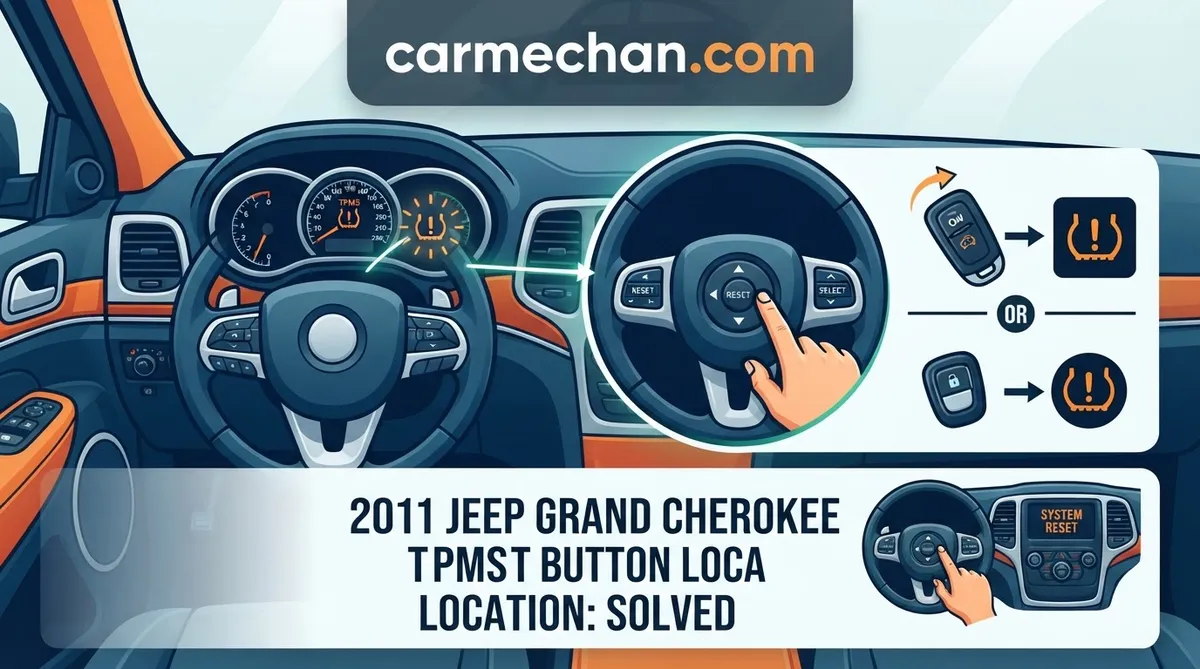
Is your tire pressure light staring you down, and you’re tearing the cabin apart looking for a button that doesn’t exist? Many 2011 Jeep Grand Cherokee owners spend hours searching for a non-existent TPMS reset button to clear their dashboard warning light. The frustration is understandable, but the reality is much simpler: there is no manual switch to press. In this guide, we’ll explain exactly why there is no button, how the system automatically performs a fresh start, and the precise steps to clear your warning light for good.

Decoding the 2011 Jeep Grand Cherokee TPMS Reset Button Location Reality
Recommended Best Deal Products


📤 Share Image

Why No Manual Reset Button Exists
It is a common myth that a physical button must be engaged to reset the TPMS. In the 2011 Jeep Grand Cherokee, the architecture is entirely automated. Manufacturers moved away from manual reset buttons to eliminate user error and ensure the system remains legally compliant with safety standards. Because the vehicle uses a “Direct” TPMS system, it constantly polls each wheel sensor individually; if the pressure is within the threshold, the system automatically shuts off the warning indicator.
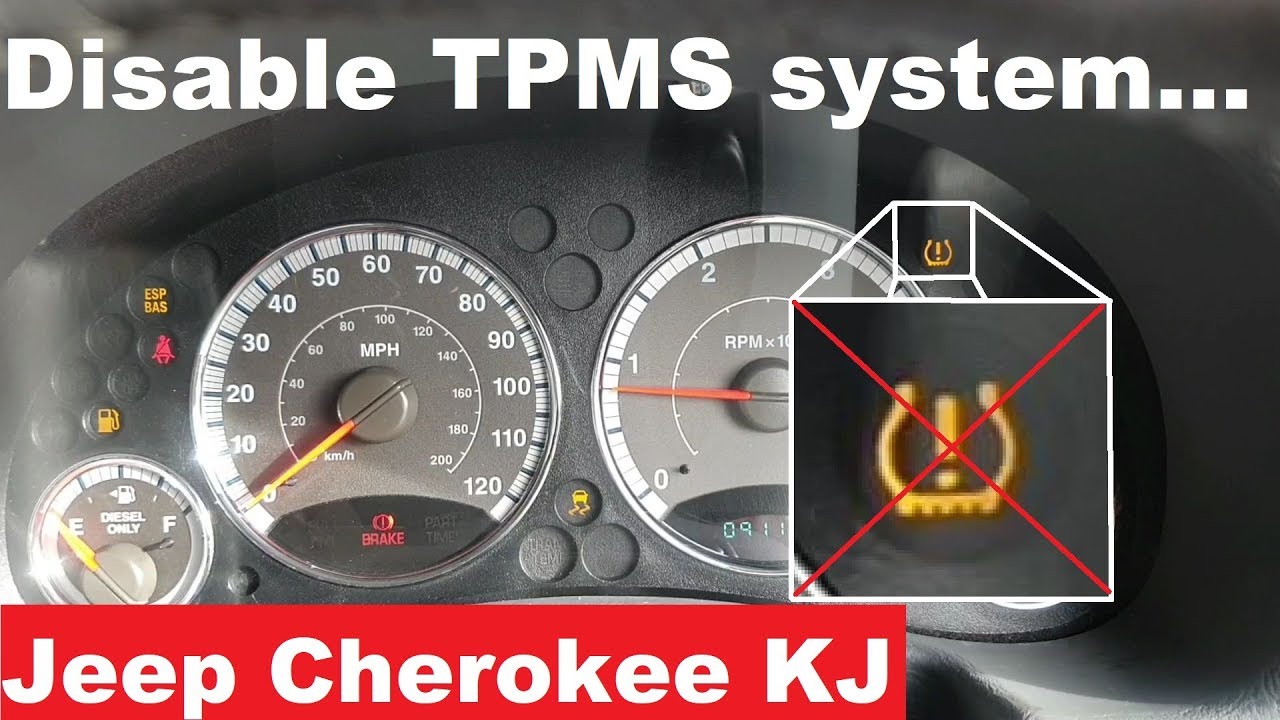
How the EVIC System Communicates Pressure
The Electronic Vehicle Information Center (EVIC) located in your instrument cluster is your primary interface. Unlike “Indirect” systems that use ABS wheel speed sensors to estimate pressure, your Jeep utilizes physical pressure transducers inside each tire. These sensors broadcast data to the TPMS module. If your EVIC is displaying a specific tire pressure, the system is functioning. If it shows dashes or a warning icon, it is signaling that a sensor is failing to report or is reporting a value outside of the safe operating range.

Direct vs Indirect TPMS Explained
Understanding the difference is critical for maintenance. Direct TPMS (found in your Jeep) tracks the exact PSI of each tire. Indirect systems calculate pressure based on tire rotation speeds. Because yours is a Direct system, you must have functional sensors in all four wheels (and typically the spare, if equipped with a sensor). This hardware-heavy design is why you cannot “force” a reset—the system only clears when it sees good, consistent data from all sensors simultaneously.
How to Properly Initialize the 2011 Jeep Grand Cherokee TPMS System
📋
Step-by-Step Initialization Guide
Recommended Best Deal Products


Check the driver’s side door jamb for the manufacturer’s recommended cold tire pressure. Inflate all tires to this exact specification using a high-quality tire pressure gauge. Ignore the maximum PSI listed on the tire sidewall.
Drive the vehicle for at least 15–20 minutes at speeds consistently above 15–20 mph. This period allows the TPMS module to “wake up” the sensors, receive their signal, and perform a fresh start on pressure validation.
Observe your instrument cluster. If the system detects that all sensors are reporting values within the acceptable range, the warning light will extinguish automatically. If it persists, re-check the pressure once the tires have cooled.
Identifying Flashing TPMS Lights and System Faults
A flashing warning icon is fundamentally different from a solid one. While a solid light usually denotes low air pressure, a light that flashes for roughly 60–90 seconds upon startup and then stays solid typically signals an electrical fault within the TPMS network. Here is how to troubleshoot these system faults:
- Dead Sensor Battery: TPMS sensors have integrated, non-replaceable batteries that typically last 7–10 years. If your 2011 model still has original sensors, it is highly probable that one or more batteries have failed.
- Operational Frequency Mismatch: Ensure any replacement sensors match the original factory frequency (standard 315 MHz for North American models). Using an incompatible frequency will cause the system to fail to initialize.
- Interference: Aftermarket electronics, such as high-powered LED headlight kits or improperly shielded dash cams, can sometimes create electromagnetic interference, preventing the TPMS module from receiving sensor signals.
- Professional Scan Tool Diagnosis: If a drive cycle fails to clear the light, a shop-grade diagnostic tool is required. This tool can communicate with the TPMS module to identify exactly which sensor is reporting a “fault” or “no signal” status.
Common Pitfalls for 2011 Jeep Grand Cherokee TPMS Maintenance
Recommended Best Deal Products


✅ Best Practices
- Always use the door jamb placard for PSI specs.
- Perform tire pressure checks while tires are “cold.”
- Allow time for the computer to sync after rotations.
❌ Common Pitfalls
- Over-inflating to “force” a signal trigger.
- Replacing sensors before testing for battery health.
- Ignoring the 20-minute drive cycle requirement.
One of the most dangerous mistakes owners make is over-inflating tires in an attempt to “clear” the light. Excessive pressure reduces the tire’s contact patch, which significantly compromises traction and braking distances—especially on wet or icy roads. Furthermore, temperature-based fluctuations are common; a 10-degree drop in ambient temperature can result in a 1 PSI drop in your tires. Always account for weather before assuming a sensor has failed.

Audible — Listen Free for 30 Days
One free credit a month and thousands of titles included.
Listen Free for 30 DaysIf your Jeep is equipped with a full-size spare tire, it likely has its own TPMS sensor. If the spare is low, it can trigger the dashboard light, and the light will remain on until the spare is pressurized. Never neglect the spare during your monthly air pressure checks.
Industry Data: TPMS Life Expectancy
Years of Battery Life
MHz (Standard Frequency)
In summary, the 2011 Jeep Grand Cherokee relies on a self-learning system that operates independently of manual user input. A persistent warning light usually indicates one of three things: tires are not set to the factory cold-fill PSI, the system has not completed its required drive cycle, or a physical sensor battery has reached the end of its operational lifespan. Always verify your pressures first, give the system time to re-initialize during your commute, and only seek professional assistance if the light remains on after confirming pressures are correct.
2011 Jeep Grand Cherokee Tpms Reset Button Location: Frequently Asked Questions
Does the 2011 Grand Cherokee have a TPMS reset button?
No, the 2011 Jeep Grand Cherokee does not have a manual TPMS reset button. The vehicle’s onboard computer is programmed to monitor tire pressure sensors continuously. When you adjust the tire pressures to the manufacturer’s recommended specifications, the system automatically detects the change and updates the dashboard status once the vehicle is driven for several minutes at appropriate speeds.
Why is my tire pressure light still on after filling my tires?
The system often requires a brief ‘wake-up’ drive cycle to register the new pressure readings. If you have inflated the tires to the correct PSI as listed on the door placard and the light remains on, the sensors may not have transmitted the updated signal to the Tire Pressure Control Module yet. Continue driving above 15 mph for roughly five to ten minutes to allow the data to synchronize.
How long do I need to drive to reset the light?
To force the TPMS to refresh its data and clear the dashboard warning, you generally need to drive the vehicle for at least 5 to 10 minutes at speeds consistently above 15 mph. This specific speed is required to activate the motion-sensitive transmitters located inside each tire, which then send the updated pressure information to the car’s computer system for validation.
Do I need a scan tool to reset the TPMS on a 2011 Grand Cherokee?
Generally, no. You do not need a specialized OBDII scan tool to reset the light for standard low-pressure warnings. The system is designed to be self-resetting. However, if the TPMS light is flashing, this indicates a system fault—such as a dead sensor battery or a damaged module—which would then require an professional-grade scan tool to diagnose the specific hardware failure.
Does my spare tire affect the TPMS warning light?
Yes, on some 2011 Grand Cherokee trims equipped with a full-size spare, the spare tire also contains a TPMS sensor. If the spare tire is significantly under-inflated, the system may trigger a warning light even if your four road tires are at the correct pressure. Always check the pressure of your spare tire if the warning persists after inflating your primary tires.
Audible Premium Plus — Annual Membership
12 audiobook credits up front, plus the full Audible catalogue.
See Annual Plans