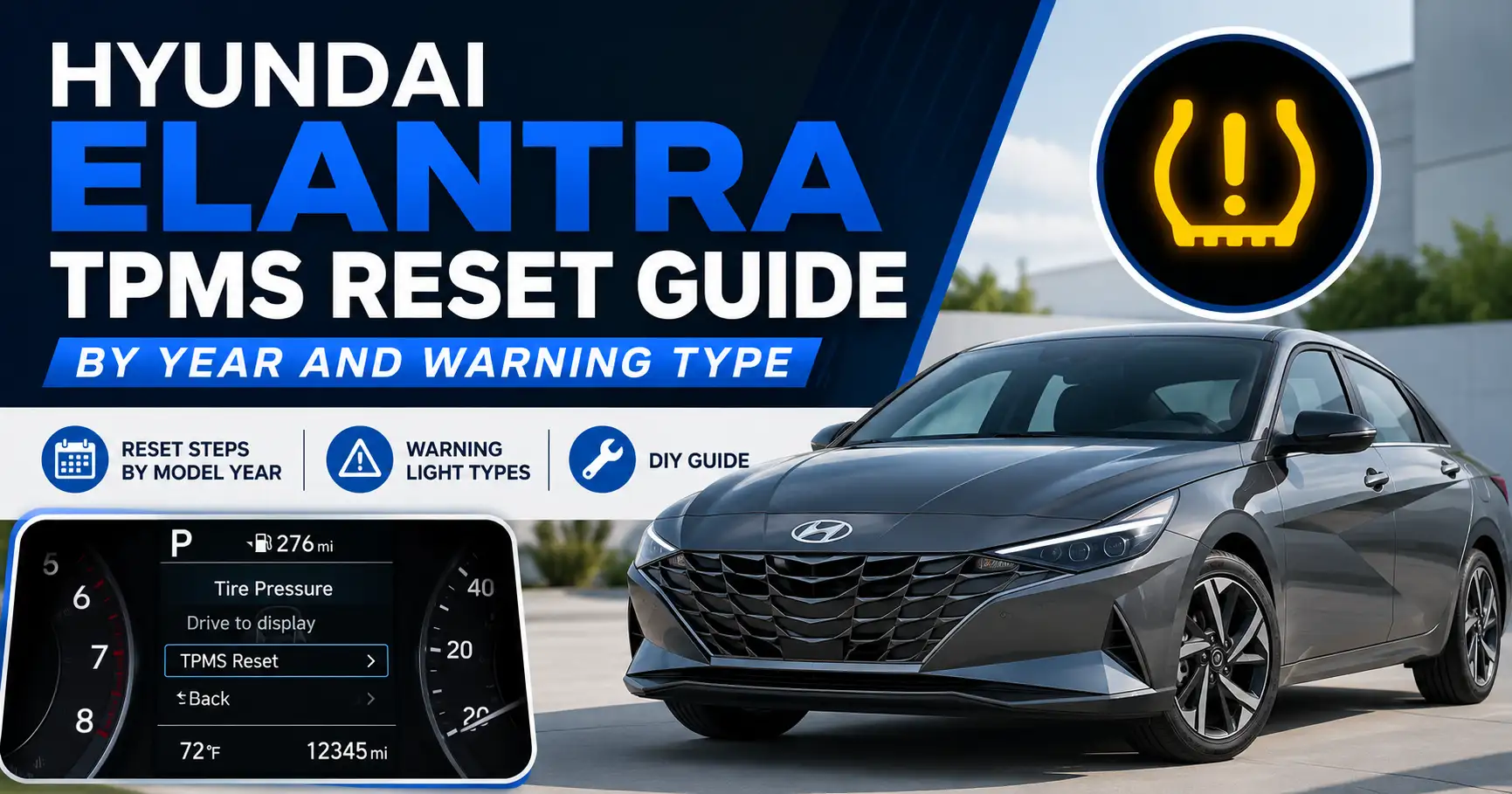
Hyundai Elantra TPMS Reset Guide by Year and Warning Type
Last Updated on June 24, 2026 by Albert Duke
A Hyundai Elantra TPMS reset is not the same for every year because Hyundai uses different reset and relearn behavior across models. TPMS means Tire Pressure Monitoring System, and its job is to warn you when one or more tires are low or when the system cannot read a sensor correctly.
For most Elantra owners, the fix starts with checking cold tire pressure at the driver door placard value. Some models let you reset through the instrument cluster menu, some clear after driving, and some need a TPMS scan tool after sensor work.
Start with the warning type, because that tells you whether this is a pressure issue or a sensor issue.
What Hyundai Elantra TPMS Warning Type Means


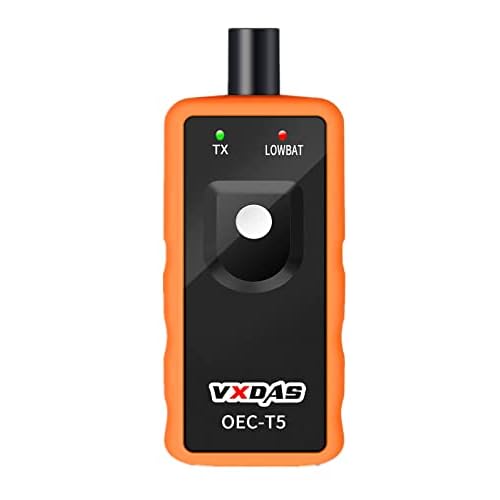
The first clue is how the TPMS light behaves on your Elantra dashboard. A solid light, a flashing light, and a warning after tire service do not all mean the same thing.
Solid Tire Pressure Light
A solid tire pressure light usually means one or more tires are below the pressure level the system expects. Do not reset the warning before checking the tires.
Use a gauge and check the pressure when the tires are cold. Hyundai defines cold tire pressure as after the car has not been driven for at least 3 hours, or after driving less than 1 mile or 1.6 km, according to the Hyundai cold tire pressure guidance.
Flashing TPMS Warning Light
A flashing TPMS light usually points to a system fault, not just low air. Hyundai says the TPMS malfunction indicator may blink for about 1 minute and then stay on when the system has a problem.
That can happen from a failed sensor, weak sensor battery, sensor communication issue, or relearn problem. Hyundai also says that when TPMS has a malfunction, the individual tire pressures may not be available in the cluster display, based on the Hyundai TPMS malfunction guidance.
Warning After Tire Rotation
If the warning appears after tire rotation, the car may need time to relearn the sensor positions. Some Elantra years can update automatically after driving, while others may need a TPMS tool.
This is more likely if the tire shop changed sensor positions, replaced a sensor, or installed a wheel from another vehicle.
Warning After New Tires
New tires alone should not require sensor programming if the original wheels and sensors stayed in place. New sensors are different.
If new TPMS sensors were installed, the Elantra may need a relearn so the car recognizes the sensor IDs. Once you know which warning type you have, the next step is matching it to the correct reset method.
Which Hyundai Elantra TPMS Reset Method Fits Your Year

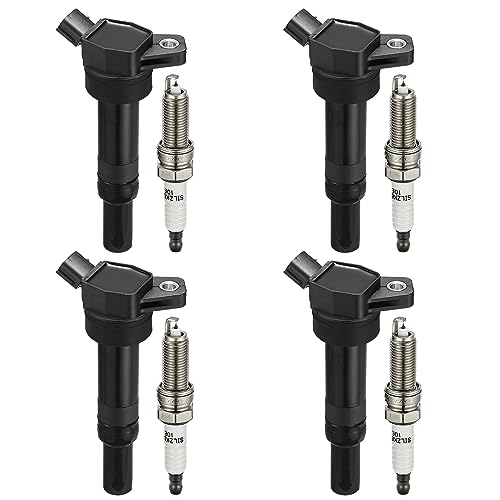

The correct Hyundai Elantra TPMS reset method depends mostly on model year and what happened before the warning appeared. Do not assume every Elantra has a physical reset button.
ATEQ lists the Hyundai Elantra, Elantra GT, and Elantra Touring from 2007 to 2020 as using a direct TPMS system. A direct system uses sensors inside the wheels, and ATEQ notes that some Elantra relearns use OBD while some use auto relearn depending on model and year, based on its Hyundai Elantra TPMS relearn information.
| Situation | Likely Reset Method | What To Do First | When To Use a Tool |
|---|---|---|---|
| Solid light after cold weather | Pressure correction and drive relearn | Set all tires to the door placard | If light stays on after driving |
| Tire pressure screen shows low tire | Cluster menu reset if supported | Inflate all tires cold | If readings are missing |
| No reset button found | Auto relearn after driving | Correct pressure first | If light flashes |
| Sensor replaced | OBD TPMS relearn | Confirm sensor compatibility | Usually needed |
| Light flashes then stays on | TPMS fault diagnosis | Scan each sensor | Needed immediately |
For 2024 model year details, see our dedicated guide on 2024 Hyundai Elantra TPMS reset steps. That page is better for owners who need a year-specific reset path.
The easiest path is the manual reset menu, but not every Elantra gives you that option.
How to Complete a Hyundai Elantra TPMS Reset


If your Elantra has a Tire Pressure menu in the cluster, try this reset before using a scan tool. This applies only when your car supports the menu based reset process.
- Park the car safely and let the tires cool.
- Check all four tires with a reliable gauge.
- Inflate each tire to the pressure listed on the driver door placard.
- Turn the vehicle on and open the Tire Pressure screen in the instrument cluster.
- Press and hold the OK button where the menu supports reset.
- Select Set if the screen asks for confirmation.
- Watch for the TPMS warning light to blink for about 4 seconds.
- Drive normally and confirm the warning does not return.
Hyundai’s owner manual says to reset TPMS after inflating all four tires, after a tire or wheel repair, after tire rotation, after suspension or ABS and ESC work, and when the low tire pressure warning appears. That is why pressure correction comes before the reset.
Use the door placard pressure, not the maximum pressure molded into the tire sidewall. The sidewall number is the tire’s maximum limit, not Hyundai’s recommended operating pressure.
If your Elantra does not show this menu, the reset may happen through driving instead.
How to Reset Hyundai Elantra TPMS Without a Button
If you cannot find a TPMS reset button, do not assume your Elantra is missing a simple fix. Many Hyundai models rely on the cluster menu, auto relearn, or a scan tool instead of a separate button.
If the light is solid, then check all four tires cold and inflate them to the driver door placard. Drive the car for several minutes at normal road speed so the sensors can report updated pressure.
If the light turns off after driving, then the system was waiting to confirm the corrected pressure. No scan tool is needed.
If the light stays on after correct pressure and driving, then recheck each tire for a slow leak. A small nail or valve stem leak can drop pressure enough to keep the warning active.
If the light flashes first and then stays solid, then stop treating it as a simple reset. That pattern points toward a TPMS fault or relearn issue.
Owner discussions on Hyundai forums and Reddit show repeated confusion around missing reset buttons on some Elantra years. One 2017 Elantra owner reported needing to inflate the tires and drive before the warning cleared, while other owners were told a TPMS reset tool may be needed if the system does not relearn. Treat those reports as community experience, not official repair instructions.
A no button reset usually works only when the sensors are healthy, which is why pressure and sensor checks matter next.
Why the Hyundai Elantra TPMS Light Stays On
A TPMS light that stays on after inflation usually means the system still sees a pressure or sensor problem. Resetting the light without fixing the cause only delays the same warning.

Cold Pressure Is Still Low
Tire pressure rises as the tire warms up during driving. If you fill the tires after a long drive, the reading can look correct while the true cold pressure is still low.
Let the car sit and check the tires cold. A quality manual gauge is often more dependable than guessing from the dashboard display alone.
For tool help, our guide to the best tire pressure gauge for accurate TPMS checks can help if your current gauge gives inconsistent readings.
One Tire Has a Slow Leak
If the same tire keeps triggering the warning, look for a slow leak. Common causes include a nail, bead leak, cracked valve stem, or corrosion around the wheel seat.
Inflating the tire may clear the light temporarily. If pressure drops again within days, the tire needs inspection.
Sensor Battery Is Failing
TPMS sensors have internal batteries that are not normally replaced separately. When the battery gets weak, the sensor may stop transmitting reliably.
A flashing TPMS light, missing pressure reading, or warning after correct inflation can point toward a weak or failed sensor.
New Sensor Needs Relearn
A new sensor must be recognized by the car. If the sensor ID is not registered or relearned, the Elantra may keep showing a TPMS warning.
This is where a tire shop, dealer, or TPMS scan tool becomes useful. The tool can read sensor IDs and write them to the vehicle when the model requires it.
If these checks do not clear the light, the next step is deciding whether you need an OBD TPMS relearn.
When Hyundai Elantra Needs OBD TPMS Relearn
OBD TPMS relearn is different from clearing a tire pressure warning. OBD means On Board Diagnostics, which is the diagnostic system a scan tool uses to communicate with your car.
Your Elantra may need OBD TPMS relearn when:
- A TPMS sensor was replaced
- A used wheel was installed
- A winter wheel set was added
- Sensor IDs do not match the vehicle
- Tire pressures are correct but readings are missing
- The TPMS light flashes before staying solid
ATEQ states that direct TPMS systems may require a TPMS scan tool with an OBD module for relearn on some Hyundai Elantra years. That matters because a basic OBD2 code reader may not program TPMS sensor IDs.
A normal OBD2 scanner reads engine and emissions codes. A TPMS tool reads tire pressure sensors and can perform relearn functions when supported.
Once you know whether this is a reset or relearn problem, the final decision becomes simple.
Quick Hyundai Elantra TPMS Decision Guide
Use this quick guide if you just want the next step. Start at the top and match the condition that fits your Elantra.
| What You See | What It Usually Means | Best Next Step |
|---|---|---|
| Solid tire pressure light | One or more tires are low | Check all tires cold and inflate to door placard |
| Light stays on after inflation | Pressure may still be low or tire has leak | Recheck cold pressure and inspect for puncture |
| No reset button found | Car may use menu reset or auto relearn | Use cluster menu or drive after correcting pressure |
| Light flashes then stays on | TPMS malfunction | Scan sensors or visit a tire shop |
| Warning after new sensor | Sensor ID may not be learned | Perform TPMS relearn with proper tool |
| Same tire warning returns | Slow leak likely | Inspect tire, valve stem, and wheel bead |
Hyundai Elantra TPMS Reset Path
Follow the path that matches your warning light before trying to clear the TPMS message.
Check the Warning Type
A solid light usually points to low tire pressure. A flashing light that stays on points to a TPMS fault.
Set Cold Tire Pressure
Let the tires cool, then inflate all four tires to the pressure listed on the driver door placard.
Use the Cluster Menu
If your Elantra has a Tire Pressure screen, select it and hold OK where the menu supports reset.
Drive for Auto Relearn
If there is no reset button, drive after correcting pressure so the sensors can update the system.
Scan for Sensor Faults
If the light flashes, pressure readings disappear, or the warning returns, scan the TPMS sensors.
Perform OBD Relearn
If sensors were replaced or wheel sets changed, use a TPMS tool with OBD relearn support.
The safest approach is to treat TPMS as a warning system, not just a dashboard light to clear.
What to Do Before Driving Your Elantra Again
A reset should come after the tire problem is corrected, not before. If the Hyundai Elantra TPMS reset does not work, check the tires again before assuming the system is wrong.
Inflate the tires to the driver door placard pressure, inspect for visible damage, and look for one tire that keeps losing air. If your tires are worn, cupped, or repeatedly leaking, compare replacement options in our guide to the best tires for Hyundai Elantra daily driving.
If the TPMS light flashes, pressure readings disappear, or the warning returns quickly, have the sensors scanned. A healthy TPMS system should warn you early, not leave you guessing.
FAQ
Does Hyundai Elantra Have a TPMS Reset Button
Some Hyundai Elantra years may have a menu based reset, while others may not have a physical TPMS reset button at all. If you cannot find a button, check the instrument cluster tire pressure menu and try driving after setting all tires to the correct cold pressure.
Why Will My Hyundai Elantra TPMS Light Not Turn Off
The light may stay on because tire pressure is still low when measured cold, one tire has a slow leak, or a TPMS sensor is not reporting correctly. If the light flashes before staying solid, treat it as a system fault instead of a simple pressure warning.
How Long Does Hyundai Elantra TPMS Take to Reset
Some Elantra models update after a short drive once tire pressure is corrected. If the car uses a menu reset, the warning light may blink for several seconds after confirmation, but the system still needs correct tire pressure to stay clear.
Can I Reset Hyundai Elantra TPMS Without a Scanner
Yes, you can often reset or clear the warning without a scanner when the problem is only low tire pressure. You may need a scanner if a sensor was replaced, pressure readings are missing, or the TPMS light flashes before staying on.
Do New TPMS Sensors Need Programming on a Hyundai Elantra
New TPMS sensors may need programming or relearn depending on model year and sensor type. If your Elantra does not recognize the new sensor after driving, a tire shop or dealer can use a TPMS tool to register the sensor IDs.
Is the 2010 Hyundai Elantra TPMS Reset Different
Older Elantra models can behave differently from newer cluster menu models. For that specific older model path, see our guide on the 2010 Hyundai Elantra TPMS reset button location.