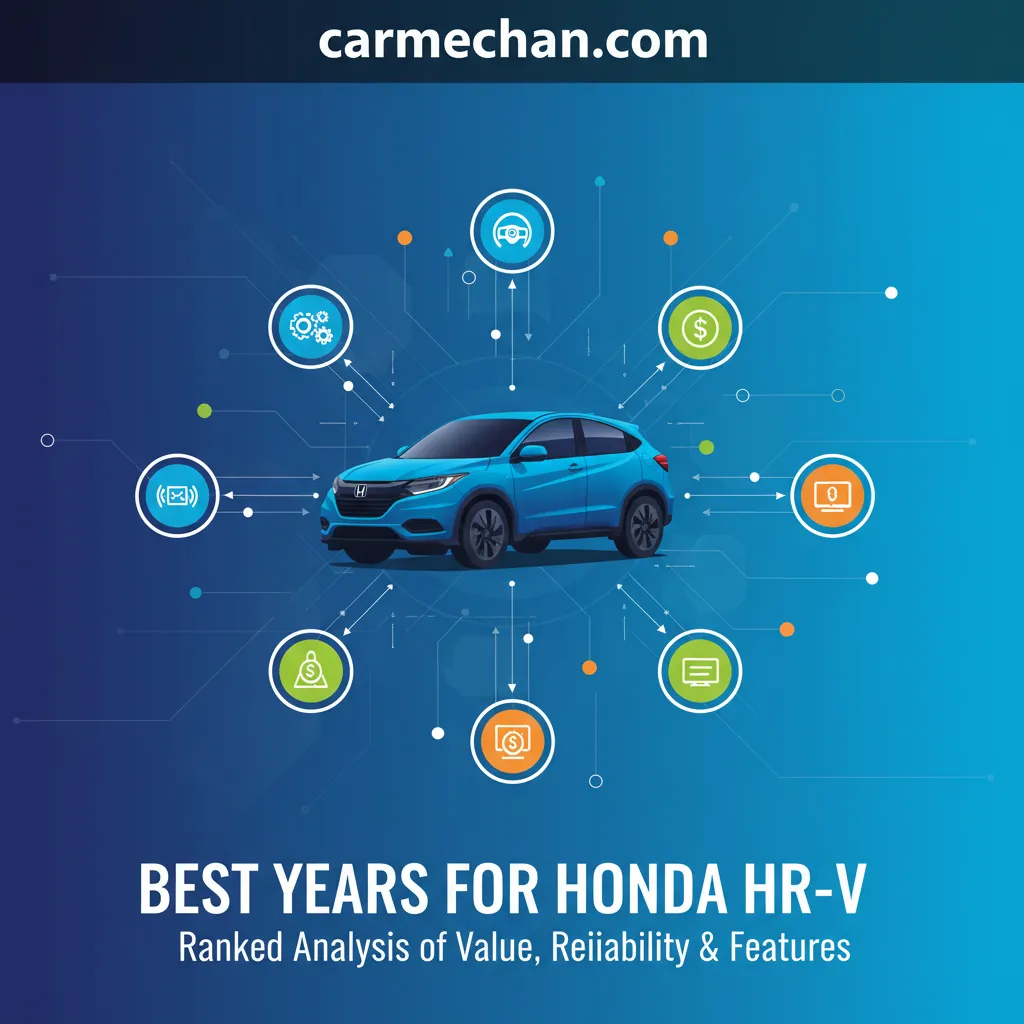
Best Years For Honda Hr-V: A Ranked Analysis Of Value, Reliability, And Features
The Honda HR-V has consistently delivered a compelling blend of compact dimensions, fuel efficiency, and Honda’s renowned reliability, making it a highly popular choice in the competitive subcompact SUV segment. For prospective buyers, especially those navigating the used car market, identifying the best years for Honda HR-V that offer optimal value, performance, and features can be a complex decision given the model’s evolution. This ranked and curated guide meticulously analyzes the various HR-V model years, providing essential insights into their strengths and weaknesses to empower you to make an informed purchasing decision.

The Honda HR-V’s Market Evolution and Core Design Philosophy
Recommended Best Deal Products


📤 Share Image
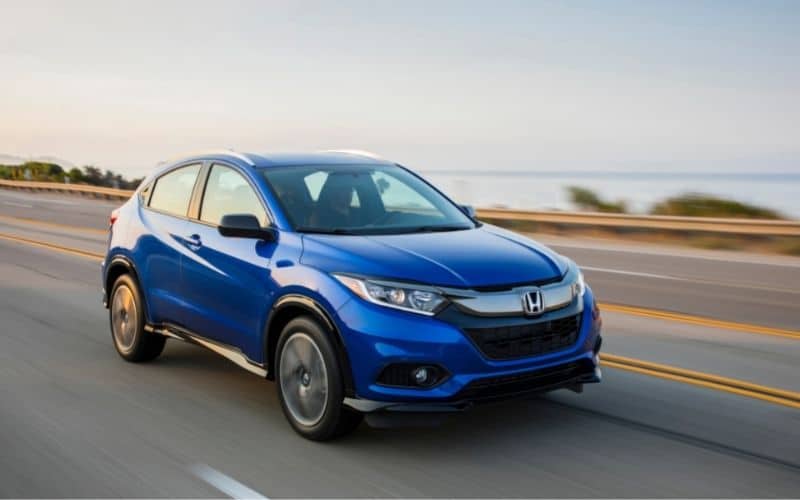
Honda strategically introduced the HR-V to the global market in 1998, though its most significant impact, particularly in North America, began with the second-generation model’s launch for the 2016 model year. This entry carved out a vital niche in the rapidly expanding subcompact SUV segment, acting as a crucial bridge between the compact Fit hatchback and the larger CR-V. Built on the highly adaptable Global Small Platform shared with the Fit, the first-generation HR-V (2016-2022) rapidly established itself as a formidable competitor. Upon its North American launch in May 2015 for the 2016 model year, it quickly captured attention, contributing to a significant surge in Honda’s overall light truck sales and aligning with the segment’s growth trajectory which saw a near 50% increase between 2015 and 2020.
The foundational design elements of the HR-V have always prioritized segment-leading interior versatility. This is primarily embodied by Honda’s ingenious ‘Magic Seat’ functionality, a feature directly inherited from the Fit. This innovative rear seating system allows for multiple configurations, including a “Tall Mode” where seat bottoms flip up, accommodating items up to four feet tall, and a “Long Mode” that permits cargo nearly eight feet long by folding both front and rear passenger seats flat. This efficient packaging, despite its compact exterior dimensions (a 2016 HR-V measured around 169 inches in length), maximized interior volume, offering a cargo capacity of up to 58.8 cubic feet with the rear seats folded, often rivaling vehicles from the class above.
The vehicle’s target demographic was broad, appealing strongly to urban commuters who valued its maneuverability and fuel efficiency, young families needing flexible cargo solutions for strollers or sports equipment, and anyone seeking Honda’s hallmark reliability in a smaller, more fuel-efficient package. Key differentiators setting the HR-V apart from rivals included its superior build quality, anticipated longevity, and the unparalleled versatility of its interior. The significant evolution arrived with the completely redesigned 2023 model, which shifted to the more substantial Honda Civic platform, growing in overall length to approximately 179.8 inches and gaining a more refined ride, marking a clear generational divide in its design philosophy and market approach.
By The Numbers
Max Cargo (1st Gen)
Subcompact SUV Segment Growth (2015-2020)
Assessing Overall Reliability and Owner Satisfaction Trends Across HR-V Generations
The Honda HR-V, across its generations, generally upholds Honda’s esteemed reputation for reliability and longevity. Owners consistently report satisfaction with the vehicle’s powertrain durability, particularly the first generation’s 1.8L i-VTEC four-cylinder engine. This engine, known for its proven track record in other Honda models, delivers consistent performance and excellent fuel economy without being overly complex, contributing to its robust nature. The Continuously Variable Transmission (CVT), a common point of concern for some manufacturers, performs reliably in the HR-V, provided it receives diligent maintenance.
Typical owner feedback patterns highlight several key strengths:
- Fuel Economy: Consistently rated as a major plus, especially for urban and highway driving.
- Maneuverability: Its compact size makes it exceptionally easy to navigate city streets and park.
- Cargo Flexibility: The ‘Magic Seat’ (in first-gen models) receives widespread praise for its practicality and versatility.
However, common critiques for the first-generation HR-V often include increased road noise at highway speeds and a less-than-zippy acceleration, particularly when fully loaded or attempting rapid overtakes. These are generally accepted tradeoffs for its fuel efficiency and interior space.
For potential owners, several must-know factors regarding long-term ownership costs are crucial. Routine maintenance for the HR-V aligns with Honda’s generally affordable service intervals. However, the CVT transmission fluid changes are paramount. Honda recommends fluid changes typically every 30,000 to 60,000 miles, or as indicated by the Maintenance Minder system. Neglecting this service can lead to premature wear and costly transmission repairs. Beyond this, potential issues that emerge with higher mileage are generally minor, such as worn suspension components or sensor failures, rather than catastrophic engine or transmission problems.
Aggregated reliability scores from reputable automotive organizations consistently place the HR-V in a favorable light. For example, J.D. Power has often given first-generation HR-V models “Great” or “Above Average” reliability ratings (typically 4/5 or 80/100). Similarly, Consumer Reports has historically rated the HR-V with average or better predicted reliability. These consistent high scores across multiple model years underscore Honda’s reputation for meticulous engineering, translating directly into the HR-V’s general performance in reliability rankings and providing owners with confidence in its long-term dependability.

Audible — Listen Free for 30 Days
One free credit a month and thousands of titles included.
Listen Free for 30 Days
Top-Ranked HR-V Model Years (2016-2019): Unparalleled Value and Proven Performance
Recommended Best Deal Products
For buyers seeking the quintessential Honda HR-V experience with an emphasis on practicality, efficiency, and established reliability, the 2016-2019 model years of the first generation represent an exceptional sweet spot in the used car market. These years are ranked highly for their blend of features, proven performance, and compelling value proposition.
The 2016 and 2017 models were pioneers in the North American market. They came equipped with the robust 1.8L SOHC i-VTEC 4-cylinder engine, producing 141 horsepower and 127 lb-ft of torque, paired with either a 6-speed manual transmission (primarily in FWD LX models) or the more common Continuously Variable Transmission (CVT). The Magic Seat functionality was a core selling point, offering unparalleled interior versatility for its class. These early models offered impressive fuel efficiency, with FWD CVT models achieving EPA ratings of 28 city/34 highway MPG. Standard features on many trims included a rearview camera, Bluetooth, and a 5-inch display, with higher trims (EX, EX-L Navi) adding a 7-inch touchscreen infotainment system, heated front seats, push-button start, and automatic climate control.
The 2018 and 2019 models continued this strong legacy, with the 2019 model year introducing notable refinements. While the powertrain remained consistent, the 2019 refresh brought styling updates to the front and rear, an improved infotainment system with a physical volume knob (a common user request), and critically, the availability of the Honda Sensing Suite of advanced safety and driver-assist features on EX and higher trims. This included Collision Mitigation Braking System, Road Departure Mitigation, Adaptive Cruise Control, and Lane Keeping Assist, significantly enhancing their overall appeal and safety profile. For example, a 2019 HR-V EX offered a superior technology and safety package compared to a 2017 HR-V EX-L, despite the latter being a higher trim in its respective year.
These curated years benefit from Honda’s renowned strong resale value, a testament to their reliability and fuel efficiency. A well-maintained 2017 HR-V, for instance, typically retains a significant portion of its original value, experiencing an average depreciation rate that is often lower than many competitors in its class. These models consistently earned favorable safety ratings from the NHTSA (5-star overall rating) and the IIHS (Good ratings in most crash tests), further solidifying their desirability. Typical used market price ranges for well-maintained models fall into accessible brackets, making them an excellent choice for budget-conscious buyers seeking Honda’s hallmark quality.
✅ Pros (2016-2019 HR-V)
- Exceptional interior versatility with Magic Seat.
- Proven 1.8L engine and reliable CVT.
- Excellent fuel economy.
- Strong resale value.
- Honda Sensing available (2019+ EX trims).
❌ Cons (2016-2019 HR-V)
- Modest acceleration.
- Higher road noise at highway speeds.
- Older infotainment interface on pre-2019 models.
- Basic interior materials on lower trims.
Curated HR-V Model Years (2020-2022): Enhanced Features and Modern Comforts
The final years of the first-generation HR-V, specifically the 2020, 2021, and 2022 model years, represent the most refined iteration of this platform. These models benefit from mid-cycle refreshes and a gradual standardization of key features, making them highly popular choices for those seeking a balance of proven reliability with more contemporary amenities and safety technology. They are a valuable selection for buyers not yet ready for the full redesign but desiring a more modern experience.
These later models saw significant technological upgrades. The infotainment system, which received an update in 2019, was further refined. Apple CarPlay and Android Auto integration, previously limited or clunky, became more seamless and widely available, often standard on Sport and higher trims. Additional enhanced USB port placement and more responsive touchscreens improved the user experience. Crucially, the Honda Sensing Suite, introduced as optional on EX and higher trims in 2019, became more commonplace across the trim lineup, offering a comprehensive array of advanced safety features like Adaptive Cruise Control, Lane Keeping Assist, and Collision Mitigation Braking System as standard on many mid-to-high level trims. This commitment to safety helped these models maintain excellent IIHS Top Safety Pick designations in relevant years.
Beyond technology, comfort and convenience enhancements were also a focus. While not a radical overhaul, Honda introduced updated interior materials in various trims, offering a slightly more premium feel. Refined climate controls, improved sound insulation in key areas, and subtle ergonomic adjustments contributed to a more pleasant cabin experience. Despite these improvements, the HR-V maintained its highly praised virtues: the versatile Magic Seat, excellent fuel efficiency (still around 28 city/34 highway MPG for FWD CVT models), and the reliable performance of the 1.8L powertrain. These factors make them ideal for budget-conscious buyers who appreciate a robust, dependable vehicle but also desire modern safety and connectivity options.
Owner satisfaction scores, particularly for technology integration, generally trended upward in these years, as reported by outlets like J.D. Power. Buyers considering these model years will find a well-sorted package that represents the culmination of the first-generation HR-V’s development cycle, offering a compelling blend of proven reliability with a more contemporary feature set, without the higher price point of the fully redesigned second generation.
Standardized Honda Sensing
Wider availability of advanced safety features across trims.
Audible Premium Plus — Annual Membership
12 audiobook credits up front, plus the full Audible catalogue.
See Annual PlansImproved Infotainment
Better Apple CarPlay/Android Auto integration, more responsive screens.
Refined Cabin
Subtle updates to materials and sound insulation for better comfort.
Essential Considerations: The Redesigned Second-Generation HR-V (2023+)
The 2023 model year marked a pivotal moment for the Honda HR-V, ushering in a completely redesigned second generation for the North American market. This iteration represents a fundamental shift in Honda’s approach to the subcompact SUV, moving away from the Fit-based platform to adopt the more sophisticated architecture of the Honda Civic. This change dramatically impacts the vehicle’s character, resulting in significantly larger dimensions (e.g., a wheelbase increase of 1.7 inches, and an overall length increase of 9.4 inches compared to the 2022 model) and a decidedly more sophisticated ride quality. The interior space, particularly for rear passengers, is noticeably improved, creating a less cramped and more comfortable environment.
Accompanying the new platform is an entirely new powertrain. The previous 1.8L engine is replaced by a larger 2.0L naturally aspirated four-cylinder engine, delivering 158 horsepower and 138 lb-ft of torque. While still paired with a CVT, this engine offers a welcome boost in performance, making acceleration feel less strained and improving overall driving dynamics. However, this power increase comes with a slight trade-off in fuel economy, with FWD models receiving updated EPA estimates of 26 city/32 highway MPG, a small dip compared to its more efficient predecessor. The driving experience is more refined, with better road manners and reduced cabin noise, aligning it closer to its larger CR-V sibling.
The interior of the 2023+ HR-V has been significantly upgraded, showcasing higher-quality materials, a more cohesive design, and advanced infotainment technology. The cabin aesthetics are cleaner and more modern, with fewer hard plastics and a greater emphasis on soft-touch surfaces. Key features include a standard 7-inch digital gauge cluster and either a 7-inch or an available 9-inch touchscreen infotainment system, both offering crisp graphics and intuitive operation, along with standard Apple CarPlay and Android Auto. Honda Sensing also became standard across all trims, providing a comprehensive suite of safety features from the base model up.
While the second-generation HR-V boasts substantial improvements, it’s important to acknowledge that long-term reliability data is still accumulating. Initial safety ratings from organizations like the IIHS have been strong, with the 2023 HR-V earning a Top Safety Pick award. Anticipated owner feedback centers on appreciation for its enhanced ride comfort, more spacious and premium interior, and increased power. However, it’s also worth noting the loss of the revered ‘Magic Seat’ functionality, which was integral to the first generation’s unique versatility. Buyers considering a 2023+ HR-V are choosing a more contemporary and refined vehicle that sacrifices some of the segment-defining flexibility of its predecessor for a more traditional, upscale subcompact SUV experience.
Must-Know Factors for Maximizing Your HR-V’s Lifespan and Resale Value
Regardless of the model year you choose, proactive maintenance and diligent care are essential for maximizing your Honda HR-V’s lifespan, ensuring optimal performance, and preserving its resale value. Honda vehicles are engineered for longevity, but this potential is fully realized only through consistent attention to their needs.
📋
Step-by-Step Guide: HR-V Maintenance Checklist
Follow the owner’s manual for all scheduled services. Pay particular attention to CVT transmission fluid changes, typically required every 30,000-60,000 miles (or as per Maintenance Minder). Regular engine oil and filter replacements (every 5,000-7,500 miles) are also non-negotiable for engine health. A typical 100,000-mile service can cost anywhere from $700-$1,500, but it’s an investment that pays dividends in longevity.
Regularly inspect and replace common wear items. Brakes and tires should be checked at every service interval. Suspension components (shocks, struts, bushings) can wear over time, impacting ride quality and safety; addressing these proactively prevents more costly cascade failures. For example, worn struts can lead to premature tire wear and decreased handling stability.
The vehicle’s appearance significantly impacts resale value. Regular washing, waxing, and interior cleaning prevent deterioration. A clean interior, free of stains and odors, can add hundreds, if not thousands, to the perceived value of your HR-V when it comes time to sell. Protect the dashboard from sun damage and keep upholstery clean.
Honda’s Maintenance Minder system in your HR-V is not a suggestion; it’s a precise guide. This intelligent system tracks driving conditions and calculates oil life and service needs, displaying codes (e.g., A1, B2) to indicate specific services required. Following its prompts accurately ensures your vehicle receives service when needed, preventing costly oversights.
Ignoring the recommended CVT fluid change intervals is one of the most common pitfalls leading to premature transmission failure in the Honda HR-V. The CVT is a robust unit but requires fresh fluid to maintain optimal operation and prevent excessive heat and wear. Skipping this vital service can shave years off your transmission’s life and incur repair costs upwards of $3,000-$5,000.
Finally, when purchasing a used HR-V, a comprehensive vehicle history report (such as CarFax or AutoCheck) is absolutely critical. This report provides an invaluable collection of data on prior maintenance, accident history, title issues, and mileage discrepancies, allowing you to assess the vehicle’s true condition and ensure you’re making a sound investment. A well-maintained HR-V, regardless of its specific model year, can statistically extend its operational life by 20-30% beyond a neglected counterpart, offering many years of reliable service.
Conclusion
The Honda HR-V offers a compelling proposition within the subcompact SUV market, defined by its blend of reliability, efficiency, and versatility across its generations. This comprehensive analysis has revealed distinct advantages for various model year groupings:
- The 2016-2019 HR-V models offer exceptional value, established reliability, and the innovative ‘Magic Seat’ for unparalleled versatility.
- The 2020-2022 HR-V models represent refined versions of the first generation, featuring enhanced technology and safety features.
- The redesigned 2023+ HR-V introduces significant upgrades in size, interior quality, and driving dynamics, representing the future of the model line.
Utilize this must-know analysis to pinpoint your ideal HR-V model year, aligning its strengths with your specific needs and priorities. We recommend thorough pre-purchase inspections and test drives to confirm suitability before making a commitment, ensuring your chosen HR-V provides many years of satisfying ownership.
Frequently Asked Questions
Which HR-V model years are known for the best fuel economy?
The first-generation HR-V models (2016-2022) generally offer superior fuel economy due to their lighter weight and efficient 1.8L i-VTEC engine paired with a CVT. Specifically, the FWD variants from this era often achieve an EPA-estimated 28 city/34 highway MPG, making them excellent choices for fuel-conscious drivers. The redesigned 2023+ models, while more powerful, see a slight decrease in efficiency.
Are there any HR-V years to specifically avoid due to common problems?
While the Honda HR-V generally boasts strong reliability, some early first-generation models (2016-2017) occasionally received minor critiques regarding their infotainment system responsiveness or cabin noise. These were often addressed in subsequent model years or through software updates. There are no widespread, critical issues that would lead to a blanket ‘avoid’ recommendation for any specific HR-V year; consistent maintenance is key.
How important is the CVT transmission maintenance for the HR-V?
CVT transmission maintenance is critically important for the Honda HR-V’s longevity. Regular fluid changes, typically recommended every 30,000-60,000 miles or according to your Honda Maintenance Minder system, are essential to prevent premature wear and ensure smooth operation. Neglecting CVT fluid changes can lead to costly repairs and significantly reduce the lifespan of the transmission, impacting overall vehicle reliability.
What safety features should I look for in a used Honda HR-V?
For enhanced safety, prioritize HR-V models equipped with the Honda Sensing Suite. This package, which became available on EX and higher trims starting in 2019 (and more widely standard in later models), includes critical features like Collision Mitigation Braking System, Road Departure Mitigation, Adaptive Cruise Control, and Lane Keeping Assist System. These advanced driver-assist technologies significantly enhance occupant protection and driving confidence.
What are the key differences between the first-gen (2016-2022) and second-gen (2023+) HR-V?
The second-generation HR-V (2023+) marks a significant redesign. It’s built on the larger Civic platform, offering increased interior space, a more powerful 2.0L engine, and a notably more refined ride quality. The interior sees a major upgrade in design and materials, alongside more advanced infotainment and safety technologies. The first generation (2016-2022) is known for its incredible ‘Magic Seat’ versatility and slightly better fuel economy, but with a simpler interior and less potent engine.