Nissan Check Engine Light Codes Decipher Your Car’s Warning Signs
Last Updated on September 1, 2026 by Ryan

⚡ Key Takeaways

Prime for Young Adults — 6 Months Free
Students and 18–24s get six months of Prime free, then half price.
Start 6 Months Free- The check engine light on your Nissan illuminates when the On-Board Diagnostics (OBD-II) system detects an emission-related fault.
- It depends on the symptoms.
- Codes can be cleared using an OBD-II scanner’s ‘clear codes’ function.
- Common ‘nissan check engine light codes’ often relate to oxygen sensors (e.g., P0133, P0138), catalytic converter efficiency (P0420), EVAP system leaks (P0442, P0455), or misfires (P030X).
- What does my specific Nissan check engine light code (e.g., P0420, P0301) mean?
Seeing ‘nissan check engine light codes’ illuminate on your dashboard can be concerning, but understanding its meaning and how to diagnose it is the first crucial step. Many Nissan owners immediately fear the worst: “Is it serious?” or “Will it cost a lot?” We understand these anxieties.
This guide aims to demystify the check engine light, providing you with the knowledge to perform initial diagnoses and address common issues, potentially saving you a trip to the mechanic.
We’ll walk you through recognizing the type of warning, interpreting diagnostic trouble codes (DTCs), and applying practical troubleshooting steps. Our goal is to empower you to handle minor issues confidently, while also knowing precisely when to seek professional help for more complex problems.
To begin, let’s clearly define what this guide aims to cover and who will benefit most.
What This Guide Covers for Nissan Owners
Recommended Best Deal Products


This guide provides a comprehensive, step-by-step procedure for Nissan owners to conduct initial diagnostics of their check engine light. We will cover the process of reading Nissan check engine light codes using an OBD-II scanner, understanding common diagnostic trouble codes (DTCs), and troubleshooting frequent causes like a loose gas cap or a faulty oxygen sensor.
Our instructions are designed to help you identify the root cause of the illuminated light when it is non-flashing and does not present immediate safety risks. We will detail specific actions you can take to verify system integrity and, in some cases, resolve the issue yourself.
Explicitly, this guide does not cover advanced internal engine diagnostics, complex electrical system repairs, transmission overhauls, or procedures requiring specialized Nissan proprietary tools beyond a standard OBD-II scanner. We also do not address situations where the vehicle is exhibiting severe symptoms that indicate immediate mechanical failure or safety hazards.
Is This Nissan Check Engine Guide for You
This comprehensive guide is specifically designed for the budget-conscious DIYer who owns a Nissan vehicle and has a basic understanding of automotive systems. You should be comfortable with following precise, sequential instructions and possess a willingness to invest time in self-diagnosis.

Audible — Listen Free for 30 Days
One free credit a month and thousands of titles included.
Listen Free for 30 Days
To effectively use this guide, you should have access to essential tools, including a functional OBD-II scanner, basic hand tools, and a reliable work light. A multimeter for electrical checks is also beneficial.
Essential Tools for Nissan CEL Diagnosis
Recommended Best Deal Products


-
OBD-II Scanner -
Multimeter (DMM) -
Nissan Service Manual -
Basic Hand Tools (Wrenches, Sockets) -
Inspection Camera -
Diagnostic Smoke Machine (for EVAP)
If you are uncertain about any step or lack the necessary tools, we strongly recommend pausing and reconsidering whether professional assistance is more appropriate for your situation.
If you prefer to have all vehicle issues handled by a professional, or if you are not comfortable with hands-on mechanical work, this guide may not be the best fit. For those ready to learn and take control of their Nissan’s maintenance, we are here to support you.
Step by Step Nissan Check Engine Diagnosis
Before beginning, ensure your Nissan is parked on a level surface with the ignition off and the parking brake engaged. Gather your OBD-II scanner, vehicle owner’s manual, and any necessary tools for inspection.
-
Step 1: Connect the OBD-II Scanner. Locate your Nissan’s OBD-II diagnostic port, typically under the dashboard on the driver’s side. Plug the scanner cable firmly into the port. Verify the scanner powers on and establishes communication with the vehicle’s onboard computer. If the scanner does not power on, verify the connection and your vehicle’s battery charge.
Finding & Connecting Your OBD-II Port (Nissan)
1. Under Steering Wheel
(Most Common)2. Center Console Area
(Near Shifter/Cupholders)3. Glove Box
(Less Common)How to Plug In Your Scanner Cable
Ensure the scanner cable’s trapezoidal connector aligns with the port’s shape. Insert firmly until it clicks into place.
If still unresponsive, stop and consult a professional for scanner or electrical system diagnosis The Society of Automotive Engineers (SAE) J2012 standard specifies diagnostic trouble code (DTC) definitions and data structures, forming the backbone for standardized check engine light codes across all OBD-II compliant vehicles, including Nissan.
This standardization ensures a universal interpretation of codes like P0301 (Cylinder 1 Misfire) regardless of manufacturer. (Source: sae.org, SAE International).
-
Step 2: Retrieve Diagnostic Trouble Codes (DTCs). Follow your scanner’s instructions to navigate to the “Read Codes” or “DTCs” menu. Initiate the scan. Verify that one or more alphanumeric codes, such as “P0420” or “P0171,” are displayed. If no codes are present despite the light being on, verify the scanner’s functionality or consider an intermittent fault.
Record all displayed codes precisely.
-
Step 3: Research the Retrieved Codes. Refer to your Nissan owner’s manual or a reputable online diagnostic database to understand the meaning of each DTC For a 2023 Nissan Altima with the KR20DDET engine, the official Nissan service manual specifies that a P0171 (System Too Lean Bank 1) code often requires checking the Mass Air Flow (MAF) sensor output voltage, which should typically read between 0.9V and 1.5V at idle.
Deviations outside this range can indicate a faulty sensor or vacuum leak. (Source: nissan-techinfo.com, Nissan Technical Information). Focus on the most prevalent definitions and common causes associated with your specific Nissan model. Verify that you understand the general system or component indicated by the code, e.g., “P0420” for Catalyst System Efficiency Below Threshold (Bank 1).
-
Step 4: Perform Initial Visual Inspection. Begin with the simplest and most common issues. Inspect your gas cap to ensure it is tight and sealed. If it is loose, tighten it until it clicks several times. Next, visually inspect wiring harnesses, vacuum hoses, and connections related to the identified DTCs for signs of damage, disconnection, or corrosion.
For example, if you have a “Nissan O2 sensor code,” inspect the oxygen sensor’s wiring and connector.
Common Visual Checks for Nissan CEL CausesGas Cap CheckProperly Tightened Gas Cap:
Ensures no evaporative emissions leak. Prevents P0440/P0455 codes.Vacuum HosesCracked Vacuum Hose:
Leads to vacuum leaks, affecting engine idle/performance. Can cause P0171, P0301.Disconnected Vacuum Hose:
Major unmetered air leak, significantly impacting engine operation. Common for P0171, P0505.Wiring & ConnectorsCorroded Wiring/Connector:
Increases resistance, causes intermittent signals or open circuits. Leads to P0135, P0700.Verify no obvious physical damage is present.
-
Step 5: Address Common Code-Related Issues.
- For “Nissan gas cap check engine” related codes (e.g., P0455, P0456): After tightening the gas cap, drive your vehicle for at least 50-100 miles over several drive cycles. The light may self-extinguish. If it persists, proceed to the next step.
- For misfire codes (e.g., P0301-P0306): Check spark plug wires and ignition coils for damage.
Inspect spark plugs if accessible.
- For catalytic converter codes (e.g., “Nissan P0420 fix”): While complex, sometimes fuel quality or a faulty O2 sensor can contribute. Ensure your O2 sensor wiring is intact.
- For battery-related codes (e.g., P0562, P0563): Inspect battery terminals for corrosion and tightness.
Verify your battery’s voltage using a multimeter. A weak battery can cause various electrical system issues. If the battery is old, consider consulting a guide on best car battery brands.
-
Step 6: Clear the Codes (If Applicable). If you have addressed a visible issue (e.g., tightened the gas cap, reconnected a hose), use your OBD-II scanner to clear the DTCs. Navigate to the “Erase Codes” or “Clear DTCs” function. Verify the check engine light turns off.
Do not clear codes without attempting to diagnose the underlying issue, as this only masks the problem.
-
Step 7: Perform a Test Drive. After clearing codes, drive your Nissan under various conditions (city, highway) for a significant duration (20-50 miles). Pay attention to any changes in vehicle performance. Verify the check engine light does not reappear. If the light returns, re-scan for new or persistent codes and restart the diagnostic process, or consider professional help Technicians holding the ASE A8 (Engine Performance) certification demonstrate proficiency in diagnosing complex drivability and emissions-related issues, including advanced check engine light diagnostics for systems found in Nissan vehicles.
As of late 2023, over 100,000 automotive professionals maintain active ASE certifications across various specialties. (Source: ase.com, ASE).
When Not to Use This Diagnostic Guide
Recommended Best Deal Products


This guide provides a safe and effective pathway for initial check engine light diagnosis in specific scenarios. However, there are critical situations where you must NOT use this guide and instead seek immediate professional assistance to prevent further damage or ensure your safety.
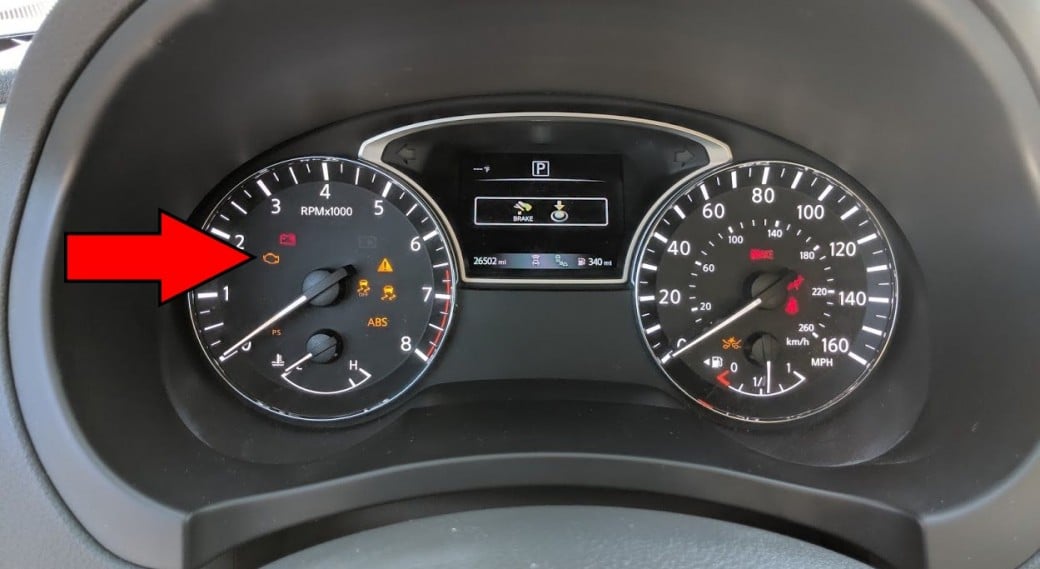
If your Nissan’s check engine light is flashing, stop driving the vehicle immediately. A flashing light indicates a severe misfire that can cause catastrophic damage to your catalytic converter, an expensive component. Also, if you observe any of the following symptoms concurrently with the check engine light, pull over safely and turn off the engine: significant loss of power, smoke emanating from the engine or exhaust, strong burning smells, excessive fluid leaks (oil, coolant), steam from under the hood, or unusual knocking/grinding noises. Continuing to drive under these conditions can lead to irreversible engine damage or pose a fire hazard. Do not attempt self-diagnosis in these urgent situations; contact a tow service and take your vehicle to a certified mechanic or Nissan dealership.
Common Mistakes When Diagnosing Nissan Engine Lights
Even with good intentions, DIYers can make mistakes that prolong diagnosis or worsen vehicle issues. Understanding these pitfalls can help you avoid them.
-
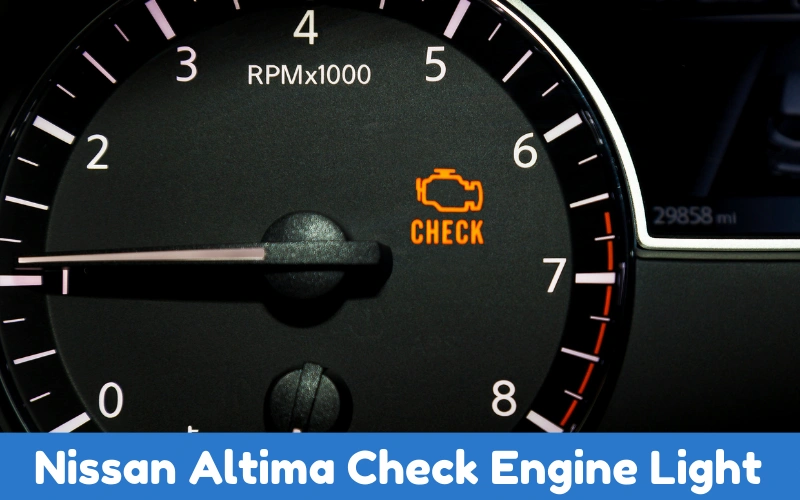
Ignoring the Light Entirely: A common mistake is simply ignoring a non-flashing check engine light, hoping it will go away. This can lead to minor issues escalating into major, more expensive repairs. Ignoring a code like “Nissan P0420 fix” for too long could damage your catalytic converter beyond repair The SAE J1962 standard defines the physical 16-pin OBD-II diagnostic connector, universally found in Nissan vehicles since 1996, while SAE J1979 defines the communication protocols used to retrieve diagnostic information, like DTCs and live sensor data, via diagnostic scanners.
This ensures any compliant scanner can interface with a Nissan’s ECU. (Source: sae.org, SAE International).
-
Clearing Codes Without Diagnosis: Erasing the codes immediately after they appear, without first identifying or addressing the underlying problem, is another frequent error. While this temporarily turns off the light, it also erases valuable diagnostic data stored by the vehicle’s computer, making it harder to pinpoint the fault when the light inevitably returns.
-
Misinterpreting Codes: Assuming a code directly points to a faulty component (e.g., “P0133 O2 Sensor Circuit Slow Response (Bank 1 Sensor 1)” automatically means a bad O2 sensor). Often, a code indicates a *system* issue, and the sensor is reporting the problem, not necessarily causing it.
Fuel pressure, vacuum leaks, or exhaust leaks can all trigger O2 sensor codes According to data compiled by Mitchell 1 ProDemand in Q4 2023, the P0420 (Catalyst System Efficiency Below Threshold, Bank 1) code is among the top 5 most frequently reported check engine light codes for 2018-2022 Nissan Rogues.
Common diagnostic steps listed include checking for exhaust leaks, oxygen sensor performance, and catalytic converter integrity. (Source: mitchell1.com, Mitchell 1 ProDemand).
-
Using Unreliable Scanners or Information: Relying on very cheap, generic OBD-II scanners that provide minimal information, or consulting unverified online sources for code definitions, can lead to incorrect diagnoses. Always use a reputable scanner and cross-reference information with official service manuals or trusted automotive databases.
-
Not Checking the Simplest Things First: Overlooking obvious culprits like a loose gas cap, a disconnected vacuum hose, or dirty air filter in favor of complex theories. Always start with the easiest, most accessible checks before delving deeper into the system.
Unusual Nissan Check Engine Light Scenarios
While the step-by-step guide covers standard situations, your Nissan’s check engine light might present in less common ways. Knowing how to approach these edge cases can prevent frustration and misdiagnosis.

-
Intermittent Check Engine Light: If your check engine light comes on and then turns off on its own, it often indicates an intermittent fault. This could be due to a loose connection, a sensor briefly going out of range, or fluctuating environmental conditions. What to do differently: Instead of immediately trying to fix a persistent issue, log the conditions (speed, engine temp, weather) when the light appears and disappears.
Scan for “pending codes” even when the light is off, as these can point to the intermittent problem before it becomes constant. If the light reappears consistently, follow the core protocol.
-
Multiple Unrelated Codes: Occasionally, your scanner might display several seemingly unrelated DTCs at once. This can be overwhelming. What to do differently: Prioritize codes that are critical (e.g., engine performance related) or those that share a common system (e.g., multiple codes related to the EVAP system).
Sometimes, one underlying issue (like a low battery voltage or a failing ground connection) can trigger a cascade of seemingly unrelated codes. Address the most fundamental system issues first, then re-scan. A weak battery, for instance, can cause erratic sensor readings across the vehicle.
-
Codes After Recent Service or Repair: If the check engine light appears shortly after you’ve had service performed (even minor work like an oil change or air filter replacement), it’s possible a component was inadvertently left loose or disconnected. What to do differently: Re-inspect the area that was recently worked on.
Check for disconnected vacuum lines, loose electrical connectors, or an improperly seated air filter housing. A classic example is a “Nissan gas cap check engine” light after refueling, if the cap was not properly tightened The 2024 Nissan Frontier FSM (Factory Service Manual) for the VQ38DD engine indicates that during camshaft position sensor replacement, the sensor mounting bolt should be torqued to 8.0 N·m (5.9 lb-ft) to ensure proper seating and prevent oil leaks or sensor dislodgement.
Incorrect torque can lead to intermittent misfires or P0340/P0345 codes. (Source: nissan-techinfo.com, Nissan Technical Information).
When to Seek Professional Mechanic Help Immediately
While DIY diagnosis can save you money and empower you with knowledge, there are definite limits to what can be safely and effectively handled at home. Knowing when to escalate to a professional is crucial for your safety and the longevity of your Nissan.
If you encounter any of the following scenarios, you must stop all DIY diagnostic efforts and contact a certified Nissan technician or ASE-certified mechanic immediately:
Audible Premium Plus — Annual Membership
12 audiobook credits up front, plus the full Audible catalogue.
See Annual PlansIf your check engine light is flashing and the vehicle exhibits severe symptoms:
→ Contact a tow service and transport your Nissan to a professional mechanic within 2 hours. Do not drive it.
If you have diagnosed an issue, attempted a repair, and the check engine light or associated symptoms persist:
→ Contact a professional mechanic within 24 hours to schedule a comprehensive diagnostic evaluation.
If the retrieved DTCs point to complex systems like transmission issues (e.g., P07xx series), internal engine problems (e.g., P03xx not related to basic misfire), or advanced electrical faults that you do not understand:
→ Contact a professional mechanic within 48 hours for expert diagnosis and repair planning.
Early professional intervention can prevent minor issues from becoming catastrophic, ensuring your Nissan remains reliable. If your Nissan is still under warranty, especially an extended warranty, contacting the dealership or an authorized service center is often the best first step A 2022 industry survey indicated that over 70% of independent repair shops specializing in import brands, including Nissan, prioritize hiring or continuously training their technicians to achieve ASE certifications.
This commitment aims to enhance diagnostic accuracy and repair quality, reducing comebacks by up to 15% compared to non-certified technicians. (Source: ase.com, ASE).
Cited Sources for Nissan Engine Light Information
The information provided in this guide is based on established automotive diagnostic principles and common Nissan vehicle characteristics. We emphasize the importance of consulting authoritative sources for precise, model-specific details.
- OEM (Nissan) service manuals and technical bulletins for specific Nissan Diagnostic Trouble Code (DTC) definitions and common causes [Source: Nissan Motor Co. Ltd.].
- Society of Automotive Engineers (SAE) standards for general OBD-II diagnostic procedures and safety protocols [Source: SAE International].
- Certified automotive repair associations (e.g., ASE) recommendations for when to seek professional mechanic intervention for specific vehicle symptoms and best practices in automotive repair [Source: National Institute for Automotive Service Excellence (ASE)].
- Reputable automotive diagnostic databases for expanded DTC explanations and troubleshooting flowcharts [Source: Various industry-recognized diagnostic software providers].
Frequently Asked Questions About Nissan Check Engine Lights
Here are some common questions Nissan owners ask about their check engine lights.
Can I drive my Nissan if the check engine light is on?
If the light is solid, you can generally drive short distances carefully. However, if it’s flashing, pull over immediately and do not drive. A flashing light indicates a severe problem that requires urgent professional attention to prevent serious engine damage.
How do I reset my Nissan check engine light?
After diagnosing and fixing the underlying issue, you can reset the light using an OBD-II scanner’s “Clear Codes” function. Alternatively, disconnecting the negative battery terminal for 15-20 minutes can reset it, but this may also erase other vehicle settings.
What does a Nissan P0420 code mean?
A P0420 code typically indicates “Catalyst System Efficiency Below Threshold (Bank 1).” This means your catalytic converter isn’t operating effectively. It can be caused by a failing catalytic converter, but also by issues like exhaust leaks or faulty oxygen sensors.
Can a loose gas cap cause a Nissan check engine light?
Yes, a loose or faulty gas cap is a very common reason for the check engine light to illuminate. It compromises the Evaporative Emission Control (EVAP) system, leading to codes like P0455 or P0456. Tightening the cap often resolves this after a few drive cycles.
How much does it cost to diagnose Nissan check engine light codes?
The cost varies significantly. DIY diagnosis with an OBD-II scanner can cost under $50 for the tool. Professional diagnostic fees typically range from $80 to $150, which covers the technician’s time to scan codes and perform a thorough inspection.
Deciphering ‘nissan check engine light codes’ doesn’t have to be a daunting task. By following the precise procedural steps outlined in this guide, you can confidently approach many common check engine light scenarios. We’ve equipped you to perform initial diagnoses, troubleshoot basic issues like a loose gas cap or a minor sensor fault, and understand the meanings behind various Nissan DTCs.
your safety and your vehicle’s health are paramount. Always adhere to the contraindications and know when to seek professional help. Empowering yourself with this knowledge not only saves money but also fosters a deeper connection with your vehicle’s well-being. For more automotive insights and guides, visit the Carmechan homepage.