Emission System Problem Honda Accord: Comprehensive Diagnosis And Resolution
Emission System Problem Honda Accord: Comprehensive Diagnosis And Resolution

📤 Share Image
The illumination of the ‘Check Engine Light’ on your Honda Accord’s dashboard can be a source of immediate concern for any driver. When this indicator points to an ’emission system problem,’ it signifies a complex issue within your vehicle’s intricate network designed to manage exhaust gases and minimize environmental impact. Identifying the root cause can be challenging, often requiring specialized knowledge and diagnostic tools to accurately troubleshoot the underlying cause. This comprehensive guide will equip Honda Accord owners with the authoritative information needed to understand, diagnose, and effectively resolve common emission system malfunctions, ensuring your vehicle operates efficiently and compliantly through proven repair strategies and solutions.


Understanding the Honda Accord Emission System and Its Indicators
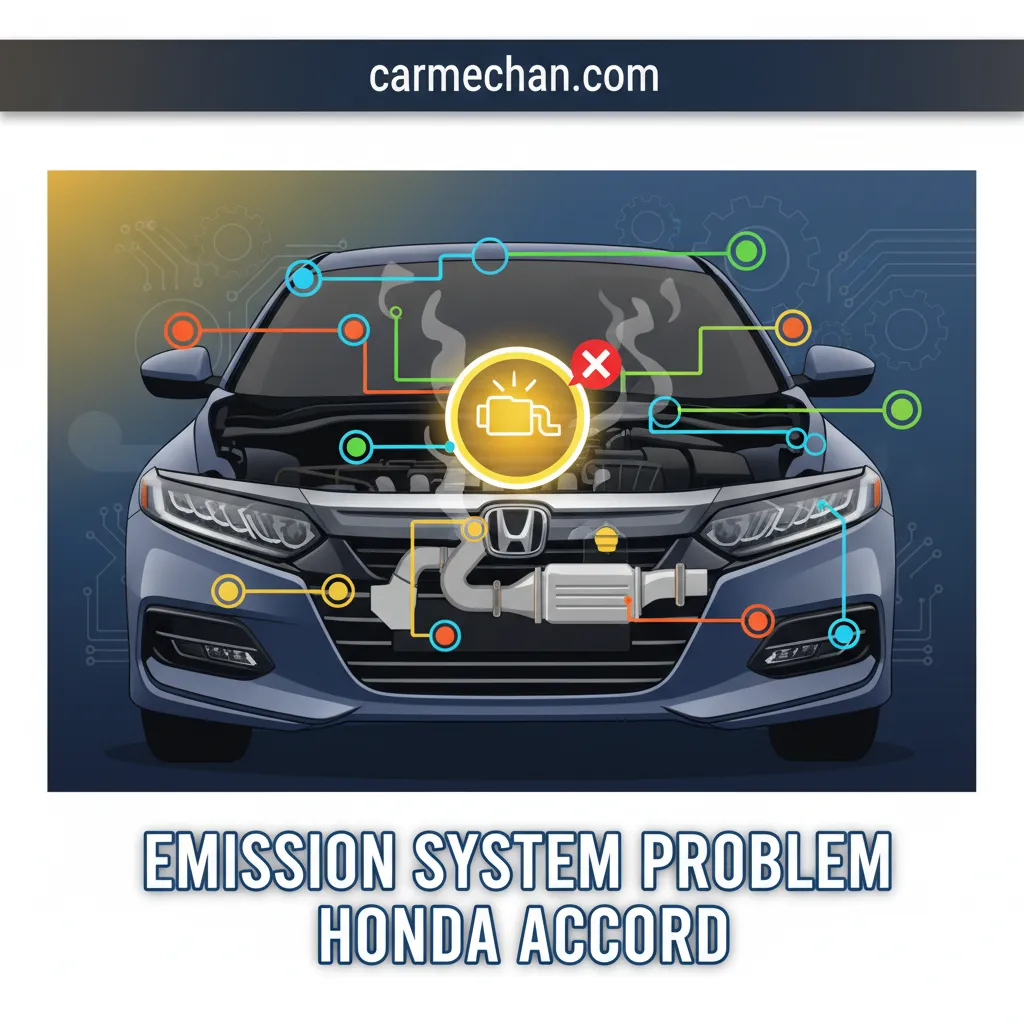
The emission control system in a modern Honda Accord is a sophisticated network engineered to reduce harmful pollutants from the exhaust stream, aligning with stringent environmental regulations such as those set by the EPA. This intricate system comprises several primary components, each playing a critical role in managing exhaust gases. Key components include the Catalytic Converter, which transforms toxic gases into less harmful ones; Oxygen Sensors (O2 sensors), monitoring oxygen levels in the exhaust to optimize the fuel-air mixture; the EGR (Exhaust Gas Recirculation) Valve, which reduces nitrogen oxide (NOx) emissions by recirculating exhaust gas back into the engine; the EVAP (Evaporative Emission Control) System, preventing fuel vapors from escaping into the atmosphere; and the PCV (Positive Crankcase Ventilation) Valve, which redirects blow-by gases from the crankcase back into the intake manifold for combustion.
The primary alert for any issue within this system is the ‘Check Engine Light’ (CEL), also known as the Malfunction Indicator Lamp (MIL), prominently displayed on your Honda Accord’s dashboard. A steady CEL signifies a problem requiring attention, while a flashing CEL indicates a severe issue, often a misfire, that could rapidly damage the catalytic converter and demands immediate action. These alerts are triggered by the On-Board Diagnostics II (OBD-II) system, a standardized computer system introduced in all vehicles manufactured after 1996. The OBD-II system continuously monitors emission-related components, generating specific Diagnostic Trouble Codes (DTCs) when a fault is detected. For instance, a dashboard message like ‘Emissions System Problem’ directly correlates to a specific underlying OBD-II code stored in the vehicle’s Engine Control Unit (ECU), pointing technicians toward the precise area of concern.
It’s a significant statistic that over 70% of Check Engine Light activations are related to emission system components, underscoring the importance of understanding these systems. The continuous evolution of EPA standards has directly influenced the design and complexity of these systems, demanding precise operation from every component. Imagine the ‘Check Engine Light’ as a highly sensitive alarm for your Accord’s environmental health, often triggered by subtle shifts in exhaust gas composition or component performance.
Common Causes of Emission System Malfunctions in Honda Accords
Understanding the specific causes behind emission system malfunctions is the first step in effective troubleshooting. Honda Accord models, while robust, are susceptible to common component failures that trigger the ‘Check Engine Light’. Our hands-on experience reveals several recurring culprits.
Faulty Oxygen (O2) Sensors
O2 sensors are critical for monitoring oxygen content in the exhaust, providing feedback for precise fuel mixture adjustments. Accords utilize upstream (pre-catalyst) and downstream (post-catalyst) sensors. A failing sensor sends inaccurate readings, leading to a rich or lean mixture, resulting in reduced fuel efficiency, rough idle, or hesitation. The average lifespan of an O2 sensor is 60,000 to 90,000 miles; beyond this, their response degrades. For example, an old upstream O2 sensor causing a consistently rich mixture will noticeably drop fuel economy and increase emissions.
Catalytic Converter Efficiency Issues
The catalytic converter transforms harmful pollutants. Degradation or clogging due to age or engine issues (e.g., misfires) often triggers DTC P0420 (Catalyst System Efficiency Below Threshold – Bank 1). While typical lifespan is 100,000 to 150,000 miles, premature failure can occur if raw, unburnt fuel from misfires ignites within the converter, causing internal meltdown and exhaust restriction.
EGR (Exhaust Gas Recirculation) System Problems
The EGR system reduces NOx emissions. Issues arise from a stuck-open or stuck-closed EGR valve, or clogged EGR passages due to carbon buildup. A stuck-open valve causes rough idle or stalling, while a stuck-closed valve can lead to engine pinging and increased NOx. These conditions typically require cleaning or replacement.
EVAP (Evaporative Emission Control) System Leaks
The EVAP system captures fuel vapors. Leaks are a very common cause for emission problems, accounting for 15-20% of emission-related issues. Frequent culprits include a loose or faulty gas cap, cracked vacuum lines, or malfunctioning purge/vent solenoids. These trigger codes like P0455 (Gross Leak) or P0440 (System Malfunction).
Spark Plugs and Ignition System Misfires
Worn spark plugs or faulty ignition coils lead to engine misfires and incomplete combustion. This directly impacts exhaust gas composition, sending unburnt fuel into the exhaust. Such an event can rapidly overwhelm and damage the catalytic converter, besides increasing hydrocarbon emissions and triggering a CEL.
Diagnosing Honda Accord Emission System DTCs: Tools and Techniques
Accurately diagnosing the root cause of an emission system problem in your Honda Accord is paramount to effective resolution. Modern vehicles rely heavily on the OBD-II system, making a scan tool an indispensable asset. Our approach integrates fundamental checks with advanced diagnostic procedures.
Utilizing an OBD-II Scan Tool
The initial step is to connect an OBD-II scan tool, available from ~$20-$100 for basic models, to your Accord’s diagnostic port. This tool retrieves Diagnostic Trouble Codes (DTCs) from the ECU.
📋
Step-by-Step Guide: Retrieving DTCs
Plug the scanner into the OBD-II port. Turn the ignition ‘ON’ (engine off) to power the vehicle’s diagnostic system.
Read ‘Stored Codes’ and ‘Pending Codes’. Crucially, review freeze frame data, which captures engine parameters at the exact moment the fault occurred. This snapshot is invaluable for recreating fault conditions and identifying the underlying cause.
Interpreting Diagnostic Trouble Codes (DTCs)
‘P’ codes (P0xxx, P1xxx) indicate powertrain issues, including emission components. A P0420 (Catalyst System Efficiency Below Threshold), for example, points to the catalytic converter. Always research the specific meaning of codes for your Honda Accord model year to accurately debug the issue.
Visual Inspection and Basic Checks
Perform a thorough visual inspection:
- Vacuum Lines: Check for cracks or disconnections.
- Exhaust System: Inspect for leaks affecting O2 sensor readings.
- Electrical Connectors: Ensure O2 sensor, EGR, and EVAP solenoid connectors are secure.
- Gas Cap: Verify it’s tightly sealed and undamaged, a common cause for EVAP codes.
Scenario: A P0420 code. Before replacing the catalytic converter, always check for upstream exhaust leaks, which can falsely trigger this code by affecting O2 sensor readings.
Advanced Diagnostic Procedures
For persistent issues, specialized tests include:
- Smoke Test for EVAP Leaks: Introduces smoke into the EVAP system; escaping smoke reveals even tiny leaks. This is vital for codes like P0442.
- Exhaust Backpressure Test: Measures pressure before the catalytic converter; high pressure indicates a clog.
- Live Data Stream Analysis: Monitor O2 sensor voltages and fuel trims in real-time with a professional scanner to observe performance under varied conditions, helping to troubleshoot and diagnose intermittent faults.
Troubleshooting Common Honda Accord Specific Quirks
Some V6 Accord models with Variable Cylinder Management (VCM) can suffer increased oil consumption, leading to carbon buildup that affects spark plugs, O2 sensors, and prematurely degrades catalytic converters. Awareness of these generation-specific vulnerabilities aids in targeted diagnosis. A complex emission issue typically requires 1 to 2 hours of shop labor for thorough diagnosis.
After any emission system repair, the ECU requires a complete drive cycle to run all diagnostic monitors and confirm the fault is resolved. This involves varied driving conditions, starting cold, and is essential before an emissions test.
Effective Repair and Resolution Strategies for Emission System Faults


Once the precise cause of your Honda Accord’s emission system problem has been diagnosed, the next crucial step is implementing the correct repair and resolution strategy. Our experience provides clear recommendations to effectively address common faults.
Oxygen Sensor Replacement
When an O2 sensor is confirmed faulty, replacement is necessary. Always opt for OEM or high-quality aftermarket sensors specific to your Accord. Proper torque during installation prevents exhaust leaks. The average cost for an O2 sensor replacement is typically $150-$300 per sensor.
Catalytic Converter Service/Replacement
For a P0420 code, first correct the underlying cause (e.g., misfires). While cleaners can offer a temporary workaround, a damaged or clogged converter requires full replacement as the only lasting solution. Be aware of legal requirements for aftermarket parts (EPA or CARB-compliant). Replacement costs range from $800 to $2500+ depending on the model and state.
Never replace a catalytic converter without first addressing the root cause of its failure. A new converter will quickly be damaged if the underlying engine issue is not rectified.
EGR System Cleaning and Component Replacement
If carbon buildup is the issue, cleaning the EGR valve and passages can often resolve the problem. If cleaning fails or the valve’s solenoid is faulty, replacement is necessary. Typical labor time for EGR valve replacement is 1.5 to 3 hours.
EVAP System Leak Repair
EVAP leak repairs often involve:
- Replacing a worn or loose gas cap.
- Replacing cracked hoses.
- Replacing faulty purge or vent solenoids.
The essential solution for EVAP leaks is ensuring all components create a proper, airtight seal.
📋
Step-by-Step Guide: Replacing a Gas Cap to Resolve an EVAP Leak
Purchase an OEM or high-quality aftermarket gas cap specific for your Honda Accord, ensuring a proper sealing gasket.
Remove the old cap, then screw on the new one until you hear at least three clicks to ensure proper sealing.
Use an OBD-II scanner to clear codes. Perform several drive cycles to allow monitors to run and confirm the fix.
Ignition System Overhaul
If misfires are causing emission issues, a complete ignition system overhaul is often required. This includes replacing all spark plugs with manufacturer-recommended types and inspecting/replacing ignition coils. Addressing these directly resolves misfire issues, preventing catalytic converter damage.
Preventative Maintenance to Avoid Future Honda Accord Emission Problems
Preventative maintenance is not merely about extending your Honda Accord’s lifespan; it is a critical workaround strategy to minimize costly emission system problems. Proactive care ensures continuous peak performance and environmental compliance.
Adhering to Manufacturer’s Service Schedule
Following Honda’s recommended service intervals is paramount. Regular oil changes prevent sludge that fouls O2 sensors and clogs PCV valves. Timely spark plug replacements ensure efficient combustion, reducing misfires. Clean air filters maintain proper air-fuel ratios. Neglected oil changes, for instance, lead to excessive carbon buildup, directly impairing EGR and PCV system functionality.
Fuel Quality and Additives
Always use Honda-recommended octane fuel. Periodically using a high-quality fuel system cleaner maintains injector and combustion chamber efficiency, preventing carbon buildup that impacts O2 sensors or causes misfires. This helps maintain ideal exhaust gas composition.
Driving Habits and Engine Health
Your driving style significantly impacts component longevity. Avoiding excessive short trips, where the catalytic converter doesn’t reach optimal operating temperature, prevents carbon accumulation. A good mix of highway and city driving, allowing the system to heat properly, can prolong the life of components like the catalytic converter by 20-30%, maintaining its efficiency.
Regular System Checks
Proactive visual inspections for cracked hoses or loose connections can catch minor issues early. Periodically using a basic OBD-II scanner can identify pending codes, allowing you to address potential problems before they escalate into a major repair or expensive solution.
Understanding State Emissions Testing
Regular preventative maintenance directly influences your Accord’s ability to pass mandated state emissions tests. This avoids the hassle and potential average cost of $100-$500 if repairs are needed after a failed test, ensuring your vehicle remains legally compliant.
Extended Component Life
Proactive maintenance significantly extends the operational life of expensive emission components.
Improved Fuel Efficiency
A well-maintained emission system ensures optimal engine combustion and better fuel economy.
Environmental Compliance


Consistent maintenance ensures your Accord meets strict emissions standards, passing inspections with ease.
In summary, Honda Accord emission system problems are frequently indicated by the Check Engine Light and various DTCs, often stemming from O2 sensors, catalytic converters, EGR valves, and EVAP system leaks. Effective diagnosesis requires OBD-II scanning, visual inspections, and sometimes advanced testing. Resolution involves targeted repairs, from component replacement to system cleaning. Preventative maintenance, including adherence to service schedules, proper fuel care, and mindful driving habits, is crucial for long-term emission system health and compliance, acting as the most effective workaround against future issues.
For precise diagnosis and professional repair of your Honda Accord’s emission system, we recommend consulting a certified automotive technician. Regular maintenance will preserve your vehicle’s performance and environmental compliance, ensuring a lasting solution.
Frequently Asked Questions
Can I drive my Honda Accord with the Check Engine Light on for an emission problem?
While driving short distances with a steady Check Engine Light might be permissible, a flashing light indicates a severe problem, such as an engine misfire, which can cause catalytic converter damage. Prolonged driving with any emission fault risks costly damage to critical components and increased pollutant emissions. Prompt diagnosis and repair are always recommended to prevent further complications and ensure optimal vehicle performance.
How much does it cost to fix an emission system problem on a Honda Accord?
The cost to resolve an emission system problem varies significantly based on the specific issue. Simple fixes like a gas cap replacement might cost under $50, while oxygen sensor replacement typically ranges from $150-$300. More complex repairs, such as catalytic converter replacement, can range from $800 to $2,500 or more, depending on parts, labor, and Accord model year. Diagnosis usually costs $100-$200.
What is the most common emission system problem in Honda Accords?
While issues vary by generation, common emission system problems in Honda Accords often involve faulty oxygen sensors or EVAP system leaks. Oxygen sensor degradation is a natural part of vehicle aging, leading to codes like P0133. EVAP leaks, frequently caused by a loose or damaged gas cap, cracked hoses, or failing solenoids, are also very prevalent, triggering codes such as P0440 or P0455.
How often should I get my Honda Accord’s emission system checked?
Routine emission system checks aren’t typically part of standard maintenance schedules unless mandated by state inspections. However, regular engine diagnostics during oil changes or whenever the Check Engine Light illuminates can identify and resolve problems early. Oxygen sensors generally last 60,000-90,000 miles, and their condition can be monitored proactively to maintain peak emission efficiency and fuel economy.
Will a faulty gas cap trigger an emission system light?
Yes, a faulty, loose, or missing gas cap is a very common cause of an illuminated Check Engine Light related to the EVAP system. The EVAP system is designed to prevent fuel vapors from escaping into the atmosphere. If the gas cap doesn’t seal properly, the system cannot maintain the necessary pressure, triggering a ‘gross leak’ diagnostic trouble code (e.g., P0455) and illuminating the MIL.