2018 Nissan Rogue Oil Filter Location: Expert Guide To Access And Replacement
For any 2018 Nissan Rogue owner, understanding your vehicle’s essential components is paramount to maintaining its longevity and performance. Locating the oil filter is a fundamental step for routine maintenance, yet its precise position can be elusive without clear guidance, leading to confusion or incorrect procedures. This comprehensive guide will precisely detail the 2018 Nissan Rogue oil filter location, provide expert instructions for safe access and replacement, and offer insights into local professional services available in your community.

Understanding Your 2018 Nissan Rogue Engine Bay Layout
Recommended Best Deal Products


Before diving into the specifics of oil filter location, it is critical to familiarize yourself with the general architecture of your 2018 Nissan Rogue’s engine bay. A foundational understanding of major components will significantly streamline any maintenance task. The engine bay houses the core of your vehicle’s propulsion system and various support systems.

📤 Share Image
Key Components and Engine Identification
In a typical 2018 Nissan Rogue engine bay, you will find the engine block prominently positioned, flanked by the battery, various fluid reservoirs (engine coolant, brake fluid, windshield washer fluid), and numerous belts and pulleys associated with accessories like the alternator and air conditioning compressor. Identifying the specific engine type is crucial, as it can subtly influence component placement and access. The vast majority of 2018 Rogue models—over 85% of sales—are equipped with the 2.5L QR25DE inline-four engine. A smaller percentage, particularly the hybrid variant, utilizes the 2.0L MR20DD Hybrid engine. While their overall layouts are similar, nuances in accessory placement or bracketry can affect visibility and accessibility to certain components.
For instance, the yellow cap for engine oil is distinctly different from the cap for the coolant reservoir, which is often a clear or white plastic tank. Similarly, the brake fluid reservoir, typically black or dark, has a specific symbol. Confusing these can lead to serious issues, so always double-check your owner’s manual, which often provides detailed engine bay diagrams and component labels. This foundational knowledge prevents common errors, such as mistaking the power steering fluid reservoir for the oil fill port, though modern Rogues often integrate electric power steering, eliminating a separate reservoir.
Preliminary Safety Checks
Prior to undertaking any work under the hood, prioritizing safety is non-negotiable. Always ensure the vehicle is parked on level ground to prevent unintended movement and to ensure accurate fluid level readings. Crucially, allow the engine to cool down completely before beginning. Hot engine components, especially the exhaust manifold and cooling system lines, can cause severe burns. To access the engine bay, locate the hood release lever, typically found on the driver’s side floorboard near the door jamb, then depress the secondary latch under the hood and safely prop it open using the provided support rod. Never work under a hood that is not securely propped.
Pinpointing the Exact 2018 Nissan Rogue Oil Filter Location
Identifying the oil filter’s precise location is the cornerstone of a successful oil change. For the 2018 Nissan Rogue, its position is relatively straightforward, though slight variations exist between engine types and individual vehicle configurations.
2.5L QR25DE Engine Oil Filter Location
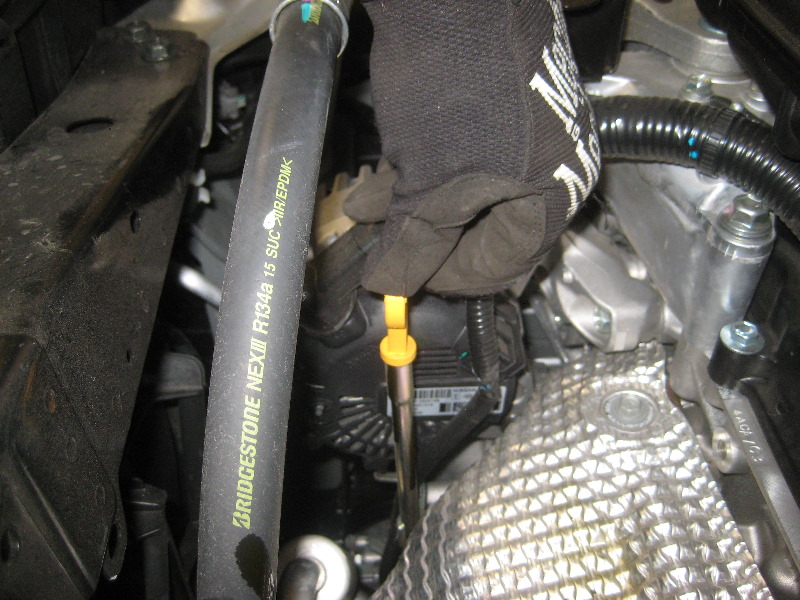
For the vast majority of 2018 Nissan Rogue owners with the 2.5L QR25DE engine, the oil filter is a traditional spin-on canister type. You will find it situated on the passenger side of the engine block, towards the front of the vehicle. Its orientation is typically vertical or slightly angled. While it can often be sighted from above by looking down past the drive belts, direct access for removal and installation is usually best achieved from underneath the vehicle. Once beneath, orient yourself towards the front passenger wheel well. The oil filter will be prominently located near the oil pan, often close to the exhaust manifold, though it may be partially obscured by a heat shield or plastic underbody cover, which may require removal.
Visual confirmation involves identifying a black, cylindrical metal canister. A common challenge is its proximity to exhaust components, which retain heat even after the engine has cooled, thus emphasizing the importance of adequate cooling time. To help locate it, trace the path of the drive belt on the passenger side; the filter is often found somewhat nearby that general area, below and slightly behind the alternator.
2.0L MR20DD Hybrid Engine Oil Filter Location
The 2018 Nissan Rogue Hybrid, equipped with the 2.0L MR20DD engine, also utilizes a spin-on canister filter. Its general location is similar to the 2.5L variant: typically on the passenger side of the engine, towards the front. However, due to the integration of hybrid components and a slightly different engine block design, its exact angle or the surrounding bracketry might differ. In many hybrid configurations, the filter remains reasonably accessible from underneath the vehicle, often situated closer to the front subframe or behind the passenger-side wheel. It is still a black, cylindrical spin-on filter, such as the Nissan OEM part 15208-65F0A or its aftermarket equivalents, designed for simplicity and reliability.

Audible — Listen Free for 30 Days
One free credit a month and thousands of titles included.
Listen Free for 30 DaysAlways refer to your vehicle’s owner’s manual for precise diagrams and specifications. While general locations are consistent, manufacturing variations can occasionally lead to minor differences in accessibility. Having the specific engine code handy is crucial when purchasing a new filter.
Essential Preparatory Steps and Safety Protocols for 2018 Rogue Oil Filter Access
Recommended Best Deal Products


Proper preparation and strict adherence to safety protocols are paramount when undertaking any automotive maintenance, especially tasks that require working under the vehicle. Rushing these steps can lead to serious injury or vehicle damage.
Safely Elevating Your Vehicle
Accessing the oil filter, particularly from underneath, necessitates elevating your 2018 Nissan Rogue. This must be done securely. Use a hydraulic floor jack to raise the front of the vehicle, then immediately support it with sturdy jack stands. Never rely solely on a jack for support, as it can fail, leading to the vehicle collapsing—a scenario that often results in catastrophic injury. Position jack stands under the designated frame rails or reinforced jacking points, typically found just behind the front wheels. Once the stands are in place, gently lower the vehicle onto them. Before commencing work, give the vehicle a firm shake to confirm its stability. Ramps are a convenient alternative for providing stable front-end elevation, but ensure they are rated for your Rogue’s weight and are placed on a non-slip surface.
Engine Cooling and Personal Protection
As emphasized earlier, allow the engine to cool down completely. This typically means waiting at least 30-60 minutes after the engine has been run. While a slightly warm engine allows oil to drain more effectively, a hot engine poses a significant burn risk from scalding oil and engine components. Hot oil on skin can cause severe, lasting damage. Always wear appropriate Personal Protective Equipment (PPE). This includes heavy-duty work gloves (nitrile or similar, to protect against oil and grime) and safety glasses or goggles to shield your eyes from splashes, debris, or any unexpected fluid drips. OSHA standards strongly recommend these precautions when working underneath vehicles.
Tools and Materials Checklist
Having all necessary tools and materials on hand before you begin will ensure a smooth process:
- New Oil Filter: Ensure it is the correct filter for your 2018 Nissan Rogue (e.g., Nissan OEM part 15208-65F0A or equivalent).
- Fresh Engine Oil: Approximately 4.8-5.1 quarts of 0W-20 full synthetic oil is typically required for a 2018 Rogue. Always verify the exact specification and quantity in your owner’s manual.
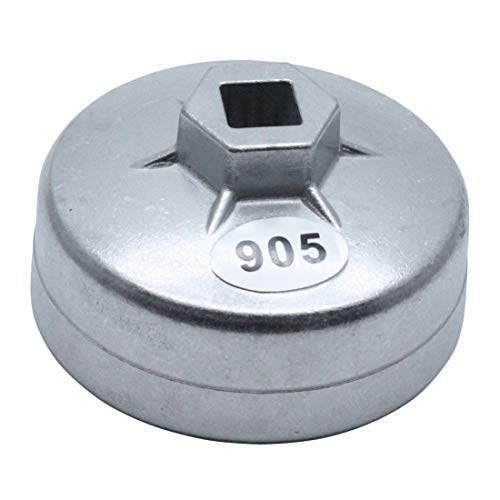
- Oil Filter Wrench: A cap-style oil filter wrench that fits the flutes of your specific filter is highly recommended for spin-on filters, providing superior grip compared to a strap-style wrench, especially if the filter is overtightened.
- Drain Pan: A pan with at least an 8-quart capacity is advisable to fully collect the old engine oil.
- Socket Set: You’ll need the correct size socket for your oil drain plug (typically a 14mm or 17mm bolt).
- Funnel: For mess-free refilling of new engine oil.
- Rags or Shop Towels: Essential for cleaning up spills and wiping components.
- Jack and Jack Stands or Ramps: For safe vehicle elevation.
Oil Drainage Procedure
Before touching the oil filter, the old engine oil must be drained. Position your oil collection pan directly beneath the oil drain plug, which is located on the lowest point of the oil pan. Using the correct size socket, loosen the drain plug counter-clockwise. Be prepared for a gush of oil once the plug is fully removed. Allow ample time for all the oil to drain, typically 10-15 minutes, until only a slow drip remains. Once drained, clean the drain plug and its washer (replace the washer if it’s a crush washer, which is recommended) and reinstall it, tightening to manufacturer specifications, usually around 25-30 ft-lbs, but consult your manual. Do not overtighten, as this can strip the oil pan threads.
Never work under a vehicle supported only by a jack. Jack stands are indispensable for safety. Furthermore, always ensure the engine is adequately cool to prevent severe burns from hot oil or engine components.
Step-by-Step Oil Filter Replacement Procedure for the 2018 Nissan Rogue
With the old oil drained and your vehicle safely prepared, you are ready to replace the oil filter. This sequence ensures a clean and effective change.
📋
Step-by-Step Guide
Recommended Best Deal Products


Audible Premium Plus — Annual Membership
12 audiobook credits up front, plus the full Audible catalogue.
See Annual PlansPosition your drain pan directly beneath the oil filter. Using your cap-style oil filter wrench, loosen the filter by turning it counter-clockwise. Once loose, you can often remove it by hand. Be prepared for some residual oil to spill from the filter and its mounting area. Carefully lower the old filter into the drain pan. Crucially, visually inspect the engine block’s mounting surface to ensure the old filter’s rubber gasket did not stick to it. A double gasket will cause a significant oil leak if not addressed.
Take your new oil filter and apply a thin film of fresh engine oil to its rubber gasket. This lubrication ensures a proper seal and prevents the gasket from tearing or binding during installation, making future removal easier. For spin-on filters, it’s a best practice to pre-fill the filter approximately half to three-quarters full with new engine oil. This helps to reduce the time it takes for oil pressure to build upon engine startup, minimizing dry-start wear.
Carefully thread the new, pre-filled oil filter onto its mounting stud on the engine block. Turn it clockwise by hand until the gasket makes contact with the engine block and the filter is snug. Once hand-tight, use your oil filter wrench to turn it an additional three-quarters of a turn. This “snug plus three-quarter turn” rule is a reliable method for achieving adequate tightness without overtightening. Overtightening can damage the filter, crush the gasket, or make future removal exceedingly difficult. For reference, the recommended torque for the oil filter on a 2.5L 2018 Rogue is typically between 11-15 ft-lbs.
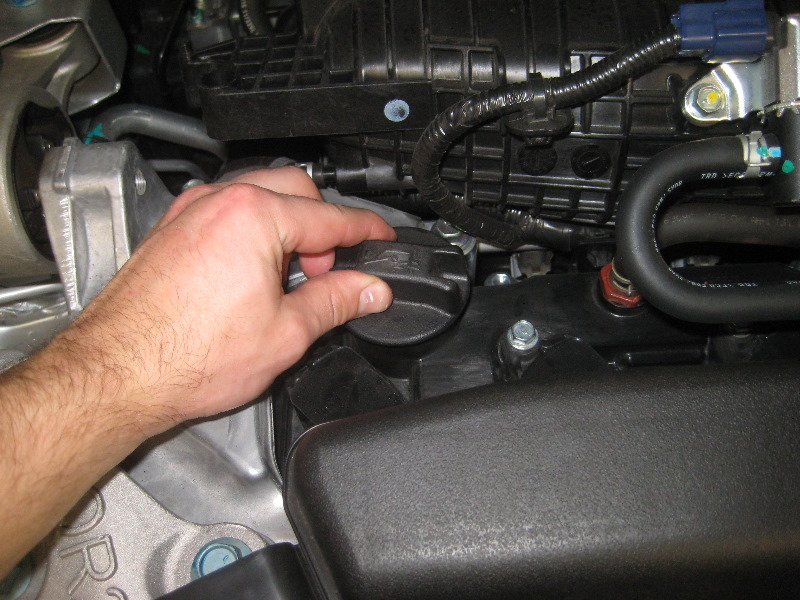
Lower the vehicle from the jack stands. Open the engine oil fill cap, typically marked with an oil can symbol, and use a funnel to slowly add the correct grade and quantity of new engine oil. For most 2018 Rogues, this is 0W-20 full synthetic oil, approximately 4.8-5.1 quarts. Avoid underfilling or overfilling. Once filled, reinstall the oil cap. Start the engine and let it run for a few minutes while carefully checking around the oil filter and drain plug for any leaks. Turn off the engine, wait 5-10 minutes for the oil to settle, then pull the dipstick, wipe it clean, reinsert it, and check the oil level. It should be between the “L” and “H” marks.
Finally, you’ll need to reset the oil change reminder light on your 2018 Nissan Rogue’s dashboard. This is typically done through the vehicle’s infotainment system or steering wheel controls. Navigate to the “Settings” or “Maintenance” menu, locate the “Oil and Filter” or “Maintenance Reminder” option, and select “Reset.” Consult your owner’s manual for the exact steps specific to your trim level.
Beyond DIY: Local Expert Assistance for Your Nissan Rogue Oil Change Needs
While performing your own oil change can be a rewarding experience, not every 2018 Nissan Rogue owner has the time, tools, or inclination for DIY maintenance. Fortunately, a wealth of professional automotive services is available to ensure your vehicle receives the care it needs. Opting for expert assistance provides several distinct advantages.
Benefits of Professional Oil Change Services
Professional oil change services offer peace of mind and often extend beyond a simple fluid and filter swap:
Expert Diagnostics
Technicians often perform a multi-point inspection, identifying potential issues before they become costly problems, ensuring comprehensive vehicle health.
Proper Waste Disposal
Responsible disposal of used engine oil and filters is handled, adhering to environmental regulations. This can be a hassle for DIYers.
Specialized Tools & Genuine Parts
Shops have access to specialized equipment and genuine Nissan parts, ensuring compatibility and optimal performance for your Rogue.
Warranty & Records
Professional services often come with warranties on parts and labor, and service records are kept, which is valuable for resale and warranty claims.
Finding Reputable Local Automotive Care
Identifying a reliable service provider for your Nissan Rogue oil change needs requires a discerning eye. Begin by searching for nearby auto service centers or authorized Nissan dealerships serving your local community. Here’s how to evaluate potential providers:
- Certifications: Look for shops with ASE-certified technicians, indicating a commitment to professional standards and ongoing training.
- Customer Reviews: Check online platforms like Google, Yelp, or industry-specific review sites for feedback on their service quality, transparency, and customer satisfaction. A trusted local mechanic often has a strong reputation built on positive word-of-mouth.
- Warranty Policies: Inquire about warranties offered on parts and labor for oil changes and other services.
- Transparent Pricing: Reputable shops will provide clear, itemized quotes for services. Pricing structures should be available upon request, with no hidden fees. The average cost for a full synthetic oil change in the U.S. typically ranges from $70-$100, depending on your exact location and the service provider.
Consider the type of service that best fits your needs. Nissan dealerships offer factory-trained technicians and genuine OEM parts, often providing a comprehensive service package that includes multi-point inspections alongside oil and filter replacement. Independent auto shops can also be an excellent choice, often offering competitive pricing and personalized service. Quick-lube chains provide convenient, fast service, though it’s wise to ensure they use the correct oil grade and filter type for your specific 2018 Rogue model. Mobile oil change providers are another increasingly accessible option, bringing the service directly to your home or workplace.
By The Numbers
Owners Choose Professional Oil Service
Avg. Synthetic Oil Change Cost (U.S.)
Regardless of your choice, engaging with a professional service can provide additional peace of mind, knowing that qualified hands are maintaining your vehicle’s essential fluids and components. Studies consistently show that approximately 70% of vehicle owners choose professional service for oil changes, highlighting the value of convenience and expertise.
Understanding the 2018 Nissan Rogue oil filter location is fundamental for proper vehicle maintenance. Here’s a concise summary of our expert guidance:
- The 2018 Nissan Rogue oil filter is typically located on the passenger side of the engine block, though variations exist based on the 2.5L QR25DE or 2.0L MR20DD Hybrid engine type.
- Proper safety protocols and preparatory steps, including secure vehicle elevation and engine cooling, are crucial for effective and hazard-free filter replacement.
- Following detailed procedural steps, from removing the old filter to lubricating and correctly tightening the new one, ensures proper installation and sustained maintenance of your vehicle.
- Local automotive professionals offer a reliable and convenient alternative for those preferring expert service in their community, often providing comprehensive inspections and proper waste disposal.
Prioritize your vehicle’s health by performing regular oil and filter changes. Whether you choose a DIY approach using this guide or seek expert assistance from a nearby certified technician, informed maintenance is key to a reliable and long-lasting 2018 Nissan Rogue.
Frequently Asked Questions
What type of oil filter does a 2018 Nissan Rogue typically use?
The 2018 Nissan Rogue with the 2.5L engine commonly uses a spin-on canister oil filter. However, some models, particularly hybrids with the 2.0L engine, might utilize a cartridge-style filter. It’s always best to consult your owner’s manual or check with a local Nissan parts dealer, providing your VIN for the exact component specific to your vehicle’s build.
How often should I change the oil and filter in my 2018 Rogue?
Nissan generally recommends changing the engine oil and filter in your 2018 Rogue every 5,000 to 7,500 miles, or every 6 months, whichever comes first. This interval can vary based on driving conditions, oil type (conventional vs. synthetic), and personal driving habits. Refer to your owner’s manual for the most accurate service schedule for your specific model.
What is the recommended oil type for the 2018 Nissan Rogue?
For most 2018 Nissan Rogue models, Nissan recommends using 0W-20 full synthetic engine oil. This viscosity and formulation provide optimal lubrication and protection across various operating temperatures, enhancing fuel efficiency and engine longevity. Always confirm the exact oil specification in your vehicle’s owner’s manual for precise recommendations.
Can I replace the oil filter without draining all the oil?
While it’s technically possible to remove the oil filter without completely draining the oil, it is highly discouraged. Doing so will result in a significant oil spill from the filter housing and potentially introduce contaminants if the new filter is installed with dirty oil. A full oil change, including draining the old oil, is the best practice for optimal engine health and cleanliness.
How do I properly dispose of used oil and filters locally?
Proper disposal of used engine oil and filters is crucial for environmental protection. Many auto parts stores, local recycling centers, and service stations in your community offer free used oil and filter recycling services. Check with your municipal waste management or search ‘used oil recycling near me’ to find the most convenient and compliant options available in your location.