Which Pedal Is The Brake In An Automatic Car Real 2026 Guide
Last Updated on September 1, 2026 by Albert Duke
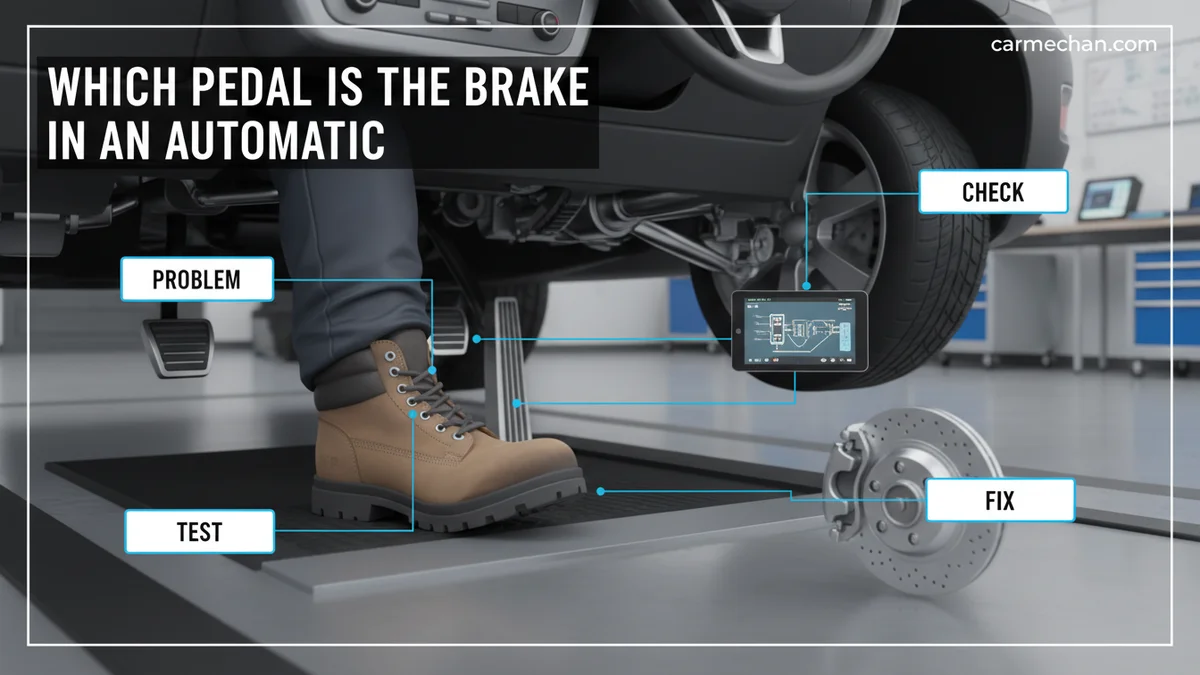
In an automatic car, the brake pedal is the wider pedal located to the left of the accelerator pedal. It is operated solely with your right foot, sharing the space with the narrower gas pedal.
If you’re wondering which pedal is the brake in an automatic car, it is unequivocally the wider pedal located to the left of the accelerator. This fundamental layout is crucial for every driver, whether you are new to automatics or transitioning from a manual transmission.
We’re here to guide you through confidently identifying, safely operating, and mastering the automatic car pedal system. By 2026, understanding this layout will remain essential for driving safety and proficiency. Let’s make sure you hit the road with complete confidence.
Key Takeaways
Recommended Best Deal Products


- The brake is the wider pedal, left of the accelerator.
- Automatic cars typically feature only two pedals.
- Always use your right foot for both pedals.
- Avoid common errors like confusing brake and gas.
- Practice consistent, smooth braking for safety.
How Many Pedals Do Automatic Cars Actually Have?
Automatic cars simplify the driving experience by typically featuring just two pedals. This design streamlines operation compared to the three pedals found in manual transmission vehicles. The two pedals you will encounter are the accelerator and the brake, each with a distinct role in controlling your vehicle’s movement.
Identifying the Wider Brake
The brake pedal in an automatic car is consistently located on the left side of the footwell area. You will find it is noticeably wider than the accelerator pedal. This larger surface area is a key design feature, making it easier for your right foot to locate and engage.
Its primary function is to slow down or stop the car. This pedal controls the vehicle’s braking system, converting kinetic energy into heat to reduce speed.
Locating the Narrow Accelerator
To the right of the brake pedal, you will find the accelerator pedal, often referred to as the gas pedal. This pedal is typically narrower and positioned slightly further forward than the brake. It is responsible for controlling the engine’s throttle, which dictates the car’s speed and power.
When you press the accelerator, you increase fuel flow to the engine, causing the car to speed up. Releasing it reduces fuel flow, and the car begins to coast or slow down.
Visualizing the Layout Clearly
The standard automatic car pedal layout places the brake on the left and the accelerator on the right. This arrangement is universal across almost all automatic vehicles, ensuring consistency for drivers worldwide. Understanding this visual and tactile difference is your first step towards confident driving.
[DIAGRAM: Standard automatic car pedal layout with brake and accelerator labeled]
[IMAGE: Close-up photo of automatic car pedals from driver’s perspective]
With a clear understanding of where each pedal is situated, we can now move on to the correct and safe methods for operating them.
How to Operate Automatic Car Pedals Correctly?
Proper operation of automatic car pedals is fundamental to safe and smooth driving. The overarching principle is to use only your right foot for both the accelerator and the brake. This technique minimizes confusion and reaction time in critical situations, ensuring you can react effectively.
Placing Your Right Foot
Your right foot should rest comfortably on the floor to the right of the brake pedal, ready to pivot. When you need to accelerate, slide your right foot to the accelerator. When you need to brake, pivot your right foot smoothly to the brake pedal.
This consistent use of a single foot for both controls builds muscle memory and prevents accidental pressing of both pedals simultaneously. Proper foot placement enhances your control and safety on the road.
Applying Smooth Brake Pressure
Braking in an automatic car requires a gentle, progressive application of pressure. Avoid sudden, hard braking unless it’s an emergency. For routine stops, begin by lightly pressing the brake pedal, gradually increasing pressure as you approach your stopping point.
As the car comes to a near stop, ease off the brake slightly to achieve a smoother, less jerky halt. This technique is often referred to as “feathering” the brake. Smooth braking not only provides comfort for passengers but also reduces wear and tear on your vehicle’s braking system.
Transitioning Between Pedals
The key to seamless driving in an automatic car is the smooth transition between the accelerator and the brake. Imagine your right foot as a pendulum, swinging gently between the two pedals. When you lift your foot from the accelerator, it should immediately be positioned above the brake, ready to apply pressure if needed.
This “cover the brake” technique is particularly important when driving in traffic or approaching intersections. It primes you for a quicker reaction. [EXPERT TIP: Visualizing foot movement] Practicing this pivot will greatly improve your driving fluidity and reaction time.
Understanding correct operation is vital, but equally important is recognizing and avoiding common errors that can compromise your safety.
5 Critical Automatic Pedal Mistakes to Avoid
Even with the simplified two-pedal system, automatic cars can pose safety challenges if drivers make common errors. Recognizing and actively avoiding these mistakes is paramount for safe driving. Statistics show that pedal misapplication can lead to severe consequences, making vigilance crucial.
Mistaking Gas for Brake
This is arguably the most dangerous and unfortunately common mistake. When startled or confused, drivers might accidentally press the accelerator instead of the brake. This can lead to uncontrolled acceleration and collisions. Always maintain situational awareness to prevent this.
Familiarity with the distinct feel and position of each pedal, coupled with consistent right-foot-only practice, is your best defense. [EXPERT ADVICE: Techniques to avoid accidental pedal confusion]
Using Both Feet Improperly
A common misconception, especially for drivers transitioning from manuals, is to use the left foot for the brake and the right for the accelerator. This is highly discouraged. It can lead to simultaneous pedal depression, slower reaction times, and confusion.
Even in 2026, driving instructors universally advocate for the right-foot-only method for automatics.
Hesitating During Emergencies
In a sudden emergency, a driver might freeze or hesitate, leading to delayed braking. The consistent practice of covering the brake pedal ensures your foot is already positioned for immediate action. Reacting quickly and decisively by firmly pressing the brake can prevent or lessen the impact of an accident.
Training your mind and muscle memory to react instantly is an ongoing process for all drivers.
Riding the Brake Pedal
“Riding the brake” means keeping your foot lightly on the brake pedal for extended periods. This habit causes unnecessary wear on brake pads and rotors, leading to costly maintenance. It also indicates your brake lights are constantly illuminated, which can confuse other drivers.
Rest your right foot on the floor when not actively accelerating or braking. Only engage the brake when you intend to slow down or stop.
Ignoring Regular Practice
Assuming you’ve mastered automatic driving after a few lessons can be a significant error. Lack of regular practice, especially for new or transitioning drivers, can lead to skills degradation. Consistent practice reinforces muscle memory and sharpens your reaction times.
Make a conscious effort to practice smooth braking and pedal transitions in various driving conditions. This continuous engagement ensures you remain a safe and competent driver.
Now that we’ve covered common pitfalls, let’s explore how automatic car pedals differ specifically from those in manual transmission vehicles.
Automatic Car Pedal Use Versus Manual Gearboxes
The distinction between driving an automatic and a manual car primarily revolves around the pedal layout and subsequent foot usage. For many, this difference is a key factor in choosing their preferred transmission type. Understanding these variations is especially helpful for drivers accustomed to manual cars.
Fewer Pedals to Manage
The most immediate difference is the number of pedals. Manual cars feature three pedals: clutch, brake, and accelerator. Automatic cars, by contrast, only have two: the brake and the accelerator. This reduction significantly simplifies the physical act of driving.
Without a clutch pedal, your left foot remains unused, typically resting on a footrest designed for this purpose. This reduces the mental and physical coordination required, making automatics often feel less demanding to operate.
No Clutch Operation
In a manual car, the clutch pedal is essential for changing gears and preventing the engine from stalling. Drivers must coordinate clutch engagement with accelerator input and gear lever movement. This complex dance is entirely absent in an automatic car. The car’s transmission handles gear changes automatically.
This removal of the clutch simplifies starting, stopping, and navigating traffic. It frees up mental bandwidth, allowing drivers to focus more on steering, observation, and anticipating traffic.
Adapting Your Foot Movement
For drivers transitioning from a manual to an automatic, adapting foot movement can be a small challenge. Manual drivers are accustomed to their left foot being active with the clutch. In an automatic, retraining your left foot to remain dormant is crucial. [ANECDOTE: A driver’s experience transitioning from manual to automatic braking] This prevents the dangerous habit of left-foot braking.
The right foot, which is typically solely for the accelerator in a manual, now takes on the dual role of operating both the accelerator and the brake. Consciously practicing this right-foot pivot builds the necessary muscle memory.
Recognizing these differences is a step towards adaptation, but consistent practice is truly the key to mastering your automatic braking skills.
When to Practice Your Automatic Braking Skills?
Consistent practice is not just for beginners; it’s a lifelong endeavor for every driver. Mastering automatic braking skills ensures your safety and the longevity of your vehicle. Knowing when and how to practice these skills can significantly enhance your driving proficiency and confidence.
Beginning Your Driving Journey
For new drivers learning in an automatic car, regular, structured practice is non-negotiable. Start in a safe, open area like a large empty parking lot. Focus on smooth starts and stops, gently pressing the accelerator and then pivoting to the brake. Gradually increase your speed and practice braking from different velocities.
This foundational practice establishes correct habits from the outset. [DRIVING INSTRUCTOR ADVICE: Recommended practice frequency for new automatic drivers] Building confidence through repetition is key for new drivers.
Transitioning From Manual
If you’re moving from a manual to an automatic car, your practice should focus on unlearning old habits. Dedicate time to consciously keep your left foot away from the pedals. Practice the right-foot-only technique for both acceleration and braking.
It’s common for manual drivers to instinctively reach for a non-existent clutch. Patience and deliberate practice will help you adapt to the two-pedal system. Slowly integrate these new movements into your driving routine.
Regularly Refreshing Skills
Even experienced automatic drivers benefit from periodic skill refreshing. Life can bring new vehicles or driving conditions, making a quick refresher valuable. Occasionally, take your car to a quiet street or empty lot to practice emergency stops or feathering the brake for exceptionally smooth halts.
[REAL-WORLD SCENARIO: Practicing smooth stops in a quiet area] Maintaining sharp braking skills is part of responsible driving. This ensures you are ready for any situation on the road, no matter your experience level.
By consciously dedicating time to practice, you reinforce safe habits and prepare yourself for safer driving in any automatic vehicle.
Concluding Thoughts
Understanding which pedal is the brake in an automatic car is more than just identifying its location; it’s about mastering a crucial skill for confident and safe driving. the wider pedal on the left is your brake, operated solely by your right foot. This simple, two-pedal layout in automatic cars simplifies operation compared to manuals, yet demands focused attention on proper technique.
By consistently applying the correct foot placement, practicing smooth transitions, and actively avoiding common errors, you empower yourself on the road. Embrace continuous learning and practice to maintain peak driving performance, making every journey secure and enjoyable. Your commitment to these principles ensures you remain a responsible and skilled driver for years to come.
Common Questions About Automatic Car Pedals
Is the Brake Pedal on the Left or Right in an Automatic Car?
In an automatic car, the brake pedal is located to the left of the accelerator (gas) pedal. It is the wider of the two pedals, situated on the left side of the footwell area. You operate both the brake and accelerator using only your right foot for safety and consistency.
How Many Pedals Does an Automatic Car Typically Have?
An automatic car typically has two pedals. These are the accelerator (gas) pedal on the right, which is narrower, and the brake pedal on the left, which is usually wider. This two-pedal layout simplifies driving compared to manual transmission vehicles.
Should I Use My Left Foot for the Brake in an Automatic Car?
No, it is strongly recommended to use only your right foot for both the accelerator and brake pedals in an automatic car. Using your left foot for braking can lead to confusion, accidental pressing of both pedals simultaneously, and slower reaction times in emergencies.
What Happens If You Press the Gas and Brake at the Same Time in an Automatic?
If you press the gas and brake at the same time in an automatic car, the vehicle’s engine will typically rev while the brakes attempt to slow or stop the car. This can cause unnecessary wear on brake components, reduce fuel efficiency, and may confuse the vehicle’s computer systems.
How Do I Practice Braking Smoothly in an Automatic Car?
To practice smooth braking, find a safe, open area. Start by applying light, consistent pressure to the brake pedal, gradually increasing it as you slow down. Just before stopping completely, slightly ease off the pedal to avoid a jerky halt. Repeat this process until it feels natural.