The Astonishing Cost: How Much is an F1 Car Worth?
Last Updated on September 1, 2026 by Ryan
An F1 car’s value is truly staggering, with a modern vehicle costing between $10 million and $20 million, primarily due to immense research and development, bespoke engineering, and exotic materials. This figure encompasses the advanced engine, carbon fiber chassis, intricate electronics, and highly specialized components, making it one of the most expensive machines on the planet.

Prime for Young Adults — 6 Months Free
Students and 18–24s get six months of Prime free, then half price.
Start 6 Months Free🎯 Key Takeaways
Recommended Best Deal Products

- F1 cars cost $10M-$20M due to advanced tech.
- Immense R&D and bespoke engineering drive value.
- Engines and chassis are the most expensive parts.
- Crash repairs can easily exceed $1 million.
- Historic F1 cars fetch millions at auction.
You’ve likely watched a Formula 1 car tear around a track, a symphony of speed and technology. But have you ever stopped to wonder, “How much does that incredible machine actually cost?” The answer is staggering: A modern Formula 1 car is worth between $12 million and $20 million. This isn’t just a simple assembly price; it reflects years of unparalleled research, development, and the meticulous crafting of bespoke components.

Understanding this colossal price tag is key to appreciating the engineering marvels involved. It explains why F1 teams operate with budgets running into hundreds of millions of dollars annually. Every single part is custom-made, pushing the boundaries of material science and aerodynamic efficiency. You’re not just looking at a vehicle; you’re witnessing the pinnacle of automotive engineering, where cost is secondary to performance and innovation.
The Astonishing Price Tag of a Modern F1 Car
The Core Valuation: Beyond Assembly Cost
When we talk about an F1 car’s value, you’re looking at far more than just the sum of its raw parts. The estimated price range of $12 million to $20 million reflects the internal manufacturing cost for a top-tier team. This figure encompasses component production, specialized labor, and a significant portion of the continuous research and development (R&D) invested. There’s no “sticker price” for an F1 car; these machines are never sold to the public in racing trim. Their value is an internal team expense.

- Internal Cost: This is what it costs a team to design, build, test, and maintain one chassis with its full complement of components.
- Exclusivity: Every part is unique, designed for a single purpose: ultimate performance.
- Continuous Development: The car you see at the start of the season is vastly different from the one at the end, due to constant upgrades.
Why the Price Tag Fluctuates
The wide range in valuation reflects several factors. Development costs are immense, and a portion of that R&D expenditure is amortized across the cars built during a season. Top teams, with larger budgets, invest more heavily in cutting-edge materials and exhaustive testing, driving up their per-car cost. For instance, a new aerodynamic concept might cost millions to develop, impacting the final cost of each car it’s applied to.
- R&D Investment: The single largest contributor to the car’s value, representing years of engineering effort.
- Team Budgets: Higher budgets allow for more aggressive development cycles and more expensive materials.
- Season Updates: F1 cars are constantly updated, adding to the ongoing cost throughout the year.
Everything You Need to Know About the True Value of an F1 Car
Welcome to your ultimate guide to understanding the fascinating and often bewildering worth of a Formula 1 car. Unlike a typical consumer vehicle, an F1 car isn’t bought off a lot. Its value is a complex tapestry woven from cutting-edge technology, bespoke engineering, unparalleled research and development, and even its historical provenance. This guide will meticulously break down the various components that contribute to an F1 car’s staggering price tag, helping you appreciate the millions of dollars (and sometimes tens of millions) that go into creating these racing masterpieces. Following these steps will give you a comprehensive understanding of why these machines are truly in a league of their own.
Step 1: Deconstruct the Chassis & Aerodynamics
What you need: An understanding of advanced material science (carbon fiber, composites), basic aerodynamics principles, and an appreciation for intricate manufacturing processes.
Instructions: Begin by considering the monocoque chassis, the core safety cell and structural backbone of the car. This isn’t just a tub; it’s a precisely engineered structure made from multiple layers of aerospace-grade carbon fiber and resin, often costing upwards of $1 million due to materials and the labor-intensive autoclave curing process. Next, factor in the incredibly complex aerodynamic package – front wing, rear wing, floor, bargeboards, engine cover, and diffuser. These components are designed with micron-level precision to manipulate airflow, generating immense downforce. Each part is often fabricated from multiple carbon fiber sections, undergoing constant revisions and wind tunnel testing throughout a season. A complete aero package can easily exceed $300,000, with individual wings often costing $50,000 to $100,000 each.
Pro Tip: Remember that aero parts are “consumables” in F1; they are designed for performance, not durability against impact, and are incredibly expensive to replace after even a minor shunt.

Audible — Listen Free for 30 Days
One free credit a month and thousands of titles included.
Listen Free for 30 DaysStep 2: Evaluate the Powertrain – The Heart of the Beast
What you need: Knowledge of hybrid engine technology, advanced combustion systems, and sophisticated energy recovery units.
Instructions: The F1 powertrain is arguably the single most expensive component. Since 2014, F1 cars have utilized 1.6-liter V6 turbo-hybrid engines, which are marvels of engineering. This includes the Internal Combustion Engine (ICE), Motor Generator Unit-Kinetic (MGU-K), Motor Generator Unit-Heat (MGU-H), turbocharger, energy store (battery), and control electronics. Each manufacturer (Mercedes, Ferrari, Honda, Renault) invests hundreds of millions in R&D annually. A single powertrain unit is leased to customer teams for around $10-15 million per season, reflecting its immense complexity and power output (over 1000 hp). The sequential eight-speed gearbox, another bespoke carbon fiber and titanium masterpiece capable of lightning-fast shifts, adds another $500,000 to $1 million to the cost, given its intricate design and robust materials.
Pro Tip: The powertrain’s value isn’t just its material cost; it encompasses decades of research, intellectual property, and cutting-edge automotive technology that filters down to road cars.
Step 3: Account for Advanced Electronics & Software
What you need: An understanding of complex embedded systems, real-time data acquisition, and sensor technology.
Instructions: An F1 car is essentially a supercomputer on wheels. It’s bristling with hundreds of sensors gathering data on everything from tire temperature and suspension travel to engine performance and driver input. The central Electronic Control Unit (ECU), a standard component supplied by McLaren Applied Technologies, costs around $25,000, but it’s the custom software developed by each team that unlocks the car’s potential. Factor in the wiring loom – an incredibly light, durable, and complex network of wires connecting all components, which can cost $100,000 or more. The steering wheel, a highly customized interface with dozens of buttons, rotaries, and a display screen, is another bespoke electronic marvel costing $50,000 to $75,000 due to its integrated electronics and carbon fiber construction.
Pro Tip: The true value here is less about hardware cost and more about the proprietary software and algorithms that manage the car’s performance, energy recovery, and driver aids.
Step 4: Analyze Materials Science & Manufacturing Precision
What you need: Awareness of exotic alloys, advanced composite manufacturing, and precision engineering tolerances.
Instructions: Every single component in an F1 car is chosen for its strength-to-weight ratio and ability to withstand extreme forces. Beyond carbon fiber, parts are machined from exotic alloys like titanium, magnesium, and specialized steel. For example, suspension components, brake calipers, and wheel hubs are often crafted from aerospace-grade titanium or custom alloys, where a single upright assembly can cost $20,000-$50,000. Manufacturing tolerances are measured in microns, requiring specialized CNC machinery and highly skilled engineers. The time and labor involved in designing, fabricating, and assembling these parts, often in very low volumes, significantly drive up their individual costs, making even a seemingly small bolt an expensive, bespoke item.
Pro Tip: The ‘cost’ isn’t just for the material itself, but for the extensive research into new materials and the incredibly precise, often proprietary, manufacturing processes used by each team.
Audible Premium Plus — Annual Membership
12 audiobook credits up front, plus the full Audible catalogue.
See Annual PlansStep 5: Factor in Research & Development (R&D) Overhead
What you need: An understanding of product development cycles, iterative design, and significant capital investment.
Instructions: This is perhaps the most difficult cost to quantify for a single car, but it’s utterly fundamental to its existence. F1 teams spend hundreds of millions of dollars annually on R&D. This includes salaries for hundreds of engineers, designers, and aerodynamicists; investment in state-of-the-art facilities like wind tunnels and simulation rigs; and continuous testing and refinement. A car rolling out for a new season is the culmination of years of iterative design and testing. While a single car’s material cost might be in the single-digit millions, its value is intrinsically tied to the collective R&D budget that brought it to life. This intellectual property and development cost is amortized across the season’s cars and spare parts, making each unit incredibly valuable.
Pro Tip: Think of the “worth” not just as the sum of its parts, but as a representation of a multi-million-dollar R&D program aimed at gaining fractions of a second per lap.
Step 6: Consider Operational Costs & Replacement Parts
What you need: Awareness of motorsport operational realities, wear and tear, and accident repair expenses.
Instructions: Even after a car is built, its value is impacted by the cost of keeping it running. Tires are a consumable, with teams using multiple sets per race weekend, costing thousands. Brake discs and pads, made from carbon-carbon composite, are similarly expensive and wear quickly, with a full set costing $10,000-$20,000 and often needing replacement after one or two races. Suspension components, clutches, and various seals have limited lifespans. Most critically, crash damage can add millions to the cost. A major accident can easily write off wings, floor, suspension, and even part of the chassis, requiring new components to be fabricated and fitted. These ongoing operational costs highlight the high “running cost” of an F1 car, which contributes to its perceived value.
Pro Tip: For a current-season car, the potential cost of replacement parts far outweighs the initial build cost of many road-going supercars.
Step 7: The “Heritage Tax” – Collectibility & Provenance
What you need: An understanding of the collector’s market for classic cars and the impact of historical significance.
Instructions: For older, historic F1 cars, their worth can skyrocket far beyond their original build cost due to provenance. If a car was driven by a legendary driver like Ayrton Senna, Michael Schumacher, or Lewis Hamilton, or if it won multiple races or a championship, its value in the collector’s market becomes astronomical. A race-winning car, especially one with a strong championship connection, can fetch tens of millions of dollars at auction. For example, a Mercedes W04 driven by Lewis Hamilton sold for $18.8 million in 2023. This “heritage tax” is purely based on its place in motorsport history, its success, and the fame of its drivers, rather than its material components alone. The original Ferrari F2001 chassis 211 driven by Michael Schumacher sold for $7.5 million in 2017.
Pro Tip: The rarer the successful chassis and the more iconic the driver/race wins, the higher the ultimate value will be for a collector.
Step 8: Differentiate New vs. Old Dynamics
What you need: The ability to distinguish between the intrinsic cost of building a current car and the market value of a historic one.
Instructions: It’s crucial to understand that the “worth” of an F1 car varies dramatically between a brand-new, current-season machine and a historical artifact. A current-season F1 car, fully developed and ready for competition, is estimated to cost a team between $12-20 million to produce and make race-ready for a single unit, largely due to R&D, powertrain leasing, and bespoke manufacturing. However, these cars are rarely sold externally in their current state due to proprietary technology. Conversely, a historic F1 car, once retired from competition and potentially modified for private ownership (e.g., engine life extensions), has a market value driven almost entirely by its racing legacy, condition, and rarity. This can range from $1 million for a less successful, older car to over $20 million for a championship winner. The market for old cars is driven by auction houses and private collectors.
Pro Tip: When discussing F1 car worth, always clarify if you’re referring to the cost of a current, competitive machine for a team, or the collector’s market value of a historic chassis.
✅ Final Checklist
- Understood the immense cost contribution of the chassis and aerodynamic components.
- Grasped the multi-million-dollar value of the F1 hybrid powertrain and gearbox.
- Recognized the critical role and cost of advanced electronics and custom software.
- Acknowledged the impact of exotic materials and ultra-precise manufacturing.
- Appreciated the vast R&D budgets that underpin each car’s development.
- Identified the key factors driving value in the collector’s market (heritage, provenance).
- Differentiated between the cost of a new, competitive F1 car and an historic one.
Important Notes:
- Safety considerations or warnings: While not directly safety-related for determining worth, understand that attempting to acquire, run, or maintain a real F1 car involves significant financial and technical risks. F1 cars are designed for professional operation in highly controlled environments.
- When to seek professional help: If you are seriously considering purchasing a historic F1 car, always seek professional legal advice, an independent appraisal from a motorsport specialist, and a comprehensive mechanical inspection by engineers familiar with F1 machinery. Authentication of provenance is paramount.
- Estimated time and cost range: Determining the worth of an F1 car for a current season can be estimated at approximately $12-20 million per unit (excluding team operational budgets). For historic F1 cars, the market value ranges wildly from $1 million for less successful or older models to well over $20 million for championship-winning cars with significant provenance. The time to research and appraise a specific historic car can take weeks or months.
Component Breakdown: What Makes an F1 Car So Expensive?
The Power Unit: A Multimillion-Dollar Masterpiece
The engine, or “power unit,” is hands down the most expensive single component of an F1 car. Its cost alone can dwarf that of many luxury supercars. Estimates for a complete F1 power unit range from $8 million to $12 million. This isn’t just an internal combustion engine; it’s a highly complex hybrid system, meticulously engineered for extreme performance and efficiency.
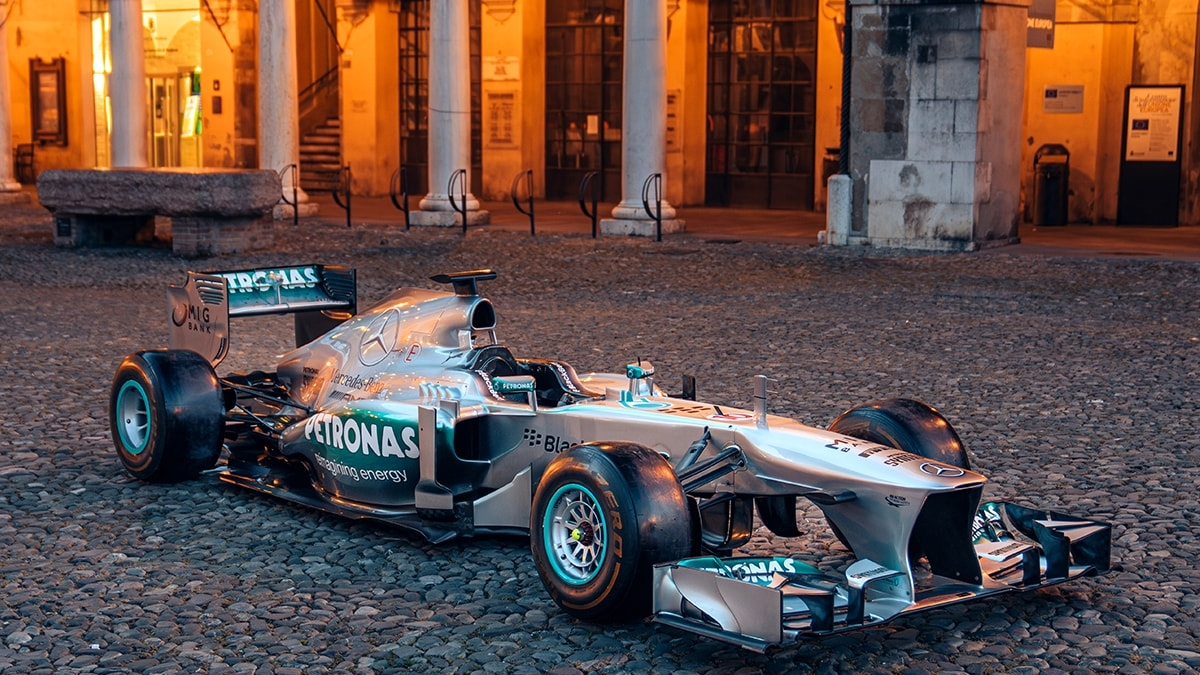
- Internal Combustion Engine (ICE): A 1.6-liter V6 turbo-charged unit, operating at incredible temperatures and pressures.
- Motor Generator Unit-Kinetic (MGU-K): Recovers energy from braking, providing a power boost.
- Motor Generator Unit-Heat (MGU-H): Recovers energy from exhaust gases, crucial for performance and fuel efficiency.
- Energy Store (Battery): A bespoke high-performance battery pack.
- Turbocharger & Control Electronics: Custom-designed for maximum efficiency and power delivery.
Chassis, Aerodynamics & Gearbox: Precision Engineering
Beyond the power unit, other major components also carry significant price tags, reflecting their bespoke design, advanced materials, and critical performance roles. These parts are crafted with absolute precision, often involving thousands of man-hours in design, simulation, and manufacturing.
- Chassis/Monocoque: Made almost entirely from carbon fiber composite, this central structure costs between $1.5 million and $3 million. It’s incredibly strong yet lightweight, designed to protect the driver and house the car’s vital systems.
- Aerodynamics Package: Wings, floor, bargeboards, and other aero elements are crucial. Developing these components, including countless hours in wind tunnels and computational fluid dynamics (CFD), can cost millions. Each front wing alone can cost upwards of $300,000, with multiple versions and spares needed.
- Gearbox: A bespoke 8-speed semi-automatic sequential unit, engineered to handle immense torque and deliver lightning-fast shifts. A single F1 gearbox can cost between $500,000 and $1 million. It’s built from exotic alloys and carbon fiber, designed for reliability under extreme loads.
Beyond Parts: Factors Driving the Astronomical F1 Car Value
While the exotic materials and bespoke components themselves carry a hefty price tag, the true “worth” of an F1 car extends far beyond its physical parts. We’re talking about an investment in human capital, relentless innovation, and years of accumulated knowledge.
The Human Element: Engineering Brilliance and Expertise
Behind every carbon fiber panel and every meticulously designed gear, there are hundreds, if not thousands, of brilliant minds. An F1 car is the culmination of immense intellectual property and countless hours of highly specialized work. Imagine:
- Design & R&D Teams: Huge departments dedicated to aerodynamics, chassis design, powertrain development, electronics, and suspension. Each specialist earns a premium for their niche expertise.
- Advanced Simulation: Before a single component is manufactured, countless simulations are run using proprietary software, requiring massive computing power and skilled operators.
- Testing & Refinement: From wind tunnel testing (which can cost tens of thousands per day) to simulator runs and real-world track testing, every iterative improvement adds to the car’s overall development cost.
This army of engineers, aerodynamicists, data scientists, and strategists are constantly pushing the boundaries of what’s possible. Their salaries, alongside the cost of cutting-edge facilities like state-of-the-art wind tunnels and manufacturing plants, are a significant hidden cost embedded in every car.
Innovation, Research & Development (R&D) Costs
Formula 1 is a technology arms race. Teams are constantly researching and developing new solutions to gain even a fractional advantage. This ceaseless pursuit of speed is incredibly expensive. Consider:
- New Materials Science: Developing lighter, stronger, or more heat-resistant materials that often originate in aerospace but are pushed further in F1.
- Aerodynamic Breakthroughs: Every season, new regulations often require ground-up aerodynamic redesigns, involving vast resources for fluid dynamics research and testing.
- Hybrid Powertrain Complexity: The current hybrid power units are engineering marvels, integrating internal combustion engines with powerful electrical systems. Their development involves years of costly, specialized research into energy recovery systems, battery technology, and combustion efficiency.
Each season, significant portions of a team’s budget are allocated to R&D, making the car a rolling prototype of future automotive technology. This intellectual investment and the competitive pressure to constantly innovate are key drivers of an F1 car’s staggering worth.
Different Measures of Worth: Crash Costs vs. Collector Value
The “worth” of an F1 car can change dramatically depending on the context – whether it’s mangled after a high-speed incident or revered as a piece of racing history.
The Immediate Impact: Valuing a Car in a Crash
When an F1 car crashes, its worth immediately transforms into a repair bill. Even seemingly minor contact can result in astronomical costs:
- Front Wing: A common casualty, often costing upwards of $150,000 to replace due to its complex aerodynamic profile and carbon fiber construction.
- Suspension: High-speed impacts frequently damage wishbones, push-rods, and uprights, easily leading to repair bills in the hundreds of thousands.
- Chassis & Gearbox: A hard impact can damage the carbon fiber monocoque chassis (the “survival cell”), which is the car’s core. Replacing or extensively repairing a chassis can cost well over $1 million. The intricate, bespoke gearbox can also cost another $500,000 to $1 million to replace.
Major shunts, like those seen at Spa or Silverstone, can easily incur damage exceeding $2-3 million for a single incident, sometimes rendering the car a complete write-off. Teams strategically budget for crash damage, understanding it’s an inherent, costly risk of high-speed racing, especially under the current budget cap rules.
The Legacy Price Tag: Collector and Heritage Value
Once an F1 car’s competitive life is over, it can take on an entirely different kind of value: that of a rare collector’s item. This “worth” is detached from its manufacturing cost and instead tied to its historical significance and rarity.
- Championship-Winning Cars: Vehicles driven to a world championship, especially by legendary drivers, command the highest prices. For example, Michael Schumacher’s championship-winning Ferrari F2003-GA sold for nearly $15 million in 2022.
- Iconic Moments: Cars involved in famous races or pivotal moments in F1 history also see their value soar.
- Provenance and Originality: The car’s documented history, its level of originality (how much of it is exactly as it was raced), and its authenticity are crucial factors for collectors.
These aren’t just vehicles; they are tangible pieces of motorsport history, preserved and celebrated. Their value on the auction block can far exceed their initial development and build costs, demonstrating that for F1 cars, worth is often in the eye of the beholder, or rather, the collector.
The True Price of F1 Excellence
As we’ve explored, the “worth” of an F1 car is a multifaceted concept. It’s not just the sum of its parts, but a complex blend of cutting-edge materials, immense research and development, countless hours of engineering brilliance, and the inherent risks of racing. Factor in the historical significance for collectors, and you have a machine whose value can swing wildly from millions in repair costs to tens of millions as an auction showpiece.
The next time you watch a Grand Prix, take a moment to appreciate the sheer investment—both financial and intellectual—that each car represents. Follow the developments in F1’s budget cap regulations to see how teams strategically balance performance with the staggering costs. The astonishing price tag of an F1 car truly embodies the pinnacle of automotive engineering and human endeavor, making it far more than just a racing machine.
❓ Frequently Asked Questions
Why are Formula 1 cars so incredibly expensive to build?
F1 cars are expensive due to massive R&D investments, bespoke engineering for every component, use of exotic lightweight materials like carbon fiber and titanium, and the immense precision and specialized labor involved. Every part is pushed to the absolute limit of performance and safety.
Can you give a breakdown of the cost of major F1 car components?
The engine alone can cost $8-10 million (for supply), the carbon fiber chassis is several million, while the gearbox is around $1-2 million. Aerodynamic components, complex electronics, and the highly sophisticated steering wheel each contribute hundreds of thousands to the total.
What is the primary factor driving the high cost of an F1 engine?
The engine’s cost is driven by intense R&D for extreme power and efficiency, bespoke manufacturing using cutting-edge materials, and the need for incredible reliability under immense stress. Hybrid components and sophisticated energy recovery systems further increase its complexity and price.
How much does a Formula 1 car chassis and aerodynamics package contribute to the total cost?
The carbon fiber monocoque chassis is a multi-million dollar component, requiring extensive R&D for safety and performance. The elaborate aerodynamic package, constantly refined through CFD and wind tunnel testing, also adds several millions due to its complex design and rapid development cycle.
How does the F1 budget cap impact the stated ‘worth’ of a car?
The budget cap limits team spending on performance-related areas, which influences how much can be invested in developing each car. While it doesn’t directly cap the manufacturing cost of a single car, it incentivizes efficiency and limits overall R&D, potentially impacting the theoretical market value of its components within the cap’s constraints.
What is the value of a classic or championship-winning F1 car at auction?
Historic F1 cars, especially those with significant race wins or championship provenance, can fetch astronomical prices at auction, often ranging from several million dollars to well over $10 million. Their value is driven by rarity, historical significance, and collector demand, far exceeding their original manufacturing cost.