Can Passengers Drink Alcohol in a Car? State by State Rules
Last Updated on August 9, 2026 by Albert Duke
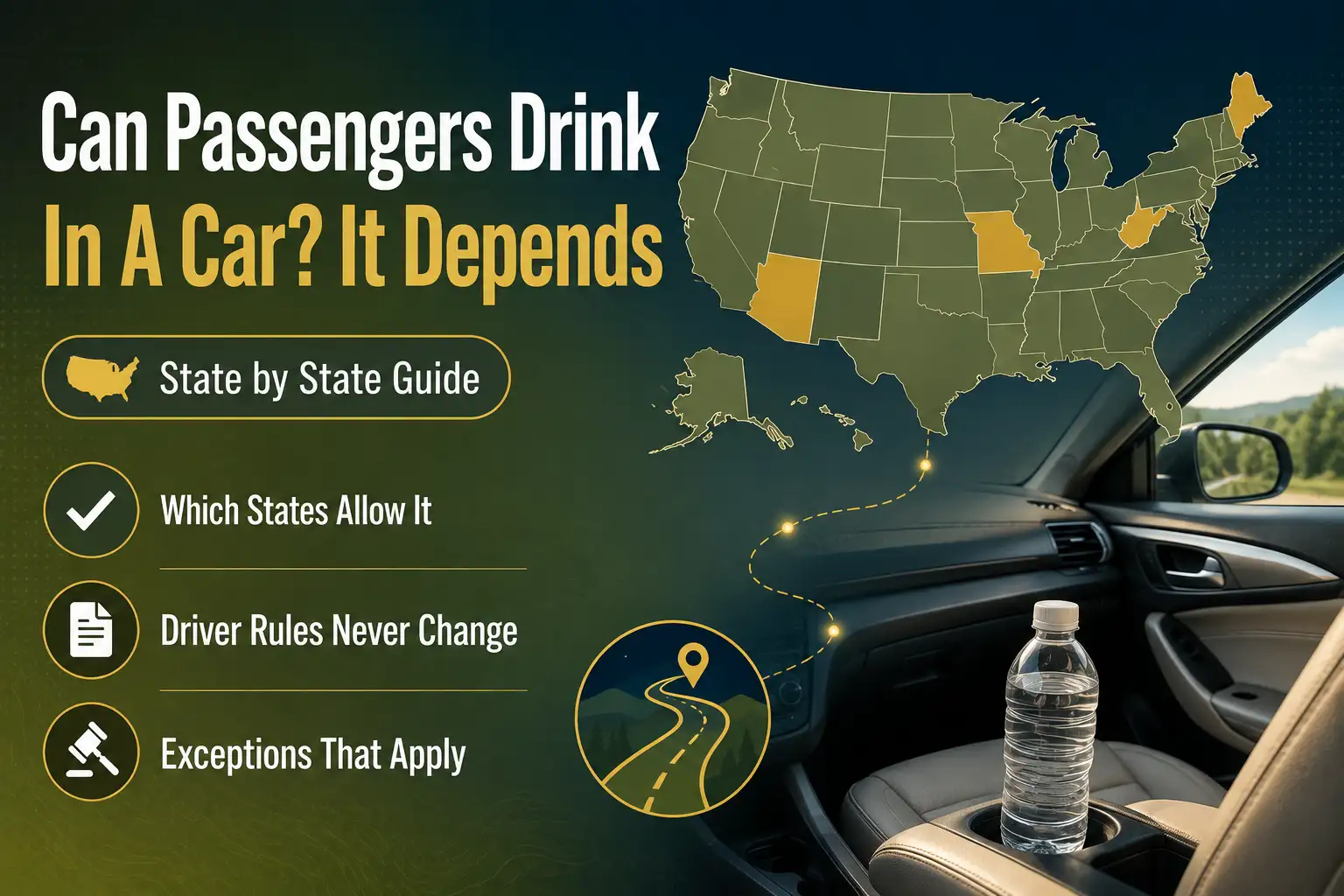
There’s no single national answer. Most states prohibit passengers from drinking alcohol in a moving vehicle, but a small group of states allow it, and the exact list varies slightly depending on the source you check. There’s also an important distinction between states that let a passenger actually drink and states that only allow an open container to be carried without drinking from it.

Prime for Young Adults — 6 Months Free
Students and 18–24s get six months of Prime free, then half price.
Start 6 Months FreeThis guide covers the general rule most states follow, the specific states where passenger drinking is legal, and the exceptions and caveats that matter if you’re traveling across state lines. Because this is exactly the kind of topic where laws shift over time, treat the specific state list as a starting point for further verification rather than a permanent guarantee.
The General Rule Most States Follow
Recommended Best Deal Products


Open container laws exist in the overwhelming majority of states, and they typically prohibit any open alcoholic beverage in the passenger area of a vehicle on a public road, regardless of who is holding it. This near-uniform pattern isn’t a coincidence.
A car law resource explains that under federal law, the government created incentives for states to adopt and enforce open-container restrictions by tying certain highway funds to compliance, which helped create an almost national rule that open alcohol in the passenger area is broadly illegal. This is why the vast majority of states ended up with nearly identical laws even without a single federal statute directly banning it.
The handful of states that never fully adopted this standard are the exceptions covered below, not the norm.
States Where Passengers Can Legally Drink
The following states are consistently cited across legal sources as allowing passengers to drink alcohol in a moving vehicle, though the driver must always remain sober. Exact counts vary by source depending on how borderline cases are classified, so treat this as a starting point to verify against current state law, not a final word.
- Connecticut: The law targets the driver specifically, meaning passengers can possess and consume alcohol in many situations.
- Delaware: Bans drinking while driving, but passengers aren’t broadly prohibited from drinking under state law.
- Missouri: No sweeping statewide open container ban, though cities and counties can and often do impose stricter local rules.
- Tennessee: The statute is written around what the driver can’t do, meaning passengers can appear to drink while the driver cannot.
- Virginia: Passengers can drink, but an open container anywhere in the car creates a rebuttable legal presumption that the driver has been drinking, which the driver would need to disprove if pulled over.
- Mississippi: The only state with no statewide open container law at all. Both drivers and passengers may have open alcohol, though the driver still cannot be impaired.
- Rhode Island: Commonly listed among the permissive states, though local ordinances may still add restrictions.
- Alaska: Allows an open container specifically “behind a solid partition that separates the vehicle driver from the area normally occupied by passengers,” so it’s conditional rather than unrestricted.
States That Allow Possession But Not Drinking
Recommended Best Deal Products


Arkansas and West Virginia occupy a middle category worth understanding separately. In both states, a passenger can legally have an open container of alcohol in the car, but actually drinking from it is prohibited. A state law reference confirms that passenger drinking laws vary meaningfully by state, and only a specific handful actually permit consumption rather than mere possession, which is why lumping these two states in with the fully permissive ones is a common but misleading simplification.
One way to think about this distinction: it’s closer to being allowed to transport a previously opened bottle, similar to bringing home a recorked bottle of wine from a restaurant, than a genuine permission to drink during the ride. If you’re in either state, having the bottle isn’t the issue, actively drinking from it is.
The Driver Is Never Allowed To Drink
Even in every state listed above, passenger permission never extends to the driver. All 50 states and Washington, D.C. prohibit a driver from operating a vehicle with a blood alcohol concentration at or above 0.08 percent, and in Mississippi specifically, the driver is only permitted to have any alcohol at all as long as they stay under that legal limit.

Audible — Listen Free for 30 Days
One free credit a month and thousands of titles included.
Listen Free for 30 DaysA passenger being allowed to drink says nothing about what the driver can do. Those two questions are answered by completely separate parts of each state’s law, and confusing the two is one of the more common misunderstandings people run into when reading about this topic online.
Common Exceptions Across All States
Regardless of which state you’re in, certain vehicle types carry broader exceptions that apply almost everywhere. Commercial vehicles like limousines, party buses, and charter buses operated under a contract to transport passengers are generally exempt from standard open container restrictions.
The living quarters of a motorhome or RV, separate from the driver’s area, are also commonly excluded from passenger drinking restrictions. These exceptions exist independently of whether your state is on the permissive list above, since they’re based on the type of vehicle rather than general passenger rules, so even someone in a fully restrictive state can still legally drink in a properly licensed limo or party bus.
What Happens If You’re Pulled Over
In states that prohibit passenger drinking, a passenger cited for an open container typically faces a fine, often classified as a non-moving violation that doesn’t add points to a license, though this varies by state. In some situations, the driver can also be cited for allowing an open container in the vehicle, even if they weren’t the one drinking, and any citation is worth taking seriously since maintaining proper insurance coverage matters even more once a driving record has a violation attached to it.
Citation costs vary widely by state and violation type. For comparison, our breakdown of how much a no-insurance ticket costs in Texas shows how differently states price traffic citations even for unrelated violations, worth keeping in mind before assuming one state’s fine amount applies everywhere.
Even in permissive states, local city or county ordinances can add restrictions state law doesn’t impose, so what’s legal on one stretch of highway can become a violation once you cross into a stricter municipality. When in doubt, especially while traveling, treat the passenger-friendly states as an exception to confirm locally rather than a blanket guarantee.
State Rules Quick Reference
| State | Passenger Can Drink | Notes |
|---|---|---|
| Connecticut | Yes | Law targets the driver specifically |
| Delaware | Yes | Passengers not broadly restricted |
| Missouri | Yes | Local ordinances may still restrict |
| Tennessee | Yes | Statute written around driver conduct |
| Virginia | Yes | Creates presumption driver was drinking |
| Mississippi | Yes | No statewide open container law at all |
| Rhode Island | Yes | Local ordinances may still add rules |
| Alaska | Conditional | Only behind a solid driver partition |
Passenger Alcohol Law FAQ
Does this apply to rideshares like Uber and Lyft?
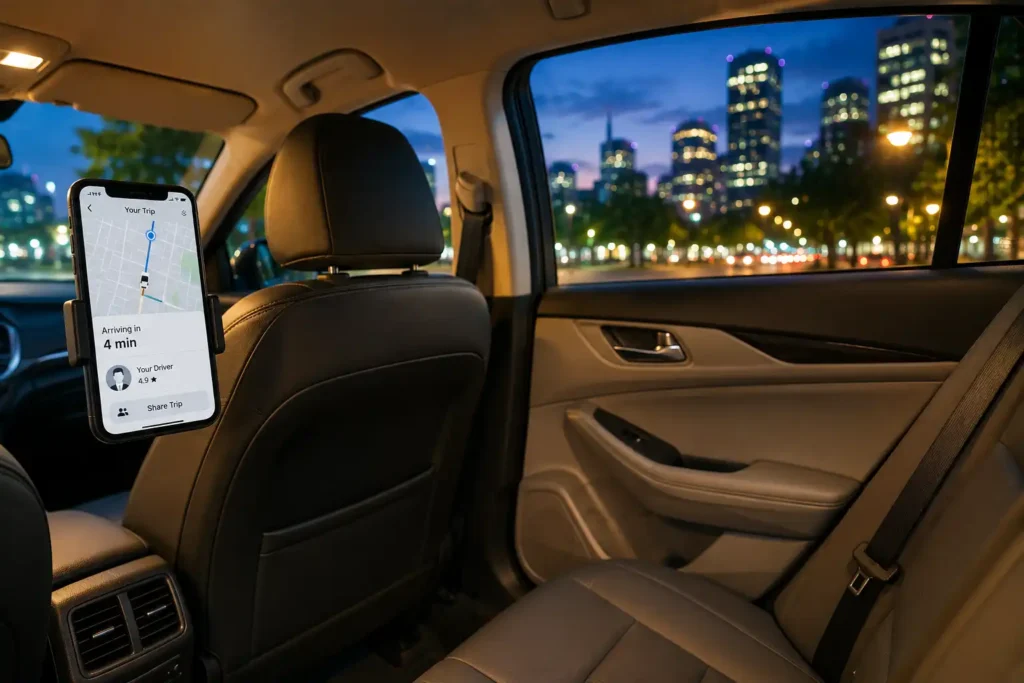
Yes, the same state law applies regardless of whether it’s a personal car, taxi, or rideshare, since Uber and Lyft drivers don’t hold the type of commercial license that exempts vehicles like limousines or party buses. A passenger drinking in a rideshare in a prohibited state can still be cited, even if the ride was booked through an app that feels more like hired transportation.
Can the rules change if I’m just passing through a state?
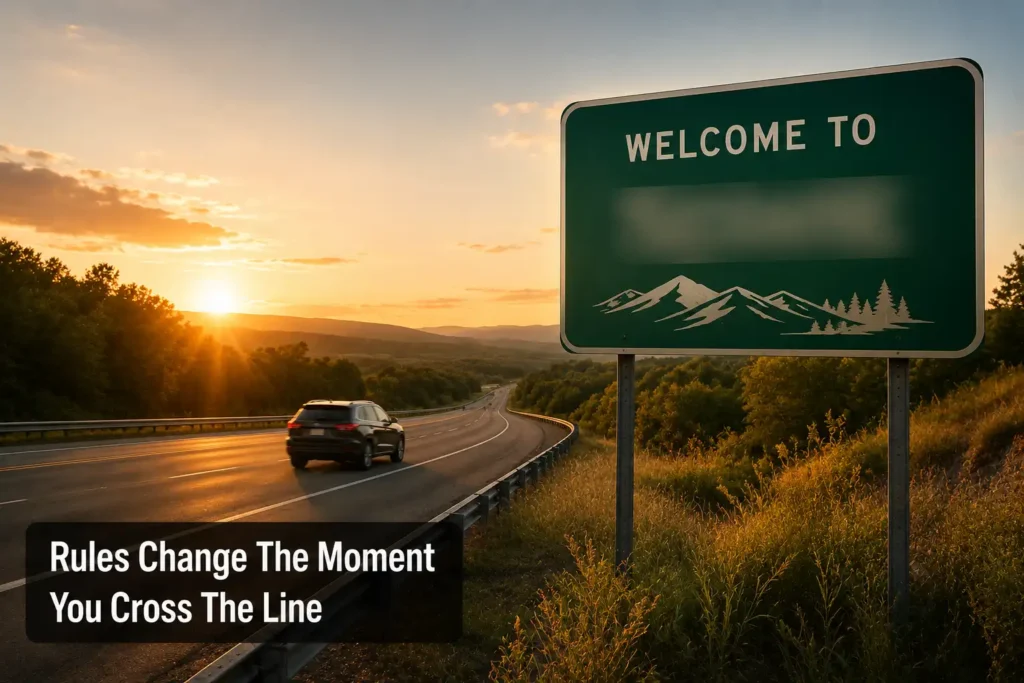
Yes. The law that applies is based on which state and even which local jurisdiction you’re physically in at the time, not where you live or where the trip started. Crossing from a permissive state into a prohibited one means the rules change the moment you cross the line, regardless of intent or how long you plan to stay.
Does age matter for passenger drinking?
Yes. All of the passenger drinking allowances described here assume the passenger is 21 or older, the same minimum drinking age that applies everywhere else in the country. States also often add extra restrictions specifically for minors transporting or being near alcohol in a vehicle.
Audible Premium Plus — Annual Membership
12 audiobook credits up front, plus the full Audible catalogue.
See Annual PlansCan a minor be a passenger while others drink?
Some states add additional restrictions when a minor is present in the vehicle, even in states that otherwise permit adult passenger drinking. This is worth checking specifically if you’re traveling with anyone under 21, since it’s not always covered by the general passenger rule.
What if my home state allows it but I’m driving through one that doesn’t?
The state you’re physically in controls, not your home state’s law. A passenger legally drinking in Missouri would need to stop before crossing into a state with a full prohibition, since the permissive law doesn’t travel with you across state lines, and getting caught out by this is one of the more common mistakes travelers make.
Whether a passenger can legally drink alcohol in a car comes down entirely to which state, and sometimes which city or county, you’re in at the time. A short list of states allow it, a couple more allow possession without drinking, and the vast majority prohibit it outright regardless of who’s holding the container in the vehicle. If a citation does land on your record, our guide on how often you pay car insurance can help you understand how a violation might play out over your next renewal cycle.
This article explains general legal information and is not legal advice. State and local laws change, so verify current rules for your specific location, especially before a road trip that crosses state lines, and consult a licensed attorney for guidance on a specific situation.