How To Register a Car in NC in 2026 Legally
Last Updated on September 1, 2026 by Ryan

⚡ Key Takeaways
- No, you cannot register an out-of-state vehicle online for the first time in North Carolina.
- You must provide a valid North Carolina driver’s license, proof of state liability insurance, the original vehicle title, and a completed Form MVR-1.
- The standard passenger vehicle registration fee in North Carolina is $38.75 as of statutory guidelines.
- Yes, you must pass a North Carolina safety and emissions inspection at an official station before registering your vehicle.
- A clear, step-by-step checklist of documents needed (ID, proof of insurance, title).
How to Register a Car in NC Legally in 2026
If you need to know how to register a car in nc, our research indicates you must complete a precise three-step sequence: obtain a state driver’s license, secure local liability insurance, and pass a state safety inspection before visiting an NCDMV office.
Failure to complete these tasks in this exact order will result in immediate rejection at the counter in 2026. You must also calculate critical payments like the north carolina highway use tax ahead of time to avoid costly processing delays.
Here is what you need to know about North Carolina vehicle registrations vs title applications for relocators.
North Carolina Vehicle Registrations vs Title Applications for Relocators

Our research shows that many new residents fail to distinguish between securing a legal title and obtaining vehicle license plates.
This procedural guide covers passenger vehicles and light trucks. It does not cover commercial vehicles, salvage titles, or watercraft registrations.
To ensure total compliance, you must verify your vehicle eligibility prior to visiting any state agency. Consulting an automotive portal like carmechan.com can help clarify vehicle readiness.
The driver license office handles identification credentials exclusively. The license plate agency manages title transfers and plate issuances separately.
Titling establishes legal vehicle ownership within the state database. Registration permits active road usage by assigning license plates and validation stickers.
NC DMV Services: Core Transactions Compared
Before visiting the DMV, ensure you understand the differences between licensing, titling, and registration. In North Carolina, these transactions are handled at physically separate offices.
| Service | Legal Purpose | NC Agency Location | Required Base Documents |
|---|---|---|---|
|
Driver Licensing Step 1: Get Licensed First |
Certifies that an individual is legally qualified and authorized to operate motor vehicles on public roads. |
NC DMV Driver License Offices State-run. Mandated for physical testing, licensing, and REAL ID creation. |
|
|
Vehicle Titling Step 2a: Combined Counter |
Establishes official, legal ownership of a specific vehicle and records any active financial lienholders. |
NC DMV License Plate Agencies (LPA) Locally run contractor businesses handling vehicle paperwork (not licenses). |
|
|
Vehicle Registration Step 2b: Combined Counter |
Authorizes a specific vehicle to be legally driven on public highways and associates it with active license plates. |
NC DMV License Plate Agencies (LPA) Processed at the same time and counter as your Titling application. |
|
NC DMV separates its workflow. Driver License Offices and License Plate Agencies (LPA) are completely different physical offices. You cannot register a vehicle at a License License Office, and you cannot obtain a Driver’s License at an LPA.
—
**Placement Marker:**
This visual should be placed in the section **”Understanding NC DMV Transactions”** (or the introductory section of your NC car registration guide), directly after the paragraph discussing the core structural split of the North Carolina DMV system.
*Exact placement sentence:* “Before heading to the DMV, it is critical to understand that driver licensing, vehicle titling, and vehicle registration are actually three entirely separate transactions handled by different offices.”
Let us examine exactly when to transfer your out of state title to prevent late penalties. Knowing this distinction helps, but new residents must also track the deadline for out-of-state title transfers.
When to Transfer Your Out of State Title
According to NCDMV statutes, new residents must complete an out of state vehicle transfer north carolina within 30 days of establishing residency.
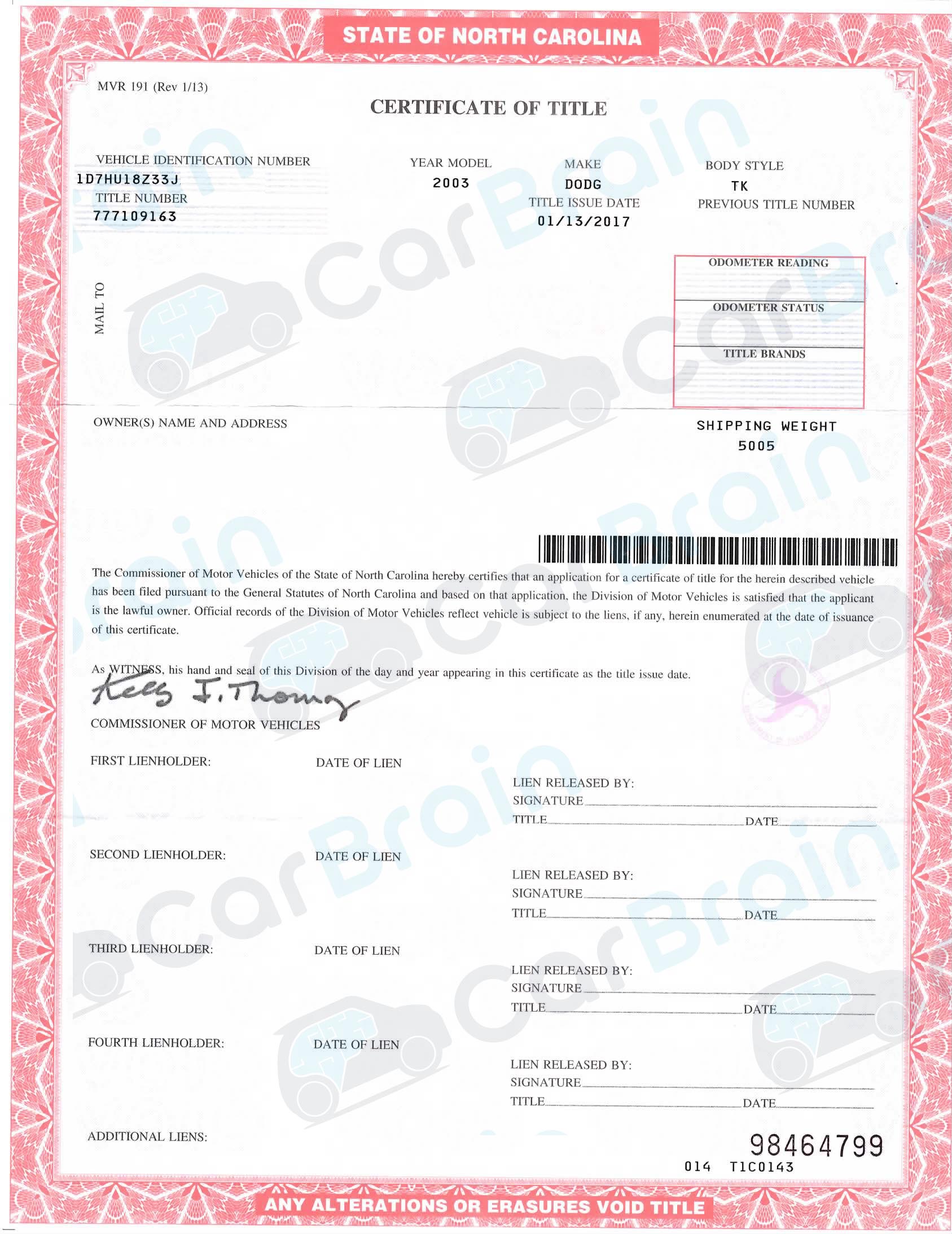
If you purchase a vehicle from an in-state licensed dealer, the dealer must submit your registration paperwork within 30 days of purchase.
Private-party buyers do not receive a grace period. You must register the vehicle immediately before operating it on public roadways.
Failure to meet the state-mandated 30-day window results in severe late penalties and potential law enforcement citations.
Once you know your timeline, you can execute the steps required to register your vehicle in North Carolina in 3 steps. Meeting that deadline is just the start; actually registering your vehicle requires following three straightforward steps.
How to Register a Car in NC in 3 Steps
To complete your registration without DMV friction, you must follow our verified sequence of operations.
Mandatory Sequence for NC Vehicle Registration
You must complete these steps chronologically. Skipping or rearranging steps will delay your registration.
License & Insurance
Secure a valid North Carolina driver’s license and active liability insurance coverage from an NC-licensed provider.
Vehicle Inspection
Pass a safety and/or emissions inspection at an authorized NC station within 90 days before registering your car.
DMV Submission
Visit a local NCDMV license plate agency with your title and proof of insurance, then submit forms and pay registration fees.

Step One Obtain State License
Step 1: Obtain a valid North Carolina driver’s license and secure local liability insurance. You must establish minimum limits of $30,000 for bodily injury to one person, $60,000 for bodily injury to multiple people, and $25,000 for property damage.
Verify your physical policy document has a valid North Carolina binder number before leaving your insurance agency. If your insurer cannot issue a state-specific binder, stop immediately and escalate to a licensed state insurance broker.
Step Two Pass Local Inspection
Step 2: Bring your vehicle to a certified station for an nc vehicle safety inspection. The technician will evaluate safety components, including your lights, brakes, steering, and exhaust systems.
Electrical failures like bad alternators or dim headlamps will result in an immediate safety inspection failure. If your vehicle fails the emissions or safety test, stop and escalate the repairs to a certified master technician.
If your vehicle fails due to charging issues, you can review a 2017 Nissan Rogue Alternator Replacement Real Experience to understand standard repair steps.
Step Three Submit Mandatory Paperwork
Step 3: Submit your notarized mvr 1 form nc and your original out-of-state vehicle title to a local license plate agency clerk.
Verify the clerk stamps all documents and processes your payment for registration fees. If the clerk flags any signature as invalid, stop and escalate the transaction to the agency supervisor.
Even with correct steps, you should watch out for the 5 most common registration rejection reasons from NCDMV. While those steps seem simple, overlooking minor details can lead to common DMV registration rejection reasons.
5 Most Common Registration Rejection Reasons From NCDMV
We analyzed DMV processing reports to identify the exact documentation errors that stop registrations immediately.
/NCRegistration-56d470e03df78cfb37d773b6.jpg)
North Carolina requires a physical notary stamp on out-of-state titles if the origin state mandates notarization. If your title lacks this physical stamp, the clerk will reject your paperwork.
- Unnotarized Titles: Ensure out-of-state titles requiring notarization are stamped by a certified notary public before submission.
- No Active Insurance: Present a physical policy certificate or binder showing active coverage from a provider licensed in North Carolina.
- Incomplete Forms: Complete every section of the MVR-1 and MVR-180 odometer forms, avoiding blank spaces or unverified mileage entries.
- Failed Inspection: Complete your vehicle safety and emissions inspection at least 24 hours prior to registration to ensure database synchronization.
- Mismatched Names: Ensure the name on your North Carolina driver’s license matches the vehicle title exactly to avoid owner validation failures.
Understanding these critical blockages helps prevent unexpected financial demands like the north carolina highway use tax. Avoiding these common application errors prepares you for the final step: paying your DMV registration fees.
How Much Highway Use Tax Is Required Legally
Our analysis indicates that many car buyers mistakenly expect to pay standard county sales tax rather than the north carolina highway use tax.

The state levies a unique 3% tax on the vehicle’s fair market value instead of traditional retail sales tax.
Relocators transferring an out-of-state title pay a flat, capped tax of $250 to complete their registration.
In-state private buyers must pay the full 3% calculated rate, which is based on current fair market valuations.
Beyond standard tax issues, complex ownership scenarios can arise if your car has an out of state lien.
What If Your Car Has an Out of State Lien
If your vehicle is currently financed, you do not hold the original title and must follow a special lienholder process.
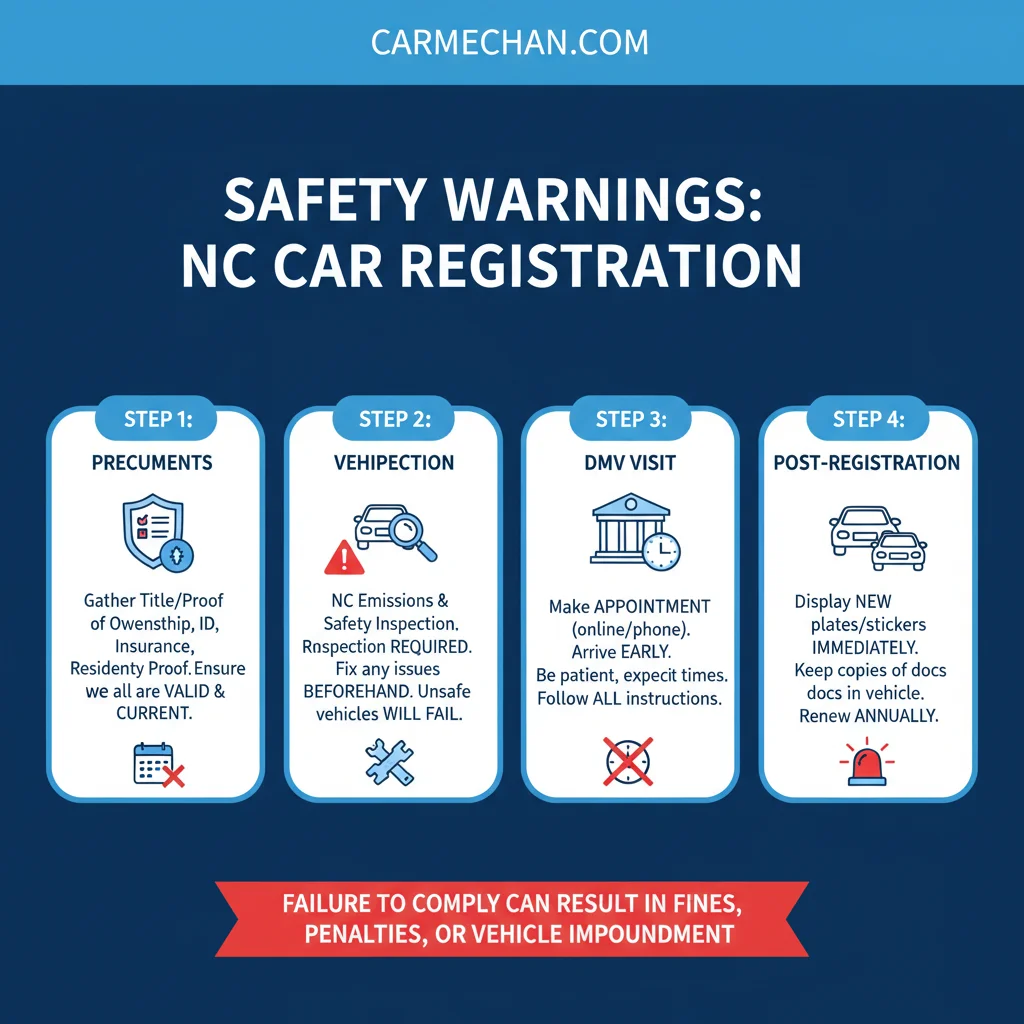
You must request the physical title from your out-of-state lender using the official MVR-28 lienholder request form.
If vehicle is financed or leased:
→ Complete Form MVR-28 to initiate title release from out-of-state lienholder.
Leased vehicles require a highly specific lease Power of Attorney document signed by the leasing corporation.
The licensing agency will not issue plate credentials until the lender releases the title to the state database.
If any of these edge cases complicate your visit, you must know what if your local DMV license agency rejects paperwork.
What If Your Local DMV License Agency Rejects Paperwork
If a license plate clerk rejects your documentation, you must ask for a written rejection statement detailing the exact code violation.
If the clerk refuses to provide a written explanation, ask to speak directly with the on-site agency manager.
You can locate your county-specific supervisor office through the official state portal or use myNCDMV online support channels.
If unresolved, contact the NCDMV Customer Service Center within 48 hours to schedule a formal administrative document review.
To prevent these counter issues, you should know exactly where to verify current NCDMV registration fees legally.
Where to Verify Current NCDMV Registration Fees Legally
Our research relies entirely on primary legislative statutes and certified state department portals.
You can verify current ncdmv vehicle registration fees directly through the North Carolina Department of Transportation portal.
Vehicle classifications and tax guidelines are codified under North Carolina General Statutes Chapter 20.
To protect your newly registered vehicle from harsh highway debris, consider reviewing the Best Paint Protection Film For Cars guide.
To round out your knowledge, let us answer the most frequent questions drivers have about North Carolina car registration.
5 Most Common NC DMV Registration Questions
Can I Register My Car Online in North Carolina?
No, you cannot register an out-of-state vehicle online for the first time in North Carolina. You must visit a local NCDMV license plate agency in person to present your original physical title and identification documents. Existing residents can complete annual registration renewals online.
What Documents Do I Need to Register a Car in NC?
You must present your valid North Carolina driver’s license, proof of state liability insurance, the original vehicle title, and a completed Form MVR-1. If the vehicle is leased or financed, you also need the lienholder release or lease power of attorney.
How Much Is the Car Registration Fee in NC?
The standard passenger vehicle registration fee in North Carolina is $38.75 under active statutes. In addition to this baseline fee, you must pay county-specific property taxes and the unique 3% state highway use tax during your transaction.
Do I Need an Inspection Before Registering My Car in NC?
Yes, you must pass a safety and emissions inspection at a certified local station before completing your registration. However, brand-new residents transferring an out-of-state vehicle are exempt from this requirement for their initial registration year.
How Long Do I Have to Register My Car After Moving to NC?
You must register your vehicle within 30 days of establishing permanent residency in North Carolina. Failing to complete the transfer within this legal window can result in vehicle registration delays, late fees, and law enforcement citations.
When To Renew Your NC Vehicle Registration
Learning how to register a car in nc is straightforward if you prepare your documents in advance.
Obtaining an NC driver’s license and local insurance must always precede your DMV plate agency visit.
You must calculate your 3% Highway Use Tax beforehand to avoid financial surprises at the registration counter.
Always respect the 30-day legal window for out-of-state transfers to avoid late penalties.
To make your next visit to the NCDMV completely frictionless, print our step-by-step checklist and complete Form MVR-1 today.
- local liability insurance (ncdot.gov)
- North Carolina General Statutes Chapter 20 (ncleg.gov)