Why Does My Car Smell Like Cat Pee? 2026 Proven Fix Guide
Last Updated on September 1, 2026 by Albert Duke
The cat pee-like smell in your car is often caused by antifreeze leaks, mold in the AC system, or actual pet urine contamination. Diagnosing the exact source is crucial for effective remediation.
If your car smells like cat pee, it’s often due to issues ranging from leaking antifreeze to mold in your AC, or even actual pet urine itself. This distinctive and unpleasant odor can be concerning, not only for comfort but also as a potential indicator of a underlying problem with your vehicle.
Understanding the specific cause is the first critical step toward eliminating the smell and ensuring your car’s well-being.
Our comprehensive guide helps you diagnose the exact origin of this noxious scent. We provide clear, actionable steps for identifying common culprits and offer proven solutions to restore your car’s freshness. By following our expert advice, you can pinpoint the source and implement effective remediation strategies by 2026.
Key Takeaways


- Antifreeze leaks mimic cat urine odor.
- Mold in AC systems creates a distinct smell.
- Diagnose the specific source before cleaning.
- Enzymatic cleaners are essential for urine.
- Regular maintenance prevents recurring odors.
7 Key Reasons Your Car Smells Like Cat Urine


While the cat pee smell is distinct, its origin can be surprisingly diverse within your vehicle. Pinpointing the correct source is vital for effective treatment.

Leaking Antifreeze Coolant
Antifreeze, particularly when it leaks and heats up, often emits a pungent odor similar to cat urine. This is typically due to the chemical components, such as propylene glycol or ethylene glycol, which decompose into ammonia-like compounds. You might notice this smell becoming stronger when your engine warms up.
Common leak points for coolant include hoses, the radiator, water pump, or the heater core. A sweet, slightly chemical smell mixed with the urine-like odor is a strong indicator of a coolant issue. Always prioritize addressing fluid leaks promptly for vehicle safety and performance.
Mold or Mildew in AC
When moisture accumulates in your car’s HVAC system, especially on the evaporator core, mold and mildew can thrive. These fungal growths release volatile organic compounds (VOCs) that can produce a musty, pungent, and sometimes ammonia-like smell. This odor often intensifies when you first turn on the air conditioner or heater.
The moisture provides an ideal breeding ground for these microorganisms. Regular use of the AC can sometimes dry out the system, but persistent moisture from humidity or leaks leads to growth. Our guide on car AC maintenance can help.
Actual Pet Urine Contamination
The most straightforward cause is, of course, actual cat urine or other pet accidents. Even a small amount of dried urine can create a powerful and persistent odor, especially in warm, enclosed spaces like a car’s interior. The uric acid crystals in urine bind to fibers and release ammonia gas over time.
Pets, particularly cats, might spray or urinate in a car if they are stressed or unfamiliar with the environment. Check soft surfaces like upholstery, carpets, and floor mats first. A thorough inspection is crucial to locate all affected areas.
Residue From Ozone Treatment
Ozone generators are sometimes used to eliminate tough odors in cars. However, if the car is not properly aired out after treatment, or if the generator is misused, it can leave behind a chemical smell. This residual odor can sometimes be described as sharp, metallic, or even urine-like, especially if it combines with other residual odors.
This is less common but can occur in used cars that have undergone extensive odor remediation. The smell usually dissipates with thorough ventilation over time, but professional detailers can offer additional solutions.
Fumes From Battery Acid
A failing car battery can sometimes emit sulfurous gases that some people describe as smelling like rotten eggs or, occasionally, a strong, acrid, urine-like odor. This is often a sign of a battery overheating or overcharging, leading to the release of hydrogen sulfide gas.
An old or malfunctioning battery can be dangerous, potentially leading to acid leaks or even explosion. If you suspect battery issues, investigate immediately. Look for corrosion around the battery terminals or a swollen battery casing.
Decomposition of Small Critters
Rodents or other small animals might nest inside your car’s engine bay, vents, or even the cabin. If an animal dies within these confined spaces, its decomposition can produce a foul, ammonia-rich smell similar to urine. This can be a particularly strong and unsettling odor.
The smell might be intermittent, depending on airflow and temperature. Carefully check under seats, in the trunk, and behind dashboard panels. Our guide on car pest control offers further insights.
Spilled or Tracked Pesticides
Certain agricultural chemicals, including some pesticides or fertilizers, contain ammonia or other compounds that can mimic the smell of cat urine. If these substances are spilled inside your car or tracked in on shoes, they can leave a persistent odor. This is more common in rural areas or for individuals working with these chemicals.
The smell might be concentrated in specific areas of the floor or trunk. Identify if you’ve recently been in contact with such substances. Cleaning needs to be thorough to neutralize the chemicals.
Conclude by highlighting that identifying which cause is at play requires careful investigation, leading directly to the diagnostic steps.
How to Diagnose Car Odor Sources in 5 Steps

Effective odor removal starts with precise identification of the source. Follow these structured steps to accurately pinpoint the problem.
Conduct Initial Visual Inspection
Begin by thoroughly inspecting your car’s interior. Look for any visible stains or damp spots on carpets, upholstery, and floor mats. Pay close attention to corners, under seats, and in the trunk where pets or spills might go unnoticed. A strong flashlight can help illuminate hidden areas.
Check all air vents for debris or unusual coloration, which could indicate mold growth. Note any areas that feel damp or appear discolored. This initial scan helps narrow down potential areas of concern.
Examine Under Hood for Leaks
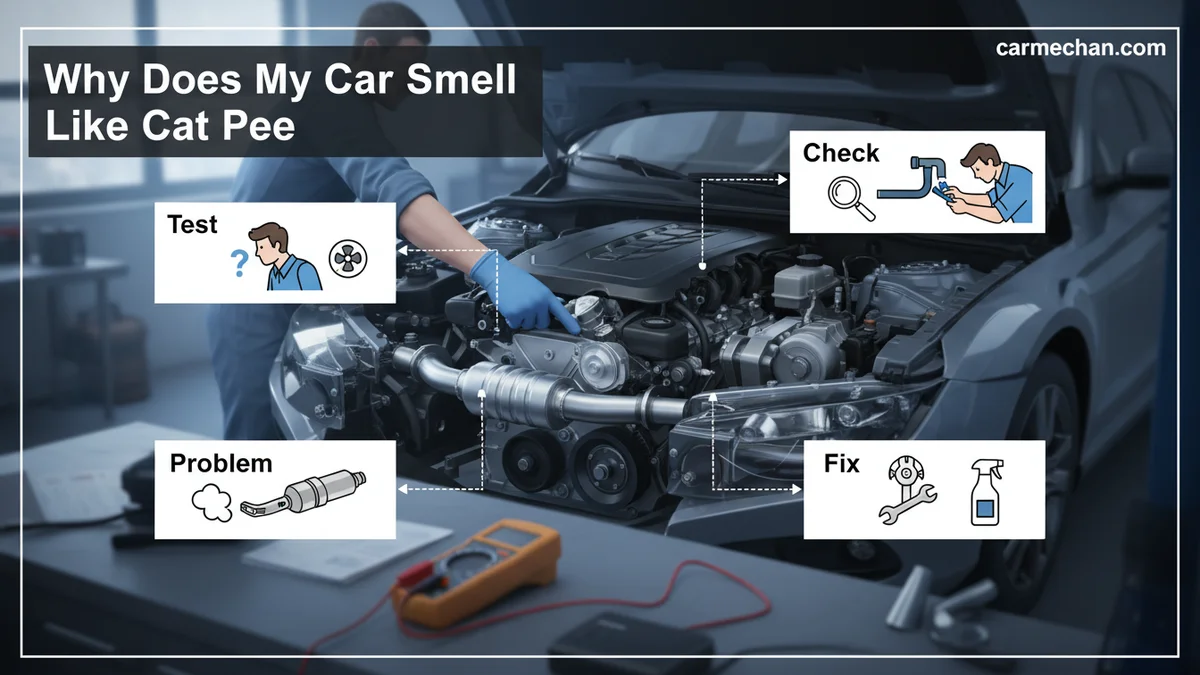
Carefully open your car’s hood and visually inspect the engine bay. Look for any signs of fluid leaks, particularly brightly colored puddles (green, orange, pink, or blue) which indicate antifreeze. Check hoses, connections, the radiator, and the overflow reservoir for dampness or drips.
A persistent sweet and acrid smell around the engine is a strong indicator of a coolant leak. Also, examine the battery for any corrosion around the terminals or a swollen casing, which points to battery acid fumes. A professional coolant system check typically costs around and can confirm a leak if you are unsure.
Test AC System Functionality
Turn on your car’s air conditioning system and set it to its highest fan speed. Let it run for a few minutes with the windows down. Pay close attention to when the smell is strongest: immediately upon starting, or after the system has been running for a while.
If the odor is strongest when the AC first kicks on and smells musty or like sour milk mixed with the urine-like scent, mold or mildew in the evaporator core is likely the culprit. You can also try running the heater to see if the smell changes.
Perform Blacklight Urine Check
For suspected pet urine, a UV blacklight flashlight is an invaluable tool. In a dark environment, shine the blacklight over all interior fabric surfaces. Urine stains often glow a fluorescent yellowish-green under UV light, even if they are dry and invisible to the naked eye.
This method helps locate exactly where the urine contamination occurred, allowing for targeted cleaning. Remember to check seams, crevices, and the undersides of mats and seats for hidden spots. Our recommended car detailing products include effective blacklights.
Isolate Odor Location
Once you’ve performed the visual and functional checks, try to isolate the smell to a specific area. Is it stronger in the front of the car, the back, or coming directly from the vents? Is it localized to a single seat or patch of carpet?
This isolation helps differentiate between systemic issues (like coolant or AC mold) and localized spills or animal contamination. The more precisely you can locate the odor, the more effective your remediation efforts will be. Knowing the exact spot saves time and effort during cleaning.
Once the source is identified, the next step is implementing the correct solution for non-organic issues, specifically antifreeze and chemical smells.
How to Fix Antifreeze and Other Chemical Smells
Mechanical issues and chemical odors require targeted repairs and interventions, not just superficial cleaning. Addressing the root cause is essential for long-term relief.

Repair Coolant System Leaks
If you’ve identified an antifreeze leak, immediate repair is crucial. Depending on the source, this might involve replacing a cracked radiator, a worn-out hose, a faulty water pump, or a leaking heater core. Coolant leaks are dangerous, as they can lead to engine overheating and significant damage.
You can often perform minor hose replacements yourself if you have basic mechanical skills. For more complex issues, like a radiator or heater core replacement, seeking a certified mechanic is advisable. Ensure you use the correct type of coolant for your vehicle after repairs.
Clean AC System for Mold
For mold or mildew in the AC system, you have a few options. A DIY method involves using specialized AC evaporator foam cleaners, which are sprayed into the system’s vents and allowed to penetrate and clean the evaporator coil. Follow product instructions carefully to ensure efficacy and avoid damage.
Alternatively, professional AC system cleaning services can perform a deeper clean, often using fogging treatments to eliminate mold and mildew. This is particularly effective for persistent or severe mold issues. Many reputable brands offer effective AC system cleaning products for DIY use.
Address Battery Issues Promptly
If a failing battery is the source of the smell, it needs immediate attention. First, check the battery terminals for excessive corrosion and clean them with a wire brush and baking soda solution. If the battery casing is swollen or leaking, replace it without delay. A damaged battery poses fire and chemical burn risks.
Ensure your charging system is functioning correctly to prevent overcharging new batteries. A voltmeter can help check the battery’s voltage and the alternator’s output. Consult a professional if you are unsure about handling battery replacement.
Know When to Seek Professional Help
For complex mechanical repairs like significant coolant leaks, heater core replacement, or persistent AC system issues, professional expertise is often invaluable. Mechanics have the tools and experience to safely diagnose and fix problems that are beyond the scope of DIY. This ensures repairs are done correctly and safely.
Don’t hesitate to consult a trusted automotive service center if you’re uncomfortable with a diagnosis or repair. It could save you time, prevent further damage, and ensure your vehicle’s reliability.
While chemical odors require repair, organic smells like urine demand a different cleaning approach for complete removal.
How to Permanently Remove Actual Urine Odor From Interior
Actual urine requires specific treatment to break down the odor-causing compounds effectively. Simple cleaning agents often only mask the smell, leading to its eventual return.
Locate and Clean Affected Areas
First, identify all contaminated spots using methods like the blacklight inspection. Once located, blot up any fresh urine immediately with paper towels or a clean cloth, applying pressure to absorb as much as possible. Avoid rubbing, as this can spread the urine deeper into the fibers.
For dried stains, re-wet the area with clean water to reactivate the urine crystals, making them more susceptible to treatment. Thoroughly remove any solid debris before applying cleaning solutions.
Apply Enzymatic Cleaner Thoroughly
Enzymatic cleaners are essential for urine odors because they contain beneficial bacteria that produce enzymes. These enzymes break down uric acid crystals and other organic matter that cause the smell, rather than just covering it up. This process neutralizes the odor at its source.
Generously apply the enzymatic cleaner to all affected areas, ensuring it saturates the material as deeply as the urine did. Allow the cleaner to dwell for the recommended time on the product label. Many trusted brands like Rocco & Roxie Supply Co. and Nature’s Miracle offer enzymatic cleaners safe for car interiors.
Deep Clean Upholstery and Carpets
After the enzymatic cleaner has done its work, deep clean the treated areas. For upholstery and carpets, a wet/dry vac or a carpet extractor can effectively remove the cleaner and the dissolved urine compounds. Ensure you extract as much moisture as possible to prevent mold growth.
You may need to repeat the enzymatic cleaning and extraction process several times for heavily saturated areas. Allow the interior to dry completely between treatments. Proper drying is crucial to avoid trapping moisture and encouraging new odors.
Ensure Proper Car Ventilation
After cleaning, adequate ventilation is vital for drying the interior and dissipating any remaining fumes. Park your car in a sunny spot with all windows and doors open, if safe to do so. This helps air circulation and accelerates the drying process.
You can also use a small fan directed into the car to aid ventilation. Avoid closing up the car too soon, as trapped moisture can lead to new mold issues. Fresh air is your ally in odor removal.
Consider Professional Detailing
For stubborn or widespread urine contamination, professional car detailing services can offer advanced solutions. They have access to commercial-grade equipment, powerful extractors, and specialized odor removal treatments, including ozone generators (used correctly) or foggers that can penetrate deep into materials.
A professional detailer can thoroughly clean and deodorize your vehicle, often restoring it to a like-new freshness. This is especially recommended if DIY efforts have not fully eliminated the smell.
Once the existing odor is eliminated, proactive measures are key to preventing any unpleasant smells from returning to your vehicle.
5 Smart Strategies to Prevent Future Car Odors
Preventing future odors is simpler and less costly than treating existing ones. Adopt these proactive measures to keep your car smelling fresh and clean.
Maintain Regular Vehicle Servicing
Adhering to your car’s regular maintenance schedule is paramount. This includes routine checks of fluid levels, hoses, and the battery, which can help detect and address potential leaks before they become noticeable odors. A well-maintained vehicle is less likely to develop unexpected issues that cause bad smells.
Follow expert recommendations on vehicle maintenance schedules, typically found in your owner’s manual. Addressing potential issues early helps avoid larger problems down the line.
Keep AC System Clean
Regularly change your cabin air filter, usually every 12,000 to 15,000 miles or annually, as recommended by your vehicle manufacturer. A clean filter prevents dust, pollen, and spores from entering your HVAC system and reducing mold growth.
Also, try running your fan on high with the AC off for a few minutes before parking to dry out the evaporator core. This simple habit helps prevent moisture buildup that leads to mold and mildew.
Manage Pet Access Carefully
If you transport pets, use protective seat covers or pet carriers to contain any shedding, dirt, or accidental spills. This creates a barrier between your pet and your car’s upholstery, making cleanup much easier. Regularly wash these covers to prevent odors from accumulating.
Always clean up pet messes immediately to prevent urine from soaking into fabrics and becoming a permanent odor source. Consider having a small emergency pet cleanup kit in your car.
Clean Spills Immediately
Any liquid spill, whether coffee, juice, or water, can become a breeding ground for mold and bacteria if not cleaned promptly. Blot spills thoroughly and use appropriate cleaners to remove residues. Ensure the area dries completely to prevent musty smells.
Keep a small towel and a general-purpose car interior cleaner handy. Immediate action significantly reduces the chance of long-term odors forming. Dampness is the enemy of a fresh car interior.
Ensure Proper Interior Ventilation
Whenever possible, allow fresh air to circulate through your car. Park with windows slightly cracked (if safe) or roll them down briefly when driving. This helps to air out any trapped moisture and prevents stale odors from accumulating. Good ventilation discourages mold growth and clears out residual smells.
Avoid leaving wet items like umbrellas, gym clothes, or damp towels inside the car for extended periods. These can quickly introduce moisture and lead to unpleasant, lingering odors.
Keep Your Car Fresh in 2026 and Beyond
A persistent cat pee-like smell in your car is more than just an inconvenience; it’s often a signal from your vehicle that something needs attention. By understanding the diverse causes, from coolant leaks and AC mold to actual pet accidents, you empower yourself to effectively diagnose the root of the problem.
Our comprehensive guide provides you with the knowledge to either perform DIY fixes or recognize when professional assistance is necessary. Implementing the right diagnostic steps and targeted solutions, along with adopting preventative maintenance habits, ensures your car remains a pleasant and healthy environment. Take action today to eliminate that unwelcome odor and enjoy a fresh driving experience.
Frequently Asked Questions About Car Odors
What Common Car Fluid Smells Like Cat Urine?
Antifreeze, especially when leaking and heating up, is the most common car fluid known to emit an odor strikingly similar to cat urine. This is often due to its chemical composition, particularly glycols, which can decompose into pungent compounds.
Can Mold in My Car’s AC System Smell Like Cat Pee?
Yes, mold or mildew accumulating on the evaporator coil in your car’s AC system can produce a musty, pungent smell. This odor, resulting from volatile organic compounds, is often described as similar to cat urine by many people.
How Can I Differentiate Between an Antifreeze Leak and Actual Cat Urine?
Antifreeze usually has a sweet undertone mixed with the acrid, urine-like smell and will likely be found as a colored fluid under the hood or near the heater core. Actual cat urine will be on interior fabrics and can be confirmed with a UV blacklight.
Are Ozone Generators Effective for Removing Car Odors?
Ozone generators can be effective for neutralizing tough odors by oxidizing odor-causing molecules. However, they must be used correctly in an empty vehicle with proper ventilation afterward. Improper use can leave a chemical residue or not fully eliminate the original smell.
When Should I Take My Car to a Professional for Odor Removal?
You should seek professional help if DIY cleaning attempts fail to eliminate the odor, if you suspect a mechanical issue like a significant coolant leak, or if the smell is widespread and difficult to pinpoint. Professionals have specialized tools and expertise for stubborn cases.