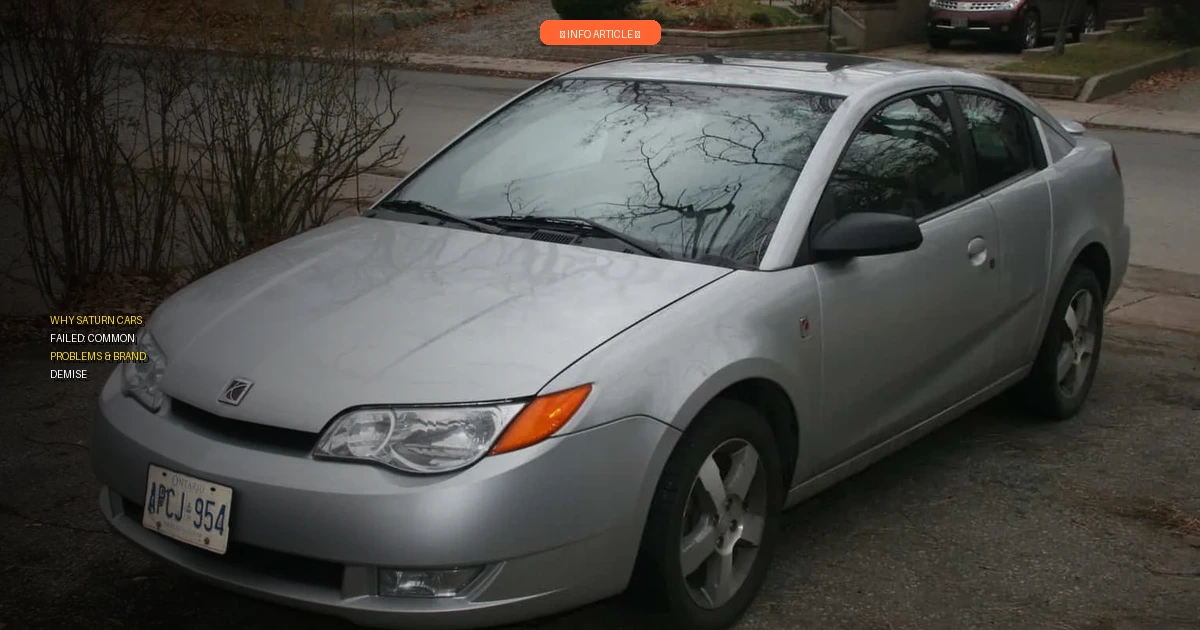
Why Saturn Cars Failed: Common Problems & Brand Demise
Saturn cars earned a reputation for being “bad” primarily due to persistent mechanical failures, particularly with engines and transmissions, and inconsistent build quality. The brand’s initial promise of unique engineering and customer focus eroded as GM integrated it, leading to a loss of distinctiveness and ultimately, its demise.
🎯 Key Takeaways
Recommended Best Deal Products


- Saturn cars faced widespread engine and transmission reliability issues.
- Inconsistent build quality and cheap interior materials marred the brand.
- GM’s integration strategy diluted Saturn’s original unique appeal.
- Poor long-term reliability led to significantly low resale values.
- The brand struggled to differentiate itself from other GM vehicles.
Saturn cars earned a reputation for being unreliable and poorly made not due to a single catastrophic flaw, but from a cumulative effect of significant mechanical issues, compromised build quality, and a gradual erosion of their initial brand promise. Many owners faced frustrating and costly problems that directly undermined the brand’s original appeal of a distinct, trouble-free ownership experience. Understanding these specific failings helps clarify why a brand once hailed as “a different kind of car company” ultimately faded.
For anyone who owned a Saturn, or considered one, the lingering perception of their quality is rooted in tangible disappointments. This wasn’t just about minor inconveniences; it was about engines consuming oil at alarming rates, transmissions failing prematurely, and electrical systems developing costly gremlins. These issues weren’t isolated incidents, but rather systemic problems that chipped away at consumer trust and cemented Saturn’s negative legacy.
Common Mechanical Failures Plaguing Saturn Vehicles
Notorious Engine Issues: Oil Consumption and Beyond
One of the most infamous problems associated with Saturn vehicles, particularly the S-series (SL, SC, SW models from 1991-2002), was excessive engine oil consumption. Their 1.9-liter four-cylinder engines, designed with unique architecture, frequently developed issues with worn piston rings or valve guides. This led to burning oil, often requiring frequent top-ups, and could result in catastrophic engine failure if neglected.

Later Saturn models also suffered from engine-related reliability challenges. V6 engines in L-series sedans and early Vue SUVs (3.0L/3.5L) frequently suffered from timing chain stretch and premature wear, causing expensive engine damage. Some Ecotec four-cylinder engines, while generally more reliable, occasionally suffered from water pump failures and minor sensor malfunctions, contributing to a perception of inconsistency across the brand’s powertrain offerings.
Transmission Woes and Electrical Headaches
Saturn’s automatic transmissions were another frequent source of frustration. Early S-series models were notorious for their automatic transmissions failing, often experiencing harsh shifting, slipping, or complete loss of gears long before expected. Later models, like the Ion and Vue, also faced significant transmission reliability issues. The Continuously Variable Transmissions (CVTs) in some Ions and Vues were particularly problematic, known for premature belt wear, fluid degradation, and expensive breakdowns that often required full replacement. Even conventional 4-speed automatics (e.g., 4T45-E) suffered solenoid failures and internal wear.
Beyond the powertrain, Saturn vehicles were frequently plagued by electrical system problems. The Body Control Module (BCM) in models like the Ion and Vue was a common failure point, leading to erratic behavior of dashboard lights, power windows, door locks, and even starting issues. Owners regularly reported failures of power window regulators, intermittent dashboard warning lights, and general wiring harness defects that were difficult and costly to diagnose and repair, significantly eroding owner confidence.
The Erosion of Saturn’s Unique Build Quality and Design
Recommended Best Deal Products

From Distinctive Engineering to Platform Sharing
Saturn debuted with a truly unique proposition: a ‘different kind of car company’ promising unique engineering, no-haggle pricing, and dent-resistant polymer body panels. This initial promise of distinction was a cornerstone of its brand identity. However, as GM faced financial pressures, Saturn’s independence was undermined by increased platform sharing. Models like the Saturn Ion (based on the GM Delta platform), the Vue SUV (Theta platform), and the L-series sedan (Epsilon platform) were essentially rebadged General Motors vehicles, sharing architecture and components with Chevrolet, Pontiac, and Opel.
This shift eliminated much of what made Saturn unique. The polymer panels, once a key differentiator, became less significant as the underlying engineering became indistinguishable from other GM marques. Consumers began to perceive Saturns as mere variations of existing GM cars, often with cheaper materials. This dilution of its original engineering philosophy directly contributed to a loss of brand distinctiveness and a subsequent decline in consumer trust and loyalty.
Compromised Interiors and Component Quality
As Saturn moved towards platform sharing, the initial promise of a high-quality, unique product often failed to materialize in the cabin. Interiors frequently featured hard, brittle plastics, flimsy controls, and an overall fit-and-finish that lagged behind competitors. Dashboard materials scratched easily, door panels rattled, and seat fabrics showed premature wear. This stark contrast to the brand’s original aspiration left many owners feeling short-changed, as the tactile experience conveyed cost-cutting rather than thoughtful design.
Beyond aesthetics, the move to common GM parts sometimes meant inheriting existing quality issues. Components that were adequate in a Chevrolet might feel sub-par in a brand that promised distinctiveness. This translated into things like cheap power window switches, unreliable climate control mechanisms, and a general lack of robustness in many interior and exterior fittings. These pervasive deficiencies contributed to Saturns being perceived as poorly made, diminishing resale value and appeal.
<h2>How GM Integration Undermined Saturn's Brand Identity</h2>
<p>Saturn began with a bold promise: to be a "different kind of company, a different kind of car." This wasn't just marketing speak; it was reflected in their unique plastic body panels, no-haggle pricing, and a genuinely customer-focused dealer experience. For years, this distinct identity set Saturn apart, building a fiercely loyal customer base.</p>
<h3>Losing the "Different Kind of Company" Vibe</h3>
<p>However, as GM faced financial pressures and sought greater efficiency, Saturn's autonomy began to erode. The unique engineering and distinct dealer experience slowly gave way to cost-sharing and platform commonality. While this might have made sense from a manufacturing perspective, it dealt a heavy blow to Saturn's core appeal.</p>
<ul>
<li><strong>Shared Platforms:</strong> Later Saturn models increasingly shared chassis and powertrains with other GM vehicles.</li>
<li><strong>Diluted Design:</strong> The distinctive styling, once a hallmark, became more generic, blending into GM's broader lineup.</li>
<li><strong>Eroding Dealer Experience:</strong> The special "Saturn experience" at dealerships, including the beloved "homecomings" for owners, became harder to maintain as traditional GM practices crept in.</li>
</ul>
<p>The original vision of Saturn as a separate entity, a <em>startup within GM</em>, was slowly but surely dismantled. The brand’s unique selling propositions, which had initially attracted customers seeking an alternative, became less apparent.</p>
<h3>Rebadging and Generic Offerings</h3>
<p>Perhaps the most damaging aspect of GM's integration strategy was the rise of "rebadged" vehicles. Instead of developing truly unique Saturn models, the brand started receiving slightly restyled versions of existing GM cars from other divisions. This move essentially stripped Saturn of its distinct identity and made it just another option in a crowded showroom.</p>
<p>Consider these examples:</p>
<ul>
<li><strong>Saturn Vue:</strong> While initially unique, later versions shared platforms with the Chevrolet Equinox and Pontiac Torrent.</li>
<li><strong>Saturn Aura:</strong> Essentially a slightly restyled Chevrolet Malibu, offering little to differentiate itself.</li>
<li><strong>Saturn Outlook:</strong> A triplet alongside the GMC Acadia and Chevrolet Traverse, with minimal stylistic changes.</li>
</ul>
<p>When a prospective buyer could get essentially the same car from a more established or often cheaper brand within GM, why choose Saturn? This rebadging strategy confused consumers, diluted the brand's unique appeal, and ultimately eroded the very reason Saturn was created in the first place.</p>
<h2>Saturn's Demise: The Cumulative Impact on Consumer Trust</h2>
<p>The combination of persistent mechanical issues, particularly with transmissions, and the gradual erosion of its unique brand identity created a perfect storm for Saturn. Consumer trust, once a bedrock of the brand's success, began to waver significantly. This wasn't a sudden collapse but a slow, painful decline.</p>
<h3>Declining Quality Perceptions and Reliability Concerns</h3>
<p>Initial Saturn owners were forgiving, often overlooking minor issues because they felt part of something special. However, as widespread problems with transmissions, engines, and other components mounted, and as new models failed to live up to the original quality promise, that goodwill evaporated. Word-of-mouth, once a powerful asset, turned into a liability.</p>
<p>Key factors that chipped away at trust included:</p>
<ul>
<li><strong>Recurring Mechanical Failures:</strong> The consistent issues, especially with automatic transmissions, became synonymous with the brand.</li>
<li><strong>Perceived Value Drop:</strong> As reliability declined, so did resale values, making the cars a less appealing long-term investment.</li>
<li><strong>Loss of Differentiation:</strong> When a Saturn was just a slightly different Malibu with reliability concerns, its distinct value proposition vanished.</li>
</ul>
<p>For consumers, buying a Saturn became a gamble. The initial promise of a reliable, distinct car was replaced by uncertainty and the feeling that they were buying a generic GM product with potential hidden flaws.</p>
<h3>The Financial Crisis and GM's Restructuring</h3>
<p>While Saturn's internal struggles laid the groundwork for its failure, the 2008 global financial crisis delivered the final, fatal blow. As General Motors spiraled towards bankruptcy, it was forced to make drastic decisions about its numerous brands. Many brands were deemed "non-core" assets.</p>
<p>GM initially attempted to sell Saturn, recognizing its potential if properly managed. Penske Automotive Group, a major dealership operator, expressed interest. For a brief period, it seemed Saturn might have a second life. However, when Penske couldn't secure a manufacturing source to continue building Saturn vehicles after GM's planned shutdown, the deal collapsed in September 2009.</p>
<p>With no buyer and GM emerging from bankruptcy a leaner company, Saturn was among the brands, alongside Pontiac and Hummer, that GM decided to discontinue. Production ceased in late 2009, and the remaining Saturn dealerships closed their doors by October 2010. It was a somber end for a brand that began with such high hopes and a revolutionary vision.</p>
<h2>Conclusion</h2>
<p>Saturn's journey from a revolutionary "different kind of company" to a discontinued brand is a compelling case study in automotive history. Its failure wasn't due to a single cause but a confluence of factors: persistent mechanical issues, especially with transmissions, which eroded consumer trust; the dilution of its unique brand identity through GM integration and rebadging; and ultimately, the devastating impact of the 2008 financial crisis.</p>
<p>For those considering a used Saturn today, research is paramount. Understand the specific model's common issues and ensure any potential purchase has a documented maintenance history. Saturn's story serves as a powerful reminder that even the most innovative ideas can falter without sustained quality, clear brand focus, and robust support. Let's learn from these lessons to appreciate the complex dynamics of the automotive industry.</p>
❓ Frequently Asked Questions
What specific engine problems were most common in Saturn vehicles?
Many Saturn models, particularly those using the 2.2L Ecotec and some V6 engines, were widely known for excessive oil consumption, premature timing chain wear, and head gasket failures. These issues often led to significant repair costs or even complete engine replacement, contributing heavily to their poor reputation.
How did Saturn’s transmission reliability contribute to its “bad” perception?
Saturn’s automatic transmissions, especially the 4-speed units found in popular models, were frequently prone to premature failure, exhibiting symptoms like harsh shifting, slipping, and solenoid issues. This widespread problem was a major source of frustration and expense for owners, significantly impacting the brand’s perceived reliability.
Beyond mechanical issues, what about Saturn’s build quality and interior design?
While Saturn was innovative with its dent-resistant plastic body panels, the interior build quality often lagged. Owners frequently reported cheap-feeling plastics, poorly fitting trim pieces, premature wear on seats and controls, and persistent rattles, which diminished the overall perception of quality and durability.
How did GM’s integration strategy ultimately undermine the Saturn brand?
Saturn was originally conceived as a distinct, independent division within GM with unique engineering and customer service. However, as GM increasingly forced platform sharing and generic parts onto Saturn models, the brand lost its unique identity and appeal, becoming just another GM rebadge, which alienated its dedicated customer base.
What was the impact of Saturn’s reliability issues on its resale value?
Due to the widespread and well-documented reliability problems, coupled with the brand’s eventual discontinuation, Saturn vehicles suffered significantly from extremely low resale values. This made them a poor long-term investment and contributed to a negative perception among both owners and the broader automotive market.
Were there any Saturn models considered “good” or exceptions to the rule?
While the brand generally struggled, some early S-Series models were praised for their fuel efficiency and driver engagement, and the Saturn Sky roadster offered a sporty, albeit niche, appeal. However, these positive examples were largely outweighed by the pervasive quality control issues that afflicted the majority of the lineup and the brand’s ultimate fate.