Nissan Pathfinder Throttle Body Relearn: Essential Guide
Last Updated on December 22, 2025 by Ryan
📋 Table of Contents
- 🎯 Key Takeaways
- Understanding the Role of the Throttle Body in Nissan Engines
- Master Nissan Pathfinder Throttle Body Relearn in 8 Simple Steps
- Common Symptoms of an Out-of-Sync Throttle System
- Factors That Necessitate a Throttle Relearn Procedure
- Potential Costs and Professional vs. Independent Solutions
- Conclusion
- 💬 Quick Questions & Answers
- ❓ Frequently Asked Questions
Proper throttle body synchronization is vital for maintaining a stable idle and smooth acceleration in your Nissan Pathfinder. This process ensures the Engine Control Module (ECM) accurately recognizes the throttle valve’s position after maintenance. Ignoring this can lead to stalling, poor fuel economy, and persistent check engine lights.
🎯 Key Takeaways
Recommended Best Deal Products


- Relearning restores accurate idle speed after cleaning the throttle body.
- Disconnected batteries often trigger the need for a throttle recalibration.
- Incorrect idle RPM is the primary symptom of a synchronization issue.
- Ensure the engine is at operating temperature before starting any procedure.
- Professional scanners can simplify the relearn process for modern Pathfinders.
Have you ever noticed your Nissan Pathfinder acting a bit strange after a simple battery change or a cleaning session under the hood? It might start idling too high or feel sluggish when you step on the gas. This happens because your vehicle’s computer has lost its “muscle memory” for the throttle body. Understanding how to fix this is the key to keeping your SUV running like new.

Prime for Young Adults — 6 Months Free
Students and 18–24s get six months of Prime free, then half price.
Start 6 Months FreeThe throttle body relearn process is a vital maintenance step that many owners overlook. It is essentially a reset for your car’s electronic brain. When you perform this reset, you ensure that the engine receives the perfect amount of air for a smooth, efficient drive. This guide will help you understand why this component is so important for your Pathfinder’s health.
Understanding the Role of the Throttle Body in Nissan Engines
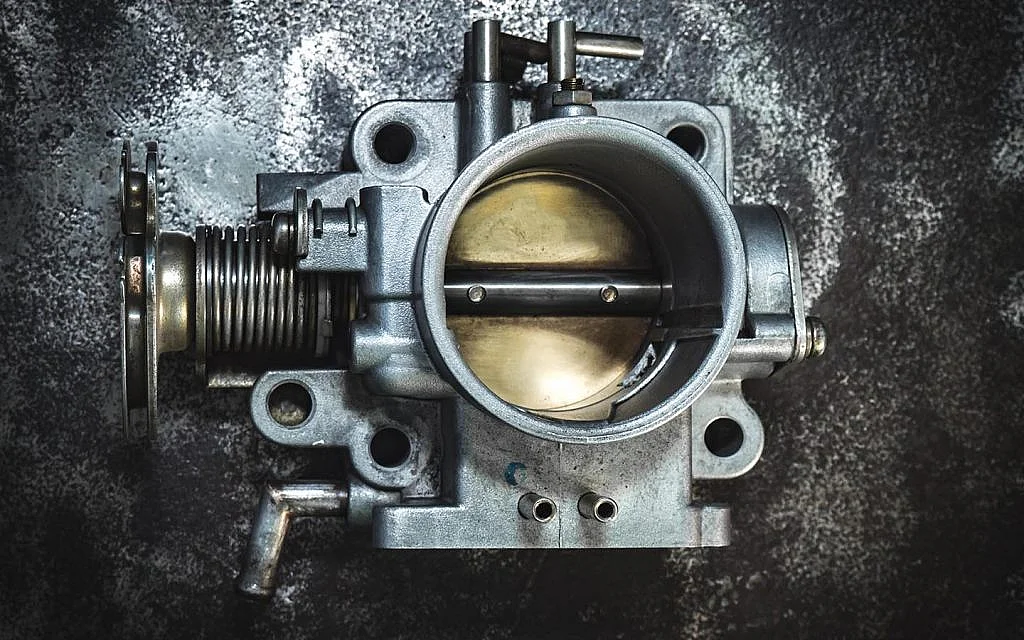
Think of the throttle body as the lungs of your Nissan Pathfinder. It is a critical component located between the air intake filter and the engine manifold. Inside this metal housing is a circular plate called a butterfly valve. When you press the accelerator pedal, this valve opens to let air into the engine. The more air that enters, the more fuel is injected, and the faster you go. In modern Pathfinders, this is controlled electronically rather than by a physical cable.
How the Electronic Throttle Control (ETC) Works
Nissan uses a sophisticated Electronic Throttle Control system. Instead of a simple wire, sensors on your gas pedal send a signal to the Engine Control Module (ECM). The ECM then tells a small motor on the throttle body exactly how far to open the valve. This system allows for better fuel efficiency and smoother cruise control. However, because it is electronic, the computer needs to know the precise “closed” position of the valve to maintain a steady idle. If the computer loses track of this position, your engine will struggle to breathe correctly.
The Importance of the Idle Air Volume Learning
The “relearn” part of this topic specifically refers to Idle Air Volume Learning. This is a process where the ECM learns the specific position of the throttle valve when the engine is idling. Over time, carbon deposits can build up around the edges of the valve. The computer slowly adjusts the valve’s position to compensate for this dirt. If you clean the throttle body or disconnect the battery, the computer might still try to use those old, “dirty” settings on a clean part. This mismatch causes the engine to run poorly.
- Precision: The system measures air in tiny increments to save fuel.
- Adaptation: Your Pathfinder “learns” your driving habits and engine condition over thousands of miles.
- Syncing: Relearning ensures the gas pedal and the engine are in perfect harmony.
Master Nissan Pathfinder Throttle Body Relearn in 8 Simple Steps
Recommended Best Deal Products


If you have recently cleaned the throttle body, replaced a battery, or disconnected the air intake on your Nissan Pathfinder, you might notice a surging idle, high RPMs at a standstill, or a Check Engine Light. This happens because the Engine Control Unit (ECU) has lost its calibration for the throttle valve’s position. This guide covers the precise “pedal dance” procedure required to recalibrate the Idle Air Volume Learning (IAVL). Following these steps accurately is vital because Nissan’s timing requirements are sensitive down to the half-second; missing a beat can result in a failed relearn and continued poor engine performance.
Step 1: Pre-Procedure Environment and Preparation
What you need: A digital stopwatch (phone app is fine), a voltmeter (optional), and a completely clear workspace where you won’t be interrupted.
Instructions: Before starting the manual relearn, you must ensure the vehicle meets specific criteria, or the ECU will reject the command. First, ensure the battery voltage is at least 12.9V at idle. The engine coolant temperature must be between 158°F and 203°F (70°C – 95°C); if the engine is cold, drive it for 10 minutes first. Turn off all electrical loads: this includes the air conditioning, headlights, rear defogger, and even the interior dome lights. Ensure the steering wheel is pointed straight ahead and the transmission is in “Park.” If your Pathfinder has a “Check Engine” light for anything other than idle speed, you must clear those codes first using an OBD-II scanner.
Pro Tip: Many DIYers fail because the engine is too hot or too cold. Aim for the middle of the temperature gauge. If your cooling fan kicks on during the process, stop and wait for it to finish before proceeding, as the electrical draw will interrupt the ECU’s logic.

Audible — Listen Free for 30 Days
One free credit a month and thousands of titles included.
Listen Free for 30 DaysStep 2: Accelerator Pedal Released Position Learning
What you need: Just your ignition key (or Push-to-Start button) and your feet.
Instructions: This step teaches the ECU the “zero point” of the gas pedal. Ensure the accelerator pedal is fully released. Turn the ignition switch to the “ON” position (do not start the engine) and wait for exactly 2 seconds. After 2 seconds, turn the ignition switch to the “OFF” position and wait for at least 10 seconds. You might hear a faint clicking sound from the engine bay—this is the throttle motor cycling. Repeat this process one more time to ensure the ECU has registered the released position of the sensor. This step is a prerequisite for the more complex idle air volume learning that follows.
Pro Tip: On Push-to-Start models, “ON” means pressing the start button twice without touching the brake pedal. Do not rush the 10-second “OFF” period; the ECU needs this time to save the data to its EEPROM memory.
Step 3: Throttle Valve Closed Position Learning
What you need: Your ignition key and a quiet environment to listen for the throttle motor.
Instructions: This specific action tells the ECU where the “home” or fully closed position of the throttle butterfly valve is located. Ensure the accelerator pedal is fully released. Turn the ignition switch to the “ON” position for 1 second, then immediately turn it back to the “OFF” position for at least 10 seconds. During this 10-second window, the ECU will physically move the throttle plate to the closed stop and record the voltage. Listen closely; you should hear a high-pitched hum followed by a “click” from the throttle body under the hood. If you do not hear this, your throttle body motor may be failing or the connector may be loose.
Pro Tip: If you have recently cleaned the throttle body with spray, ensure there is no residue or “gunk” physically blocking the plate from closing fully, as this will cause this step to register an incorrect voltage.
Step 4: The 7-5-10-20 Timing Sequence Preparation
What you need: A stopwatch and a steady foot. This is the most critical phase where timing is everything.
Instructions: This step prepares you for the “Pedal Dance.” You are about to perform a series of timed movements to put the ECU into “Diagnostic Test Mode.” Start with the engine warmed up and the ignition OFF for at least 10 seconds. Turn the ignition ON (engine off). Wait exactly 3 seconds. In the next 5 seconds, you must fully depress and release the accelerator pedal 5 times quickly. It does not matter if you finish the 5 pumps in 3 or 4 seconds, as long as you are done by the 5-second mark. After the 5th release, wait exactly 7 seconds. This precise wait period is where most people fail; use a stopwatch to be exact.
Pro Tip: Practice the rhythm without the key first. Think of it as a dance: 1-2-3 (Wait), 1-2-3-4-5 (Pump), 1-2-3-4-5-6-7 (Wait). Consistency is more important than speed during the pumping phase.
Audible Premium Plus — Annual Membership
12 audiobook credits up front, plus the full Audible catalogue.
See Annual PlansStep 5: Engaging the SES Light Blinking Mode
What you need: Your eyes on the “Service Engine Soon” (SES) or “Check Engine” light on the dashboard.
Instructions: Immediately following the 7-second wait in the previous step, fully depress the accelerator pedal and hold it down. Do not let go. After about 10 seconds, the SES light will start blinking. This indicates the ECU is entering the relearn mode. Continue holding the pedal down. After another 10 seconds (total of 20 seconds holding the pedal), the SES light will stop blinking and stay illuminated (solid). The moment the light turns solid, release the accelerator pedal. You have now successfully bypassed the security lockouts and told the ECU you are ready to set the idle.
Pro Tip: If the light never starts blinking, you likely missed the 7-second or 3-second window in Step 4. Turn the car off, wait 30 seconds, and start again from the beginning of Step 4.
Step 6: Executing the Idle Air Volume Relearn (IAVL)
What you need: Quick reflexes and the ability to start the engine immediately.
Instructions: Within 3 seconds of releasing the pedal (after the SES light turned solid in Step 5), start the engine. The engine should crank and fire up. It will likely idle high at first, perhaps around 1,000 to 1,200 RPM. Let the engine idle for at least 20 seconds. During this time, the ECU is monitoring the engine temperature, intake air temperature, and load to calculate the perfect throttle opening for a steady 650–750 RPM (standard for most Pathfinder V6 engines). Do not touch the gas pedal, do not turn on the radio, and do not move the steering wheel during these 20 seconds.
Pro Tip: If the idle doesn’t drop to the factory specification (usually around 700 RPM) after 30 seconds of running, the relearn has failed. This usually happens if the coolant temperature is not high enough or if there is a vacuum leak in the intake snorkel.
Step 7: Verification of Idle Stability
What you need: Observation of the tachometer and a few throttle “blips.”
Instructions: Once the 20 seconds have passed and the idle has settled, rev the engine a few times. Press the pedal to bring the RPMs up to about 2,000 or 3,000, then release it quickly. The needle should fall smoothly back to the 700 RPM mark without dipping below 600 or “hunting” (surging up and down). Next, turn the air conditioning on to max. The idle should slightly increase to handle the load but remain steady. Turn the AC off, and the idle should return to the base setting. This confirms that the ECU has successfully mapped the new throttle positions against various engine loads.
Pro Tip: If the RPMs “hang” at 1,000 and refuse to come down, you may need to perform the “Throttle Valve Closed” procedure again or check for an air leak behind the Mass Air Flow (MAF) sensor.
Step 8: Post-Relearn Test Drive
What you need: A 10-minute drive on varied roads.
Instructions: The final step is to solidify the learning in the ECU’s long-term memory. Drive the Pathfinder for about 5 to 10 miles. Ensure you reach highway speeds (55+ MPH) and perform several complete stops. This allows the ECU to learn the “deceleration fuel cut-off” parameters. If the car feels responsive and the idle remains rock-solid at stoplights, the procedure is complete. If the “Service Engine Soon” light returns with a P0507 code (Idle Control System RPM Higher Than Expected), it means the manual relearn wasn’t accepted, and you may need to repeat the process or use a professional-grade scan tool.
Pro Tip: Avoid aggressive “flooring” of the gas pedal during this initial test drive. Smooth, gradual transitions help the ECU fine-tune the fuel trim maps more effectively after a reset.
✅ Final Checklist
- Engine coolant temperature is verified between 158°F and 203°F.
- All electrical accessories (AC, lights, defroster) remained OFF during the timing sequence.
- The SES light transitioned from blinking to solid while holding the pedal in Step 5.
- The engine was started within 3 seconds of the light turning solid.
- Final idle speed rests between 625 and 725 RPM (for most 3.5L or 4.0L Pathfinder engines).
Important Notes:
- Safety Warning: Always perform this procedure in a well-ventilated area, as the engine will be running for extended periods. Ensure the parking brake is engaged.
- When to seek professional help: If you have attempted the “Pedal Dance” more than 5 times without success, there may be a mechanical vacuum leak, a faulty Mass Air Flow (MAF) sensor, or a damaged throttle body motor that prevents the relearn from completing.
- Estimated Time: 15–30 minutes (including engine warm-up).
- Estimated Cost: $0 (DIY) or $100–$150 at a dealership for a “Consult III” computer relearn.
Common Symptoms of an Out-of-Sync Throttle System
How do you know if your Nissan Pathfinder needs a throttle body relearn? Usually, the car will tell you through its behavior. If the computer and the physical valve are not in sync, the engine will struggle to find its “sweet spot” at rest. You might notice these issues after you have disconnected the battery for a repair or if you have recently sprayed cleaner into the intake system. Paying attention to these signs can save you from unnecessary stress and expensive repair bills.
Fluctuating or High Idle Speeds
The most common sign is a “hunting” idle. This is when your tachometer needle bounces up and down while you are stopped at a red light. Your engine might rev up to 1,200 RPM and then drop suddenly to 500 RPM. In some cases, the idle might simply stay too high, making the car feel like it wants to pull forward even when your foot is on the brake. This happens because the ECM is confused about how much air is actually entering the cylinders at rest. It is constantly trying to correct the airflow, which causes the surging sensation.
Reduced Fuel Economy and Poor Throttle Response
When the throttle system is out of calibration, your fuel economy will often take a hit. Because the air-to-fuel ratio is slightly off, the engine burns more gas than necessary to keep running. You may also notice a “lag” when you try to accelerate. You press the pedal, but there is a one-second delay before the SUV actually moves. This lack of responsiveness can be frustrating and even dangerous when merging into fast traffic. A simple relearn often restores that “crisp” feeling to the gas pedal.
Watch out for these specific warning signs in your Pathfinder:
- Stalling: The engine dies suddenly when you come to a stop or slow down.
- Check Engine Light: Error codes like P0507 (Idle Control System RPM Higher Than Expected) may appear on your dashboard.
- Rough Shifting: The automatic transmission may jerk because the engine RPMs are not where the transmission expects them to be.
- Erratic Acceleration: The car feels jumpy or inconsistent when you try to maintain a steady speed on the highway.
Quick Tip: Always check for vacuum leaks before assuming the throttle body is the only culprit. A cracked rubber hose can mimic many of these symptoms by letting “unmetered” air into the engine!
Factors That Necessitate a Throttle Relearn Procedure
Recommended Best Deal Products


Your Nissan Pathfinder’s Engine Control Module (ECM) is a highly adaptive piece of hardware. It is constantly “learning” the physical state of the engine to maintain a perfect idle. However, certain maintenance tasks can render these stored values obsolete. When the physical reality of the engine no longer matches the ECM’s digital map, a manual relearn becomes necessary to bridge the gap.
Routine Maintenance and Component Cleaning
The most common trigger for a relearn is a simple cleaning of the throttle body. Over thousands of miles, carbon deposits and oil vapors create a “gunk” ring around the butterfly valve. To keep the engine from stalling, the ECM slowly compensates by holding the valve open just a tiny bit wider. Once you scrub that gunk away, the valve is suddenly “too open” for the now-unobstructed passage. This results in an engine that receives way more air than the computer expects, leading to a high or surging idle that won’t settle down on its own.
Electrical Disruptions and Hardware Swaps
Sometimes the hardware stays the same, but the “memory” of the car is wiped or becomes irrelevant. The ECM can lose its calibration or require a fresh start due to several common scenarios:
- Battery Replacement: If the battery is disconnected for an extended period, or if it dies completely, some Pathfinder model years may revert to default settings that don’t account for your engine’s specific wear.
- Mass Air Flow (MAF) Sensor Replacement: Since the MAF sensor and throttle body work in tandem to calculate air-fuel ratios, a new sensor often sends data that doesn’t “align” with the old throttle positions.
- Throttle Body Replacement: A brand-new unit has different mechanical tolerances than the old one; the ECM must be taught the “zero point” of this new component.
- Vacuum Leak Repairs: Fixing a leak in the intake manifold changes the vacuum pressure, often requiring the ECM to recalibrate how it handles the throttle at idle.
Potential Costs and Professional vs. Independent Solutions
When your Pathfinder starts idling erratically after a repair, you have to decide between a professional fix or a DIY solution. While the process itself is purely electronic, the price of getting it done can vary wildly depending on the tools used.
The Cost of Professional Calibration
Taking your Pathfinder to a Nissan dealership is the most straightforward, albeit expensive, route. Technicians use the proprietary Nissan CONSULT diagnostic workstation, which can force an “Idle Air Volume Learn” in a matter of seconds. Typically, a dealership will charge a “diagnostic fee” or one hour of labor, which usually ranges from $120 to $180. Independent shops are often cheaper, charging between $80 and $100, provided they have a high-quality bidirectional scan tool capable of communicating with Nissan’s specific modules.
The Independent Path: DIY Tools and Software
For the proactive owner, you don’t necessarily have to pay a shop every time you clean your intake. Many Pathfinder enthusiasts now use specialized software that turns a smartphone into a professional-grade tool. This is often the most cost-effective long-term solution.
- Bluetooth OBDII Adapters: By pairing a quality OBDII dongle with apps like NDSIII (Nissan Data Scan) or CarZilla, you can trigger the relearn yourself. The total cost is usually under $60 for the hardware and software combined.
- Dedicated Scan Tools: Mid-range handheld scanners (such as those from Autel or Foxwell) often include “Work Support” functions for Nissans. These tools generally cost between $150 and $300 but pay for themselves after two uses.
- The Manual Method: There is a “free” way involving a precisely timed sequence of the ignition key and gas pedal. While it costs $0, it is notoriously difficult to get right and can take dozens of attempts to trigger.
Conclusion
Mastering the concept of the Nissan Pathfinder throttle body relearn is essential for anyone performing their own maintenance. Whether you’ve just finished a deep clean of the intake or replaced a component, ensuring the ECM and throttle body are in sync is the final step to achieving a smooth, factory-standard idle. Skipping this step often leads to poor fuel economy and a frustrating driving experience.
As an actionable next step, check your current idle RPM while the engine is at operating temperature; if it sits consistently above 750 RPM, it’s time to perform a relearn. Consider investing in a Nissan-compatible OBDII app to save yourself time and money in the future. Keep your Pathfinder running efficiently and enjoy the peace of mind that comes with a well-tuned engine!
💬 Quick Questions & Answers
Why does my Nissan Pathfinder idle high?
A high idle often occurs after cleaning the throttle body without performing a relearn procedure to update the ECM.
Can I drive without a throttle relearn?
While possible, you may experience poor fuel economy, surging, or stalling at stops until the system is calibrated.
Does disconnecting the battery reset the throttle?
Yes, a prolonged battery disconnect can clear the ECM memory, often requiring a throttle position relearn.
Is a scan tool required for this process?
Not always; many Nissan models allow for a manual pedal-dance sequence to initiate the relearn without external tools.
How long does the electronic relearn take?
The actual electronic calibration usually takes less than 60 seconds once the initiation conditions are met.
❓ Frequently Asked Questions
What exactly is an Idle Air Volume Learning procedure?
This is a software process where the ECM learns the specific throttle valve opening angle required to maintain the target idle speed. It compensates for internal wear and carbon buildup that affects airflow over time.
Will a dirty throttle body cause a permanent check engine light?
It can trigger codes like P0507 (Idle Control System RPM Higher Than Expected) if the airflow deviation is too great. Cleaning and relearning usually resolve these specific codes without replacing any hardware.
Can I perform a relearn if the Service Engine Soon light is on?
Usually, you must clear all diagnostic trouble codes (DTCs) before the ECM will allow the idle learning process to complete. Ensure the engine has no underlying vacuum leaks or sensor failures first.
How often should a Nissan Pathfinder undergo a throttle relearn?
It is not a scheduled maintenance item but should be performed whenever the throttle body is cleaned, replaced, or if the battery is disconnected for an extended period.
What are the risks of ignoring a necessary throttle relearn?
Neglecting the relearn can cause erratic shifting in automatic transmissions and excessive wear on braking components due to high idle speeds. It also negatively impacts overall driveability and emissions compliance.
Are there hardware requirements before starting the relearn?
Yes, the engine must be at normal operating temperature, all electrical loads like the AC and headlights must be off, and the steering wheel must be in the straight-ahead position.